I’ve never really been able to get behind the whole augmented reality thing. I tried it with the Yelp iPhone app once while I was on vacation in a large city, but it hasn’t really changed my life in any way. If there’s any platform I can see augmented reality really taking off, it’s on smartphones.
The developers at Crossfader have released something really cool: an augmented reality layer for Maps on the iPhone. Both Apple and Google Maps are supported, and the app itself is totally free.
Apple’s new Maps app leaves a lot to be desired, and while there are some decent alternatives out there, the only worthy replacement for Apple Maps is either Google Maps or Nokia’s Maps. Neither company has an iOS app ready to go just yet, but Nokia is planning to change all that.
In a few weeks Nokia plans to release a maps app for iOS called Here. The app will be free for iPhone, iPad and iPod Touch owners, and Nokia is hoping that it will persuade some iOS users to try out their smartphones as well.
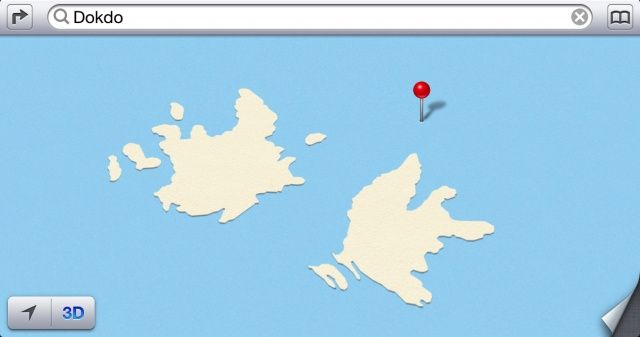
South Korea has asked Apple to remove the Japanese names of the Dokdo islets from its new Maps app in iOS 6. Both Asian countries claim ownership of Dokdo, which has long caused tensions between the two. In iOS 5, when Maps was powered by Google Maps, only the Korean name for the islets was used, and that’s how Korean officials want it to stay.
I despise iOS 6 Maps. Despite writing some initially favorable early impressions that now seem like they were written by a slathering moron demon who temporarily possessed my soul, ever since iOS 6 has been released, I have been frustrated by a fail rate on iOS 6 Maps that hovers somewhere around 70%. Not only can I most of the time not get iOS 6 Maps to give me a correct answer to a search query, I usually can’t get it to give me the same wrong answer twice in a row.
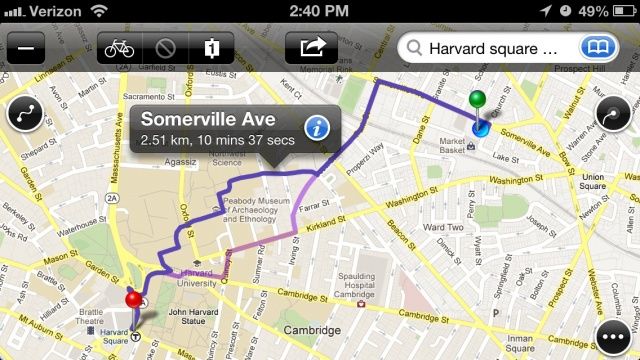
I realize a lot of people think iOS 6 Maps is just fine. Some of these are people I respect. I have a hard time reconciling their views on the matter with my reality. I have my suspicions that people who think iOS 6 Maps is just fine commute everywhere in their cars, and have a set pattern of destinations that rarely change: point A to point B to point C. I bike everywhere, I’m constantly going to new addresses, and for me, iOS 6 is just an utter disaster.
I yearn for the return of Google Maps to iOS 6, but I find their web app to be wanting, and most of the maps competition to be slow, ugly and just as bad as iOS 6 Maps when it comes to walking and biking instructions. Up until now, Mapquest (!) was the best app I found for getting me where I’m going.
That’s all changed, now that I’ve discovered Maps+. It’s based off of Google Maps, so it’s accurate. It uses the same tileset as iOS 5 Maps, so it’s pretty and familiar. It’s super fast, and it’s free.
Going somewhere? Trust Apple's turn-by-turn directions to get you there.
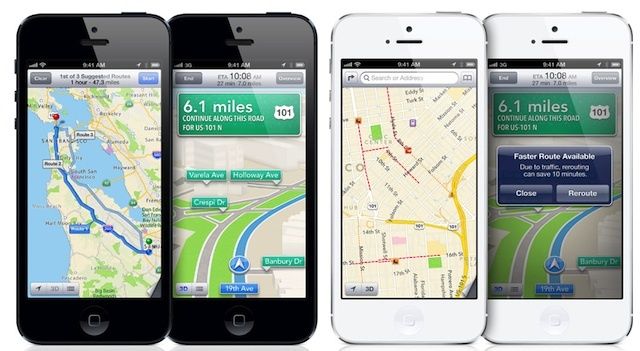
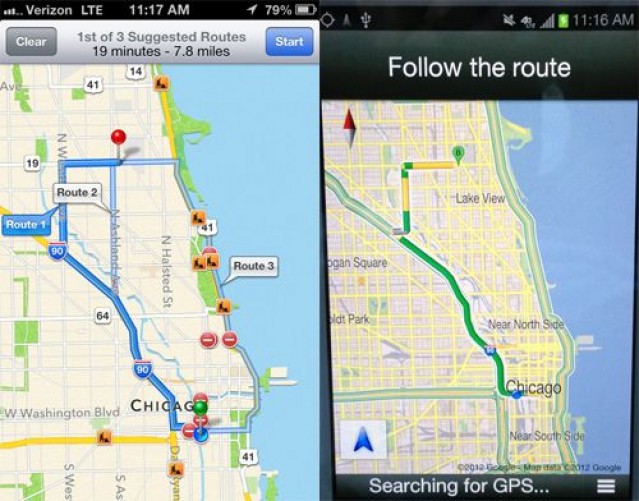
If you’ve opened up Apple’s new Maps app in iOS 6, you probably have a good idea of the faults everyone’s been complaining about. But it does have one feature that works well: turn-by-turn navigation. In fact, when compared to Google’s turn-by-turn feature on Android, Apple’s service is actually much better in many ways.
It only took two days, but ClassicMap is no longer available on the Apple iTunes App Store. We reported on the app a couple of days ago, but now clicking on any iTunes link for the app returns a “No longer available in the US iTunes store,” which basically means it’s no longer for sale.
Apple’s new Maps app in iOS 6 has been the subject of intense criticism in the press for weeks. Tim Cook had to issue a public apology for the widespread inaccuracy of Maps, and Apple is now recommending other third-party mapping solutions in the App Store. Not exactly a great product launch.
Google’s Eric Schmidt commented on Apple ditching Google Maps in an interview tonight. “Apple should have kept our maps,” said Schmidt. Why? Simply put, “They’re better maps.” Touche.
Yes, we know, Apple Maps sucks. You hate it. It’s the biggest screw up the company’s seen since MobileMe. Maybe even worse. But it’s totally fixable, and Apple might not need to do anything more than just open up their wallet and buy one of the most intriguing tech companies right now that is struggling big time – Nokia.
Right now there are three major players in the mobile maps business: Google, Apple, and Nokia. Everyone applauds Google Maps for having the best data and interface, but Nokia has been doing maps for a long time now, and they have access to even more data than Google. They’re also in a financial deathspiral which makes them the perfect company for Apple to acquire to fix their mapping problem.
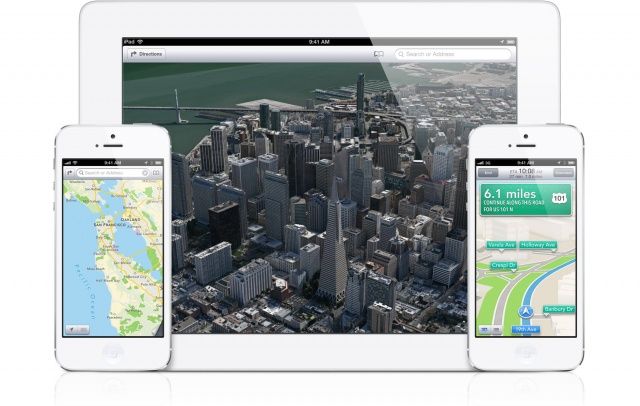
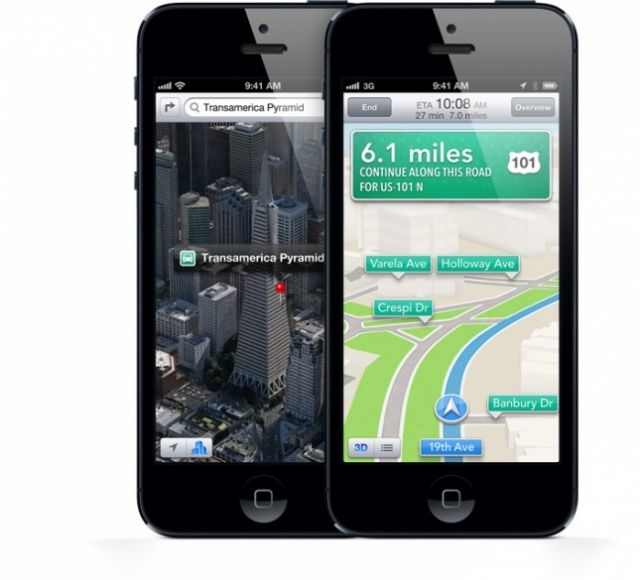
While iOS 6 may be “the world’s most advanced mobile operating system,” its new Maps app is, quite frankly, a heap of trash. It boasts some terrific features, such as 3D Flyover and voice-guided turn-by-turn navigation, but they’re only terrific when the Maps that power them actually work. And Apple’s don’t in a lot of places.
The Cupertino company’s CEO, Tim Cook, has apologized to customers for the frustration the new app has caused, and it’s led us to wonder why Apple even released it. It still had a year left on its contract with Google, so why did it rush into releasing its own, half-baked service so quickly?
Well, one reason behind the move is that Steve Jobs had grown to hate Google. So much so that he set up a new Maps team just to kick Google Maps off the iOS devices.
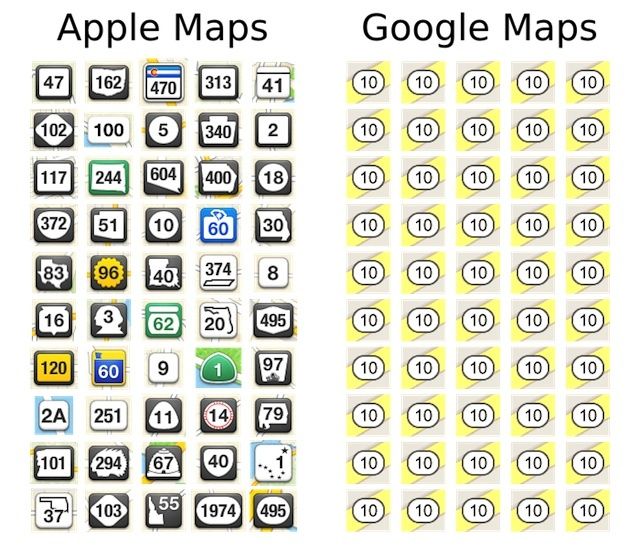
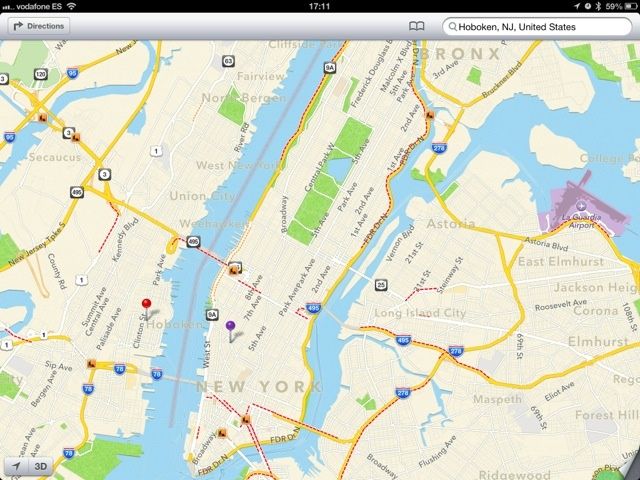
Apple Maps has taken a lot of heat over the last few weeks for its abysmal performance. The data on Apple Maps is pretty terrible, but there’s no denying it’s one of the prettiest maps apps on available. Case in point, take a look at the detail on Apple’s highway icons on their maps verses that found on Google.
Apple’s icons contain details for each particular state, while Google’s is just a bland icon that’s used for every state highway. Now if Apple Maps could just get their data to be as good as Google Maps they might become everyone’s favorite maps app.
If someone told you that iOS 6 Maps had one advantage over Google Maps, and that it was 80% more efficient in using data, you’d probably quip, “That’s because it’s 80% less accurate” then do an air drum roll and punctuate the whole thing with the sound of a cymbal crashing that you made with your mouth.
Joking aside, though, it’s true. iOS 6 Maps uses way less data than Google Maps, and it has nothing to do with accuracy, but with its beautiful new vector graphics.
It could be some time before you can rely on Apple's new Maps app.
Now that Apple has apologized for its decision to release a half-baked Maps app in iOS 6, the vast majority of us will carry on with our lives and use a third-party solution until Apple’s is fixed. Right now, it seems Apple is a company that can achieve anything. So it won’t be too long before Maps is as good as — if not better then — Google Maps. Right?
Maybe not. You see, Apple’s Maps problem could be much bigger than we think, and it could be a long time before we can say goodbye to third-party alternatives.
I’m not talking about Tim Cook’s apology for iOS 6 Maps. While it’s rare, Apple has apologized before, especially recently: see John Browett’s admission that the company had “messed up” when cutting shifts among Retail Employees, and Apple’s public about-face when pulling out of the EPEAT rating system. One of the things that makes Apple great is they’re not afraid to be as harsh on themselves as they are on the competition when they’ve fucked up.
No, what Apple did today is far more uncharacteristic than an apology. They suggested that you use a third-party app instead of their own.
If there were ever a time for Google to play “good guy” it would be now. Apple has simply been piling up the negative criticism with everything from its ridiculous legal attacks to its latest Mapsgate debacle. While Google has been going down the wrong path by setting itself up to bite back (see Motorola Mobility), I believe now to be the perfect time to turn the other cheek. Specifically with their Maps service.
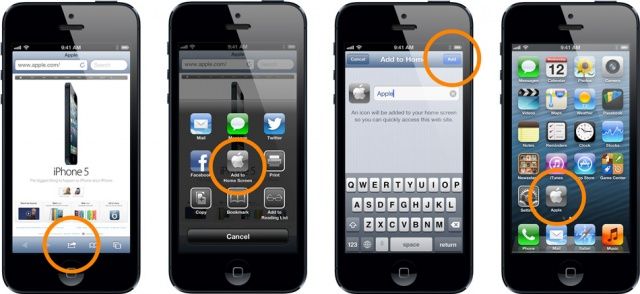
In addition to posting an extraordinarily classy apology for the iOS 6 Maps fiasco written by CEO Tim Cook, Apple has also gone to the length of pushing online a page explaining how to add a website icon to your home screen in four easy steps, and while the website they use for the example is Apple.com, they clearly mean for you to do this on maps.google.com.
On Tuesday, The New York Times reported that Google is currently working on a native Google Maps app for iOS, which is expected to make its debut before the end of the year. But in the meantime, it will be bringing Street View to its web app so that you can enjoy the much-loved feature in mobile Safari.
This is coming back to iOS... you'll just have to wait for it.
We’ve heard a lot of rumors surrounding a Google Maps app for iOS over the past week, and now The New York Times is weighing in with information from its own sources. Fortunately, it’s good news: it claims Google is indeed working on a Maps app for iPhone, iPad, and iPod touch, and that the company is hoping to have it ready and released by the end of this year.
Why’s it taking so long? Well, Google had no idea Apple was kicking Google Maps out of iOS until Apple first previewed iOS 6 back in June.
We all knew this was coming. It was only a matter of time before Hitler found out about Apple’s new iOS 6 Maps. As you may have already guessed, der Führer isn’t all that happy with the new service and is quite irate over the fact that his house is listed as a fountain in Austria.
Watch the hilarity unfold as Hitler is informed that a Google Maps app has yet to be approved and his army is officially all out of 30-pin connectors.
Woz keeps a bunch of third-party navigation apps on his iPhone as backup.
Speaking at a company event in Sydney, Australia, this week, Apple co-founder and everyone’s favorite geek Steve Wozniak spoke out about Apple’s new Maps service, which got its public debut alongside iOS 6 last Wednesday. Like most of us, Woz says he’s disappointed with the new app, and that Google’s Maps service is better. However, he doesn’t feel that the issues users have been experiencing are “that severe.”
With Google Maps gone from iOS 6 in favor of Apple’s own solution, many are hoping Google will bring its own Maps app to the App Store — as it did with YouTube a couple weeks ago. A recent report claimed that it was already on its way, but according to Google chairman Eric Schmidt, that’s not the case at all. In fact, Google hasn’t even submitted a Maps app to Apple for approval yet.
Apple is hoping Google Maps employees can help fix its new service.
Apple is said to be “aggressively” recruiting Google Maps employees in an effort to fix its highly criticized Maps service, according to an unnamed source “with connections on both teams.” The Cupertino company is reportedly using recruiters to attract individuals who have previously helped develop Google Maps, and many of them seem to be snapping up the opportunity to work at Apple.
Job listings on Apple’s website reveal it is currently seeking developers to help fix its newly-released Maps app, which has received widespread criticism since making its debut in iOS 6 on Wednesday. The company is calling for software engineers who will be tasked with “road rendering,” and “creating new and innovative features.”
A lot has been written over the last day or so about the crappy maps in iOS 6, and the fact that Apple’s new data engine doesn’t live up to its pretty new map tiles and spectacular flyover feature.
I thought exactly the same thing when I first installed a beta of iOS 6 on my iPad a month or two back. But while Apple’s maps are definitely a step back in many ways, it’s not all as bad as it seems. Not quite anyway.
But guess what? If you’re willing to use a couple extra apps until Apple fixes things, you can get everything back that you’re missing.
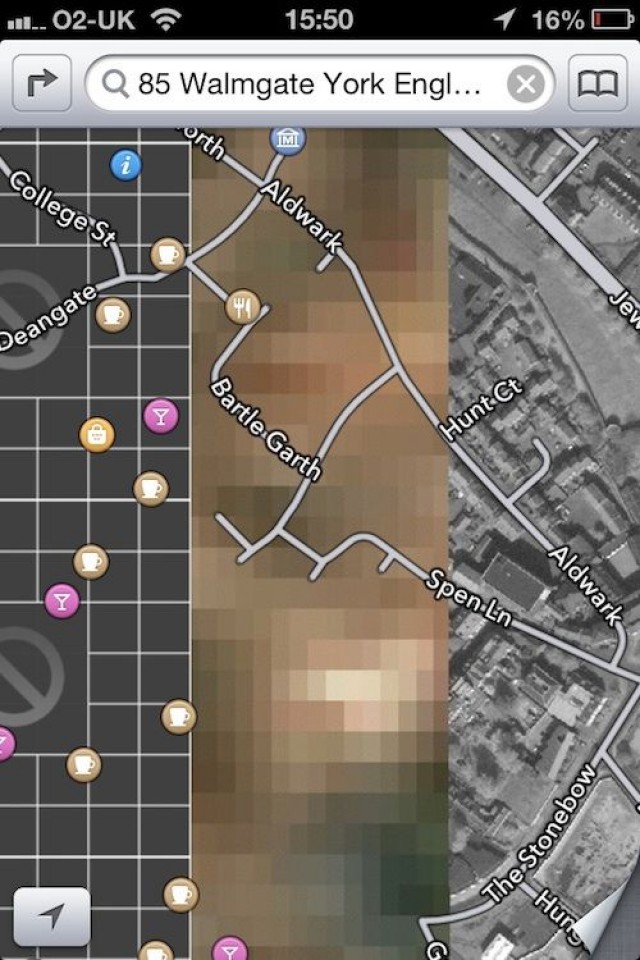
It’s no secret that Apple’s new iOS Maps app has been a pretty big letdown so far. Surely Apple is working on perfecting the app and correcting a lot of erroneous data, but if you’ve already updated to iOS 6 you’re stuck with maps that have a tendency to glitch out on you, especially if you live outside the U.S.
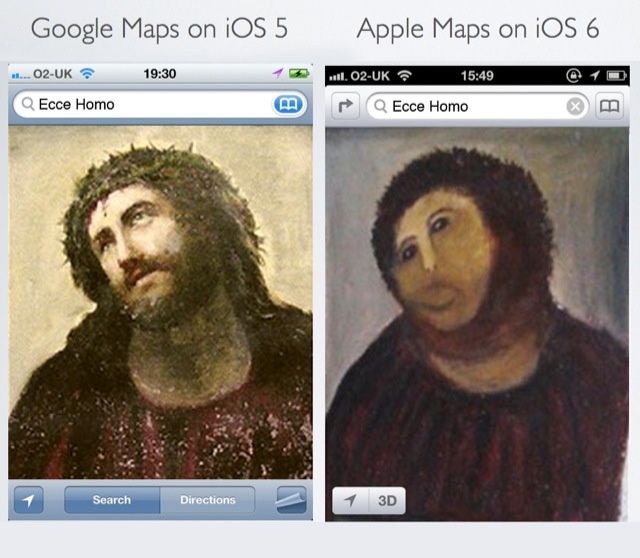
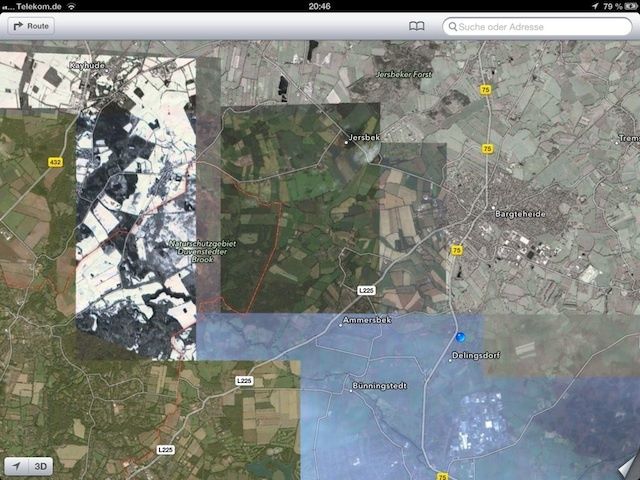
The Amazing iOs 6 Maps is a new Tumblr account dedicated to the uglier side of Apple’s new maps app. They’ve compiled a ton of screenshots of iOS 6 Maps doing terrible things. Here’s some of the best/worst ones so far: