Despite a visit from Apple CEO Tim Cook, Foxconn shows little signs of improvement.
Following the Fair Labor Association’s audit into Foxconn working conditions earlier this year, which unearthed several labor violations, including unlawful working hours, poor pay, and a total disregard for health and safety, Apple and Foxconn promised to make some major improvements.
However, two months on, activists say violations “remain the norm,” and that there is no evidence of any significant changes in Foxconn’s Chinese factories.
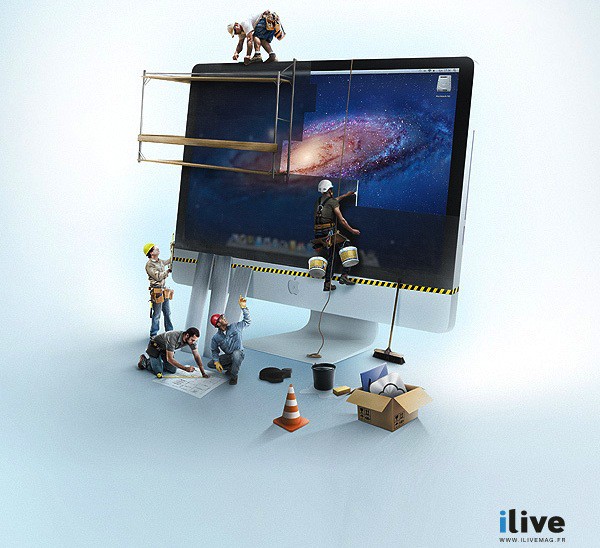
Do you know how much sweat, blood, and tears went into making your beautiful aluminum iMac? Trust us, it wasn’t easy. Five tiny construction workers risked life and limb in some Foxconn factory far away to assemble your sweet little machine, just so you could watch cute cat videos on that gorgeous 27inch screen.
Ok, maybe that’s not how it really got assembled, but we love these images from Mathieu Schatzler, who imagines what it would be like if Liliputian men constructed each iMac individually. I wonder if they fight over who has to clean the display.
Apple's biggest manufacturing partner is making preparations to turn this into a reality.
During a press conference in Shanghai this week, Foxconn president Terry Gou finally confirmed that the company is making preparations to begin production of the upcoming Apple HDTV. Production is yet to begin, so you may not see the set before Christmas. But Apple certainly plans to bring Steve Jobs’s set to market.
Apple will help Foxconn improve labor conditions by stumping up some of the cash.
Foxconn chief executive Terry Gou has confirmed that Apple will use some of its cash to help improve the labor conditions for more than 1 million workers in Foxconn’s Chinese factories, where devices like the iPhone, iPad, and iPod are assembled.
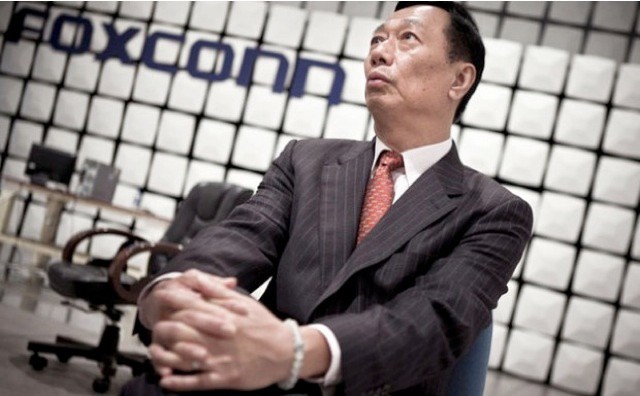
Now Foxconn CEO Terry Gou is trying to settle the debate. Yes, Gou says, Foxconn may well be running a sweatshop… but what’s wrong with sweatshops anyway?
The new Apple TV costs more than twice as much in Brazil.
The new Apple TV has made its debut in Brazil today, but it picked up a pretty hefty price tag on the way. Although the set-top box sells for just $99 in the U.S., in Brazil it costs 399 Reals — roughly $211.
When people ask why Apple doesn’t make its iPads in America, the usual explanation is that labor costs are so high, there’s no way an iPad could be made in the country for less than $1000. That answer has always lacked weight, as the manual labor of constructing an iPad is actually a very small portion of its overall build cost: building an iPad in America would cut down margins, but not double the price.
No, there’s a better reason why every iPad gets made in China, and you can find it on your local periodic table. Every iPad is made with a sizable number of rare earth metals… all of which can only be mined in China.
Apple has granted Rob Schmitz of Marketplace direct access to the Foxconn supply chain following his debunking of Mike Daisy’s inaccurate claims regarding Chinese working conditions. This makes Schmitz the second reporter to ever take a video crew behind the scenes at Foxconn. ABC News and Bill Weir previously visited China for a Nightline segment.
This 2 in a half minute video briefly takes you though the iPad manufacturing line and Foxconn life in general. Schmitz offers a very different take than that of Mike Daisey, highlighting how much people actually want to work at Foxconn.
Steve Jobs Avenue in Jundiai is located near Foxconn's new iPhone plant.
Brazil’s Jundiai city council has paid tribute to Apple’s late co-founder and former CEO by naming one of its streets Steve Jobs Avenue. The council actually announced that it would commemorate Steve with a street a day after his passing last year, but city officials only confirmed the name this week.
With worker overtime now reduced, Foxconn simply can't assemble as many iPads as it used to.
Apple’s new iPad is still selling like hot cakes, and new customers continue to face a 1-2-week shipping delay when purchasing through the Apple online store. But the company is reportedly struggling to meet demand with production constrained by Retina display supply and the recent cuts to factory worker overtime at Foxconn.
Last week a Foxconn recruiter thought he knew what he was talking about and told a reporter that Apple’s next iPhone is launching in June. However, he probably only knew as much as we do, and was just making an assumption based off Foxconn’s drive to hire 18,000 employees.
Interestingly, another employee inside of Foxconn would like to disagree with his co-worker. The head of human resources at Foxconn’s Taiyuan factory told reporters in an interview that the new iPhone is launching in October.
Workers' wages will be increased in July, the CEO of Foxconn said.
After the FLA found wide scale violations at Apple’s main manufacturing plant, Foxconn, both Foxconn and Apple promised to fix the issues by 2013. Issues that were found include the amount of overtime worked, compensation workers receive for their overtime, and numerous health and safety risks. In what looks to be the first of changes, Foxconn and Apple will be raising workers’ wages in July.
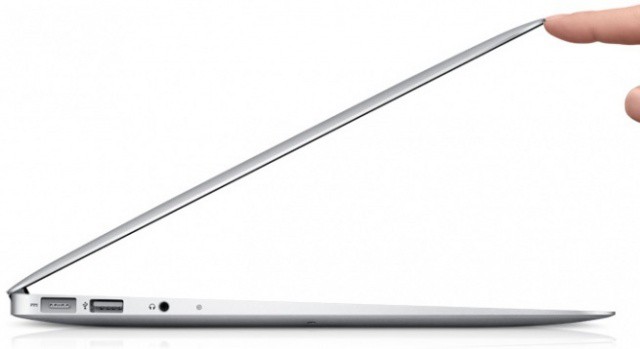
Want a thinner, lighter and more Air-like MacBook Pro? You’ve only got a couple months or so to wait… provided you want a 15-inch. The 13-inch might take a little longer.
The iPhone 5 probably won't look like this... or arrive in June.
Apple broke away from its traditional June iPhone unveiling last year, delaying the iPhone 4S announcement until early October instead. The company is widely expected to do the same with the iPhone 5 — likely to be called the “new iPhone” — this year, but according to one Foxconn recruiter, it’ll arrive in June like many of its predecessors.
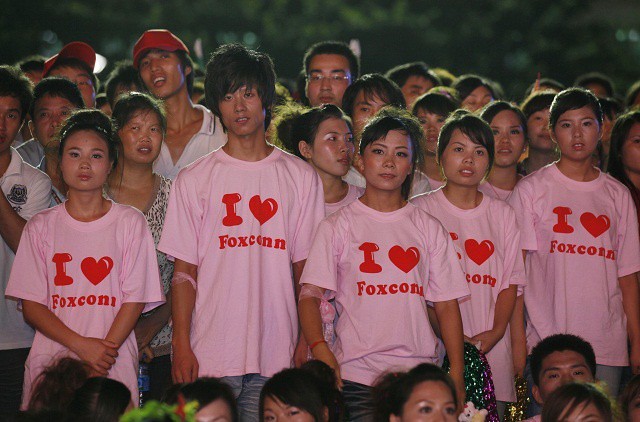
Do they really love Foxconn, or were they forced to wear the shirts?
Crappy internships have become a sort of initiation process that American students subject themselves to in order to enter the workplace. Working for free for 4 months – making copies, fetching coffee, and filing paperwork – sounds like hell for a lot of American students, who love to complain about the hardships of their internships.
Well, turns out American interns have a pretty beautiful life compared to their Chinese counterparts at Foxconn who are forced into internships that resemble slave labor and are told they will not graduate unless they spend months working on the production lines.
Another sunny day at the Foxconn factory. Photo Ged Carroll (CC BY 2.0)
Bleeding hearts the world over are very happy with the news that Apple and Foxconn are working together to make employee working conditions better in their Chinese factories. But there is a group of people who aren’t so pleased about the reductions in working hours: the workers themselves.
Apple will help Foxconn improve labor conditions by stumping up some of the cash.
The first reactions by human rights groups to the Fair Labor Association’s independent audit of Foxconn factory working conditions are in, and there is cautious optimism that the widescale abuse of Chinese factory workers may be on the cusp of coming to an end. But that’s only if the rest of the tech industry follows Apple’s lead.
We’ve read through the Fair Labor Association’s report on Foxconn’s facilities, and while the picture it paints of conditions is bleak, they’re not insurmountably awful, or even particularly Dickensian. Rather, these are issues that can be fixed… many through simple communication.
Here’s all the bad in the FLA’s report, and what Foxconn can do to fix things.
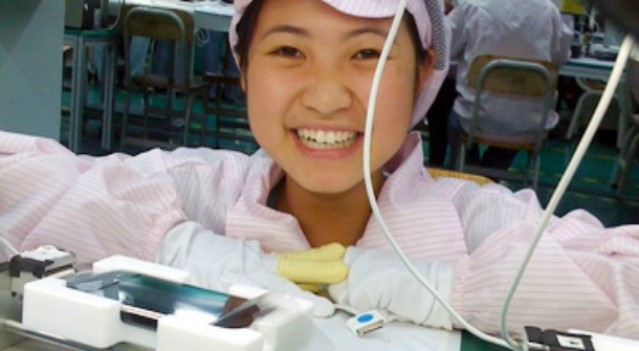
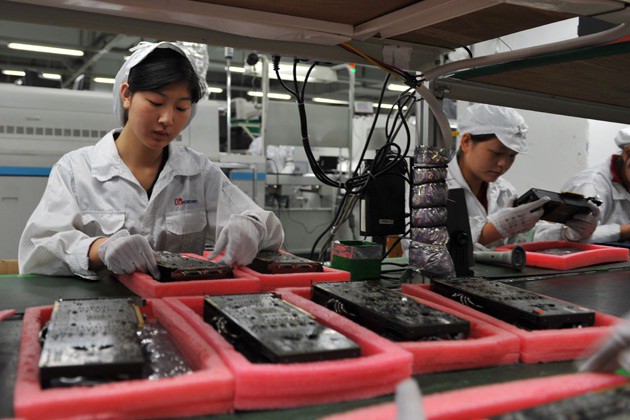
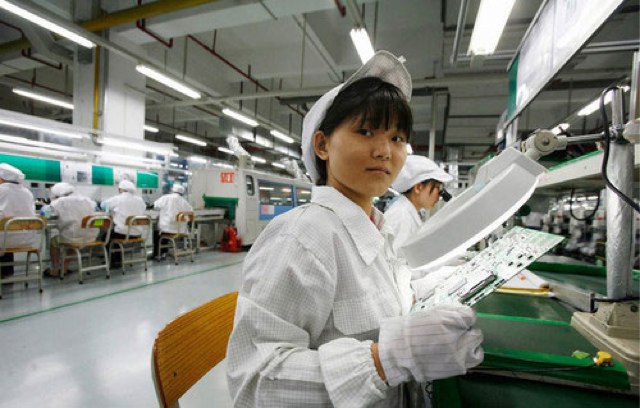
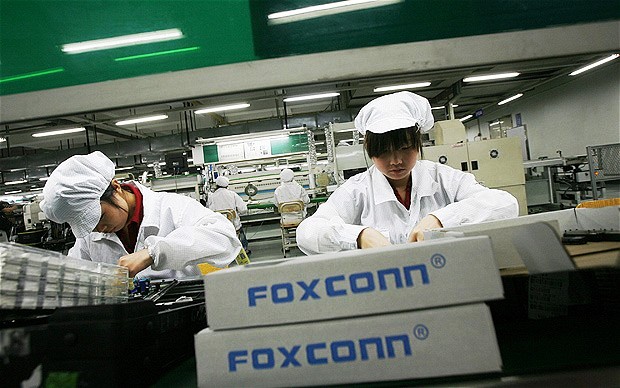
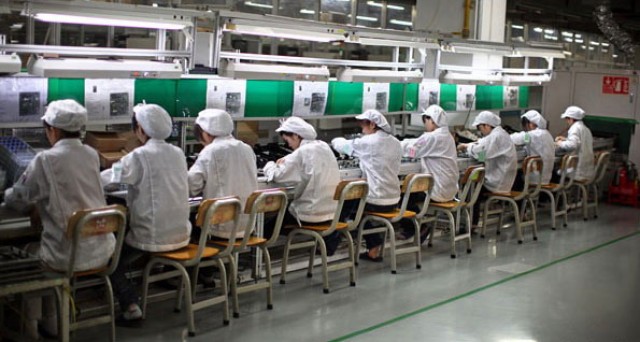
Workers at Foxconn assembling Apple products. Photo: Foxconn
After being invited by Apple to perform an audit at Foxconn, the Fair Labor Association released its findings today in a report. The findings were a bit mixed, saying they found wide scale issues primarily around amount of overtime worked, compensation, and safety. Apple and Foxconn agreed to improve on the FLA’s findings by 2013.
Labor group Human Rights First has reacted this evening, saying that Apple and Foxconn’s changes will help reform supply chains as a whole and will be a turning point for the industry. But primarily, the changes will be “life-changing” for the workers.
Apple CEO Tim Cook has long said that “no one in our industry is driving improvements for workers the way Apple is today,” and to put the company’s money where its mouth was, Cupertino invited the Fair Labor Association to do a thorough audit of working conditions at Foxconn.
Now the results are in, and there’s good news and bad news.
The bad news is that the Fair Labor Association found wide scale violations of Chinese labor laws, including the amount of overtime worked, the compensation received for overtime, and numerous health and safety risks, as well as “crucial communication gaps that have led to a widespread sense of unsafe working conditions among workers.”
The good news? Apple and Foxconn are fully on board fixing the issues. That’s why they agreed to the audit, and that’s why they’re committing to being compliant with all of the FLA’s guidelines by 2013. Oh, and they’re going to hire a lot more staff and workers to help even the load.
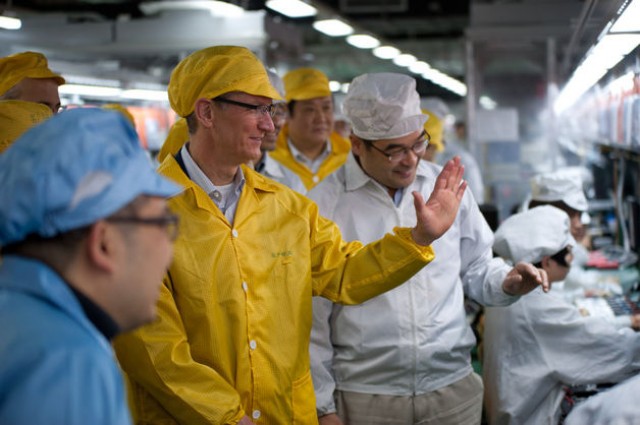
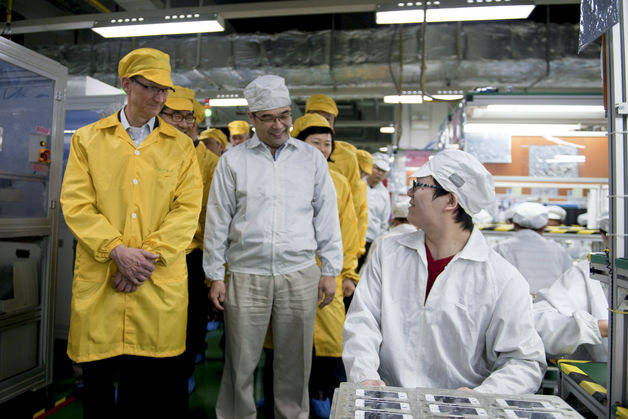
Apple CEO Tim Cook spent time with Foxconn employees during his visit to China.
Apple CEO Tim Cook has been spending some time in China this week, meeting with officials and even posing with fans at the company Xidan Joy City retail store. He also paid a visit to Foxconn’s new plant in Zhengzhou, where the company employs around 120,000 employs, some of whom are assembling Apple’s iPhone.
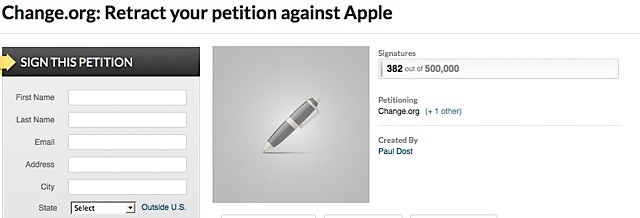
Mark Shields’ petition on Change.org sparked by Mike Daisey’s This American Life story earned over 250,000 online signatures and led to protests outside Apple stores across the country.
That doesn’t sit well with Paul Dost, who launched a counter petition after the TAL story was debunked. Cult of Mac reached out to Dost via email for the story behind the anti-petition petition.
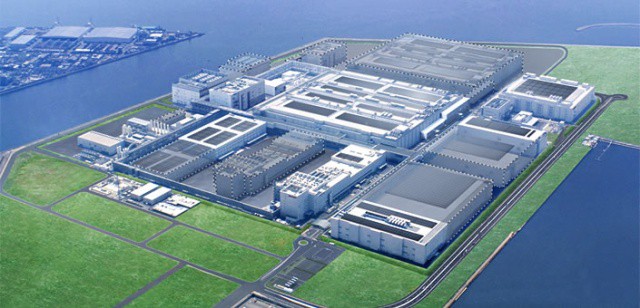
Foxconn, the company that assembles almost all of Apple’s devices —- plus plenty more for the likes of Amazon, Dell, Microsoft, and Sony —- has confirmed today that it has secured a 46.5% stake in Sharp’s giant LCD plant in Sakai, Japan. The deal is expected to help Sharp improve its performance, and could make low-energy IGZO displays a possibility for future iPads
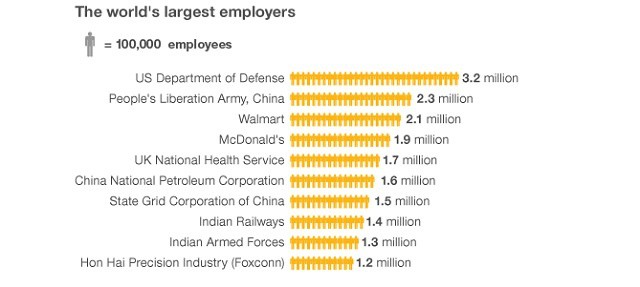
The Foxconn army is probably bigger than your country's army
Apple’s main supplier pal Foxconn is massive. With multiple mega-factories that can include up to 400,000 workers living on a cramped “campus,” it’s no surprise that Foxconn has quickly become one of the biggest companies in the world. They employ more people than Apple. Not only that, but they’re actually the 10th largest employer in the world, which is freaking enormous when you consider that the US Department of Defense is the world’s largest employer with 3.2 million employees. Foxconn, on the other hand, is just a few notches below them with 1.2million employees. Amazing!