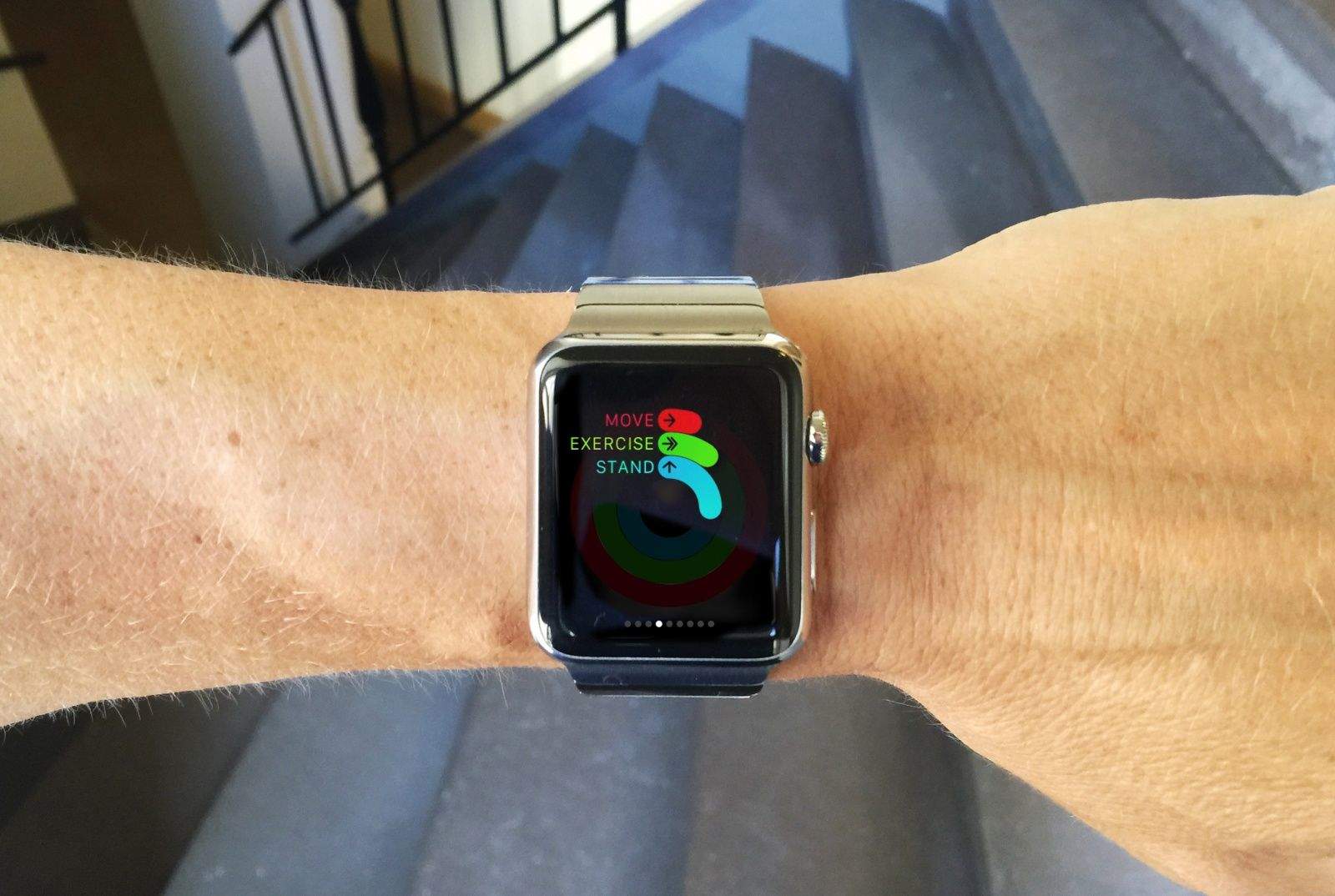
The Activity app on your Apple Watch suggests new “Move goals” each week, based on how many calories you burned the previous week. To test how this works in practice, I accepted every new goal my Watch suggested during the past 10 weeks.
The Move goals became progressively more challenging as the test went on. They nearly doubled, from 950 to 1,840 calories, and I could no longer keep up. I realized that Apple is following the Peter Principle, and that’s why I was always destined to fail.
Failure is inevitable — the Peter Principle
Lawrence J. Peter was a professor of education at the University of Southern California. His book, The Peter Principle: Why Things Always Go Wrong, was published in 1969 and quickly became an international best-seller.
Peter argued that “in a hierarchy, every employee tends to rise to his level of incompetence.” Employees normally receive promotions as rewards for performance in their current role, rather than because of their ability to perform their new role. So they keep getting promoted until they are no longer competent, and then they get stuck in that role.
It was intended as a joke, but The Peter Principle made a serious point, with implications beyond management theory. The Generalized Peter Principle states that “anything that works will be used in progressively more challenging applications until it fails.” It has been applied to everything from evolutionary theory to accident prevention. And it is equally applicable to the Apple Watch Activity app.
Apple states on its website: “Each week, Apple Watch can suggest a new daily Move goal for how many active calories to burn each day, based on your recent history.” In other words, your Apple Watch will repeatedly increase your Move goal until you fail to reach it.

Photo: Graham Bower/Cult of Mac
How I failed
I like to think I’m pretty fit. I live an active lifestyle. I go running every day, and I’m a bit of a gym rat. So I have to admit I didn’t anticipate that Apple’s Activity app would present much of a challenge. How wrong I was.
When I initially set up my Watch, it asked me my gender, age, weight and activity level, then suggested a Move goal for me of 950 calories a day. That proved to be too easy. I didn’t just close the Move ring, I frequently lapped it twice.
So my Apple Watch upped the ante, suggesting I increase the goal by 300 calories. I accepted. A couple of weeks later, it wanted to increase the goal by a further 130 calories. And so it went until we reached 1,840 calories. That’s a whopping 890 calories more the original daily goal.
At this point, I could no longer keep up. After a long streak of success, my Move rings were now left incomplete. Finally, on the 10th week of the experiment, my Watch sheepishly suggested that we change the goal to 1,660 calories. It politely did not mention that this was a decrease of 180 calories.
I felt deflated. Humiliated. I thought I could beat the Activity app but after 10 weeks, it finally had beaten me. And yet, wasn’t this always inevitable?
How are Move goals calculated?
I’m curious to know how Apple Watch suggests new Move goals. My admittedly unscientific experiment suggests that they are based on an average of recent activity, without consideration for what is a realistic and healthy long-term goal.
Apple says the purpose of the Activity app is to help you “live a better day.” But would I really have lived a better day if I had managed to burn the suggested 1,840 active calories? Is moving more always a good thing, regardless of how much you are moving already?
I wonder if there is any upper limit to the Move goals that Apple Watch suggests. I could not get any further than 1,840 daily active calories, but it would be interesting to know the highest Move goal Apple Watch has suggested to other Cult of Mac readers. (Let us know in the comments below).
Setting better goals
You do not have to accept the Move goal your Watch suggests. You can adjust it up or down at any time. Just launch the Activity app on your watch, force-tap, then select the “Change Move Goal” option.
Apple recommends that you pick a Move goal that “feels right for you.” But how should you decide this? Is it best to pick a challenging goal that you might not achieve, or a realistic goal that is motivational but might not encourage you to move more?
How much is too much? And for that matter, there is more to exercise than moving — strength and flexibility are also important, but these are not tracked by the Activity app’s rings.
Ultimately there are no right or wrong answers when it comes to setting your fitness goals. It is a very personal thing. But from my experience, you can’t simply leave it to your Apple Watch to decide for you.

Graham Bower is a designer, writer, fitness geek, and long-time Apple user. He is the co-host of Apple Core, a podcast about the history of Apple, and the developer of Reps & Sets, a fitness app for iPhone, iPad, and Apple Watch. Connect with Graham on Bluesky or at www.grahambower.com.


10 responses to “Why it’s impossible to keep up with the Apple Watch Activity app”
I personally found this when I started out but quickly rained in the activity app’s enthusiasm and have found it to have settled down now. I began with a 400 calorie a day target which I managed easily, even with a desk job and I soon received an uplifted target of 500, which I accepted. As it was early days with the watch and enthusiasm was high, I was very active and met my target every day. At this point the target suggested was 800. There was no way I was going to meet this so I stuck to 500 and have stayed since.
I would much rather have an achievable daily target and then be rewarded through the 200%, 300% and 400% achievements. I doubt the app would be half as motivational if the daily target were unachievable and likewise, what would be the point in those over achievement awards if you could never reach them.
Everyone is different, I guess a bit of thought and observation over how easy it is too meet your targets is the only way to find the right one for you.
I mostly just keep it around the standard 500. It’s easy to manage in case I can’t get much in in a day and not feel like a failure, but can be equally rewarding when I double or triple it.
My life wouldn’t permit this. My days vary considerably. One day I’ll have the time to double or even triple goal. Another day office demands, client business, etc make it impossible. I prefer a goal that is achievable most days. When I exceed that mark, great for me.
Move Goals suggested by Apple Watch work for me.
Mine stopped working correctly. I can log a run or bike ride and it does not show as activity anymore. I have been underwhelmed with the Apple Watch as a whole.
I misspoke. Its my ACTIVITY ring that no longer shows even after I track runs etc.
I’ve found the watch to be pretty inconsistent and unreliable anyway, when it comes to calories burned, and fitness tracking in general. Apple says the “Exercise” ring gives you credit for any activity that raises your heart rate, even if you’re not logging an actual workout. The other day I spent 2 hours mowing the lawn with a little push mower and it said I had done 2 minutes worth of exercise. The next day I decided to try an experiment – I was only doing a little light work around the house, interspersed with a lot of sitting on my ass. I decided to run the Workout app and log a good chunk of my afternoon as an “other” type workout. The watch gave me credit for over 2 hours of exercise and said I burned 750 calories in the process. On other days I’ll do insane workouts in the gym. My Fitbit Charge HR will tell me my hear rate is at 109 while I’m lifting weights, and the Apple Watch will tell me it’s 70. If it can’t get that right, it really has no clue how many calories I’m burning.
So I’ll just say I think the whole fitness tracking portion of the watch is pretty flaky. A great thing to have if it works and you can trust the data, but in my experience you can’t. So for anyone having trouble hitting your Move goal, just be generous to yourself, and anytime you’re walking around or spending time on your feet, use the Workout app to log it. Is it cheating? Or is the watch cheating you out of the calories you’re burning now?
I don’t think that the apple watch fitness part it for elite fitness types. It’s for ordinary people. Even thought people these days go crazy on the fitness trend, you are simply not the right type for this app. You need a professional watch like a garmin. Also you start of writing that the watch suggested 950. Is this number correct. Because it does not add up with the rest
I wonder if it is more accurate than Fitbit. Last time around it calculated up to 4,000 calories but my walk distance was set to 2 feet back then. I do elliptical machine 30 minutes a morning and night personal training 30-60 a day.
Don’t really understand this article. It does it’s job by keeping you going to your personal limit. That’s a good thing. You can scale it back without feeling like a loser.