A blaring megaphone is an effective way to get people’s attention. But what if the people in the room speak a multitude of languages?
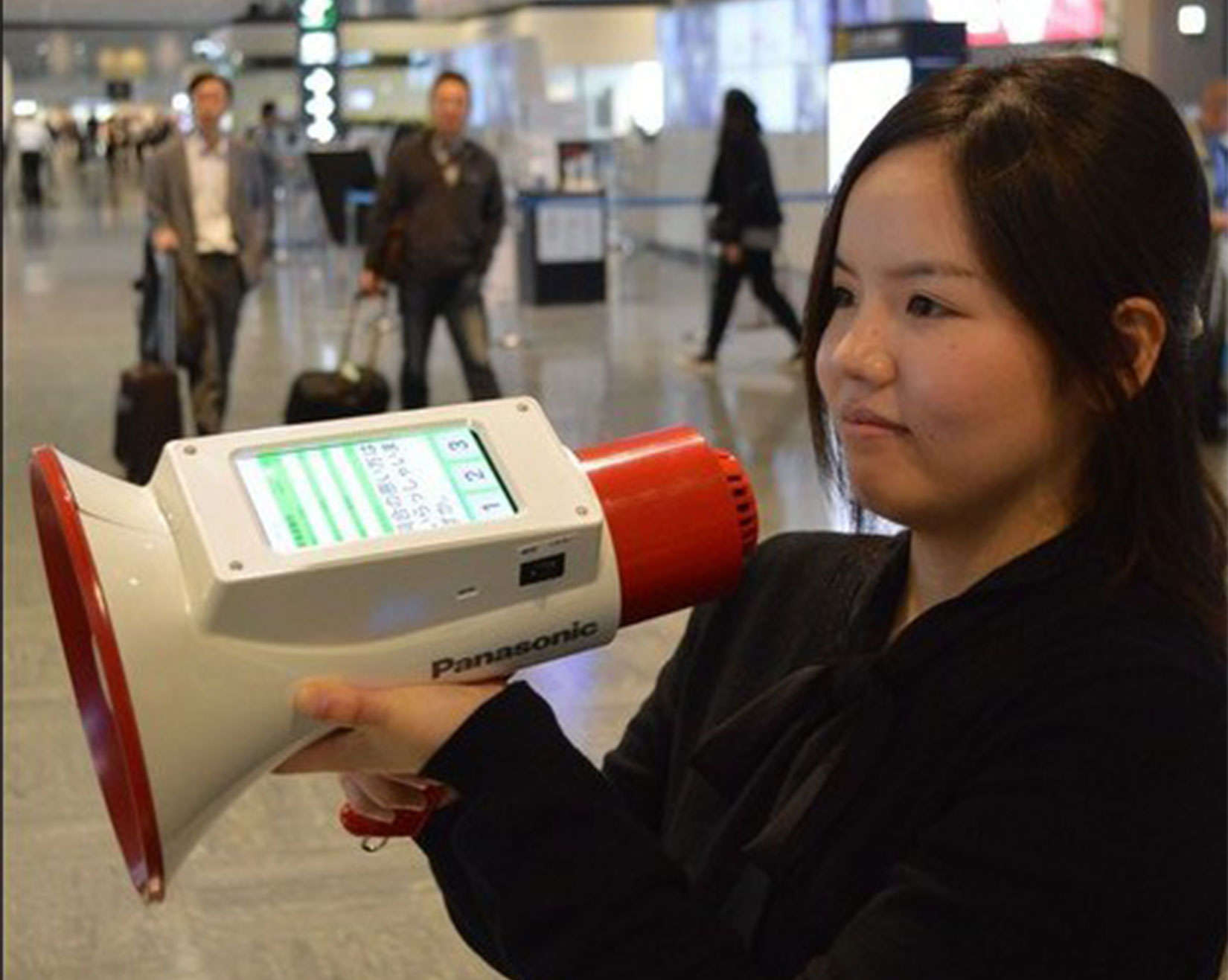
A Tokyo airport is trying to solve the language gap with international travelers with a megaphone that lets the user communicate in three different languages. A worker speaking one of three languages, Chinese, Korean or English, can have their message broadcast in the other two.
Made by Panasonic, it is called a Magaphoneyaku. Yaku means translation.
Narita International Airport is testing the smart megaphone after it had problems communicating with stranded travelers about food and water during an airport flood in 2014, according to the website SlashGear.
A picture published by the Mainichi Newspapers shows an airport worker with what looks like a traditional megaphone that has a housing on top for a tablet-like computing device. The translating function is reported to be similar to how a translating app works on a smartphone.
A video here shows airport officials demonstrating simple transportation instructions with the megaphone.
Source: SlashGear

David Pierini is a former newspaper writer and long-time photographer. Considered a luddite by most of his friends, they did not believe him when he broke the news that he would be writing for a technology website. He is fascinated by human nature and would love to cultivate stories about the people driving the tech bus. Reach out to him at [email protected].


One response to “High-tech megaphone will translate your speech in real-time”
It will only work with predefined phrases and sentences. There is not a single piece of tech on the planet that can actually translate in real time. Heck, translation software even fails at normal text. And it will remain like that for the next decades to come.
Software can somewhat work between languages that are related and have many similarities. Take German and English. Translation software tends to get the gist of sentences across, but even then the grammar it produces is abysmal with more complicated phrases. Now, if you try the same with, let’s say from Japanese to English… The results of that are basically gibberish. I’ve tried a few software solutions just for shits and giggles and the systems all stumble so brutally over even the most basic grammar, it’s actually quite hilarious.
It would be more efficient to have staff that knows various languages, which they have to do anyway, because if passengers have follow up questions, this system will be completely useless.