Top stories

Stolen Belgian iPhones Starting To Appear on Russian Black Market

Batches of stolen iPhones snagged during the “Great iPhone Heist” in Belgium earlier this month are showing up on the Russian black market.
Two weeks ago, thieves made off with 3,000-4,000 iPhone 3GS from a Belgian warehouse belonging to wireless carrier Mobistar. The haul was valued at $3 million. Now the stolen iPhones are being offered [...]

iPhone Worm Creator Snags App Dev Job

The 21-year-old Australian guy who got chewed out by his parents for launching the first iPhone worm landed a job with an app company.
Ashley Towns wrote Ikee, calling it an “experiment that got out of hand,”  a worm that  switched iPhone wallpaper for an image of 80s pop singer Rick Astley. Astley, who sang the [...]

Apple Opens iTunes LP and Extras to Developers

Never let it be said that Apple doesn’t keep its promises. Six weeks after announcing it would open up its iTunes LP file format to all developers and labels, Apple delivered this morning with specifications and resources for both iTLP and its DVD-like iTunes Extras. All of the contents are here. The company also through [...]

Let’s Give Thanks This Thanksgiving — For Steve Jobs

Techcrunch’s Michael Arrington has written a nice essay giving thanks this Thanksgiving — to Steve Jobs.
Arrington rightly points out that our world would be very different if Jobs hadn’t returned to Apple 12 years ago. Mobile phones would still be horrible, computers would still be ugly and the music industry would have collapsed.
“… What would [...]

Phishers Lure MobileMe Users With Fake E-mail

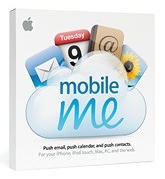
mobileme_box.pngUsers of Apple’s online MobileMe service are once again the target of false e-mails sent by phishers attempting to persuade Mac users to divulge private information.

The e-mail purports to come from Apple, offering some friendly assistance with renewing MobileMe subscriptions; all that’s needed is your credit card information.

“Attempts to charge your credit card have failed,” the false e-mail mourns.

While the warning to never click on links (even in legitimately-looking e-mail) is often heeded, malicious hackers rely on the minority of Mac users that dismiss such security fears.

This isn’t the first time users of Apple’s online service have been the focus of phishers. In April of last year, another “Apple” e-mail was sent warning MobileMe users of a snag in billing.

“We were unable to process your most recent payment. Did you recently change your bank, phone number or credit card?” hackers asked.

This latest phishing attempt comes as Apple tries to retain Windows-based MobileMe users. Apple announced Wednesday it improved MobileMe’s syncing capability for Windows Outlook users. The update of MobileMe’s Control Panel for Windows follows news that Microsoft is readying a rival service, MyPhone.

About the author

Ed Sutherland

Ed Sutherland is a veteran technology journalist who first heard of Apple when they grew on trees, Yahoo was run out of a Stanford dorm and Google was an unknown upstart. Since then, Sutherland has covered the whole technology landscape, concentrating on tracking the trends and figuring out the finances of large (and small) technology companies.


Email the author | Read more posts by Ed Sutherland.

2 comments

    Wow, why do people assume that if they aren’t being asked for their credit card number they are not being scammed. How do we get the word out that users need to protect all their personal information? And then on the other side of the coin—how do we get social networks, email and mobile applications to jump on the same train as websites and offer robust security measures that online retailers do. Are they so confident of keeping their user-base, is there no competition in the market to drive them to upgrade security. Online retailers have had to continually upgrade encryption and security (in order to keep their customers) and most are implementing the highest standards of security through Extended Validation SSL, which btw is impossible for phishers to copy. Therefore, the solution is two-sided, educated the users, and higher online security measures all round.

    On a final note, Valentine’s Day is tomorrow – practice caution before clicking all those e-cards. Phishers are extremely cleaver about using psychology to exploit and coax user-error.

    email me back im a loner

Buy Inside Steve's Brain Buy from Amazon.com Buy from Barnes & Noble