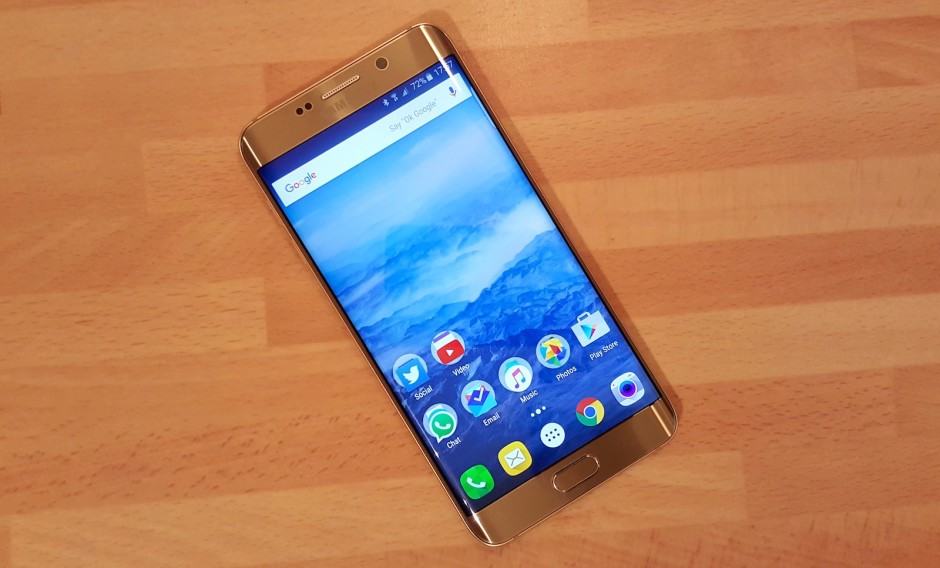
Building a smartphone with modular components that could be quickly swapped out for different parts sounds like a really cool idea, but Google is ready to admit no one actually wants one.
The Alphabet Inc. company has reportedly suspended Project Aura, its modular smartphone concept that it hoped would help solidify it as a hardware company after striking out with Google Glass.
Google sounded like it was making a big push with Project Aura at its developer conference in May, where it revealed a developer unit would be made available this fall. Reuters reports that Google no longer plans to release a phone itself.
The tech behind Project Aura could make its way into other smartphones through licensing. Motorola and LG both launched smartphones with simplified modular capabilities this year, but they’re not exactly flying off shelves.
Now that Project Aura and Google Glass are dead Google can now focus more on its Chromebooks which has been its most popular hardware project thus far.

Buster Hein is a freelance writer who lives in Phoenix, Arizona. Twitter: @bst3r.

10 responses to “Google suspends modular smartphone project”
Glass failed because it was barely available to the general public and it still had a developer kit price tag. If they actually sold Glass to the public and brought the price down to $500 – $800 it might have actually done well enough to continue production. Not to mention it being a tease for YEARS.
Richard, you are being WAY too optimistic on Glass – the product was sub-par in quality and performance and even at $ 500-$800 would have been way overpriced. BUT, the BIGGEST reason why it would never take off – really take off has NOTHING to do with tech or features, it’s that it goes AGAINST human nature… people want to get away from Glasses and being called 4 eyes not towards it… that’s the real reason it was bound to fail – the reason smartwatches have done much better [and yet not as well as one might have expected] is that it is more within the human habit [and yet some younger generations don’t wear watches and the 30-40 generation started to stop wearing watches because their phones did that just fine, but at they remembered what that felt like at least so it wasn’t foreign to them…
I have to disagree with you on the “human nature” thing, especially given all of the interest in VR. I don’t think people would wear Glass constantly, but they don’t need to for it to be a successful product. Even now there are TONS of use cases! At the right price point every service technician who ever needs to access a manual while making a repair would have one – they wouldn’t wear it all the time, probably just while they’re working. How about nurses? They could wear them and monitor patient data. I know lots of people in different industries that bought Glass and built applications prepping for Google to release a product but had to scrap plans because Google bailed without going to market.
I could go on, but the point being Glass could have been a hit. Would it have been as big as Smartphones? No, but it doesn’t need to be.
Time to enjoy a tasty bowl of claim chowder. This was a dumb idea when it was presented. Die hard fans attempted to claim otherwise. Now that Google has come to the same realization, I wonder what those same forum commenters are saying now.
On paper, it sounds like a novel idea. However, in the end, a phone is a well balanced machine that is not simply a collection of stock components. The SoC’s ISP should be designed and adapted to the camera hardware, the software should be optimized for the hardware, etc. The frankenstein like mess Project Ara would have been would have never worked or at least it would have never been practical or optimal.
Steve – completely disagree with you and that just shows that both Google didn’t do any good marketing behind it nor did they really believe in it… to be honest, I always thought they had bought the tech to bury it later which is what they are doing… and it also shows you don’t understand its potential… nor a user’s need/desire to make it their own… by configuring it the way they use a phone… as for a phone is a well balanced machine that is not simply a collection of stock components – yeah but no… on paper that argument sticks but with the slight amount of ingenuity and thought process you solve that in 2 seconds flat and get all of the benefits of the platform.
No, it shows that you, like Google, didn’t really think this concept through. Yes, when you first here about the concept, it seems pretty cool. However, when you think it through, it just doesn’t work and it will never be better than a well designed / engineered alternative. It took Google a while to figure that out as well. Try as they might, seemingly cool ideas can’t always be made into really cool products.
I agree Steve – the appeal is pretty limited. I think very few ‘average consumers’ would go for it.
This concept has been tried before in different products and the problem usually comes down to the company releasing the product, then saying “okay, now other companies make stuff for our device!” … And it doesn’t happen.
Anybody remember the Compaq iPaq with it’s modular design via sleeves? How about the Handspring Visor with it’s Springboards? This device takes the concept further, but it’s the same thing.
Biggest reason though? It’s totally not sexy. Like it or not, consumers go for looks in a phone.
Computers are so complex, and nowadays, so finely tuned for optimal performance that if you change one component subsystem, you are almost sure to cause imbalances across the device’s component subsystems that basically ruin the way the whole device runs. Anyone who has tried upgrading their PC’s old Pentium chip twenty five years ago knows about this particular frustration. Why Google thought smartphones are immune to this problem is completely mystifying.
I still think Project Ara was another enticing hole in the ground that Google, because they are Google, the Google of the barges, could not resist filling with stockholder’s money.
That’s the difference between trend setters vs media mongering companies…Google wants to be in news always…that’s why they keep doing these things…where as Apple is in a different league…we all know the state of Android before iOS/iPhone launched…and even Google engineers openly agreed they had to re-engineer the OS… of course they are the best in cloud and search…but it stops there.