This is my last chance to say something before the great and terrible Steve holds his tablet aloft (and even then, rumormongers might have beaten him to the punch), so let me give you a bit of a long-view perspective, something usually left out when we’re discussing whether we’ll see a 10-inch or 11-inch LCD panel on the device.
You see, I’ve been thinking a lot about Apple and its insane run of success over the last nine years. Consider this: In 2001, Apple’s revenue was about $6.5 billion. In 2009, that revenue was $42.3 billion. Essentially, the company grew by more than 550 percent in eight years.
How exactly is that possible? Was it the great products? Partly. Great leadership? Sure. Killer marketing? No question. But more than all of those combined, the secret to Apple’s success was that it defined and followed the right strategy and the right era. Steve Jobs is king of the world right now because he hit on the idea for the digital hub.
Steve Jobs’ digital hub strategy
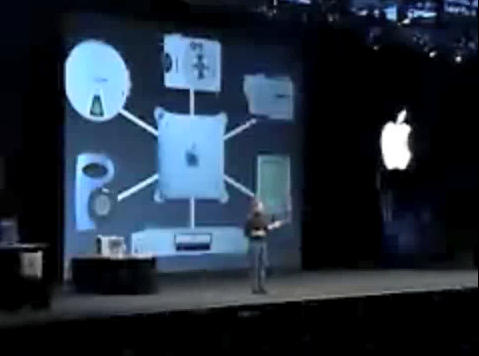
If you’ve never heard this term before, or its meaning has faded, take a look at the video below. It’s the most important moment in the modern era of Apple. It’s not the day the iPod was announced, it’s not when the iPhone descended from the heavens. Instead, it’s the day that Steve Jobs defined what computing would mean in the next decade.
It was January 9, 2001. It was the silver anniversary of Apple, and the newspapers were full of stories about the demise of the personal computer. Lots of digital devices had emerged that were tailored to single tasks that they did really well, from digital cameras to DVD players to DVRs to CD players to camcorders to PDAs.
Many thought that we would replace our multi-use, but often inefficient, computers with a bunch of highly effective single-task devices. But not Jobs. As he made clear, the strength of a computer was its ability to control and integrate all these many digital devices. A Mac, in short, could serve as the digital hub that unites those disparate points in your digital life. You can see the key slide at around the five-minute mark of the video.
Apple’s digital hub explained: A roadmap to the future
At the time, most people assumed that this was a rather elaborate explanation for why Apple was launching iTunes, iDVD and DVD and CD burners. But as the ensuing nine years have shown, it was actually more or less a roadmap for everything Apple would do in the near future.
We’ve seen software for nearly every spoke on that hub, from iPhoto to GarageBand, but also hardware. The iPod knocked off both the MP3 player and the CD player on the digital hub map. The iPhone displaced the Palm Pilot. The Apple TV tried to take the place of the DVD player, though it didn’t really succeed.
You could say that the iPod touch is fighting against the Nintendo DS and PlayStation Portable, neither of which were in the old hub map but surely could have been had it been made a little later. One could even make the argument that the iPhone 3GS made an effort to get rid of the humble camcorder — or that its successors will.
Macs, software and hardware: A potent combination
By focusing its innovation in two areas — hubs (Macs) and spokes (software and hardware for digital lifestyles) — Apple ran the table over the last decade, and made a ton of money in the process. Up until this point, Jobs’ focus had been on reenergizing the existing Apple fanbase with the iMac and other nicely designed products. But things didn’t take off until the company turned its gaze toward the ecosystem.
And what’s maybe most amazing about this is that Jobs told all of his competitors that this was exactly what he intended to do. If you go back to the Apple keynote video above, you see that Jobs publicly laid out the entirety of the digital hub strategy. Anyone could have executed it, but only Apple did, and the rest of the industry plays catch-up.
Apple’s tablet: A new digital hub
All of which brings us to today, and the tremendous speculation about the tablet. For the first time in nearly forever, Apple is introducing a product that doesn’t seem to fit into the digital hub as it has been. It seems focused on reading, web browsing, music, video, games and probably healing the lame and the sick.
Though it might be seen as a replacement for the Kindle, the e-reader market is weak enough that it would be shooting fish in a barrel. And this thing will be great because it will be new.
The longer I look at Jobs’ map, all I can conclude is that it doesn’t fit on one of the spokes of the digital hub because it isn’t a spoke. It’s a new hub, and the first effort to replace the PC since, well, the Mac. Mark my words, this won’t be an accessory to your computer — it’ll be the new center of your digital life.
Just wait until you see what it can do when hooked up to your TV.

Pete Mortensen is a design strategist for consulting firm Jump Associates and the co-author of Wired to Care: How Companies Prosper When They Create Widespread Empathy, a book and blog that are significantly more interesting than you might initially think. Pete’s particular Apple avocations are both around design–interface and industrial. Follow him on Twitter!