Mobile menu toggle

The Difference Between A Mac And PC Could Kill You In Medical Imaging

By

Never mind Touch ID, this could be the best way of unlocking future phones.
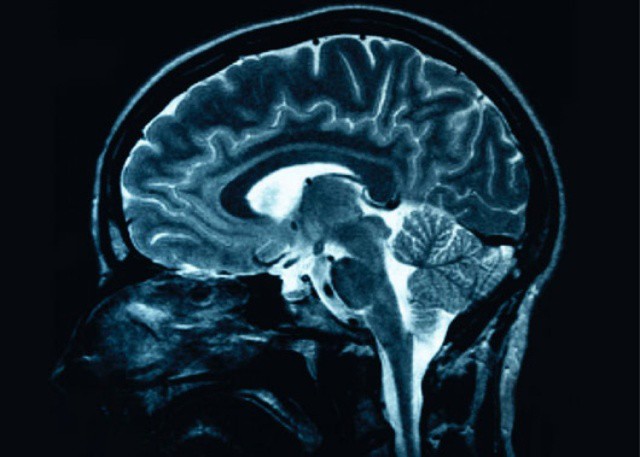
This brain scan is measured differently on Mac and PC.

A team of researchers have discovered that the software used to analyze images of the brain gives significantly different results depending on whether it’s used on a Mac or PC. It means the measurements gathered on one machine can be up to 15% different than those gathered on another — using exactly the same images — which is a serious issue that medical professionals and developers need to fix… fast.

The implications of this can be hugely damaging. As an extreme example, you could visit one doctor who uses a PC who tells you have a brain tumor the size of a pea, while another doctor running a Mac could tell you it’s the size of a marble. That’s how serious this issue is, and why it needs to be fixed as quickly as possible.

The findings were obtained by a team of German researchers who took data from 30 brain scans and analyzed them using a piece of software called FreeSurfer, which is, according to Gizmodo, a major medical image analysis program which can be used to measure parts of the brain.

They ran this software on machines running Windows, and machines running Mac OS X, and found that not only did these two operating systems throw up different results, but that they sometimes differed by up to 15%!

Across most sections there was at least a 2-5 percent variation in the answers. But in the parahippocampal and entorhinal cortex, the answers diverged by as much as 15 percent. A 15 percent variation just because of a Mac OS update.

The worst thing about this is that it’s not clear why there’s such a huge difference, and what needs to be done to fix it. Neuroskeptic insists that the developers behind FreeSurfer should not be blamed, because — wrongly — similar packages are likely to be subjected to exactly the same issues.

Regardless of whose problem this is, it needs to be fixed.

Source: Neuroskeptic

Via: Gizmodo

  • Subscribe to the Newsletter

    Our daily roundup of Apple news, reviews and how-tos. Plus the best Apple tweets, fun polls and inspiring Steve Jobs bons mots. Our readers say: "Love what you do" -- Christi Cardenas. "Absolutely love the content!" -- Harshita Arora. "Genuinely one of the highlights of my inbox" -- Lee Barnett.

8 responses to “The Difference Between A Mac And PC Could Kill You In Medical Imaging”

  1. flyoverland says:

    So, which one was correct, or more correct? 

  2. Andre Guerra says:

    I never really imagined how disturbing ignorance can be. I have to say it, this is such a nonsense. For starters: Brain scans? Using which devices? MRI, PET, CT? There are different technologies, companies, etc. Plus, images are obtained using raw statistics calculation, which has nothing to do with OS in general. Every company usually sells equipment with the respective software and some of them provides hardware as well. 

  3. Shane Bryson says:

    I never really imagined how disturbing ignorance can be. I have to say it, this is such a nonsense. For starters: Brain scans? Using which devices? MRI, PET, CT? There are different technologies, companies, etc. Plus, images are obtained using raw statistics calculation, which has nothing to do with OS in general. Every company usually sells equipment with the respective software and some of them provides hardware as well. 

    In a benchmark test like this, the only difference would have been the OS.

  4. lango6 says:

    The reporting here leaves something to be desired.  A quick review of FreeSurfer shows that there is no Windows version unless running a virtual Linux system on Virtual Box or some other commercial virtualization product.  So, I would look to the performance and accuracy of the graphics and math libraries in the virtual abstraction layers to be sure a small error wasn’t skewing the results.  Since OS X is a native environment, I’d be less suspicious of it as providing “incorrect” results.

    As to the ignorance comments, the type of scan is not so important than the fact that an image is produced that is analyzed by FreeSurfer.  That image is likely static and the variations are being generated by the routines in FreeSurfer that look at the image.  For my money, I’d be skeptical of the virtual environment “double-calculating” the results (in the host and the client OS).

  5. lango6 says:

    To refine my prior comment, the image type processed by FreeSurfer is MRI and it works against the standardized data file, not an image as I conjectured.  Also, the primary software used for analyzing the MRI data is the MINC toolkit which could be impacted by version inconsistencies with the host OS (and with virtual clients).  I was prompted to look into that by the reference to the changes due to an OS X update.  While there is a Win32 version of the MINC toolkit, FreeSurfer does not use it since no Win32 version of FreeSurfer is produced.

  6. antoniofonseca says:
    There is a well-defined standard for medical imaging software called DICOM: http://medical.nema.org/
    You should inform yourself better before you go spreading misinformation and causing fear in people.
  7. ForgotMyOrange says:

    It’s not clear to me how this medical imaging difference could kill you?
    Hyperbole?

    It seems irresponsible to come up with this level of implied gravity but then to provide scant to no details.

    I checked the Developer’s Guide for FreeSurfer and the commands required don’t come with Windows. In other words, you can’t run it on Windows.
    The only way it might even be remotely possible to get the source compiled on Windows is to download a whole bunch of tools (compiler/scripts), any one of which could have bugs that could cause the problem talked about.

    You need to provide a link to those German researchers you mentioned – they must know enough details to turn this story into something more than an April fool’s joke gone wrong.

  8. JustLacksZazz says:

    This article is absolutely incorrect and obviously written by someone with little to no background in imaging or MRI analysis. The only issue that this Mac vs PC imaging discrepancy raises is if a researcher were to switch operating systems in the middle of their analysis.

    On top of this, the images don’t look physically different across systems; it’s just that cortical thickness analysis will differ slightly with programs such as FreeSurfer (these are automatic analyses ran by computers with little to no user input – they are used solely for research). You also completely left out the part where the article describes that the differences between patient and control groups remains constant regardless of the OS used. For example, a researcher finds a 45% difference between superior frontal lobe thickness between controls and patients with schizophrenia using a Mac; another researcher comes along and performs the same analysis with the same images using a PC – he/she finds that the thickness values of his images are 15% larger but there is still a 45% difference between the groups in question. Those results are not harmful nor invalid. If a researcher came along and performed half of the analysis with a Mac and then switched to a PC, this 45% difference could not be attributed to the difference between patients and controls as the OS switch creates a major confounding variable.

    Finally, FreeSurfer is used for research purposes only and would never be used to diagnose a patient. This would be performed by a trained radiologist with years of experience (something so important would not be left to a machine to spit out numbers – people use their eyes to diagnose these things). These idiotic and misinformed articles do nothing but hinder progress in very important areas.

Leave a Reply