Apple executives voiced confidence in iPhone sales for the second quarter ending in March, according to an analyst Thursday.
Bernstein Research analyst Toni Sacconaghi told investors Apple’s top executives “appeared confident” after speaking with operations chief Tim Cook, chief finance officer Peter Oppenheimer and product head Phil Schiller earlier this week.
Apple’s confidence ahead of its second quarter guidance is bolstered by news Mac inventory is “below target level,” action that could increase Mac growth, according to Sacconaghi.
The iPhone was also a reason for Cupertino to be happy. The executives were “most bullish” about its handset business and the possibility of increasing market share.
Ted Nugent wants to put a little “Love Grenade” into your iPod on Valentine’s day. There are three of his tracks on the V-day list, along with a little obligatory Otis.
The Motor City madman says: “Picking the right mood songs and placing them in proper order could change your destiny, and set your ship of life sailing on that stormy sea known as matrimony.”
Here’s The Nuge’s V-Day Playlist:
1. “Wang Dan Doodle” — Howlin’ Wolf
2. “The Flame” — Cheap Trick
3. “Whole Lotta Rosie” — AC/DC
4. “Wango Tango” — Ted Nugent
5. “When A Man Loves A Woman” — Percy Sledge
6. “I’ve Been Lovin’ You Too Long” — Otis Redding
7. “Feels Like The First Time” — Foreigner
8. “My Love Is Like A Tire Iron” — Ted Nugent
9. “Brown Sugar” — The Rolling Stones
10. “Wang Dang Sweet Poontang” — Ted Nugent
There are relationships where saying “Wang dang, what a sweet poontang a shakin’ my thang as a rang-a-dang-dang in the bell” says it all…
Nugent is also promoting a “Valentine’s Couple Hunt” where you and your sweetheart can spend February 14 stalking wild boar or exotic rams “using guns or the preferred method of the god of love.”
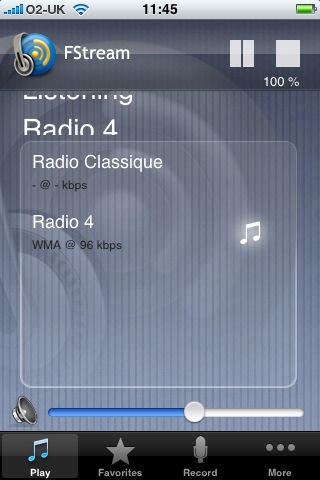
I’m one of those freaks who much prefers listening to radio than watching TV. Consequently, I like to have radios around me. I have one in my office, one in the kitchen, and one in the bedroom. I really need to get hold of one for the bathroom.
It’s not exactly Shazam for fonts, but WhatTheFont is a pretty cool new app in the AppStore that will identify or make pretty darn good suggestions for identifying almost any font you find in the wild.
Using the iPhone’s built-in camera, users can photograph the text in question (or choose an existing image from the camera’s photo albums). The app allows you to crop the image, focusing on only the important parts before uploading to the WhatTheFont web-based identification service.
After confirming which characters are used in the image, the app provides a list of possible matching fonts, which users can either e-mail a link to a MyFonts page with more info on that font, or open the page in the iPhone’s built-in Safari web browser.
iPod Touch users can even get in on the action by using any image saved from apps such as Safari and Mail.
The ever-amusing Dr. Macenstein has unearthed a pitch for a new Apple advertising campaign meant to counter the growing prevalence of lawsuits charging the company with misleading consumers.
The new angle would show real-world Mac users and how they use their Macs in the real world. Simple is brilliant, eh?
In this test pilot, author/evolutionist Richard Dawkins uses his PowerBook to read hate mail.
Om Malik, a notable technology blogger, gave up on his iPhone Wednesday.
Citing ongoing and ultimately insurmountable frustration with AT&T’s network, Malik decided to ditch the iPhone and opt for a T-Mobile BlackBerry Curve 8900 for email and SMS. “I also signed up for a plain-vanilla voice service from Verizon Wireless. And I already have a 32 GB iPod Touch for surfing and music,” he said.
Admitting all that is probably not an ideal solution, Malik – wiith over 1800 friends on Facebook and nearly 20,000 followers on Twitter – found solace in the fact his new devices “can all be charged using the USB port of my Macbook, thereby obviating the need for extra chargers.”
Given that his decision rested solely on the deficiencies of AT&T’s network in the San Francisco Bay Area – ungodly stretches of time “searching” for the network, slow download speeds of web pages, problems with email, static, dropped calls and shoddy call quality – and he professed love for the iPhone, it’s a wonder he didn’t just jailbreak it.
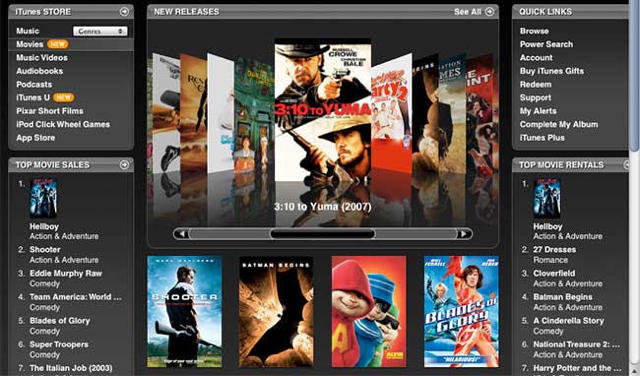
Apple may be putting the finishing touches on a new streaming video service that would allow iTunes users to access purchased video content without the need to download and store it on a local machine, according to a report Wednesday at AppleInsider.
iTunes Replay would let users stream content such as movies and TV shows directly from Apple-owned servers in a manner similar to Amazon’s Video on Demand (formerly known as UnBox) and the Instant Watch service from Netflix, and may also improve the experience of the company’s Apple TV set top box, allowing users to stream purchased media directly from Apple’s servers without syncing or copying files between Apple TV and a computer running iTunes.
The report is unclear whether Apple intends to move toward a “streaming only” distribution model for the typically large files created by video content, or if iTunes Replay would merely represent an option for consumers with fewer concerns about retaining physical control of their purchased media content (and less storage in which to keep it).
To the extent that media distributors such as Apple, Amazon and Netflix embrace the streaming distribution model, consumers may find relief from the need to maintain ever greater storage capacity for growing media libraries. Though the trade-off – and guaranteed consumer dissatisfaction – will arise over bandwidth limitations that already make even a YouTube-watching experience sub-optimal at peak demand times in some places in the US.
After a round of saber rattling that left Palm and Apple hurling threats of patent infringement lawsuits, the Sunnyvale, Calif. company Wednesday attempted to smooth any ruffled feathers.
Palm had “no issues with Apple” patents and is “very respectful of other companies” patent portfolios, Palm chief Ed Colligan told an audience at the Thomas Weisel Technology & Telecom Conference.
The comments follow a week of verbal sparring between Palm and Apple over the upcoming introduction of the Pre, a touch-screen handset from the Treo maker.
Users of Apple’s online MobileMe service are once again the target of false e-mails sent by phishers attempting to persuade Mac users to divulge private information.
The e-mail purports to come from Apple, offering some friendly assistance with renewing MobileMe subscriptions; all that’s needed is your credit card information.
“Attempts to charge your credit card have failed,” the false e-mail mourns.
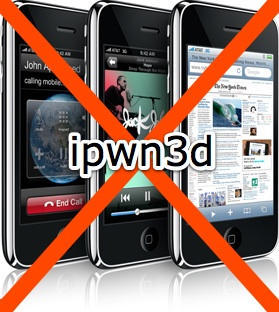
If you’re one of the many out there who lives wild and free with a jailbroken iPhone, this is a big week for you.
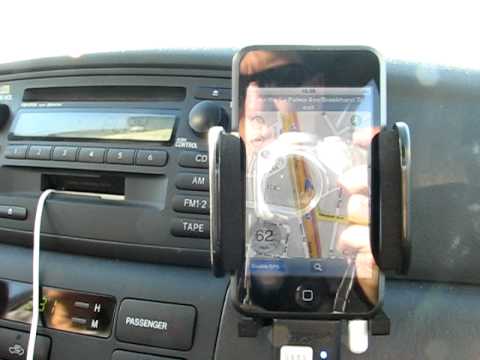
First we reported on the availability of some serious porn for you, and now it appears you can have turn-by-turn voice navigation, courtesy of the dev team at xGPS.
xGPS uses Google’s map data and driving directions, adding a real-time navigation readout and a voice engine.
If you expect you might lose your data connection during the drive, you can also select a map area to download ahead of time.
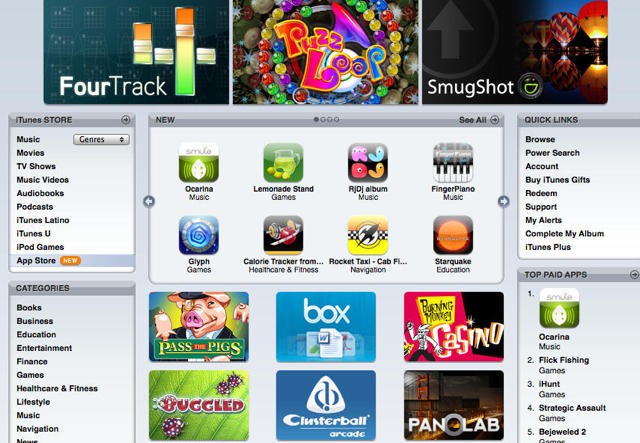
Apple’s App Store has reportedly crossed the 20,000 download mark, suggesting the popular site has added 5,000 iPhone and touch applications since mid-January.
Apple refused to comment on a report the figure was reached less than a month after the Cupertino, Calif.-based company announced 15,000 App Store entries. The update was reached Tuesday, according to the Apptism site.
As of Wednesday morning, the App Store held 20,410, according to Apptism.
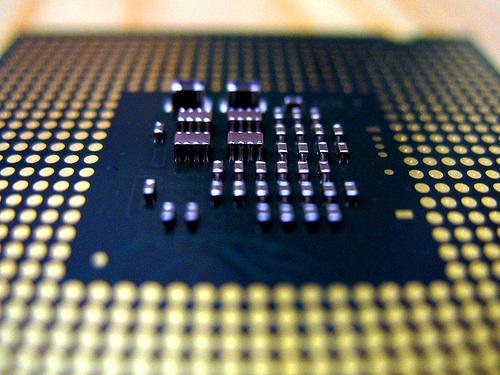
Computer chip makers saw worldwide demand for microprocessors fall 17 percent during the fourth quarter – a dive that is expected to continue in 2009, a market research firm said Wednesday.
“After hinting at a decline last September, the market fell off a cliff in October and November,” IDC research director Shane Rau told Macworld.
Rau said microprocessor shipments fell 17 percent during the quarter and more than 11 percent compared to the same quarter in 2007.
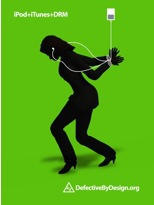
Although much has been made about Apple’s decision to drop copy-protection from iTunes Plus, the option still keeps music lovers tethered to a limit range of media players, according to a Wednesday report.
Unlike unprotected MP3 files, iTunes Plus creates songs that won’t work on devices requiring Microsoft’s Windows Media Player, the Chicago Tribune reported.
In a survey of compatibility of iTunes Plus purchases with a number of non-iPod music players, Chicago Tribune’s Eric Benderoff found iTunes Plus songs use the AAC file format.
“The problem is that Apple’s ‘unprotected files’ are in AAC format, which Windows Media player does not support,” Benderoff wrote.
Oh, the fun you’ll have with Fracture. Created by Visuamobile, it finally gives you the chance to find out what it would be like to smash your iPhone to pieces – without actually doing so.
I very nearly put this in a WTF iPhone Apps Of The Week post, but then I thought – actually, no. This might be quite entertaining, especially for the kids. My son loves smashing stuff up (I blame Power Rangers, myself) so I think he’ll get a kick out of destroying my iPhone. Over and over again.
Fracture is, as they say, “Coming soon” on the App Store.
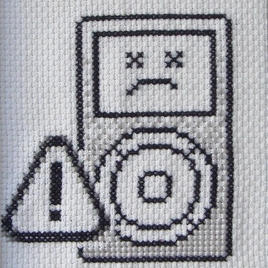
A few Apple fans have turned their love for the company, mixed with moments of frustration, into a (distracting?) hobby with cross-stitch projects.
One crafty fellow, who goes by the name Benjibot, started when his 4G iPod conked out. He needled out his pain by creating the following “dead iPod” cross stitch.
He has a few other clever Mac-related projects for sale in frames on Etsy that highlight some of the more ominous icons, including the bomb.
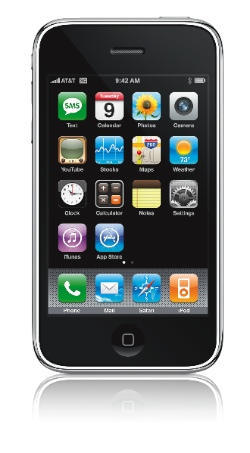
Speculation that Apple will unveil an inexpensive iPhone was revived Tuesday. RBC analyst Mark Abramsky expects Cupertino will unveil a $99 iPhone sometime this summer.
Abramsky, citing “checks”, told clients the handset is likely to eschew 3G, GPS and include a $15 data plan. A low-end iPhone could hike Apple’s share of the smartphone market to nearly 20 percent, according to one report.
While a $99 iPhone could mean handset sales for Apple, it could also cannibalize iPhone and iPod sales. The downshift might force Apple to sell triple the number of iPhones to take up the slack, according to Abramsky.
Maybe I’m just out of touch with college-level humor today, because the animated dig at iPhone produced by the Flash technicians at College Humor strikes me as, well, kinda like a skit on SNL – pretty good idea; too long by a lot.
If you manage to sit through it to the end, though, the last 5 – 10 seconds is pretty funny.
Photo: Cishore/FlickrIt’s the best of times; it’s the worst of times for Apple, one analyst wrote Tuesday. Apple’s unique products prevent them from being victim of the economic undertow, but their premium prices could result in flagging sales.
Walking that tight-rope is Kaufman Brothers’ analyst Shaw Wu. Wu told clients Apple hasn’t fallen victim to the economy like PC makers because of the Cupertino, Calif.-based company’s well-maintained elitist image.
A number of technologies, ranging from PCs to cell phones enjoy a commodity status. In a poor economy, companies fear being “commoditized.”
Yes, it’s true. There is a man who swapped his iPhone for a Blackberry. In some respects, I greatly admire Ben Ackerman. Not because of his choice of smartphone, but because he was brave enough to own up to his change of heart in public. Not many self-confessed members of the “giant Mac fanboy” club would be prepared to do that.
But Ben has. He prefers the Blackberry, as he explains in a slightly contradictory post on his blog.
I say “contradictory” because Ben is clearly caught between a rock and a hard place. He’s the first to admit that the iPhone:
(a) is “prettier”
(b) has better apps
(c) and better web browsing
… but he *still* prefers the Blackberry. Why, Ben, why?
Because, it seems, the Blackberry is (in Ben’s opinion), simply a better mobile device. It does things you’d expect a mobile device to do, like, you know, MMS and copy-paste. The basics. That’s what it does, and it does superbly: the basics.
And that, ladies and gentlemen, is why the iPhone doesn’t appeal to Ben and many thousands of other people. It’s because Steve Jobs, Tim Cook, Jonathan Ive and the rest of the Apple gang just don’t consider “basics” to be part of their remit. They leave basics to everyone else. Their products go above and beyond.
So, two questions for you:
(1) Do you agree with any parts of Ben’s argument?
(2) If you ever ditched your iPhone for a Blackberry (or, God forbid, your Mac for a Windows PC), would you have the guts to say so in public?
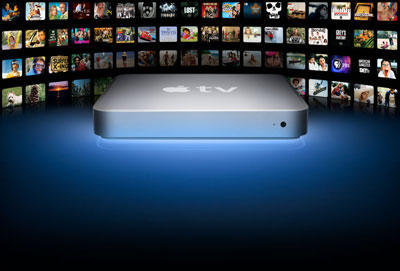
Amid a plethora of suggestions how Apple can make better use of its Apple TV box, the Cupertino, Calif.-based company has turned to its users for possible directions.
As part of an online survey, Apple is asking how owners use their Apple TV boxes, including the preferred source for content and their hardware configuration.
The survey’s purpose is seen as a way to determine the company’s next step in turning what initially was viewed as a “hobby” device into the third leg of Apple’s sales strategy.
Apple succeeded in persuading Internet giant Google to not include multi-touch features in Android, the open source cell phone platform, a report suggested Tuesday.
Multi-touch, which gives a handset the ability to convert multiple finger touches into instructions, was apparently bypassed by Google in an attempt to avoid legal entanglements, VentureBeat reported, citing an unnamed member of the Android development team.
In late January, Apple was awarded an omnibus patent covering its multi-touch technology used by the iPhone and the iPod touch. Apple has also threatened companies that might infringe the patent. The comment was seen as a not-so-subtle jab at Palm, which recently unveiled it’s iPhone rival touch-screen Pre.
Here’s something I’ve not thought about before: an utility that lets you create multiple Dock configurations, each one mapped to one of your Spaces. It’s called Dock Spaces and you can get it from here.
As someone who rarely makes use of Spaces and always keeps the Dock hidden from view, this leaves me bemused at best. But I know lots of you love yer Spaceses and yer Dockses, so this one’s for you.
(Look again at the video, though: wouldn’t you find it annoying to wait for the second’s pause as each fresh Dock is spawned for each Space? I would. Blimey.)
British thriller/crime novelist Christopher Fowler (“Psychoville,” “Disturbia”) claims he doesn’t even know what a PC is, he’s so in love with his “awesomely cool MacBook Air.” Fowler’s been using his MacBook to upload clues in a treasure hunt in London for signed first-editions of his books.
More from his love letter to Apple:
How has the MacBook improved your life?
It’s super-light, fast, and I always have it with me so that I can blog via my local Wi-Fi coffee shops. Except it means I drink waaaay too much coffee.
What additional features would you add if you could?
A push-down track-pad, like on the Pro. Easier uploading of video footage from my mobile, cross-region DVD functionality, and someone to sort out the Blu-Ray mess. Nobody knows what plays where.
What piece of technology would you most like to own?
A good eReader that looks cool (so, not the Kindle, then).





 After a round of saber rattling that left Palm and Apple hurling threats of patent infringement lawsuits, the Sunnyvale, Calif. company Wednesday attempted to smooth any ruffled feathers.