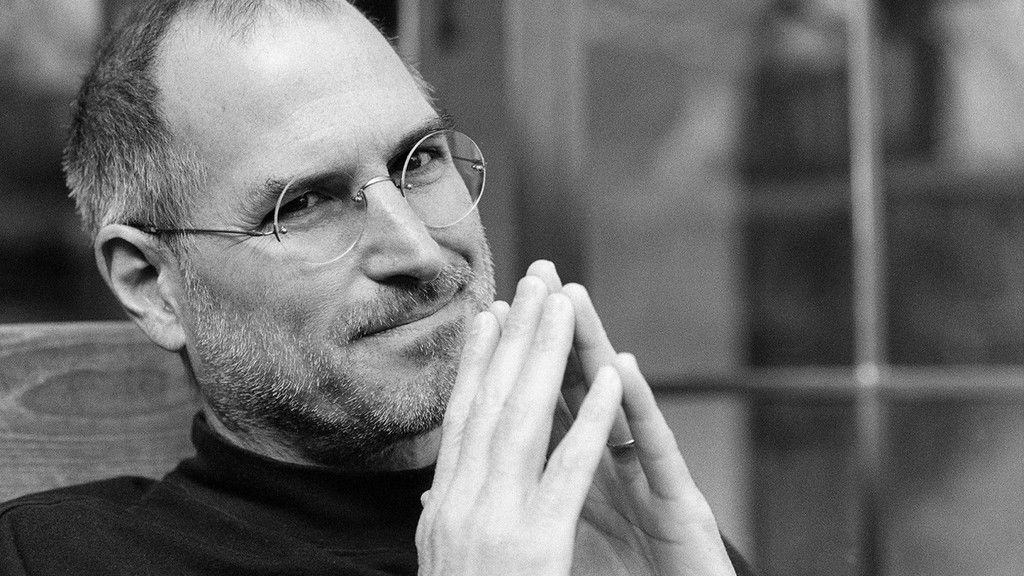
1985 marked a major turning point in Steve Jobs' life as he prepared to leave Apple. Photo: ABC
September 2, 1985: Reports claim Apple co-founder Steve Jobs is on the verge of setting up a new company to compete with Cupertino. The rumors fly after Jobs sells Apple stock holdings worth $21.43 million.
For anyone who thinks speculation about Apple’s future is an invention of the blog era, today’s edition of “Today in Apple history” is a reminder that the tech rumor mill was alive and well in 1985.
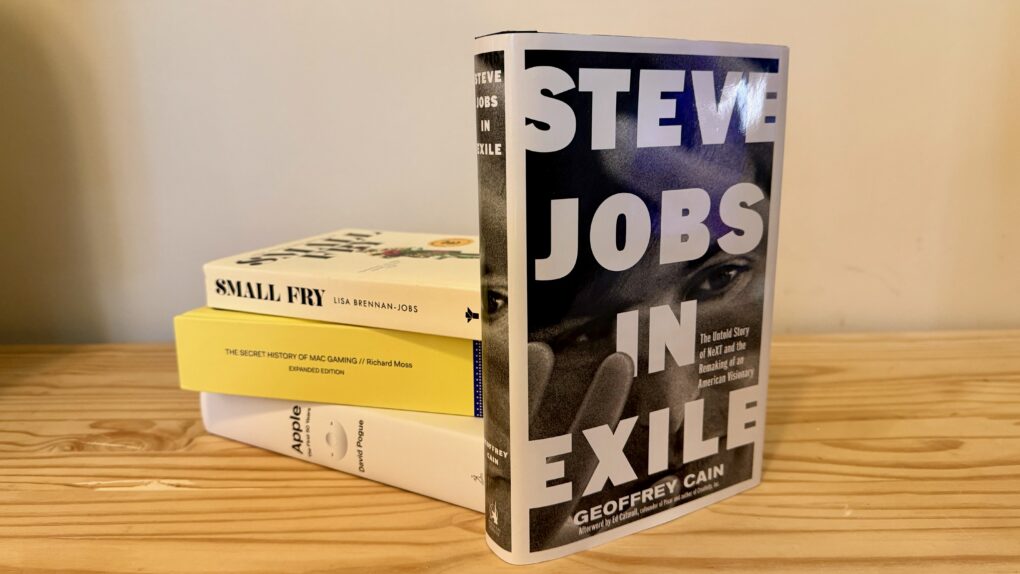
★★★★★Steve Jobs in Exile among other classic Apple books. Photo: D. Griffin Jones/Cult of Mac
Steve Jobs in Exile by Geoffrey Cain serves up a comprehensive history of that other computer company Steve Jobs founded, NeXT.
The book, released Tuesday, starts in 1985 with Steve Jobs being forced out of Apple. It tells the tumultuous tale of what happens after Jobs poaches five Apple employees, they all gather in his bare living room, and ask, “Well … now what?”
Starting fresh at just the right moment in history, they invented the computer architecture of the modern era with a powerful UNIX foundation, object-oriented programming and emerging web technologies. It’s an intensely frustrating tale of Jobs blowing chances at success left and right, letting perfection be the enemy of the good.
May 14, 1992: Apple co-founder Steve Jobs‘ company NeXT runs into trouble as it loses a crucial deal with Businessland after the computer retailer closes its stores.
It comes at a time when NeXT’s luck is going from bad to worse. The Businessland closure marks one of the lowest points in Jobs’ career — before everything starts to turn around again.
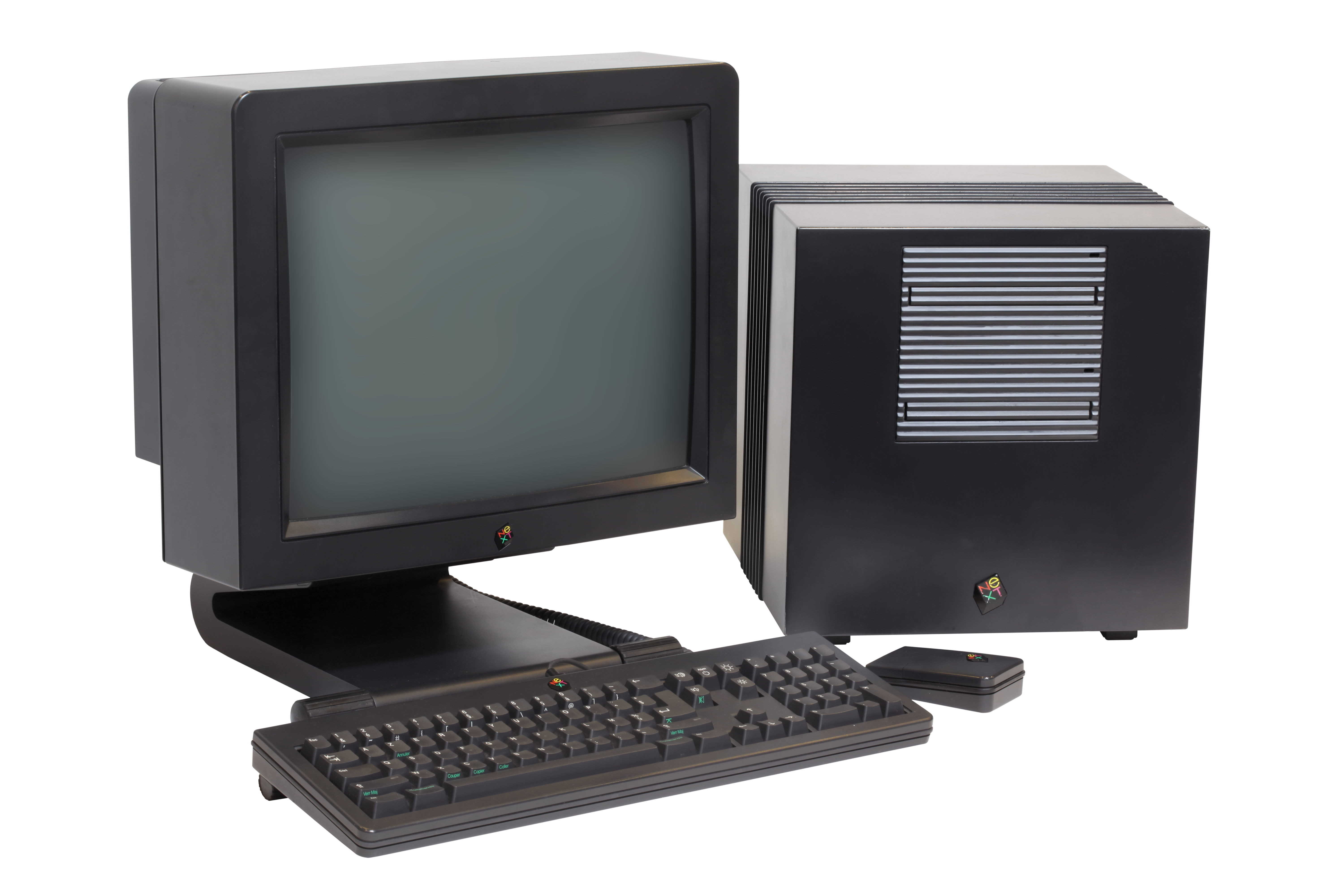
February 9, 1993: NeXT Inc., the company Steve Jobs founded after being pushed out of Apple, quits making computers. The company changes its name to NeXT Software and focuses its efforts entirely on producing code for other platforms.
In a mass layoff, 330 of NeXT’s 500 employees lose their jobs in an event known internally as “Black Tuesday.” Cruelly, many people hear of their fate on the radio.
December 20, 1996: Apple Computer buys NeXT, the company Steve Jobs founded after leaving Cupertino a decade earlier.
The deal costs Apple $429 million. It’s a massive price to pay for the failing NeXT, a computer company that already saw its hardware division crash and burn. But the price is worth it when you consider what Apple gets as part of the deal: the return of Steve Jobs.
November 25, 1996: A midlevel manager at NeXT contacts Apple about the possibility of Cupertino licensing NeXT’s OpenStep operating system. The phone call sows the seeds of Mac OS X and Apple’s rejuvenation.
The talk in question takes place between NeXT’s Garrett L. Rice and Ellen Hancock, Apple’s chief technology officer. While just the first formal step in a long process, it ultimately leads to Apple buying NeXT, the creation of Mac OS X, and Steve Jobs returning to the company he co-founded.
People couldn't wait to discover Steve Jobs' next move. Image: Newsweek
October 24, 1988: Three years after leaving Apple, Steve Jobs prepares to launch the NeXT Computer, a machine he hopes will cement his reputation as a tech genius and blow away the machines produced by Cupertino.
The new NeXT Computer receives a wave of positive publicity. Fawning stories show exactly what the 33-year-old Jobs has been working on — and what’s coming next.
Can this really have been 30 years ago? Photo: NeXT
Looking for a dose of Monday nostalgia? If so, then you might enjoy checking out the 1989 fall catalog for NeXT, the company started by Steve Jobs during his years outside Apple.
Loving scanned by amateur computer historian Kevin Savetz, it’s a fun look at computing 30 years ago.
American business magnate and politician Ross Perot died yesterday at the age of 89.
However, while the world probably remembers Perot best for his 1992 and 1996 presidential campaigns, Perot also played a crucial role in Apple history. Here’s how.
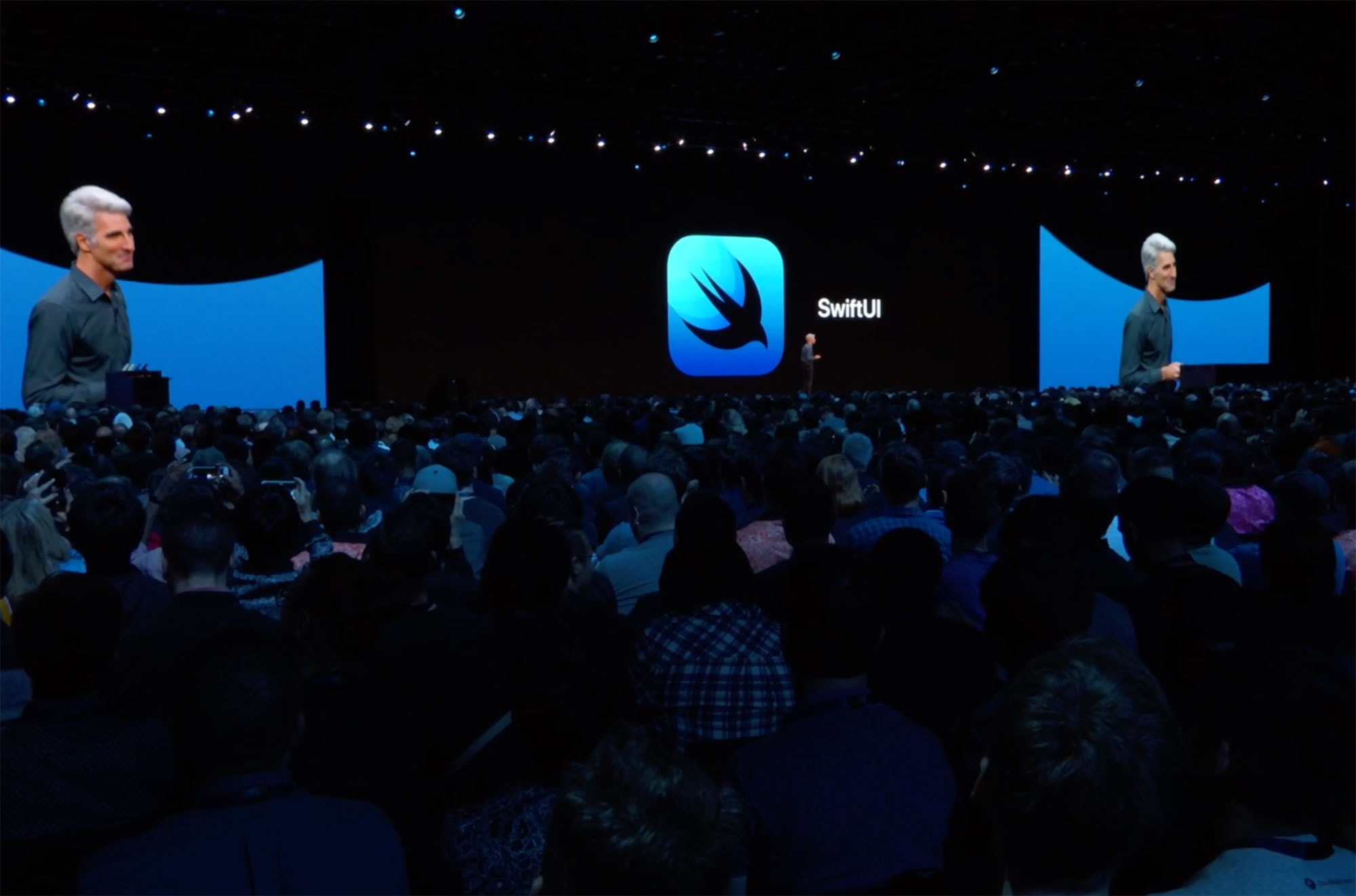
SwiftUI is actually a pretty big deal. Photo: Apple
Apple lavished attention on all its platforms at WWDC this year. We even got a first look at the all-new Mac Pro. But another announcement, which didn’t grab so many headlines, may prove to be the most important thing to come out of this year’s developer conference: SwiftUI.
SwiftUI promises to fundamentally change the way developers create apps for Apple products. And you don’t need to be a techie to appreciate why it’s such a big deal.
NeXTStep was an operating system ahead of its time. Image: NeXT
September 18, 1989: Steve Jobs’ company NeXT Inc. ships version 1.0 of NeXTStep, its object-oriented, multitasking operating system.
Incredibly advanced for its time, NeXTStep is described by The New York Times as “Macintosh on steroids.” In an ironic twist, the operating system Jobs plans to use to compete with Cupertino turns out to be one of the things that saves Apple a decade later.
"Do you want to eat pasta all your life, or join me and change the world?" Photo: Lou Stejskal/Flickr CC
It’s not exactly breaking news that Steve Jobs was a great salesman. But a hilarious anecdote from Adam Fisher’s recent oral history of Silicon Valley, Valley of Genius, gives a great example of Jobs’ next-level skills.
Want to know how Jobs persuaded a product marketing expert from Microsoft to join his company NeXT? It turns out it involved little more than a bit of patented Steve Jobs charm — and a helping hand from a local Italian restaurant menu.
John Carmack was one of the brains behind some of the biggest PC games of the 1980s and 90s. Photo: Id Software
Id Software co-founder John Carmack was behind some of the most iconic computer game of the 1980s and 90s. This week, the legendary coder behind the smash hit games Wolfenstein 3D, Doom, and Quake shared some memories of working with Steve Jobs.
Writing on Facebook, Carmack described some of his interactions with Jobs over the years — for better and for worse.
Who wouldn't want Steve as their instructor? Photo: Deliberate Think
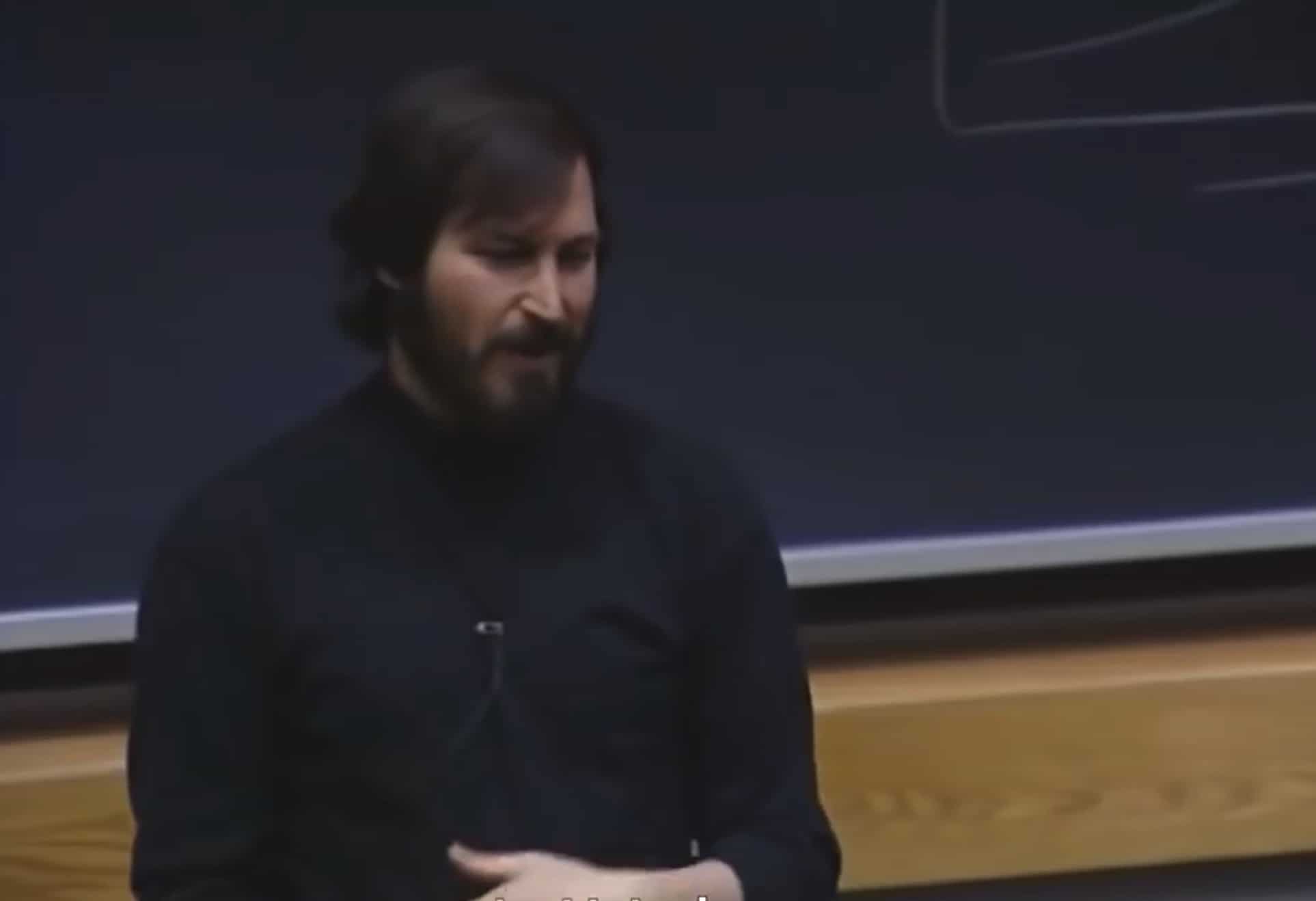
Who wouldn’t have wanted Steve Jobs to have visited their university class for a casual Q&A with the students? That’s what folks at MIT were lucky enough to experience in 1992.
Running NeXT at the time, Jobs stopped by to drop some wisdom on everything from his thoughts on leaving Apple to the state of computing to his thoughts on the right way to run a company. Excerpts from the discussion recently landed on YouTube. Check them out below.
The Computer History Museum named former Apple executive Dan’l Lewin as its new CEO and President today.
Lewin was one of Steve Jobs’ top guys back in the early days of Apple. He served in a number of marketing roles from 1981 to 1985 and was recruited by Jobs to join his new company, NeXT, after Jobs was fired from Apple.
Who wouldn't want their very own Steve Jobs autograph? Photo: Ben Stanfield/Flickr CC
Do you fancy getting your hands on some Steve Jobs memorabilia, but can’t quite stretch to the high six figure dollar mark needed to purchase a big ticket item like an original Apple-1 computer? No problem if so — because an upcoming auction for a Steve Jobs autograph may be more in your ballpark.
The autography in question is on the front cover of a Newsweek magazine from October 24, 1988, features Jobs with his NeXT computer — the first of several computers he launched during his wilderness years outside of Apple.
There was, to put it mildly, a lot that was insanely great about Steve Jobs’ return to Apple. But one thing that always struck me as less than good from an Apple fan’s perspective was that he stopped giving revealing in-depth interviews.
As his ability to command the narrative increased, Apple’s CEO understandably shifted away from playing the media hound he’d been for the first part of his career, where he’d speak with often painful honesty to seemingly any magazine that would have him. One of his last such interviews? The one that appeared in the June 16, 1994, edition of Rolling Stone.
WebObjects came to Apple when Steve Jobs returned from NeXT. Photo: Ben Stanfield/Flickr CC
Twenty years after it was first released to the public, Apple has finally confirmed that its WebObjects Java-based web application framework is dead — at least as far as official Apple updates are concerned.
Never heard of WebObjects? You’re probably not alone, but back in the 1990s it was considered a breakthrough product, was one that Steve Jobs was incredibly high on, and officially came over to Apple as part of the historic deal to acquire Jobs’ former company NeXT. Even today, aspects of WebObjects are used to power its online Apple Store and iTunes Store.
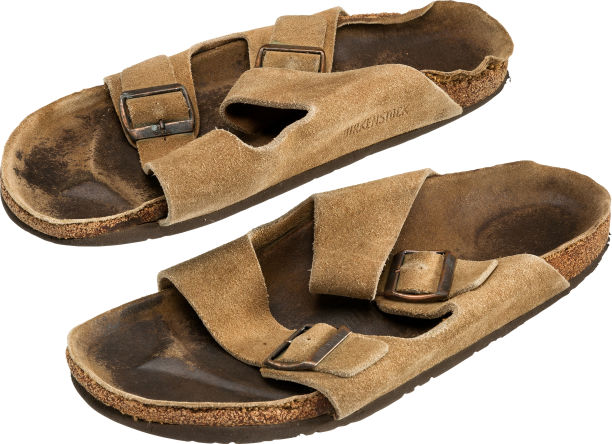
These stinky old Birkenstocks from Steve Jobs's NeXT years sold for a pretty price at auction today. Photo: Mark Scheff
An odd assortment of purported artefacts from Steve Jobs’s wilderness years – including a pair of his rated running sandals – were sold at auction today. And while it’s not entirely clear who bought them, all of the disparate items, dating back to Steve Jobs’s NeXT years, still ended up earning a pretty penny.
Steve Jobs during the NeXT years. Photo: Doug Menuez
Only a handful of products Steve Jobs introduced to the world became flops, but three years after he was kicked out of Apple, the tech visionary unveiled his biggest failure ever: the NeXT computer.
Video footage of Jobs’ first major public appearance since he left Apple in 1985 was lost to the world until researchers for Aaron Sorkin’s movie came across two videotapes of the NeXT’s gala unveiling at San Francisco’s Davies Symphony Hall in 1988.
Early Apple designer Susan Kare. She created the Happy Mac face and many more icons. Photo: Ann Rhoney
As part of the original Macintosh team back in the 80s, Susan Kare created some of Apple’s earliest typefaces and icons, but now the famous designer is ready to bring her iconic skills to Pinterest, as the company’s newest design lead.
Kate Winsley praised the Steve Jobs biopic and co-star Michael Fassbender.
Steve Jobs memorabilia collectors can now grab the holy trifecta of business cards while also doing a bit of good along the way.
Three of Jobs’ business cards from his days at Apple, Pixar and NeXT are up for auction, with proceeds going to The Marin School in California. Bidding started at $600 but it’s already up to $2,405.
Here’s a look at the cards you’ll win if you place the high bid:
Today AT&T announced a Next 24 plan that allows you to pay for your phone in small payments over the course of 30 months, with the option to upgrade after two years.
The new 24-month plan joins Next’s current 12 and 18-month upgrade options, which AT&T has been promoting heavily to get subscribers off traditional two-year contracts.
Doug Menuez photographed Steve Jobs for close to a decade. Picture: Tereza Machado-Menuez
Family and a few close friends aside, very few people got the inside track on Steve Jobs.
One of the few exceptions was Doug Menuez, an award-winning documentary photographer. For almost a decade between 1985 and 1994, Menuez shot an unprecedented number of photos of Jobs during his wilderness years outside Apple. And, as can be seen in the gallery above, he also took some astonishing inside shots of Apple during this same time frame.
In the process, Menuez became one of the foremost documentarians of an incredible period in Silicon Valley history. To celebrate the launch of his new book, Fearless Genius: The Digital Revolution in Silicon Valley 1985-2000, Menuez spoke with Cult of Mac about his background with one of the greatest tech entrepreneurs to ever live.
AT&T’s new early upgrade program is “calculating, sneaky, underhanded,” according to a new print ad from T-Mobile that will be published in USA Today.
AT&T Next is designed to let customers upgrade their smartphone more often — once every 12 months — and it is a direct competitor to T-Mobile’s new Jump plan. But T-Mobile has been quick to make its feelings about Next clear, accusing AT&T of trying to take more money from its customers.
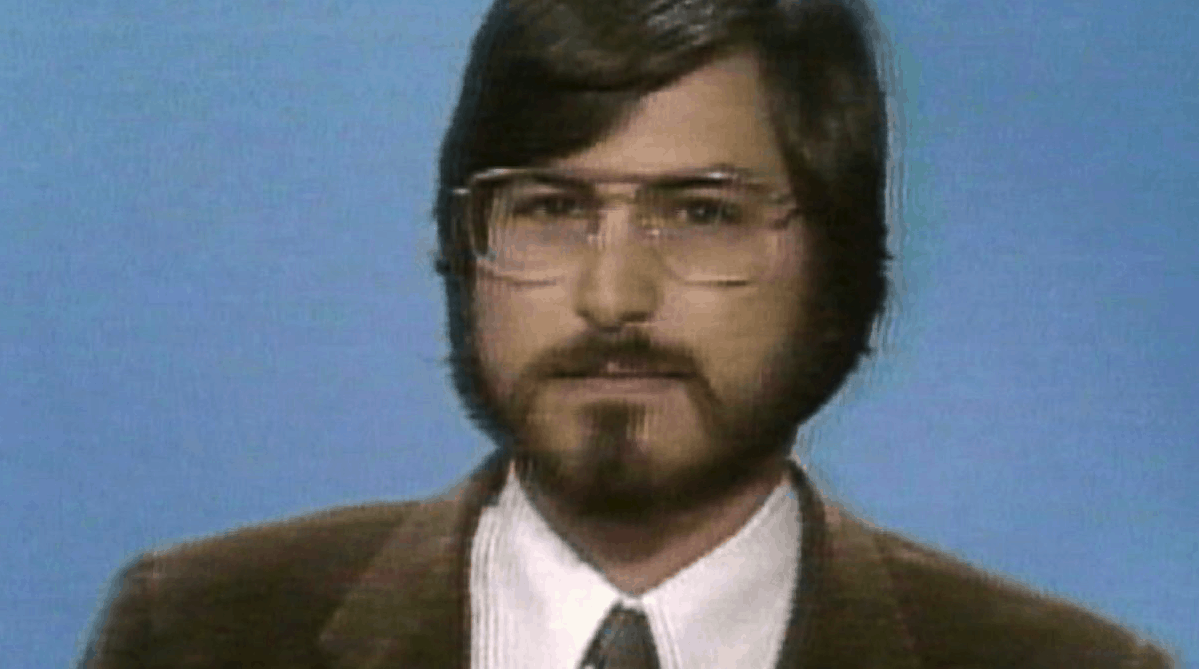
 September 2, 1985: Reports claim Apple co-founder Steve Jobs is on the verge of setting up a new company to compete with Cupertino. The rumors fly after Jobs sells Apple stock holdings worth $21.43 million.
 May 14, 1992: Apple co-founder
  February 9, 1993: NeXT Inc., the company Steve Jobs founded after being pushed out of Apple, quits making computers. The company changes its name to NeXT Software and focuses its efforts entirely on producing code for other platforms.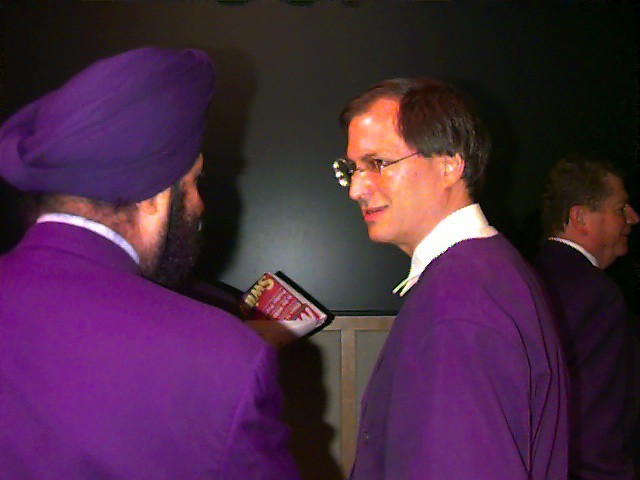
 December 20, 1996: Apple Computer buys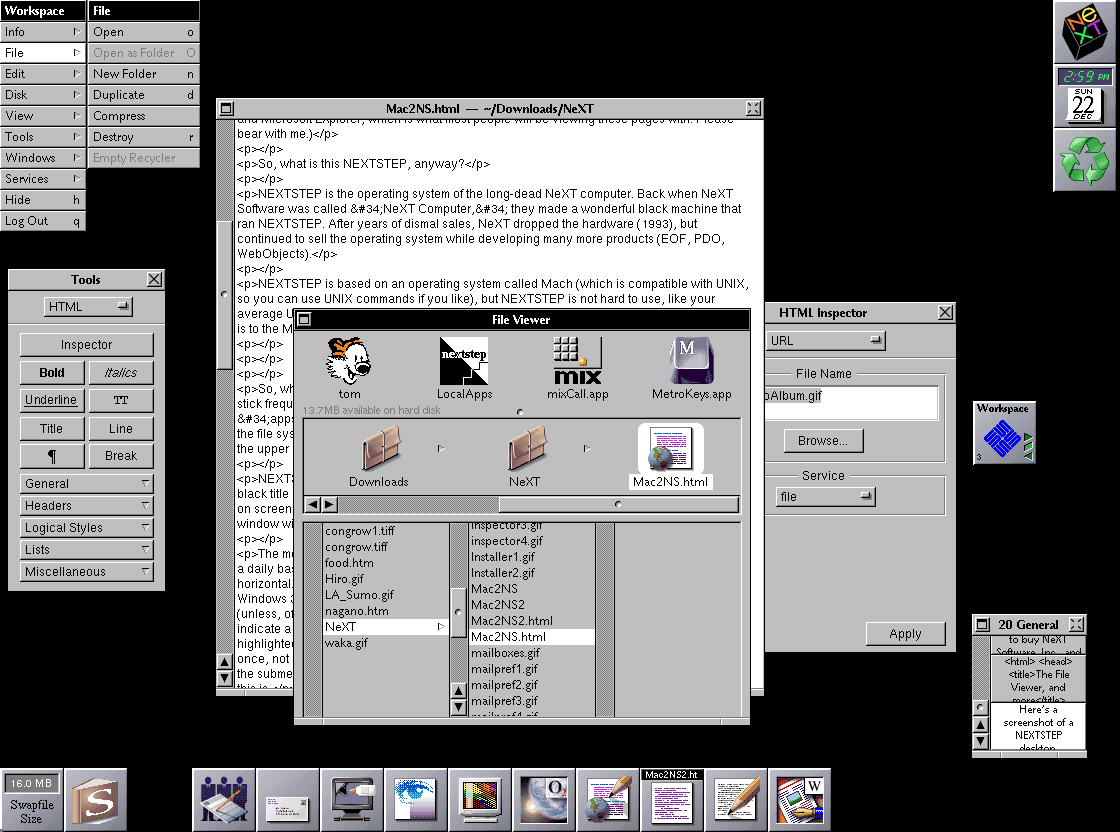
 November 25, 1996: A midlevel manager at NeXT contacts Apple about the possibility of Cupertino licensing NeXT’s OpenStep operating system. The phone call sows the seeds of Mac OS X and Apple’s rejuvenation.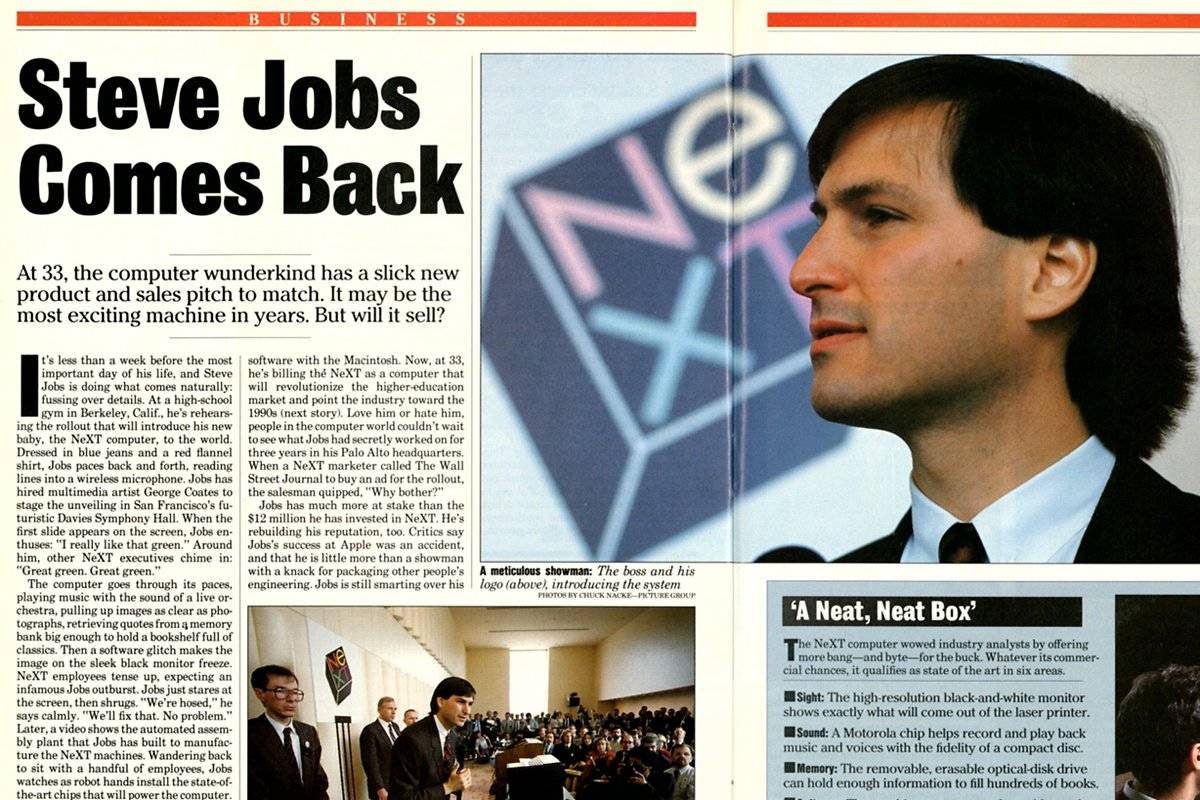
 October 24, 1988: Three years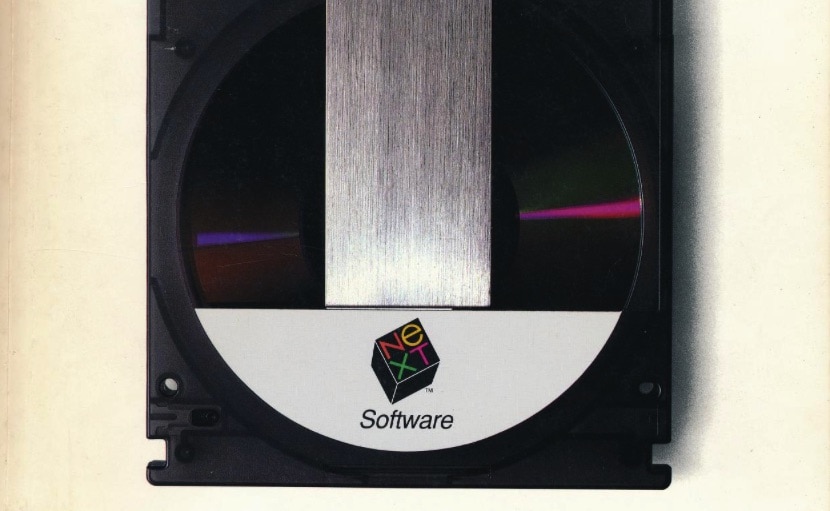


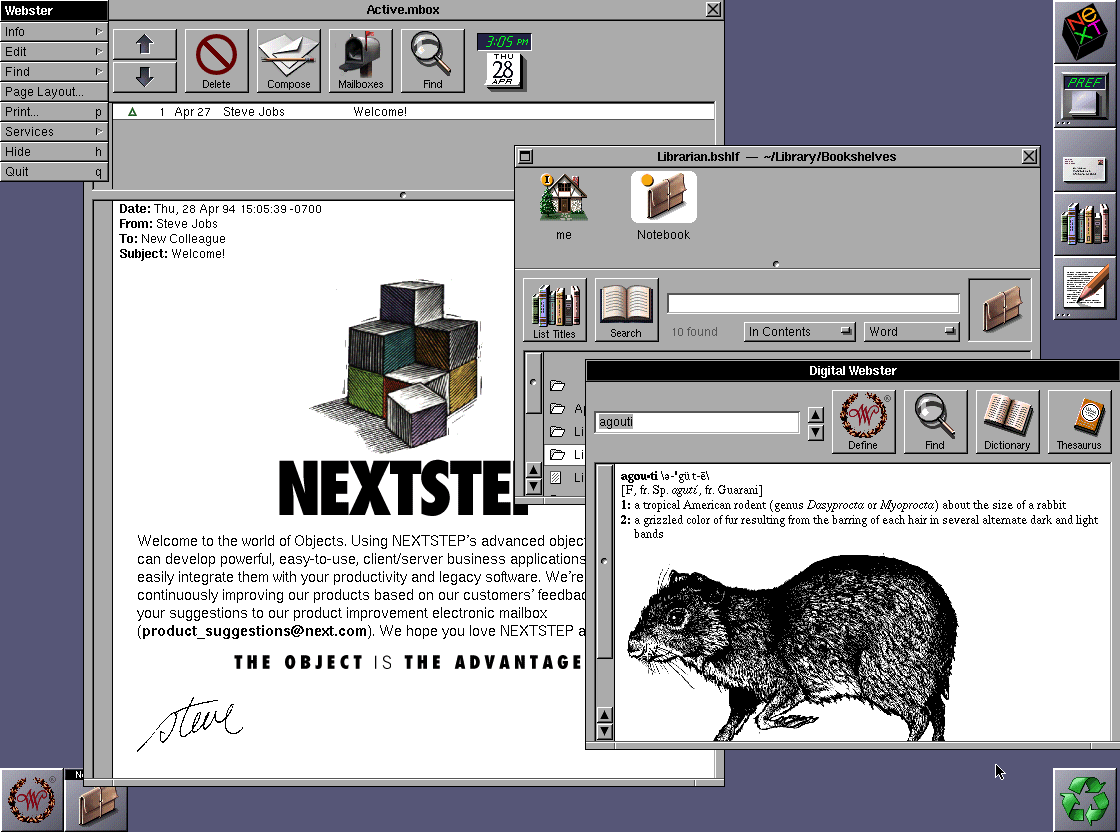
 September 18, 1989: Steve Jobs’ company NeXT Inc. ships version 1.0 of NeXTStep, its object-oriented, multitasking operating system.

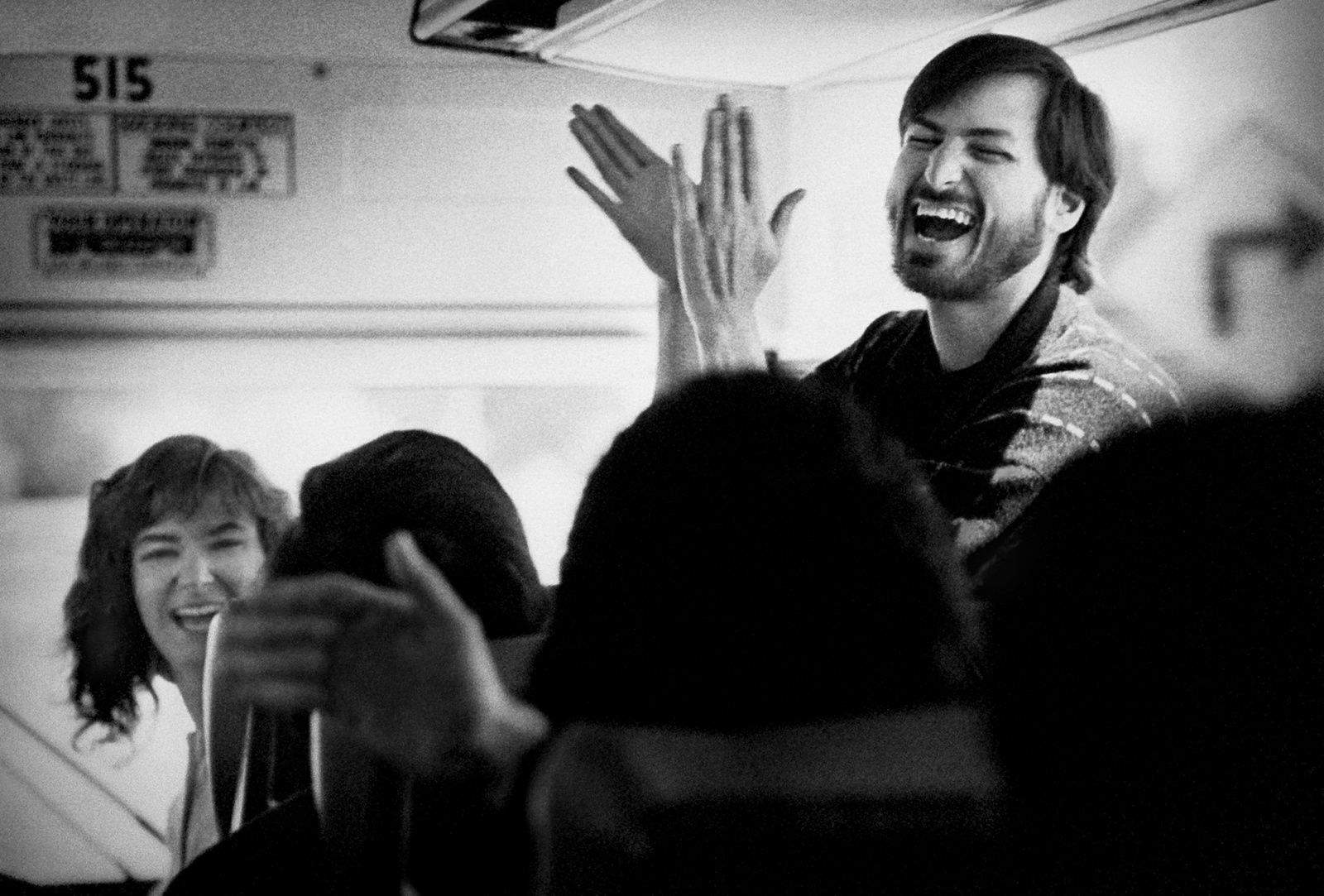
 There was, to put it mildly, a lot that was insanely great about Steve Jobs’ return to Apple. But one thing that always struck me as less than good from an Apple fan’s perspective was that he stopped giving revealing in-depth interviews.