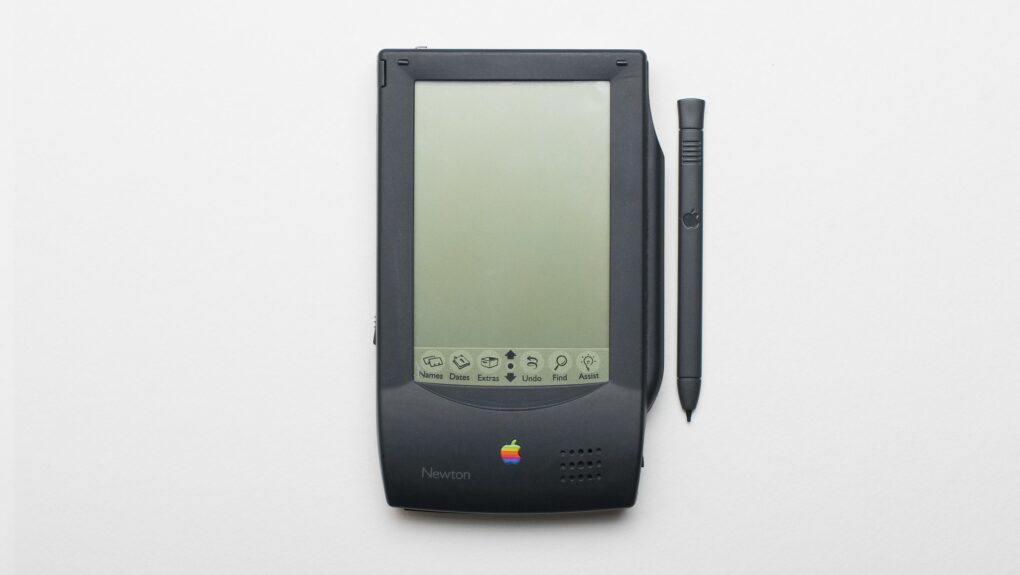
I arrived at this party pretty late — I’m probably the junior member here at the Cult of Mac, as far as Apple adoption goes. I haven’t discussed it directly with the entire staff, but I’m almost certain everyone else here had been using Steve’s gadgets long before I started.
My wholesale defection from PC to Mac finally happened in 2005, when I walked out of the Stonestown Galleria Apple Store, beaming, with a 12-inch iBook G4, never to return to the world of Windows. But the journey began two years earlier, when I met and fell in love with my first Apple product.
Let me begin this review by saying, while I’ve found some love for certain models, I don’t really care for most canalphones: They’re uncomfortable, and while I love the idea of plugging a foreign object into my ear and having that object deliver magical sounds just like an owl delivers a Howler, I usually wind up being disappointed with either the sound or the fit. So, with that in mind, it was time to try the Etymotic mc3 ($100).
This set, with a three-button remote on the cable and four sets of super-sealing, deep-seating eartips (two flanged, two foam), was now tasked with being tested by me. May the Force, that I’ll probably have to use to shove them into my ears, be with them.
So you’ve got your new iPhone 4S, and now you want to talk to Siri (and maybe friends) and enjoy some tuneage. Step one: Donate those pathetic white buds that came with your iPhone to your favorite charity, if they’ll take ‘em. Step two: Get yourself a snazzy pair of microphone-equipped canalphones — earphones that fit snugly in your ear. Why? Because a good set of canalphones are the best accessory ever made for an iPhone; they’ll create a seal that will block out ambient noise while enhancing sound coming from the earphones, especially bass — which means better conversations with friends (or Siri), and better music.
Around $100 seems to be the point at which there’s a big jump in quality; also, most in that range are now equipped with inline volume controls (in addition to the play/pause and track-skip controls like the ones on Apple’s stock buds).
We’ve assembled an Apple Store’s worth of canalphones at that level, and we’ll be reviewing them over the next several days. Up first is Sennheiser’s MM 70 iP earphones ($100).
Take a gander at the flock of reader comments under any canalphone review and one thing should become quickly apparent: canalphones are kinda flimsy.
The few chances we’ve been given to play with V-Moda’s creations have given us the solid impression that the company is paying much closer attention to the survivability of its canalphones; and that maybe they’re paying more attention to that factor than any other outfit. In fact, the three-button, microphone-equipped V-Moda Remix Remote ($80) seems like it should be the most bombproof canalphone in its range — and it hasn’t proved us wrong yet.
The PowerSkin for iPhone 4 ($80) is a silicone case with a built-in rechargeable 2,000 mAh battery that claims to double your device’s battery life with patented “XPAL Power” battery technology. Like most battery cases, it uses a mini-USB port to charge and sync your iPhone simultaneously, and you can turn the case on and off when necessary. The four-LED battery indicator will let you know how much juice you have remaining at the touch of a button.
The problem with battery cases is that they’re so big. Wrapping one around the iPhone 4 turns it from slim-and-sleek into a thick brick of a phone; and if you wanted fat and ugly, heck, you would have bought an Android phone.
But the PhoneSuit Elite iPhone 4 battery case ($80) changes everything. It’s the first case I’ve really felt comfortable carrying around in a jeans pocket, and it’s powerful and fast to boot.
Let’s face it: If you have an iPhone 4, you need a battery case. Unless all you’re doing with your iPhone is using it as a $600 mirror. Luckily there’s no shortage of choice — so we’ve assembled a collection of promising candidates and put them through their paces, the results of which we’ll be revealing in the next few days.
First up is the XtremeMac InCharge Mobile ($80), selected from XtremeMac’s deep line of charging solutions (all of which have been given the “InCharge” moniker).
I’ve worked at a few desks that used Cisco VoIP phones (one in the Wired.com offices among them); but something like the new Invoxia NVX 610 iPhone-controlled conference phone may eventually turn conventional handsets — even VoIP ones — into relics.
Somewhere, as Wagner’s Flight of the Valkyries is playing n the background, squadrons of Parrot AR Drones face off against Griffin’s new Helo TC somewhere over the Atlantic (since Parrot is based in France and Griffin in Tennessee, I figured that’s where they’d probably meet up).
The popularity of Babak Pahlavan‘s new predictive, artificial intelligence app seems to have caught him completely by surprise; so much so that he had to change its (or maybe in this case, his) name from Seymour to Alfred.