TSA plans massive pilot project using $3 million worth of Apple products
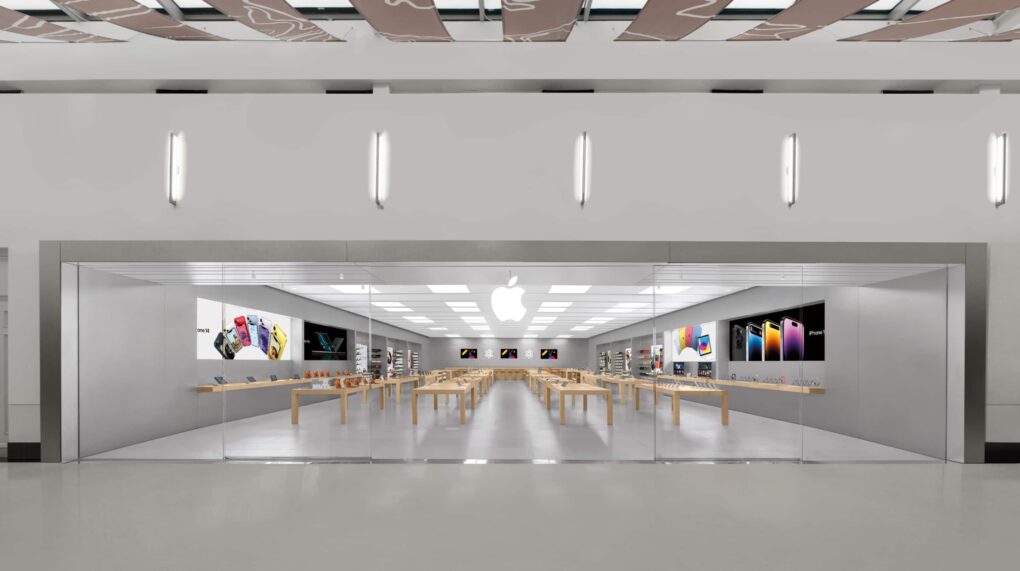
TSA is the latest U.S. federal agency to make a significant investment in Apple technologies in what may be a move away from RIM’s BlackBerry and Windows PCs. The agency is set to start a pilot program that will run over the next three years and will involve heavy investment in Macs, iPhones, iPads, and even Apple TVs.
According to federal documents (PDF link), the security agency plans to spend $3 million on Apple products and has an amazingly wide range of uses for them in mind. The plans go well beyond the scope of Apple investments made by other U.S. government agencies like the EPA and FAA, which focus primarily on iPhones and/or iPads.
Airfoil Speakers Touch has been yanked from the App Store. Why? Only Apple knows for sure.
Update: According to our tipster, Airfoil Speakers Touch wasn’t yanked arbitrarily, but instead because it duplicates functionality in the still unreleased and officially unannounced iOS 6. Our source says that in iOS 6, an Apple TV, for example, can pipe sound from a movie to an iPod touch, iPhone or iPad, and any iOS device will be able to beam audio to another. We’re trying to get more details, and have reached out to Apple and Rogue Amoeba for comment. Original post is below.
Update: 2: We’ve added Rogue Amoeba’s official comment at the bottom of this post.
Rogue Amoeba are some of the good guys. They’ve released some of the Mac’s coolest audio apps, including Airfoil, Audio Hijack Pro, Piezo, Pulsar, Nicecast and Fission, and we’ve long been a fan of their version of Airfoil for iOS. Called Airfoil Speakers Touch, the app allowed you to stream audio over AirPlay from your Mac, PC or iDevice to any iPhone, iPad or iPod Touch. We’ve been rocking it since 2009.
Now Airfoil Speakers Touch is dead, killed for unspecified reasons by Apple’s App Store review team while the guys at Rogue Amoeba scratch their heads.
Coming on the heels of Facebook’s $1 billion Instagram acquisition, but otherwise pretty much out of nowhere, the social networking giant just released a brand new Camera app called Facebook Camera… and it’s so much like Instagram that you have to wonder if Facebook bought the up-and-coming app just so it could put a bullet through its head before it became a real threat.
iPad growth offer advertisers new kinds of opportunities
Lead by the iPad, tablets, and other non-phone devices accounted for 20% of mobile ads during the first quarter of 2012. That number is up 5% from the first quarter of last year. The increase reflects a change in the mix of mobile devices that people use to consume content and may have implications for the entire ad industry – mobile and otherwise.
iPhone halo effect improves public perception of mobile carriers
Sprint took a gamble on the iPhone last fall. In exchange for getting the iPhone 4 and 4S on its network, the company agreed to pay $15 billion in subsidies over the next four years. The company acknowledged that it pays 40% more to subsidize the iPhone than it does for Android, BlackBerry, and Windows Phone handsets. To get shareholders on board, Sprint CEO Dan Hesse actually gave up $3.25 million in compensation.
It looks like Sprint’s investment may be paying off in unexpected. A new study by the Yankee Group revealed this week that the iPhone has a halo effect for carriers as well as it does for other Apple products – an effect that dramatically changed public perception of Sprint once it began carried the iPhone.
May is Mobile Management Month at Cult of Mac, where we will be profiling a different mobile management company every weekday. You can find all previous entries here and read our Mobile Management manifesto here.
This post is brought to you by SolarWinds, an IT software management company with more than 93,000 customers worldwide – from Fortune 500 enterprises to small businesses. Click here to download a free 30-Day Trial of Mobile Admin from SolarWinds. Author: Denny LeCompte Coauthor: Stephanie Mitchell.
Which smartphone or tablet are you bringing to work?
With the constant stream of news emerging in the Apple versus Android battle, we think it’s time to look at which devices the IT pros are choosing, and how recent trends are affecting what devices are brought into work.
Download the second Infinity Blade II content update now.
Infinity Blade II is one of those essential games that every iOS user should own. Its intense hack and slash gameplay makes it a joy to play over and over again, and its stunning 3D visuals are the perfect masterpiece for showcasing the abilities of your iOS device. What’s more, it just keeps getting better with each and every update.
The latest, version 1.2, is named ‘Vault of Fears’, and it delivers new areas with new secrets, new enemies, and new items.
1-3 Business Days. It took Apple four months to get iPad 2 shipping times to this level last year.
After two months of scarcity, Apple’s finally gotten its new iPad production ramped up enough to get a new iPad to you the same week you ordered one, from a Foxconn factory straight to your door in 1-3 business days. Just three weeks ago, it still took 3-5 business days for Apple to ship a new iPad to an online customer. In another three weeks, you might be able to overnight one.
Apple’s done a lot better with new iPad supply compared to the iPad 2. Not only did everyone who wanted one on launch day pretty much get one, but it took Apple about four months last year to get shipping times down to 1-3 business days, and five months to get it down to within 24 hours. Let’s hope this is a trend towards having enough supply to go around that continues with the iPhone 5.
One interesting moment during last year’s WWDC keynote was when Steve Jobs said that Apple was moving beyond the digital hub strategy it had embraced for years. He talked about how our computers are no longer the hub of our digital life and said that Apple was demoting the Macs and PCs and making them just another device like an iPhone or iPad.
That message set the stage for iCloud and for cord-free iOS devices that don’t need a Mac or PC for activation, backup, or sync.
There was also a much subtler message, however, that no one really picked up on at that time. In making the Mac just another device, Apple was likely laying the groundwork to change how companies and schools manage Macs – essentially treating them as just another device and bringing the mobile device management (MDM) paradigm introduced in iOS 4 to OS X and Mac management.
The creators of the popular Bump app that lets you share contact information and photos by simply bumping two phones together has bumped up their magic to include your computer. Thanks to today’s update, users will now be able to “magically” transfer their photos from their phone to their computer by simply bumping their phone against their keyboards spacebar. Say what? Yea, and the best part is there’s no additional software needed!