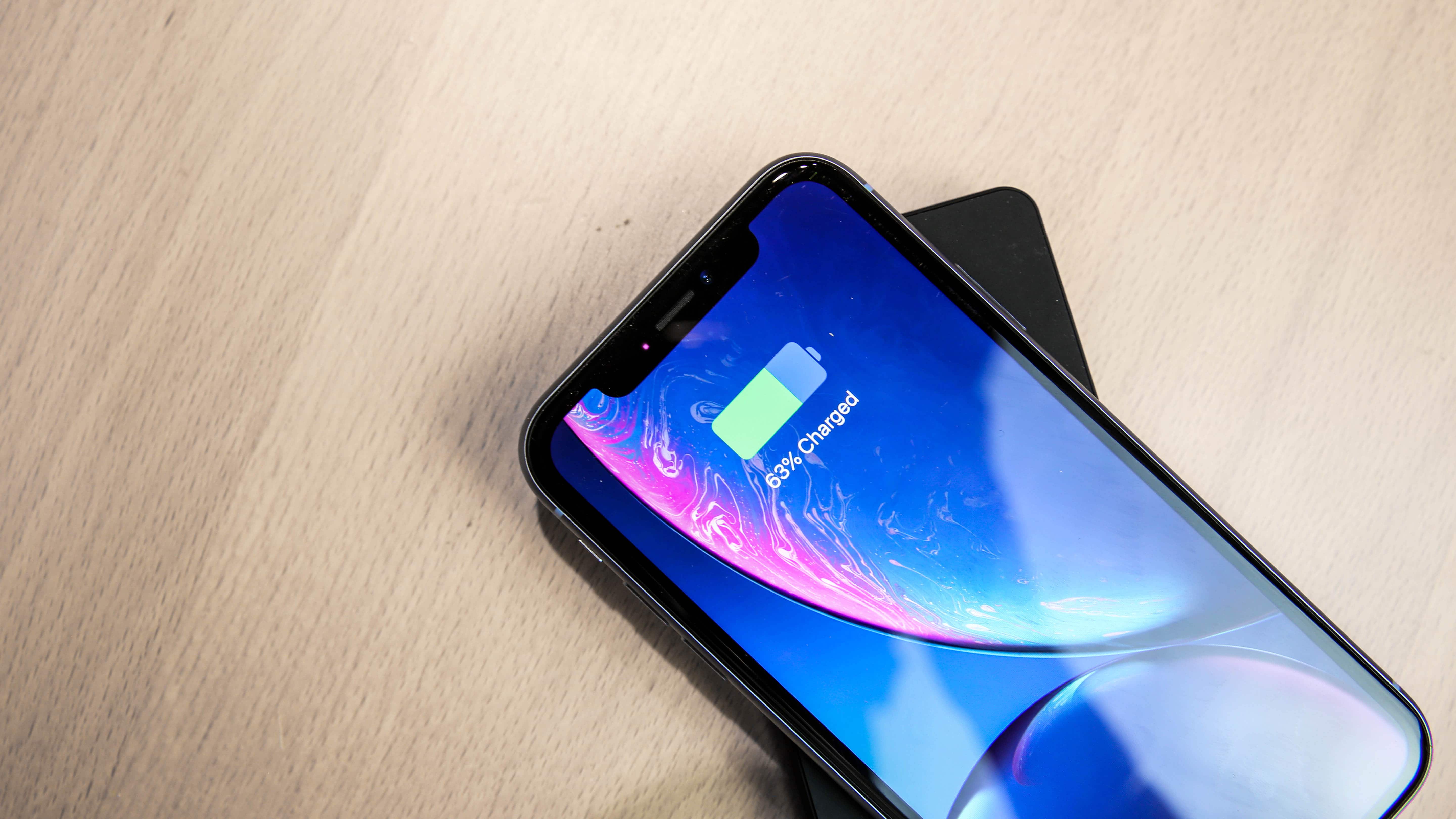
Apple's Self Service Program is a major change to the company's repair policy. Photo: Apple
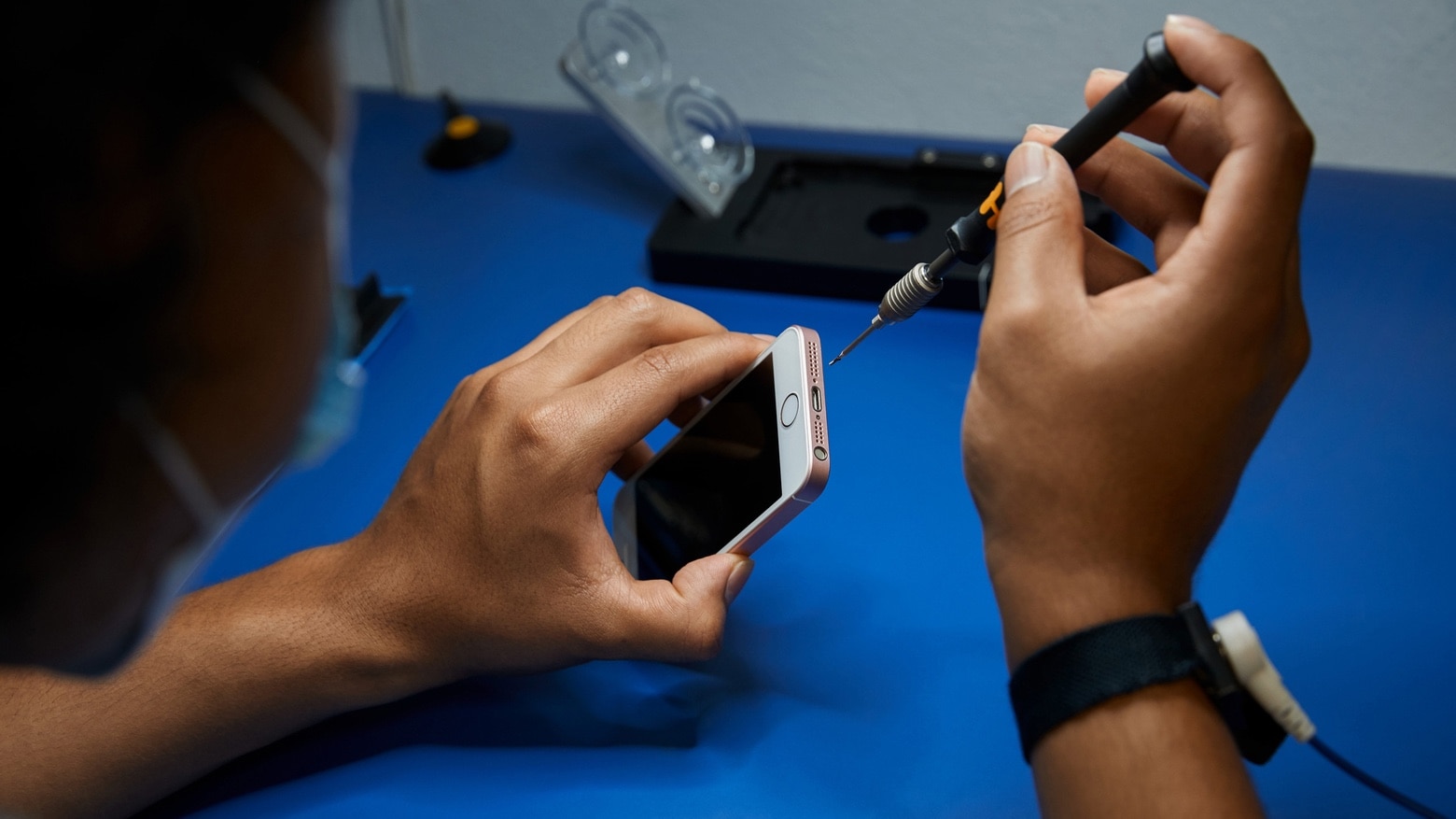
The iPhone Self Service Program that Apple announced last fall launched Wednesday. It provides customers with the parts and tools they need to repair their own handsets. And it marks a major shift in the company’s approach to hardware fixes.
The program is for individuals, not small businesses.
Indie repair shops around the globe get access to genuine Apple parts and training Photo: Apple
The Apple Independent Repair Provider program will soon be available in nearly every country where Apple products are sold, making it easier for users to find a reliable place to get their smartphone, laptop or other device fixed.
The program gives repair providers of all sizes access to genuine Apple parts, tools, repair manuals and diagnostics to fix iPhones, Macs and other devices.
Got an Apple product repair stuck in a shuttered Apple Store? It's safe. Photo: Brad Gibson/Cult of Mac
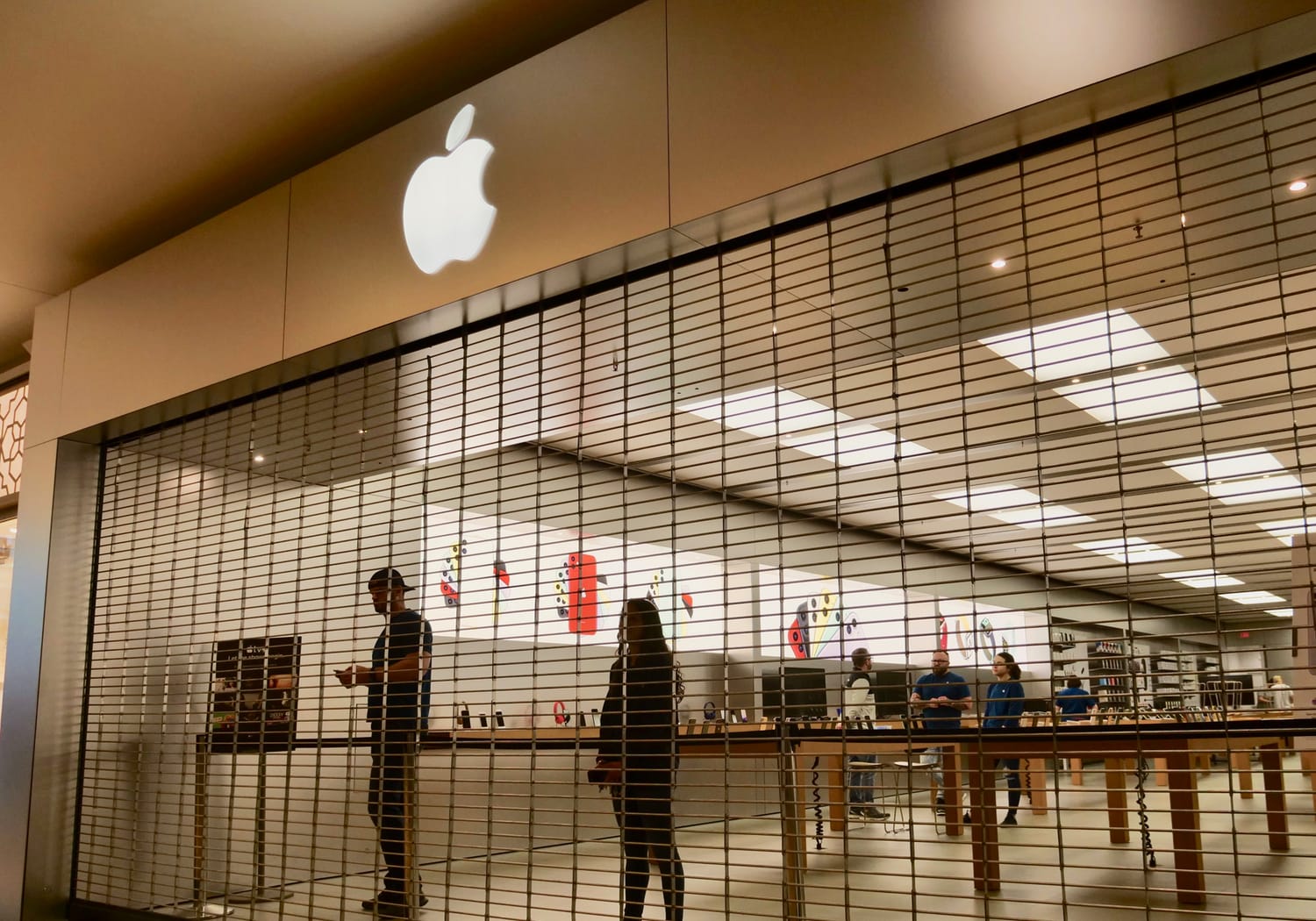
Repaired devices that customers couldn’t pick up before Apple Stores closed will remain piled up for some time due to the COVID-19 coronavirus pandemic.
Many Mac and iPhone owners now find themselves between a rock and a hard place, according to various reports and social media posts.
Apple is throwing a bone to third-party repairers. Photo: Apple
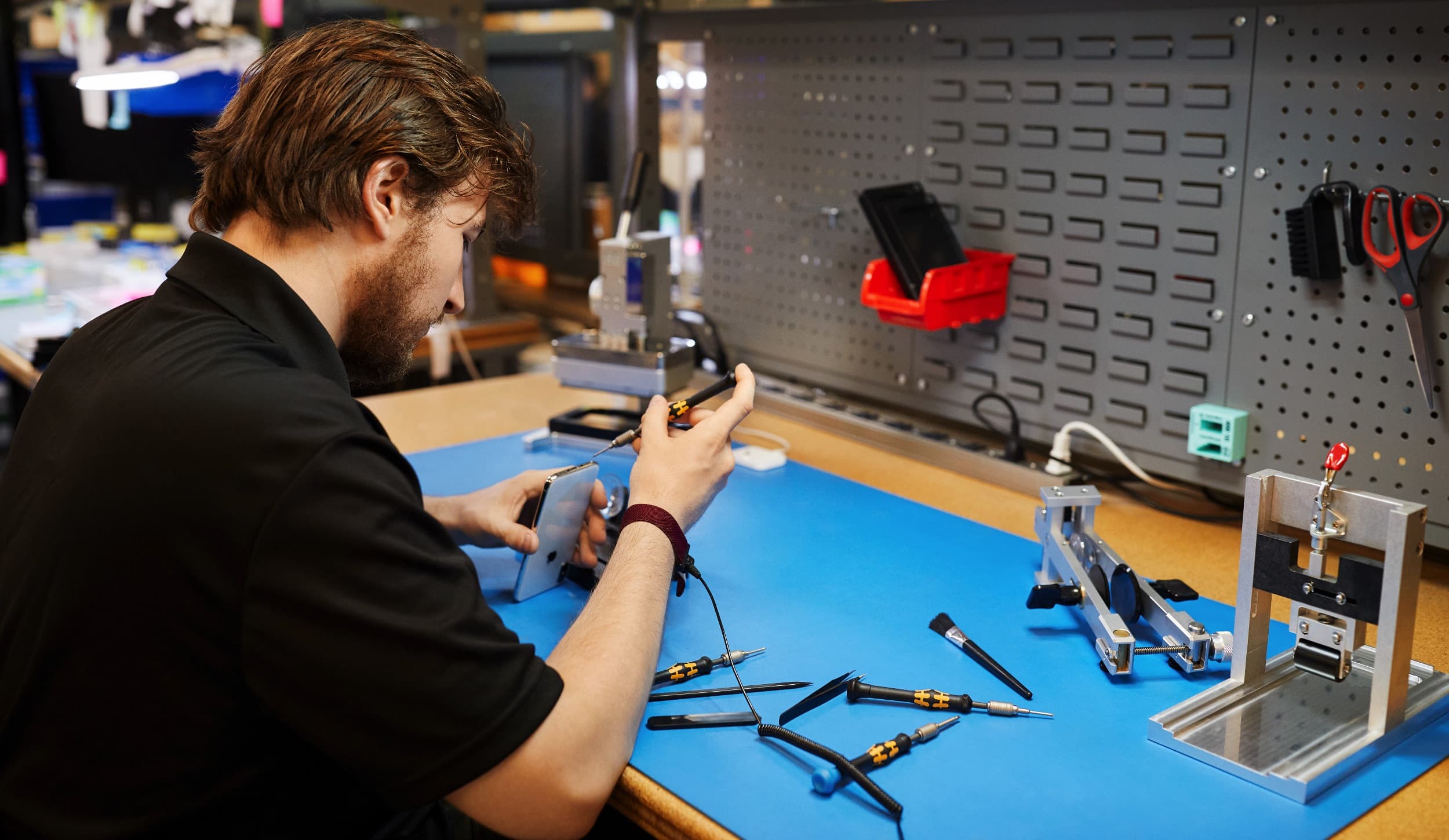
Apple is making it easier for independent repair shops to service out-of-warranty iPhones. It’s doing this by providing them with parts, tools, training, repair manuals and diagnostics previously available only to Apple Authorized Service Providers (AASPs).
The program has initially launched in the U.S. However, Apple says that there are plans to expand this to roll it out to additional countries in the future.
Be careful on who you let replace your iPhone battery. Photo: iFixIt
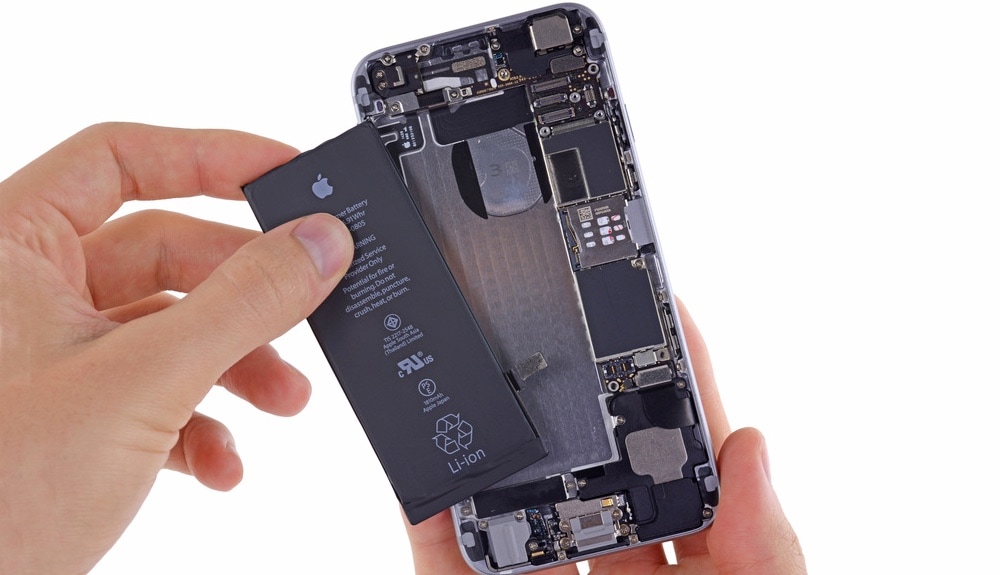
Apple confirmed it added a new “feature” to iPhones last year that displays an ominous warning when users get their battery replaced by an unauthorized service provider.
The iPhone-maker drew heavy criticism from right-to-repair advocates last week when the news of the new battery warnings surfaced. Facing claims that it is trying to funnel customers toward more expensive battery repairs, Apple has finally come out with a statement insisting that the change was made with the safety of customers in mind, but not everyone’s buying it.
You'll need to get your iPhone battery replacement carried out by one of Apple's chosen repairers. Photo: Kristal Chan/Cult of Mac
Apple has long been trying to push users to shun third-party repairers and go through Apple for device repairs. Now it’s activated a previously dormant software lock on iPhone to try and crack down on battery replacements by third-party repairers.
That’s even the case if they’re replacing your battery with an official Apple battery.
Apple has to rely on third-party repair shops in the country. Photo: Ste Smith/Cult of Mac
Apple has another potential problem in India: the sub-par repair options available for its products.
According to a new report, Apple’s authorized repair shops in the country are disappointing to say the least. That’s especially bad for a company which is well known for providing some of the best customer service around.
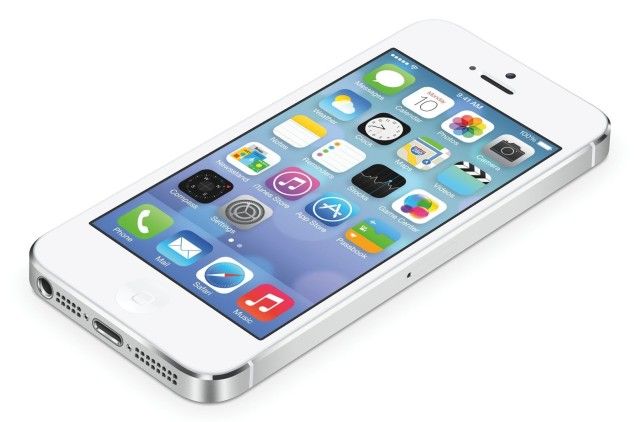
The iPhone 5 was one of the best iPhones Apple ever built. Photo: Apple
The iPhone 5 may be 6 years old at this point, but for many Apple fans this remains one of the greatest iPhone models ever built, and a genuine classic.
Sadly, there’s a bit of bad (if predictable) news from Apple: According to the company’s latest update of “vintage” and “obsolete” devices, the iPhone 5 is now considered too old for Apple repairs.
In the event that your 2018 MacBook Pro or iMac Pro runs into problems outside warranty, would you try and save money by going to third-party repair shop? If so, Apple seemingly has some bad news for you.
According to a new report, Apple has introduced new software locks that will brick these machines if they’re operated on by anyone not using Apple’s proprietary diagnostic software. Failing to do so will, “result in an inoperative system and an incomplete repair.”
It still hasn’t been officially confirmed by Apple, but reports suggest that the company will soon begin offering iPhone 5S and iPhone 5C repairs in its retail locations — providing minor repairs and screen replacements for the two latest iPhone models.
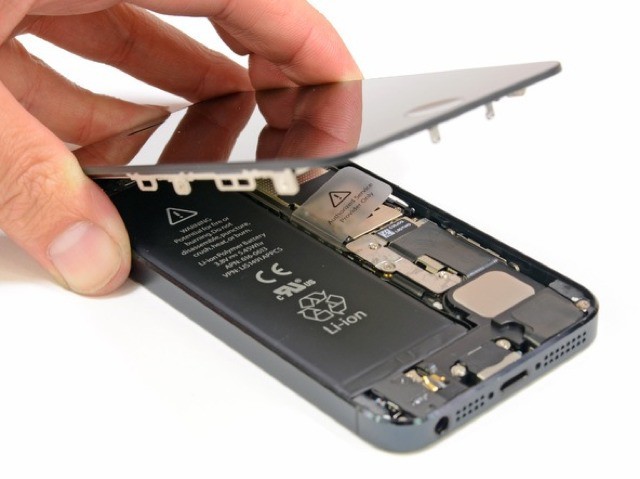
The iPhone 5 screen comes off like Brad Pitt's shirt: fast.
After boarding a plane to Melbourne, Australia to be one of the first in the whole world to get their hands on an iPhone 5, the folks at iFixit have torn it apart and found that — surprise — the new iPhone seems to actually have been designed with easy repair in mind. Partially, at least.
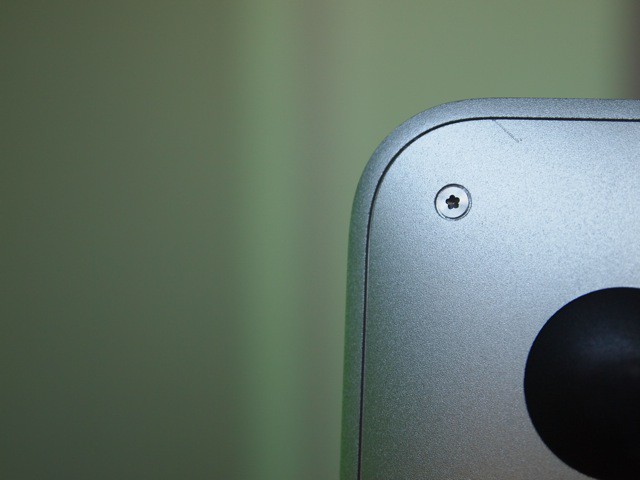
The screws are unique to Apple and serve one purpose only: to keep users out.
The plan, says iFixit CEO Kyle Wiens, is to force customers to upgrade their gadgets sooner than necessary. They also make them reliant on Apple for expensive repairs and upgrades.
“It’s a form of planned obsolescence,” says Wiens. “General Motors invented planned obsolescence in the 1920s. Apple is doing the same thing.”
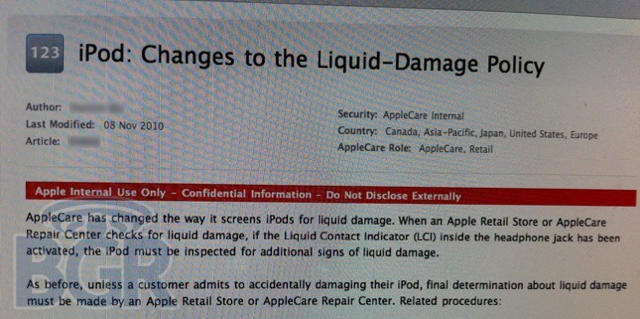
The new MacBook Air has the highest number of liquid contact indicators, or LCIs, of any Apple product yet… little stickers that tell a Genius if it’s okay to deny you service on your broken gadget because you dropped it in the drink.
LCIs have always been troubling, since they tend to trigger by humidity alone, making Apple gadgets a risky investment for those who live in the tropics. Apple’s actually been sued about false LCI reports, so the fact that the new Air had so many of them was particularly worrisome: it seemed like Apple was just chomping at the bit to deny you service on the notoriously hard-to-service Air.
However, things may not be as clearly conspiratorial as that.