NY Times’ Stross Has Underestimated Steve Jobs for a Long Time

stross

With all the discussion of the New York Times’s bizarre decision to run a column that states as received wisdom that the iPhone’s poor network performance in the United States is Apple’s fault and not AT&T’s, surprisingly little attention has been paid to the track record of reporter Randall Stross with regard to Steve Jobs.

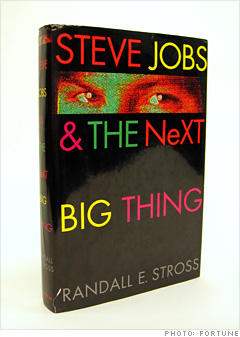
So I visited his website, and I remembered where I’d seen his name — on the cover of a book I read in high school that made a tech prognosis so spectacularly wrong that it’s occasionally used as a case study against proclaiming whether a particular technology is a winner or loser. That book? Steve Jobs and the NeXT Big Thing. And its central premise was that Steve would never produce another tech industry hit. Seriously.

I first read NeXT Big Thing in high school during my first true obsession with Apple. Steve had just come back to the Apple fold with the acquisition of his other computer company (though Gil Amelio was still <cough> in charge), and I wanted to know everything that I could. I read a bunch of the classics like Steven Levy’s Insanely Great and Guy Kawasaki’s The Macintosh Way, but I also by chance picked up the book on what was regarded as Steve’s post-glory era.

And, even in early 1997, it was clear that the author had underestimated the abilities of the man who made “One More Thing” a household phrase. Among Stross’s evidence that Jobs had gotten lucky by hitching his star to Woz (yes, really)? The iCEO had purchased some “computer animation” company called Pixar that made interesting cartoons but would never make any money — which was already demonstrably false just four years later. Another particularly memorable chapter chronicles in great detail about how if Steve Jobs were more like Scott McNealy of Sun Microsystems, he might some day be able to reascend the pinacle of the computer industry. He even went so far as to proclaim the “low-cost” SparcStation from Sun a clear example of how Steve could have avoided making an over-priced machine like the NeXT Cube — while carefully omitting the fact that the Sun machine cost more than the Cube.

DON'T MISS
Pixar Studios Remembers Steve Jobs: “He Will Forever Be A Part of Pixar’s DNA”

Now, no one in 1993 could have possibly imagined that Pixar would one day eclipse Disney as a family entertainment brand (other than John Lasseter and Ed Catmull, of course) or that Steve would change Apple into the market leader in digital music, a transformative force in mobile phones, and a profit leader in computers. But it takes a singularly myopic force to declare that Steve is “imprisoned… by his selective historical memory.” Actually, Steve is freed by his selective memory. He manages to forget bad stuff as soon as it happens and just get on to the next great thing. It’s his secret to success. Steve, unlike some who write about him, is always thinking about the future of a technology instead of trying to dissect what’s happening today.

About the author

Petemortensen

Pete Mortensen is a design strategist for consulting firm Jump Associates and the co-author of Wired to Care: How Companies Prosper When They Create Widespread Empathy, a book and blog that are significantly more interesting than you might initially think. Pete's particular Apple avocations are both around design--interface and industrial. Follow him on Twitter!

(sorry, you need Javascript to see this e-mail address)| Read more posts by .

Posted in Apple, iPhone, Opinions |

  • fred

    Ha! Who says bloggers don’t make good journalists?!

    I hope the editors at the New York Times are reading your articles!!

  • Fred A.

    Great investigation job, Pete !

  • Paul

    He’s just another Apple hater who can’t deal with Apple’s success and has to try to tear down Steve Jobs and the company. He’s obviously had some personal agenda against Jobs over the years.

  • J

    I red the book myself, but didn’t make the link.

    Randall tried to make Steve look as bad as he could. He portrait Steve Jobs as a maniac like dictator. If I remember correctly Randall was really upset because Steve Jobs didn’t want to be interviewed or be associated with the book in any other way.
    It made me doubt Steve Jobs accomplishments, but after a few years I threw the book away.

    No-one should listen to this slander journlist again.

    J.

  • http://ObamaPacman.com Obama Pacman

    Great article! Randall Stross = EPIC FAIL.

  • Bas

    Nicely dug up. But hey, it’s always easy to say stuff like this in retrospect. Jobs has an authoritarian style of leadership, wanting to know (and perhaps control) all those who work with him. Such style is easily forgiven when you’re winning, but when your down and out as Jobs was in 1993, he was an easy target for how not to do business.

  • ged

    Good article. Only an Apple fanboy could think “one more thing” is a HOUSEHOLD phrase! ask you windoz using friends to see my point. My guess the “dictatorship” of Mr. Jobs is the VERY reason for its success. Clearly there is a large design team at Apple, but the basic philosophy comes from Jobs: Simple=beautiful=Apple.
    We can argue about particular deployments but there is no denying the overall triumph of the philosophy.

  • Church of Apple

    Nice post. Entrepreneurship and innovation is in some people’s genes. That guy obviously doesn’t understand Jobs.

  • Hank

    Stross wasn’t wrong about NeXT, at least as I remember the book. The NeXT Cube was overpriced, underpowered and generally underwhelming. I had friends in Sun’s Educational division (the folks behind the SPARCstation 1) who were all quaking in their boots over what Steve had behind the curtain. Then it was revealed, and they all relaxed. True, NeXT’s UI software was superior, but for a Unix hardware company that didn’t matter and wouldn’t for a few more years.

    It may be that Steve was generally a failure during his NeXT days. But if he was, he learned from his failure, and got it right in time to get Apple back on track.
