live_tv
Livestream Starting Soon
00
Hours
:
00
Minutes
:
00
Seconds
Up next in 10


More Apple news: http://www.cultofmac.com
Follow us!
Threads: https://www.threads.net/@cultofmac
Mastodon: https://mastodon.social/@cultofmac
Instagram: https://instagram.com/cultofmac/
X: https://x.com/cultofmac
Facebook: https://www.facebook.com/cultofmac
Show More Show Less View Video Transcript
0:02
Hi there, it's Leander from Cult of Mac.
0:04
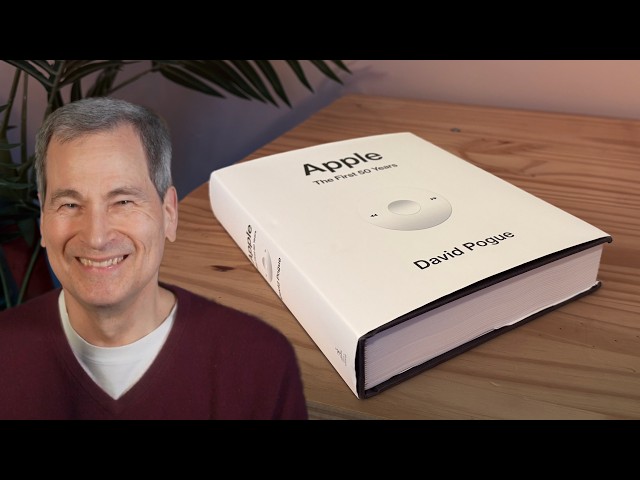
I had the great pleasure to interview
0:06
best-selling author David Pog about his
0:08
new book Apple, the first 50 years.
0:11
David's a renowned technology
0:12
journalist. He was a longtime tech
0:14
columnist for Macworld and the New York
0:16
Times. He's a bestselling author who has
0:19
written or co-written more than 120
0:21
books. David's new book is a
0:23
comprehensive history of Apple from the
0:25
company's founding in 1976 right up to
0:27
Apple Intelligence. It's the first book
0:29
about Apple to cover all 50 years rather
0:31
than specific periods like my own books
0:33
about Apple. It's about 600 pages long,
0:36
but it's a very easy read and just the
0:38
right level of detail. I think it'll
0:39
appeal to technical readers and lay
0:41
readers alike. I had a great chat with
0:43
David covering why he chose to write a
0:45
book about Apple, what he thinks of
0:47
Steve Jobs, how John Scully actually
0:49
helped to save Apple, the best Apple
0:51
product ever made, and a lot more. I
0:54
hope you enjoy my interview with David.
0:57
Well, David, thanks so much for joining
0:58
us.
0:59
>> My pleasure. It's an honor.
1:00
>> And I gotta say, I really enjoyed your
1:02
book. You
1:04
>> Wow. Well, [laughter]
1:05
clearly you have excellent taste.
1:07
>> I think it's an excellent book. A
1:09
really, really good book. Uh, just the
1:10
right level of detail. Moves along at a
1:12
very, very good clip. Doesn't get bogged
1:14
down. Uh, quite an achievement. Quite an
1:17
achievement.
1:17
>> Just about killed me. [laughter]
1:19
>> I was going to say it looks like a lot
1:21
of work.
1:22
>> Yeah. 50 years and 150 interviews and
1:26
and a lot of different constituencies,
1:28
you know, with with different agendas in
1:31
the book. I mean, you know, the the
1:33
people I interviewed care most about,
1:36
you know, getting the the credit right
1:38
and who thought of what when and getting
1:40
the facts right and, you know, techies
1:44
want a certain level of technical detail
1:46
and casual like business book readers
1:49
don't care about the technical detail.
1:51
And you know, Apple haters want to make
1:53
sure that, you know, it's not a kissass
1:55
book. So, yeah, it was a a tough needle
1:58
to thread.
1:59
>> How So, how much work was it? How long
2:01
were you working on the book?
2:03
>> It was [clears throat] so much work. Uh,
2:05
it it was two years basically. Um and uh
2:09
so so the way it began was um in 2024
2:13
was the Mac's 40th birthday and this
2:16
outfit called the Computer History
2:18
Museum in Mountain View, California
2:20
invited me to be the host of a Mac 40th
2:24
anniversary celebration and they had
2:27
Bill Atkinson and Susan K and Andy
2:29
Herszfeld and all these classic people
2:32
who developed the Mac when they were in
2:34
their 20s on stage with me and it It was
2:37
crazy. It was like a love fest, like a
2:39
Woodstock. The audience was just full of
2:42
apple nuts and it was, you know, funny
2:45
and emotional and PTSD. And so my wife
2:49
woke me up in the middle of the night a
2:50
few weeks later and said, "You know what
2:52
you should do? You should do a book on
2:54
Apple's 50th." And I literally shut her
2:57
down. I'm like, "Honey, that's come and
3:00
gone. You've missed it." [laughter] And
3:02
and then when I woke up, I looked it up
3:04
and she was right. And I was wrong. She
3:06
was right. How do you feel about it now
3:07
after after all that work? [laughter]
3:10
>> Yeah. She asked that question last
3:12
night. Like I'm like, "This is all you.
3:15
This is all your idea." She's like, "And
3:17
how would you feel about that?"
3:19
[laughter] Um,
3:19
>> right. Yeah. Yeah. Yeah. What What sets
3:21
your book apart from from all the other
3:23
books that have been written about
3:24
Apple?
3:25
>> Well, a couple things. First of all,
3:26
it's um it's not I'm a technology guy.
3:30
I'm a product guy. So, I feel like most
3:33
of the books about Apple that have been
3:34
written before were written by business
3:36
reporters who are great, but their focus
3:39
is the personalities and the CEOs and
3:41
the executives and the backstabbing and
3:43
all that stuff. Um,
3:45
>> you know, I don't care about Steve
3:46
Jobs's illegitimate daughter. You know,
3:48
I I like to say this book is like
3:50
severance. What happens after you leave
3:52
the the workday, I don't really care
3:54
about. Um, so it's much more I I think
3:56
there's a bigger helping of origin
3:58
stories about the actual products and
4:00
the technologies and also of course it
4:02
covers all 50 years and
4:06
>> and this is crazy.
4:09
>> It's an independent book, right? Apple
4:11
did not see this book uh till it was
4:13
done. Um and yet I needed something out
4:16
of Apple. I wanted interviews with the
4:19
current executives um which they don't
4:22
as a rule offer to journalists and I
4:25
wanted their archives. So it was this it
4:29
took months of persuading but ultimately
4:31
they said okay okay you can have the
4:33
interviews you can have the archives and
4:35
we're not going to ask to see the book.
4:37
So that was a really lucky stroke
4:40
>> for sure. I had a somewhat similar
4:42
experience with my with the Tim Cook
4:43
book. they they allowed me to interview
4:44
some executives and they seemed very
4:45
keen on the book initially but then they
4:47
then something happened internally and
4:48
then they um weren't so receptive. I
4:52
don't know if you had a similar
4:53
experience. Steve Dall, the PR guy, you
4:55
know, like he called me up and and he
4:57
was the one who sort of pitched me on on
4:58
interviewing some current executives and
5:00
he said uh you know we we know that if
5:03
you do a book it won't be a hit job.
5:05
This was around the time that Ukari
5:06
Kane's book was out
5:08
>> and they weren't very pleased about
5:09
that. So
5:11
>> um and so they were quite solicitors you
5:13
know I I got to go down to Apple Park
5:15
and I and I got sort of kind of whined
5:17
and dined um and but then as uh I was
5:21
working on it um I don't know you know
5:23
it got cut off they didn't return my
5:25
calls I said you know hundreds of
5:27
factchecking questions something
5:29
internally changed there was a little
5:31
bit of upheaval in the PR department
5:32
around that time I think down
5:34
>> was leaving so um the chair shifted but
5:37
so did you have any it sounds like you
5:39
don't have a summer experience at all.
5:41
>> I I did I don't think I had a reheversal
5:43
like that. Um and I did when the book
5:46
was done I did send it over and um I
5:50
mean nobody said good job or this is
5:52
great or anything but nor did they say
5:55
you know this is this is terrible. We're
5:57
blacklisting you. So they they literally
6:01
let me make a list of requests that I
6:04
had from their archivists who then went
6:06
deep into the the scans from I mean
6:09
we're talking about the 70s you know in
6:11
the 80s.
6:12
>> Um one thing that I I'm most proud of is
6:15
this book is in full color. It's there
6:18
are 360 photos and documents and
6:21
>> um product shots that uh I mean you you
6:25
can't do a book about
6:26
>> you know the iMac and the iPhone in
6:29
black and white. You just can't.
6:31
>> Um you know it was made clear to me that
6:34
that would make the book very expensive.
6:36
Um it's a it's a $50 book. You know
6:39
that's but let's face it that's what
6:42
color costs. Um, interestingly, normally
6:46
these these big publishers uh get those
6:48
printed in China and that keeps the cost
6:51
down and then they ship it back. But the
6:54
tariffs went into effect.
6:56
>> Oh, really?
6:57
>> Yeah. So terrible that it was cheaper to
7:01
print it in the United States.
7:04
>> This book was printed here. We can all
7:06
be proud.
7:08
[laughter]
7:08
>> I I had the same issue with trying to
7:10
get some of my books done in color. the
7:12
um the compromise was to print um the
7:15
color pictures in the in the middle. So
7:17
there was, you know, a bunch of color
7:19
pages in the middle. But yeah, it it
7:21
does increase the costs exponentially,
7:23
doesn't it?
7:24
>> Yeah. But it's I mean, if you can afford
7:27
the 50 bucks, it's really nice, you
7:29
know, to
7:30
>> turn the page and there's a half page
7:32
photo of what we're talking about and or
7:34
the prototypes of things and Yeah. And
7:37
>> yeah. Yeah.
7:39
very happy with some of the the stuff
7:41
that I have that I've managed to get
7:42
that hasn't been printed before. The the
7:45
the story of the iPhone's multi-touch
7:47
thing. Um I've seen I think you might
7:50
have written the article I read.
7:51
[laughter]
7:51
>> Well, I didn't want to bring this up,
7:53
David. I was hoping we could avoid this
7:54
particular subject because I that I
7:56
think is where that source uh came from.
7:58
One of my books about Johnny.
8:00
>> Yes. Yeah, that's right. [laughter]
8:01
That's right.
8:03
your telling of it um made me want to
8:06
dig in because there's there's some
8:08
weird accounts of this um the origin
8:11
story of this projector that they had.
8:14
They had a little research group in the
8:16
design department under Johnny IV who
8:18
would just fool with you know the next
8:20
generation input. Would it be voice?
8:23
Would it be AI? Would it be optical? Um,
8:26
and they were they had bought um a
8:29
little 5x6 in trackpad designed for
8:33
people with carpal tunnel syndrome that
8:35
let you type or move your fingers really
8:37
lightly so it didn't hurt you. Um, but
8:40
it it could do multi-touch this
8:41
trackpad. So they they got this
8:43
projector and they shown it straight
8:45
down onto a piece of paper. They got
8:47
they got the company that made it to
8:48
make an a paper size one 8 and 1 half x
8:51
11 like a big one like the size of a
8:54
laptop screen. But some of the accounts
8:56
are really weird. Like they say the
8:59
projector was shining down projecting
9:01
the max image on a table the size of a
9:03
ping pong table. Like I you [laughter]
9:06
read that version. Anyway, so I I
9:08
managed to get a photo of the actual rig
9:12
>> um which was really thrilling. that that
9:14
origin story had been covered I thought
9:16
fairly thoroughly but um you definitely
9:17
managed to get some new details in
9:19
there. Phil Schiller's contribution I
9:21
think I don't think that had been
9:22
reported before about the um the square
9:24
wheel of the iPod
9:25
>> the click wheel. Yeah. Yeah. Which is
9:28
funny because um Forbes or Fortune just
9:31
published their list of the 250 greatest
9:33
innovators of America's first 250 years.
9:36
and Tony Fidel, the iPod early iPod
9:40
developer guy, um, is listed there as
9:44
the inventor of the iPod click wheel.
9:48
That's like that's one thing we
9:49
explicitly know he didn't come up with.
9:52
That was Phil Schiller who was
9:54
frustrated by having to go through long
9:56
lists of songs with up and down arrows.
9:59
And he was in a mall and he saw a Bangan
10:02
Olivesson home phone with a scroll dial
10:06
for your thumb that let you go through
10:07
your address book really fast on this
10:09
handset. And he immediately bought the
10:12
handset and rushed it back to
10:13
headquarters and showed it to everybody.
10:15
And Job said, "Oh yeah, that's that's so
10:17
much better. Now you can get to the end
10:19
of the alphabet really fast." What was
10:21
it like talking to the bank of file
10:22
because my my like I know you said in
10:24
your notes that like people want their
10:26
stories told uh and but then there's
10:29
Apple's culture of secrecy so they're
10:32
deeply ingrained to keep their mouth
10:34
shut. Did you find that a you know
10:35
tension in that?
10:37
>> Um I mean obviously the people who
10:39
weren't there uh were no problem. They
10:41
were they were free to talk and and some
10:43
of them talked for a day. I mean just
10:46
very very eager to get the story told
10:49
and again to get it right. Um a lot of I
10:53
mean literally 60% of them the first
10:55
thing out of their mouths was well I
10:57
hope this book is more accurate than the
10:59
last ones. You know they they really
11:01
feel and I I did I mean I read
11:03
everybody's books. I read yours. I read
11:05
everybody's books and I did uh in
11:08
certain cases detect a sort of game of
11:11
author telephone. Like there will be
11:13
some story that somebody reported, you
11:15
know, in the 80s and then the next book
11:17
author inherits that as truth and the
11:20
next one inherits that as truth and it
11:21
just like like the story about um Steve
11:25
Jobs. He wanted the iPod really small
11:28
and so they brought in the latest
11:30
prototype and they're like, "Steve, this
11:31
is as small as it can get." And he said,
11:34
"Oh yeah." And he threw it into the fish
11:35
tank and he saw bubbles.
11:37
>> Story.
11:38
>> Yeah, exactly. Bubbles came up and he's
11:40
like, "Well, there's still air in it.
11:42
make it smaller. Never happened.
11:44
Absolutely nobody remembers that
11:46
happening. So anyway, so yeah, so people
11:49
who are no longer at Apple were very
11:50
free to talk. The people uh who are
11:53
still at Apple, um there was a PR rep in
11:56
the room with the interviews, but I will
11:58
say the there was only one thing they
12:01
ever asked me not to use and it was uh
12:04
somebody was quoting somebody else using
12:07
the fbomb.
12:09
>> Oh, really? appreciate it if you didn't
12:11
say. [laughter]
12:12
>> Okay. They want to keep it PG.
12:15
>> Yeah.
12:16
>> Did you have um did you have a favorite
12:18
interviewee?
12:19
>> Andy Herzfeld was uh he's already a
12:22
great storyteller.
12:24
>> Yeah, for sure.
12:24
>> He he has his own book, as you know, uh
12:26
Revolution in the Valley.
12:28
>> Um and so he's so full of great stories
12:30
and he in particular was great on Steve
12:33
Jobs because Jobs has his haters and he
12:37
has his defenders. We know, especially
12:40
during his first stint at Apple, he was
12:42
really abusive to people.
12:44
>> Yeah.
12:44
>> Um, so the question is always, is that
12:47
just abuse? Is that cruelty? Um, or the
12:50
other philosophy is that gets the most
12:53
out of people, you know, that inspires
12:55
people to do things they didn't think
12:57
they could do. And you hear different
12:59
people argue both sides. And I remember
13:02
Andy said he thinks it was a bug, not a
13:05
feature. He thinks it was there was
13:07
definitely a cruel streak.
13:08
>> Um, but he said like if you had to sum
13:12
up Jobs, you know, he would cry easily.
13:16
He would aoriously laugh. He could rip
13:19
you to shreds. He could make you feel
13:21
like God on a pedestal. Um, he was all
13:26
the adjectives. He was super
13:28
complicated. He was every adjective in
13:30
one person, which I thought was a really
13:33
>> a really good explanation of why
13:34
different people come away with
13:35
different views of him.
13:37
>> Yeah. Yeah. And Andy said, you know,
13:38
like he thought some of that came from
13:39
his childhood, right? The fact that he
13:41
was adopted.
13:43
>> Yeah.
13:43
>> Yeah. Andy is great. Um I liked uh John
13:47
Rubenstein uh and I laughed at a bunch
13:49
of quotes that you had from Ruby in your
13:52
book. I always found him I liked that
13:54
that sort of nononsense New Yorker
13:56
attitude and and he was feisty too,
13:58
wouldn't he? I mean, he he knew how to
14:00
put his fisty cups up and and stick up
14:02
for himself. Um, was anybody else you
14:05
anybody else you particularly like
14:07
talking to?
14:08
>> You know, some of the some of the
14:10
greatest interviews were these little uh
14:13
bit players in the Apple story that
14:15
ordinarily I mean, you don't know their
14:17
names. Like uh I found the guy uh named
14:21
Chaz Fister. He's the the carpenter who
14:24
made the cases for the Apple 1 when the
14:27
Apple 1 was nothing but a circuit board.
14:29
And Paul Terrell of the bite shop said,
14:31
"If you want to sell these, have them
14:32
come in a case." And so they hired this
14:34
this um this carpenter to make these
14:37
beautiful cases. So, I don't know if
14:39
you've seen this, but those cases are
14:41
often described as being being made of
14:43
Hawaiian koa wood, which is very rare
14:46
and very expensive. In fact, there's an
14:49
actual Sabby's auction page that you can
14:51
find right now that sold an original
14:54
Apple 1 in Fister's case for half a
14:58
million dollars. This is just a couple
15:00
of years ago,
15:01
>> listed on the auction page as rare
15:04
Hawaiian ka wood. And so I asked this
15:07
guy Fister about it and he just laughed
15:09
his butt off. He goes, "It's walnut.
15:12
[laughter]
15:12
Why would you do ka wood? It makes no
15:14
sense. walnut looks beautiful when it's
15:17
sanded and it's, you know, varnished. It
15:19
looked gorgeous. Um, so so that was a a
15:22
really interesting one. And the other
15:24
small player, there's this guy named
15:26
John Crackour. He was deep inside of
15:28
Apple in the '9s. He he was a systems
15:31
integrator. So his job was to figure out
15:34
how to fit the components of a machine
15:37
uh within the space. and he'd worked on
15:40
the uh the Mac portable which is their
15:42
first laptop which is of course 16 12
15:45
lbs and not portable at all.
15:46
>> Right. Yeah.
15:48
>> And um it was you know got horrible
15:50
reviews was way too big. It was bigger
15:52
than an airplane tray table. So it was
15:54
just a big misfire. And so he was
15:56
sitting there sort of licking his wounds
15:59
on the press tour in New York. and they
16:01
had these 9 by12 glossy brochures for
16:06
the Mac portable that showed a nearly
16:08
life-size photo of the thing. And he cut
16:12
apart the different elements, the track
16:14
ball, the keyboard, the screen. And he
16:17
started playing around with the layout
16:20
of a laptop. It was this guy, John
16:24
Crackour, who thought, "If we push the
16:27
keyboard away from you, up against the
16:29
screen." Up until that day, every lap
16:31
and laptop in history was modeled on a
16:34
typewriter because people were afraid of
16:37
technology, right? So, the keyboard was
16:39
right up against the front edge. It was
16:40
his idea to push it back, which did
16:42
three things. It gave you palm rests
16:45
while you were typing. It meant that the
16:47
track ball could be closer to you and in
16:50
the center where you could reach it with
16:52
your thumbs without taking your fingers
16:54
off the keys. And internally, it meant
16:57
that they could put the hard drive and
16:59
the the other heavy items under the palm
17:02
rests closer to you, changing the center
17:05
of gravity so that the laptop was less
17:08
less likely to flip off your knees if
17:10
you were using it. And so he mocked this
17:13
up using the pieces of this of this
17:15
brochure. It's
17:16
>> like a collage.
17:18
>> Yeah, exactly. And then he made um a
17:20
physical model of it. It had no guts. It
17:23
was tethered to an actual Mac. Uh, but
17:27
it had a real screen and a real
17:28
keyboard. And after hours, he invited 45
17:34
random people from Apple to come into
17:36
this conference room and try it. How big
17:39
should the track ball be? How big should
17:41
the return key be? This would never fly
17:45
today. I mean, he was basically
17:46
operating his own rogue operation. Today
17:50
you would you would have to badge in and
17:52
there's security cameras. But in those
17:54
days he could just like run his own
17:56
little R&D program. Finally he showed it
17:58
to Robert Bruner who was the Johnny IV
18:02
before Johnny IV the design head and
18:05
everybody thought it looked really weird
18:07
with a keyboard up against the screen.
18:09
But little by little it dawned on people
18:11
that that was a much better layout. And
18:14
no laptop from anyone has ever been
18:17
anything but that ever since. One of the
18:19
things I wanted to ask you about was
18:20
through lines, you know, through lines
18:22
in the book and and that was this is
18:23
what what you just mentioned was a
18:24
through line that that I don't that I
18:27
noticed myself was that a lot of the big
18:30
products came from the rank and file
18:32
from like these personal interests or
18:34
little side projects everything from the
18:37
Macintosh with Jeff Raskin um you know
18:40
the one you just mentioned uh there's a
18:42
whole bunch of examples out there you
18:44
know like uh
18:46
did you you know do you agree is that is
18:48
that a thing you you think that uh is
18:49
true?
18:50
>> Very much. Yeah. And you know, as as you
18:53
know, [laughter] this is I mean, this is
18:55
funny because you you and I should just
18:56
be sitting here interviewing each other.
18:58
[laughter]
18:59
Sounds like we've trotten exactly the
19:00
same pathways on our way to these books.
19:03
But um but you know, Jobs uh always said
19:07
that he didn't want a development team
19:09
for a product
19:10
larger than 100 people. I mean, the Mac
19:13
the Mac was developed with 15 engineers.
19:17
Can you imagine Apple today doing a new
19:20
product with 15 people? Um but that idea
19:24
uh did carry on and lives on to this
19:27
day. So they they do believe in
19:29
sequestering
19:31
um a skunk works team like like the
19:33
iPhone was developed in a separate
19:35
building. The iPod um a lot of these
19:38
building a lot of these products were
19:39
developed in secret by a little group
19:42
working by themselves. And I mean I
19:45
argue that this system produces many
19:48
more flops than hits. Like like there
19:51
are more Apple products you haven't
19:52
heard of than you have because they just
19:55
let a thousand flowers bloom and see
19:57
what rises to the top. But I mean even
20:00
the vision pro I mean even that was a a
20:02
tiny team given a lot of budget and a
20:05
lot of leeway to see what they could
20:06
come up with.
20:07
>> What about Yeah. like the Apple car that
20:10
um that was kind of the one that maybe
20:13
wasn't didn't follow that model. Yeah.
20:16
>> Yeah. No, that was like 1,200
20:19
engineers. That [laughter] was 10 years,
20:22
10 billion dollars they spent on that,
20:25
you know. I I mean, I feel for Tim Cook.
20:28
Everybody says, you know, you don't do
20:29
these new revolutionary platforms
20:31
anymore like Jobs used to do. So, he
20:34
tried. you know that that car was well
20:38
along. There were prototypes driving
20:39
around and Johnny I was really excited
20:41
about a a deluxe living room on wheels.
20:45
It would have reclining plush seats
20:48
facing each other like a like a living
20:50
room and that the windows they played
20:52
with making them AR glass so they could
20:55
identify the streets or the restaurants
20:57
outside the car. The world's greatest
20:59
sound system. Um, I I went on LinkedIn
21:05
and just blind messaged all the former
21:09
uh Apple Car executives I could and most
21:14
of them turned me down, but but one or
21:16
two were willing to talk and I mean I I
21:19
I mean I don't think Apple likes to talk
21:21
about that project at [laughter] all
21:22
because
21:23
>> Well, yeah, I know it's it's a lot of
21:25
money burned up, wasn't it? and
21:27
[clears throat] a high-profile failure.
21:29
But it the way you wrote it and I don't
21:32
know if you were explicit about this,
21:33
but it sounded like Johnny I've kind of
21:34
blew it up at a late at a late date.
21:38
>> That is correct. So that's right. So the
21:41
initial idea was let's get an electric
21:42
car, beautiful, partial self-driving and
21:46
then just as we did with the iPhone,
21:48
each year we'll improve it, make it a
21:50
little better. And so that was the
21:52
original goal. And one day, Johnny said,
21:56
he came in to review the progress so
21:58
far, and he's like, "No, no, we're going
22:00
all the way with this. We're going to do
22:02
a complete, fully self-driving,
22:04
worldchanging,
22:06
redefining car." And um it was a
22:10
controversial move at the time because
22:11
it was sort of going from something that
22:14
had a defined end date and a defined
22:16
budget and a goal line to one that had
22:19
no goal line. A project that had never
22:21
been achieved before by anybody.
22:23
>> Very very ambitious. Yeah. Way way too
22:25
ambitious. And that that is indeed what
22:28
ultimately led I think to its being
22:31
shuttered is because they I mean a few
22:34
things had changed in the 10 years they
22:35
were working on it 2014 to 2024. One is
22:39
um electric car uh enthusiasm was was
22:43
slowing down. Um that uh you know
22:47
self-driving did not come along as
22:48
quickly as people thought it would. Um
22:51
the you know the margins on cars in
22:54
general were not great.
22:56
So there were there were good reasons to
22:58
to shut it down. Um and twothirds of all
23:02
those engineers went into other areas of
23:04
Apple. All the robotics people, the
23:06
battery people, the AI people. Um they
23:09
got a lot of value, you know, thousands
23:11
of patents, um battery technology
23:13
[clears throat]
23:14
and audio and visual and driving and
23:16
heating and cooling. Um so I mean they
23:19
didn't get nothing for their money.
23:21
>> Yeah, I personally miss it. But kind of
23:22
same story of the Newton, right? another
23:24
failed product but they but they learned
23:25
a lot about or the cube as well uh they
23:28
learned like uh learned a lot about
23:31
different things uh even if the product
23:33
kind of failed there was a lot of
23:34
learning that was valuable to the
23:35
company. I wanted to ask about uh Johnny
23:37
Ivet towards the end of his career, you
23:39
know, like he because he says that he he
23:41
obviously missed Jobs. They were very
23:43
very close um collaborators for many
23:46
years. What do you make of his career
23:49
after Jobs died, his contributions at
23:52
Apple?
23:53
>> The end of his time there was was really
23:55
tough. So he had when when he and Jobs
23:59
were working together, Jobs was his
24:02
defender um to the rest of the company.
24:04
He didn't have to deal with mark
24:06
marketing crap or logistics or finances.
24:09
Jobs went to bat for him on that stuff
24:11
so he could be purely creative. When
24:14
Jobs was gone, Johnny had to do all that
24:16
stuff himself. He he found himself
24:19
having to sell the other executives on
24:22
his ideas, like explain why they're good
24:25
ideas, which was not the way it used to
24:27
be. um he found himself spending more
24:30
and more time doing managerial stuff and
24:33
he was also crazy burned out. I mean
24:37
remember he was doing you know iPhone
24:39
and all the other you know iMac all the
24:42
other products and designing the car and
24:46
designing Apple Park this new incredible
24:49
headquarters. So he was pretty exhausted
24:52
and he pitched Tim Cook on can I can I
24:55
just be like part-time and not do the
24:58
managerial stuff. So that was the
25:01
initial arrangement and then even that
25:03
kind of ended. So I spent an amazing day
25:07
with him. He was very very generous with
25:09
with time um and and storytelling and he
25:14
seemed really happy. I mean, he he
25:17
showed he has this new company, Love
25:19
from um right there in San Francisco and
25:22
you know, he showed me some of the stuff
25:24
that they've announced like this really
25:26
cool jacket um and uh he's working with
25:30
you know, Ferrari and uh he can choose
25:34
what he wants to work on basically and
25:36
he he al he can also choose the greatest
25:39
designers and people in the world to be
25:42
his co-workers. So, I I I got the
25:44
feeling that he was really happy with
25:46
his life right now.
25:47
>> He gave a funny quote when uh they when
25:49
they unveiled that Ferrari stuff. He
25:51
said, "I'm I'm sick of working with
25:52
I'm done with working with
25:54
assholes." And you were like, "Oh, I
25:55
wonder who he's referring to. [laughter]
25:58
I wonder which part of his career he's
26:00
talking about." Um
26:02
>> he he said the same thing to me in the
26:04
inverse. He said, "I'm so thrilled that
26:07
in this part of my career, I only work
26:09
with wonderful people."
26:11
>> What about uh let's go back to jobs. I
26:13
mean, uh, how do you feel about Jobs?
26:15
>> What Andy Herzfeld says, you know, he
26:16
was a genius at the likes the likes of
26:18
which no one has ever seen. I know he's
26:21
got these super haters online. He's
26:22
like, "He wasn't an engineer." No, he
26:25
wasn't an engineer. He never said he was
26:26
an engineer. But his ability to see
26:29
around corners and see the future is
26:32
just I mean, I knew the basic stuff, but
26:35
when I dug into this book about the
26:37
turnaround when he came back in 1997, I
26:41
mean, let's just take one example. Let's
26:42
just take the Quadrant, right? They had
26:45
70 Macs for sale, right? To perform a
26:49
6115A.
26:50
I mean, come on. Nobody could tell them
26:53
apart. Nobody knew what they were. And
26:55
somebody who's trying to explain it to
26:57
Jobs in a meeting when he came back and
26:58
he's like, "No one's going to get this.
27:02
We're gonna shutter them all." And as
27:04
you say, John Rubenstein shuttered their
27:06
entire printer division. There were no
27:08
more printers. There were no more more
27:10
monitors. They they killed the Newton.
27:12
They killed the Advanced Technology
27:13
Group. They just shut down everything
27:15
and all things except for the four
27:18
products they were going to make, two
27:20
laptops and two desktops. And the part I
27:24
don't remember reading about at the time
27:26
was that the engineers were really
27:28
upset. I mean, they were halfway through
27:30
these products. They'd spent millions of
27:32
dollars in R&D developing the next
27:35
whatever.
27:36
>> And Job just said, "No, we're canning
27:38
all of it." And the idea is we're going
27:41
to focus all of our top engineers on
27:43
just four things and that way they can
27:46
all be really spectacular. I mean, the
27:49
guy had no business training, went for a
27:52
few months of college. Who is he knowing
27:56
how to rescue a corporation? Like it
27:58
just
27:59
>> he fired the entire board.
28:01
>> Apple had 22
28:03
>> Yeah. Um they had 22 ad campaigns
28:06
running. He shut her shut all that down.
28:09
Picked one new agency with one message,
28:12
you know, here's to the crazy ones,
28:14
think different. Um, he replaced uh, you
28:18
know, the way they market in stores just
28:21
all in a year. In a year. And then, you
28:23
know, he got kidney stones. He he got no
28:27
sleep. But he did turn that company
28:30
around from 6 weeks from bankruptcy to
28:33
having this iMac the bestselling
28:35
computer in the history of the world.
28:37
Like you got to give him that.
28:39
>> Oh, for sure. Yeah, it's it it is, you
28:42
know, I I don't think it's as hyperbole
28:43
to say it is the best and most amazing
28:46
turnaround in in uh business history.
28:49
>> Yeah, I agree. I agree. And it's all
28:51
just such counterintuitive stuff. I
28:54
mean, Rubenstein probably told you the
28:57
story of the they they they were doing
28:59
these iPods and they were selling
29:01
hundreds of millions, especially when
29:03
they had the iPod mini. I mean, that
29:05
thing just sold. They could not make
29:07
them fast enough. They were doing a new
29:10
iPod model every year, which itself is
29:13
crazy from a business point of view.
29:15
>> But they had this idea for a flash
29:17
memory based one, the the iPod Nano,
29:20
that was even smaller than the mini. It
29:23
looked almost like a like a bookmark,
29:25
half a bookmark. Um, and it would hold
29:29
less music than the iPod mini did. And
29:34
so they Jobs was like, "Okay, we're
29:37
going to cancel the mini. We're going to
29:39
stop making the mini." And they're all
29:41
like, "Dude, it's the best selling
29:45
product we've ever had, right?
29:48
>> Why would you turn it off for this
29:49
unknown one that holds less music? and
29:52
he was emphatic that that's what would
29:54
happen and he ordered parts for 14
29:57
million iPod Nanos for the first
30:00
Christmas season and you know what he
30:03
sold them all
30:04
>> right
30:04
>> so I don't know I mean I try to picture
30:06
myself in that position never never and
30:09
Rubenstein said Steve you're wrong like
30:13
how could you possibly have that
30:15
confidence
30:16
>> well it's funny he wasn't always right
30:18
and good example of being um uh bringing
30:21
the iPod to Windows, right? And they
30:23
argued about that for a long time. Then
30:25
finally, he said, "Screw it. It's up to
30:27
you guys." That was kind of funny. He'd
30:28
stormed out of the room and uh left the
30:31
the the ganged up on him, didn't he? The
30:33
the the four or five
30:34
>> executives to finally persuade him with
30:38
a bunch of charts and modeling showing
30:41
that if they didn't do it, it was how
30:43
much money they would leave on the
30:44
table.
30:45
>> That's right. the that they Jobs was
30:47
worried about um if if they sold the
30:50
iPod to Windows people, it would
30:52
cannibalize the sales of Macs. And Phil
30:55
Schiller put this spreadsheet together
30:57
with John Rubenstein. And indeed, it did
30:59
show that they would lose Mac sales, but
31:02
they would make so much more money on
31:05
iPod sales. There there are a few
31:07
examples like that where they came out
31:09
with something that we now know was a
31:12
mega hit, but we forget that it wasn't
31:15
at first. The iPod did not do that well
31:19
in the first year until they made it
31:22
available for Windows and the iPhone
31:24
sold modesty until the second year when
31:27
they made the App Store, which was
31:29
another fight with Jobs. He insisted
31:32
they should not open up the phone to
31:34
third party apps. Well, it's hardly
31:36
fascinating. That was one thing about
31:38
your book. I wonder whether editorially
31:39
whether you were worried about him
31:42
disappearing for that big middle
31:43
section. [laughter]
31:45
>> Um my editor was
31:50
>> Yeah. The the middle section when Jobs
31:51
was gone um you know the dark times when
31:55
Apple just sank and sank and sank. But
31:57
to me that's just as fascinating and and
32:00
certainly more instructive than when
32:03
everything they touched turned to gold.
32:05
I mean, first of all, all three of those
32:08
CEOs, John Scully, Michael Spindler, and
32:10
Gil Ailio today are sort of dumped on as
32:13
as bumbling idiots, but it's not really
32:16
fair. I mean, no,
32:18
>> Scully did the Power Book, you know,
32:20
which which saved Apple's laptop, past,
32:24
present, and future. um he successfully
32:26
moved the Mac onto risk processors which
32:29
made them much better selling much
32:31
faster and and that was complicated
32:34
because these weren't the same
32:35
processors. They had to have an
32:37
emulation mode and for all your existing
32:39
apps um developed QuickTime speech
32:42
recognition I mean a whole lot of stuff
32:45
happened under him. Uh Spindler
32:49
probably the less said the better. He
32:50
[laughter] was he was a he was a good
32:53
guy. He'd done huge things for Apple in
32:55
Europe, but he was just totally over his
32:57
head. And and then Gilio,
32:59
um he was only there for 500 days. But
33:02
say what you will, he was the guy who
33:04
brought Steve Jobs back to Apple,
33:07
>> right?
33:07
>> So he if it weren't for him,
33:10
>> there would have been no third act for
33:11
Apple.
33:12
>> How would you rate those guys? You know,
33:13
like I I I Skully I think definitely is
33:16
underrated, isn't he? I think he gets
33:18
short shrift.
33:19
>> I agree. I agree. He uh I mean he and
33:23
he's very humble about it. He's like I
33:26
was a marketing executive at Pepsi. I
33:29
had never touched a computer in my life.
33:32
>> But like Jobs saw me as his soulmate and
33:35
his mentor in marketing. And uh
33:38
>> yeah and he and he's he wrote a book
33:40
where he was very frank about the
33:41
mistakes he made. He like he really
33:44
didn't get that once a computer is on
33:46
the shelf it starts losing value fast.
33:50
like six packs of Pepsi don't work like
33:52
that. And and also I mean Alio and
33:56
especially his chief financial officer
33:58
Fred Anderson,
34:00
>> this guy doesn't like the spotlight. He
34:02
he's sort of edited him out of all the
34:04
stories.
34:05
>> Yeah.
34:06
>> But he was this magician with money. He
34:10
got Apple out of that bind where they
34:13
were six weeks from from going under
34:15
through a series of just really
34:18
ingenious things like just simple things
34:19
like um parts suppliers. Apple promised
34:24
to pay them for the parts within 30
34:26
days. Well, the rest of the industry was
34:28
doing 60 days.
34:29
>> So, he just went to them and say, "Can
34:31
we have two months instead of one month
34:32
to pay you back?" Um there were loans
34:35
that that were coming due in Japan for
34:37
$400 million. So he flew to Japan and he
34:41
said, "Look, this is our plan for
34:42
getting this out of getting out of this
34:44
mess. Can you give us an extension on
34:46
that loan?" Just hard work, financial
34:49
work, and he did it. So Fred Anderson,
34:52
man, he's he's an unsung hero. And
34:55
>> I was going to use that exact word.
34:56
Yeah, I was going to ask about him. And
34:57
of course, like he discovered also that
34:59
um Scully had invested in this little
35:00
small company called ARM, right? Which
35:03
ended up being how much did that bring
35:04
in? 60 million or something?
35:06
>> $800 million. So yeah, Apple invested $3
35:09
million in ARM, this little British chip
35:12
maker. Uh one of the early risk chips,
35:15
low power, yeah, low electricity power,
35:19
but high computing power. Um and Apple's
35:23
like, "This is really cool. We could use
35:24
this for the Newton." So in in in the in
35:28
introduction for the book I make this
35:30
very provocative statement that in the
35:31
end the Newton saved Apple and a lot of
35:35
people are like oh come on but no it did
35:38
because of that ARM chip. They they got
35:40
this investment in ARM and then ARM
35:43
started licensing these chips to Toshiba
35:46
Sharp Sony Magnavox everybody. And then
35:49
by the time Amelio needed to buy Next to
35:53
bring jobs back to the company, it was
35:56
now worth $800 million. And the price
35:59
for Next was $425 million. Where was he
36:02
going to get that money? From that
36:04
Newton investment,
36:06
>> right? Very nice. And of course, it led
36:07
to Apple Silicon now and that the huge
36:09
success that that is.
36:11
>> Yeah, that's right.
36:12
>> What What about Tim Cook? How do you how
36:14
do you break Tim Cook? because I I was
36:16
interested in your book that the four
36:17
sections, the last section being about
36:20
Tim. Um I again I think you know heavily
36:23
underrated um and I don't think it's
36:25
fair that he has not innovated. I don't
36:27
think that's fair at all.
36:29
>> You know again I I I'm obsessed with
36:32
this idea of parallel universes. Jobs
36:36
had major new platforms roughly every
36:39
three years, right? So the iMac, the
36:41
iPod, the iPad, the iPhone, and then he
36:45
died.
36:46
>> So the question is, if he had lived,
36:49
would he have been able to keep up that
36:51
cadence or did he come along in an era
36:55
where chip design and miniaturization
36:58
made these categories possible for the
37:00
first time and that was the lowhanging
37:03
fruit.
37:04
>> So I mean, Tim Cook did the watch and he
37:07
did the AirPods. So, um, he did Vision
37:10
Pro, which was a commercial failure, but
37:12
a technological masterpiece. Um, so in
37:17
the meantime, Tim Cook tripled Apple's
37:21
headcount, revenue, and profits. I mean,
37:25
so it's really hard to say, you know,
37:28
you're no Steve Jobs. You know, in a
37:30
way, as a as a businessman,
37:32
um, he's done a spectacular job. And I I
37:34
you know the upper watch for the health
37:36
features. I think you at the end of your
37:37
book you get to talk about that blood
37:39
glucose monitoring. I think that this is
37:42
going to be a very very significant
37:44
area.
37:45
>> I do too. And and nobody talks about it.
37:48
I mean when the Apple Watch came out it
37:50
was like a glorified Fitbit, right? It
37:52
could count your steps and measure your
37:54
heartbeat and that was like it. But
37:56
they've quietly turned this thing into
37:58
like a medically justifiable
38:01
biometric thing that can warn you if you
38:03
have atrial fibrillation, which is the
38:06
most common heart a uh heart rhythm
38:08
thing that leads to strokes. It can warn
38:11
you if you have hypertension now.
38:13
>> Yeah, that's amazing.
38:13
>> Come on. Yeah. [laughter]
38:15
Isn't it?
38:16
>> Yeah. Sleep apnnea. And and again, what
38:19
fries my brain, they're learning all
38:22
this from the back of your wrist. These
38:25
are things that affect your heart and
38:27
your lungs and your brain. How would it
38:30
know on your wrist? I mean, that's
38:32
[laughter] that's real technological
38:33
magic.
38:34
>> Yeah, they've done some astonishing
38:35
stuff. I mean, that you know, things
38:36
like they can detect um early
38:38
Alzheimer's right from your gate
38:40
>> from from your wrist on your watch. I
38:42
mean, it's just mindbending mindbending
38:43
stuff. And it's only just getting
38:45
started, I think, isn't it? you know,
38:46
they uh when they add sensors to earpods
38:49
and glasses and stuff like that as well,
38:51
when others other areas of your body
38:53
with with different sensors, I think
38:54
it's only going to expand.
38:57
>> I think that's right. And and I I mean,
38:58
we know they're working on stuff. I
39:00
mean, you mentioned the glucose
39:01
monitoring. They they've been buying up
39:03
little companies and filing patents for
39:05
15 years. if they can get your watch to
39:10
measure your blood glucose level. I
39:12
mean, think of all the diabetic patients
39:14
who have to stick themselves multiple
39:16
times a day to measure their glucose
39:19
insulin levels. I mean, this would be
39:21
revolutionary.
39:22
>> What's your favorite Apple product of
39:24
all time? Your personal favorite.
39:27
[gasps]
39:27
>> Wow. I mean, the iPhone obviously comes
39:31
to mind. Um, but you know, I think I'm
39:36
going to stick my neck out and say the
39:38
PowerBook Duo.
39:40
[laughter]
39:41
>> This This,
39:43
hear me out. This was a Subn notebook.
39:47
It was tiny. It was three lbs in an era
39:50
when laptops weighed 7 lb. And it this
39:53
the keyboard and the screen were 85% of
39:57
full size. So, you had to kind of
40:00
scrunch a little bit. But my god, the
40:03
portability. I mean, everything people
40:05
love now about the iPad or whatever. You
40:08
just tuck it into your laptop bag and
40:11
off you go on your plane ride. Um, it I
40:14
mean, I wrote books on that thing. I
40:16
wrote columns. Uh, it was a full-blown
40:19
Mac, but it was so tiny. And then
40:22
>> was that the one you you plugged into
40:23
the um
40:24
>> Yes. Yes. [laughter] And then when you
40:26
come home,
40:28
>> you have this like garage. It was called
40:30
the Duo Dock. It was like this. It
40:32
looked like a big plastic VCR except
40:35
instead of putting a [laughter] tape in,
40:37
>> you you slide the actual closed laptop
40:40
in and suddenly you have a big screen
40:42
and a big hard drive and a lot of memory
40:44
and a full-size keyboard and a mouse
40:46
that we're just sitting waiting for you
40:47
to return. And so anytime you're at your
40:50
desk, you have a full-size full powered
40:52
thing. And then when it's time to go on
40:54
your next trip, you literally push an
40:56
eject button and the thing pops out like
40:58
a like a [laughter] VHS tape. It was
41:01
awesome.
41:02
>> Okay. Unusual choice there, David. I
41:05
wasn't expecting that at all.
41:06
>> You never had one?
41:07
>> No. Uh before my slightly before my
41:10
time. Um although actually that's not
41:12
true. I mean I I started using a the uh
41:14
we had an early what was the second Mac
41:17
that came out? The 512K I think maybe or
41:20
maybe the maybe the one after that. I
41:21
had access to that at my dad's
41:24
university and then we had one at home,
41:27
but no, I skipped that that Duo dock.
41:29
Um, I didn't get that. I had like a Mac
41:31
2 FX at one time, Mac classic, Mac Plus,
41:35
>> then the, you know, the first iMac, not
41:37
not the blonde blue one. I couldn't
41:38
afford it, but I had um
41:40
>> the second generation, you know, the I
41:41
bought a used one from someone on
41:43
Craigslist,
41:45
>> like a purple one or something like
41:46
that. So
41:47
>> I I was shocked to hear that what the
41:50
iMac was supposed to be. I mean, talk
41:52
about Jobs making a mistake. Jobs had
41:55
this best friend, Larry Ellison, who was
41:57
all fired up about this new concept
42:00
called the network computer. And the
42:02
idea was now that we had the internet,
42:05
all your software and all your data
42:08
would live online. So your computer
42:11
could be this hollow shell. No storage,
42:14
no hard drive. It would be just a
42:16
keyboard and a screen and it could be
42:18
really cheap and really rugged. And
42:20
that's what the iMac was supposed to be.
42:23
It was designed without a hard drive,
42:25
without a lot of guts. The original
42:27
design had a tunnel going horizontally
42:30
across the bottom middle and you were
42:33
supposed to slide your keyboard into
42:35
that as a as a garage when you weren't
42:37
using the machine. And Rubenstein, who
42:40
had worked with jobs at Next and watched
42:44
the Next Cube fail because it didn't
42:47
have a hard drive, said, "Steve, Steve,
42:50
this is a terrible mistake. The internet
42:52
is not fast enough. It's not going to be
42:54
able to run these programs online, and
42:57
not enough people have broadband." And
42:59
he they finally persuaded Jobs to put a
43:01
hard drive in there. Still had no floppy
43:03
drive, which was radical.
43:05
>> That was the early early early the early
43:07
reviews. as they all went on about the
43:08
floppy drive. It was like this product
43:10
is doomed. No floppy. Doomed. It's
43:12
doomed to fade. [gasps]
43:14
And [laughter] you were like, "What are
43:15
you talking about?" You know, the other
43:16
thing I I realized too late for the book
43:19
that I I kind of on on an editing pass,
43:22
it suddenly hit me. Jobs's greatest
43:25
periods were these times when he would
43:27
glom on to somebody talented that he
43:32
could inspire and hitch a ride with. So
43:35
W was the first one, right? There would
43:37
be no Apple without the two of them.
43:40
>> And then it was Scully. I mean, the two
43:42
of them used to talk in almost romantic
43:45
terms. They would they would stay in a
43:47
hotel room together when they were at a
43:49
conference. Um
43:51
six or seven times a night, right, just
43:53
to tell him what he was thinking about.
43:55
>> That's right.
43:56
>> Like like they're in love.
43:58
>> That's right. And they their their
43:59
quotes are like that. Like I'd never met
44:02
anyone like him. He was my soulmate. Um
44:04
and then Johnny IV was the third one. I
44:07
mean he would get paired up with one
44:09
mentor after another.
44:10
>> What do you think about the next 50
44:11
years you know for Apple? Is it rosy or
44:13
or troubled?
44:14
>> I mean they have a huge advantage in
44:17
their uh in their chipm uh operation now
44:21
which is also kind of unsung. They are
44:24
doing unbelievably advanced low power
44:27
inexpensive fast Apple silicon. Um, and
44:32
remember it takes two years for one of
44:34
these chips to come out once it's
44:35
designed. So the the iPhone you buy this
44:38
fall was designed in 2024. Um, so uh, so
44:43
they have a and they attract the
44:46
greatest talent, you know, the greatest
44:48
designers, the greatest software
44:49
programmers. Um, so I think as far as we
44:52
can see into the future, which is not
44:54
very far, um, there is as ready as
44:57
anyone to tackle what comes next. I
44:59
think it's likely that they're going to
45:01
be betting hard on glasses, smart
45:03
glasses. Um, first ones without screens
45:06
and then ones with screens, just as
45:09
Google and Meta have done. Um, Eddie Q,
45:13
who's the head of services at Apple, was
45:16
in a deposition for uh some some lawsuit
45:19
with Samsung, and he said something
45:22
interesting there. They asked him a
45:23
question about the future, like what
45:25
will the iPhones be like 10 years from
45:27
now? And he said something like, "Well,
45:31
it's entirely possible we won't need
45:32
them anymore because if everything's in
45:35
the glasses or the earpieces, and AI is
45:38
good enough that it, you know, you can
45:40
type with your voice and hear stuff read
45:43
back flawlessly. Um, we might not need
45:46
this thing in our hands that we're
45:48
looking down at all the time."
45:50
>> I'm actually kind of skeptical of that.
45:51
I I I kind of think that um the way that
45:54
laptops have stuck around um you know
45:57
they they haven't been killed off by
45:58
iPads. They haven't been killed off by
45:59
smartphones. I think it's a durable um
46:03
format that people like people want to I
46:06
think people will want to see screens if
46:07
nothing for else like playing games or
46:10
>> looking at pictures. Some of those
46:12
things I think it'll stick around for
46:13
some things. I think you know like like
46:15
the you know the desktop computer and
46:17
and the the laptop have been I mean
46:18
these are 50 years old now. They stuck
46:20
around, haven't they? So,
46:21
>> they really have. And here's another
46:24
This is an old Pogue trope that I I I
46:27
that backs you up on this. All through
46:30
my technology reporting career, people
46:31
have always said, "Oh, this is going to
46:34
kill the blah blah blah." You know, the
46:36
Kindle came along. This is going to kill
46:37
the printed book, you know, satellite
46:39
radio. Oh, this is going to kill AMFM.
46:42
>> It never does. It never Things don't
46:45
replace things. They just add on.
46:48
>> So, exactly as you're saying,
46:50
except maybe AI. This is the one thing
46:52
that um Oh my god, I swing from AI
46:55
doomer to AI optimist, you know, hundred
46:59
times a day. I'm kind of leaning towards
47:01
more the doomer side. There's there's,
47:02
you know, it's definitely um some
47:05
alarming stuff uh today and you know,
47:07
Jack Dorsey laid off half his staff,
47:09
could replace them workers.
47:10
>> You go, "Oh, great. That's fantastic.
47:12
That's really good news. I really can't
47:13
wait till this future comes along."
47:16
>> Are you optimistic about AI? I'm wait
47:19
and see, man. I I I think I think uh
47:23
doomers and uh abundant everything free
47:26
people are both deluded. I think it's so
47:29
early. We don't have any guard rails
47:31
yet. We don't have laws. We don't have
47:32
regulations. The lawsuits are still
47:34
working their way through the court. And
47:36
the public hates AI crap. like like
47:40
>> right
47:41
>> um the the uh the cinear movie chain
47:44
just just cancelled the first all AI
47:46
movie because the public hated the idea
47:49
of it so much.
47:51
>> Okay.
47:52
>> So, uh yeah. So, there are a lot of push
47:55
backs that have yet to manifest.
47:57
>> Actually, you know, one last thing I
47:58
want to ask you about the Isaxson book
47:59
and I uh this seemed to be like the
48:02
antidote to it to me. into your book.
48:05
[laughter]
48:06
You know, I think uh I think it
48:09
addresses a lot of the shortcomings of
48:10
of Eisen's book.
48:12
>> It's it's an amazing piece of research
48:15
and writing and synthesis of information
48:18
in that book. Um the one part of Jobs
48:21
that I really did want to address was
48:24
that you would never guess from the
48:26
Steve Jobs book how funny he was. This
48:30
guy was faking hilarious. And so I have
48:34
very much tried to to bring that out in
48:37
my book. I mean, some of the things he
48:40
did in those keynotes, do you remember
48:42
do you remember what he did when he was
48:43
trying to get developers to to drop Mac
48:46
OS 9 and rewrite their apps for Mac OS
48:49
10? He staged a full-blown funeral with
48:53
a casket for Mac [laughter] OS 9. and he
48:57
he put the box of Mac OS 9 into a casket
49:01
as organ music played and read a eulogy.
49:04
I mean, this guy was phenomenal as a
49:07
show.
49:07
>> I think you you were waxing lyrical
49:09
about the the the best um what was it
49:11
the the peak peak keynote was Boston
49:14
when Noah Wy came out.
49:16
>> Oh, yes. [laughter]
49:19
>> Cuz he played the movie, hadn't he?
49:20
Yeah.
49:21
>> No. No. Wy had just portrayed Steve Jobs
49:23
in one of the movies. And so he came out
49:26
in the black turtleneck and jeans and
49:28
the sneakers and impersonated Jobs
49:31
opening the keynote. We got a great show
49:33
for you here today. And only the people
49:36
in the front could see that it wasn't
49:38
actually Steve Jobs. And then Jobs comes
49:40
barreling on and says, "No, no, no.
49:43
You're not doing me right at all."
49:45
>> I mean, such genius.
49:48
>> Yeah. Yeah. Yeah. Very, very, very um
49:50
entertaining, charismatic, fascinating
49:54
man. All right, David. Well, it's
49:56
getting late, I guess, on the East
49:57
Coast. Thanks so much for for, you know,
49:59
for your time.
50:00
>> Well, thank you. Such a such a cool
50:03
thing to be uh the speaker on your show
50:06
and not the listener for once. So, this
50:08
is awesome.
#Books & Literature
#Technology News