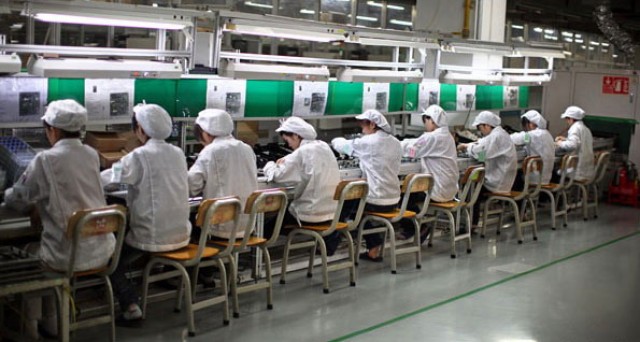
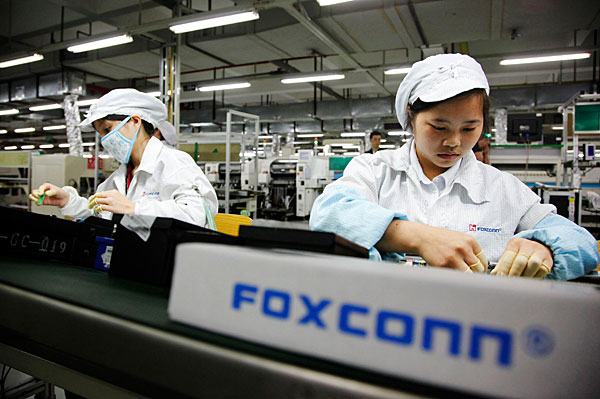
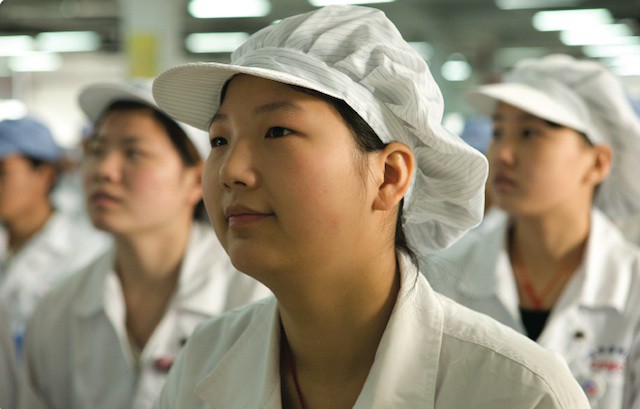
The China Labor Bulletin (CLB) has spoken out after an episode of This American Life, which highlights the poor working conditions at one Chinese factory, was retracted last week, making it clear that this does not clear Foxconn’s name. “The press and stock investors will continue to watch how Foxconn treats its workers,” the CLB made clear.
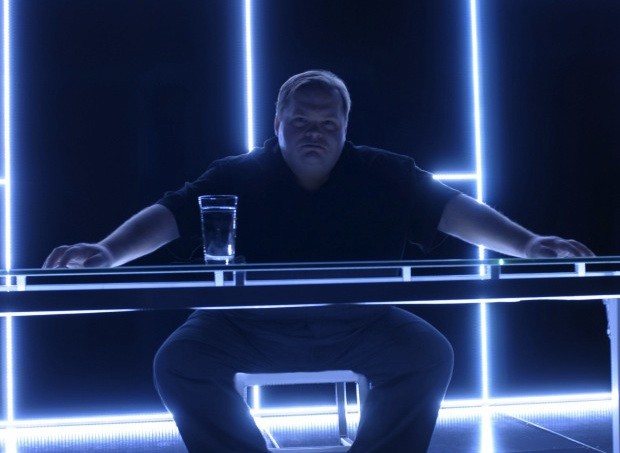
Mike Daisey performing "The Agony & Ecstasy Of Steve Jobs"
This American Life‘s January episode “Mr. Daisey Goes To The Apple Factory” was the show’s most popular episode in history, racking up over one million downloads and setting off a chain reaction of reports that eventually resulted in Apple ordering an independent audit of working conditions in its supply change.
The titular Mr. Daisey has been covered exhaustively by Cult of Mac. He is probably best known outside of his NPR appearance as the man behind the one-man show “The Agony & Ecstasy of Steve Jobs”, which Apple co-founder Steve Wozniak wept at.
Unfortunately, Daisey’s integrity and honesty are being called into question after This American Life took the unprecedented step of retracting the episode earlier today,
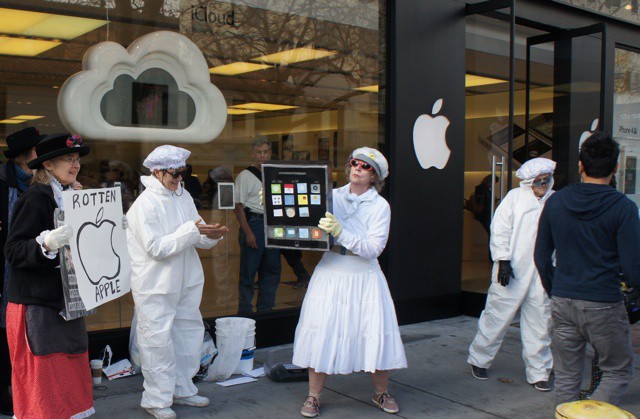
Raging Grannies protest outside the Palo Alto store Feb. 13
If you happen by the Palo Alto Apple Store Monday afternoon, that group of elderly women dressed in white dancing the robot to techno music on the sidewalk aren’t some funky flashmob.
They’re Raging Grannies, and they’re are mad as hell about worker conditions in China where Apple products are made.
Galvanized by a recent Mike Daisey story on NPR about Foxconn, they’re staging monthly protests outside the Palo Alto Apple store. They’ll be on the sidewalk grooving to bring more attention to Apple’s labor policies in China at 3 p.m. on March 12.
Mike Daisey performing "The Agony & Ecstasy Of Steve Jobs"
Playwright Mike Daisey has released the transcript of his influential monologue, The Agony And The Ecstasy Of Steve Jobs, under a royalty-free license.
The move will allow Daisey’s hit play about the conditions in Apple’s Chinese factories to be performed anywhere in the world without restriction.Indeed, Daisey claims that more than 500 groups and individuals in 13 countries have contacted him because they want to stage it.
“No one has done this before,” said Daisey in an email to Cult of Mac.com. “Theater doesn’t do a lot of things like this, and certainly not with a transcript that could have been sold — I had offers from two publishers — for real money.”
Daisey said there’s interest from three major theaters in Germany, a mid-size theater in Spain and two in France. There’s an actor who is planning to perform it in Kurdistan, a group in Nova Scotia that is adapting it, and a group in New York planning to turn it into a full-on play.
“There’s a lot,” says Daisey. “It’s going to be interesting.
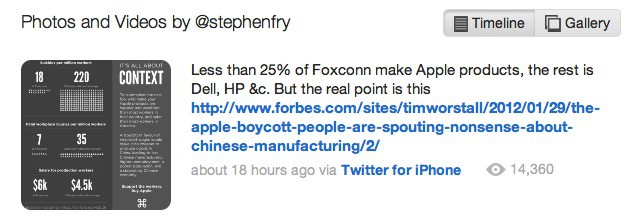
Stephen Fry, brilliant comedian, wonderful actor, and bon vivant just posted this in his Twitter feed:
As a fellow raconteur it’s painful to have to confront Mr. Fry with this fact, but he’s being a total idiot.
He’s in good company—most of the Mac universe is in the midst of a massive propaganda campaign, trying to convince itself and the universe that the cognitive dissonance they are feeling at this moment isn’t real.
So you’re going to see some good people, like Mr. Fry, who happen to love their Apple products very much, say some horrible things because they don’t actually understand how to reconcile the beauty and grace of their wonderful Apple products with the unvarnished, verified truth of how they are produced.
Chinese manufacturer Foxconn has been the center of much criticism lately, with reports of worker suicides and the inhumane treatment of employees stirring up controversy. The issue has even reached the desk of funnyman Jon Stewart at The Daily Show.
Popular radio show This American Liferecently aired an episode on Foxconn that every Apple/technology enthusiast should listen to. Monologist Mike Daisey describes his trip to Shenzhen, China and the mini-city known as Foxconn. (And this isn’t the first time he’s spoken out on Foxconn’s behalf.) It’s an incredibly interesting look at where our gadgets come from and the people that make them.
Wow! 2011 has been one of the most interesting years in recent memory for Apple Inc. Of course the death of Apple’s co-founder, Steve Jobs, stands out as one of the most important events of the year for Apple, but there have been a load of other stories too that have made 2011 a very memorable year for the fruit company. From one controversy to the next, to record-breaking earnings, and new products, Apple has plowed through 2011 with a steady determination to be the best technology company on the planet. Only one device underwent a redesign (the iPad), while other form factors stayed the same. Instead of focusing on making pivotal leaps forward with hardware, Apple’s main focus of 2011 was to fortify their strong foundation in the software game.
Here’s Cult of Mac’s look back on the Apple in the year 2011.
Steve, is that you? Courtesy Seattle Repertory Theatre.
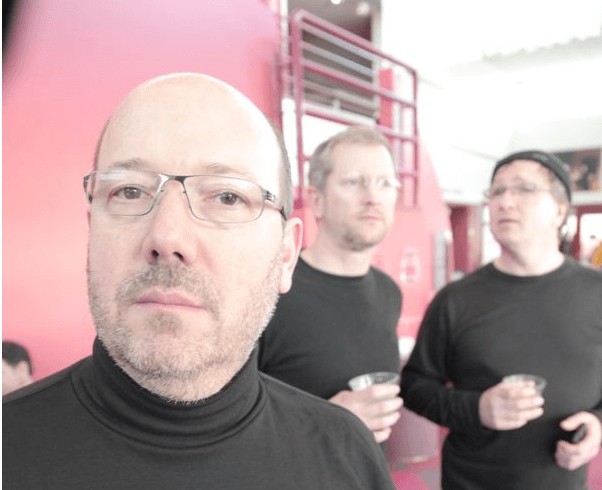
To create buzz at the Seattle premiere of Mike Daisey’s excellent “The Agony and the Ecstasy of Steve Jobs,” the host theater threw a lookalike contest.
Maybe you had to be imbibing the complimentary Appletinis (har!) to appreciate it, but none of these guys, or the gal, who participated look much like Steve Jobs.
Note to self: a black turtleneck does not an icon make.
The New York Times‘ Bay Citizen website has published more remarks from Apple cofounder Steve Wozniak on the subject of Mike Daisey’s controversial one man show.
As previously reported, Woz was moved to tears by “The Agony and The Ecstasy of Steve Jobs,” a monologue about Apple and Foxconn, the company’s largest supplier in Asia that saw a rash of worker suicides last year.
Wozniak says he found the play deeply upsetting. He urges Tim Cook, Apple’s COO and current acting CEO, to go see the one-man show besucase the issues it discusses could hurt Apple financially in the future:
Tim should know about this very soon, so that he knows what’s in more and more people’s heads. The emotions and understanding and moral feelings that Mike brings out are very strong and could be a threat to Apple’s future, even though they are only simmering now.
The main point of performer Mike Daisey’s powerful one-man show about Apple and its Chinese factories is that in China, it’s cheaper to have people make products rather than have machines make those products. As a result, people are treated like machines. They perform the same tasks, day in, day out. They work excessively long hours and if they break down, they are discarded. Most tellingly, if they try to commit suicide, the factory puts up big nets around its buildings to catch them. Nothing about the work or the workplace is changed.
It’s these nets that Apple touts in its just-published Supplier Responsibility report, which details the progress it has made during 2011 in imposing standards on its overseas contractors. The report discusses child labor, factory poisonings and conflict materials. A whole section is devoted to the suicides in 2010 at Foxconn, its largest overseas supplier.