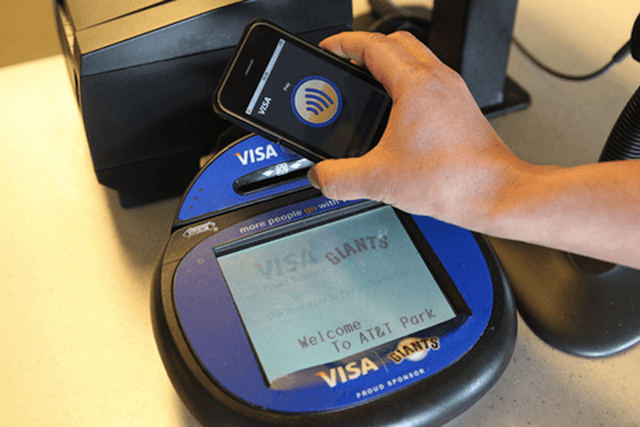
In November of last year, Cult of Mac reported that the iPhone 5 would gain a near-field communications chip, which would enable an ambitious remote computing scheme that would effectively allow you to take your desktop Mac’s settings and files “on the road” with you, syncing it with another Mac just by waving your iPhone in front of the screen.
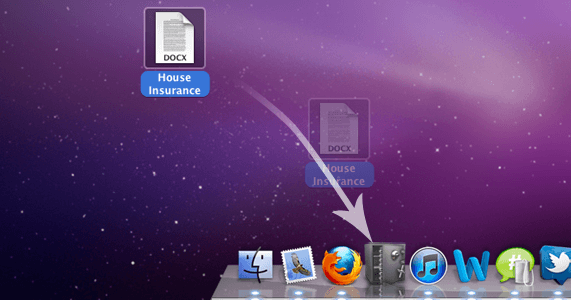
Now Apple has been awarded a software patent for a new OS X feature that could be an integral part of their future remote computing plans: it describes a way for users to secure vital files in a virtual ‘safe deposit box’ which would then encrypt them and possibly even upload them to the cloud.
Apple Pay's ease of use may lead to increased impulse buying -- and that's exactly what Apple's hoping for.
On Monday, we reported how Apple is working on a streaming-only iPhone. The smaller, lighter device will have limited storage. Media and data will be streamed to the device over the network, like the second-generation Apple TV.
In November, we reported that the iPhone 5 will use a Near Field Communications chip (NFC) to enable an ambitious remote computing system. Wave the NFC-equipped iPhone near any compatible Mac, and the user’s entire Home directory will be loaded onto the guest machine — files, photos, music and even the same desktop background. It will be as though the user is sitting in front of their home computer. Apple has even patented the system.
Analysts all seemed united that Verizon was going to sell a lot of iPhones the first week they were available. With breathless anticipations, these analysts rattled off predictions. Would Verizon sell 500,000 iPhones? A million? A jillion? The sky seemed to be the limit.
Well, admittedly, it’s informal, but Boy Genius Report has some exclusive numbers on how many iPhones Verizon sold through five Apple Store locations in the first five days of sale… and as you can see, while the Verizon numbers are undeniably higher than the AT&T numbers, they’re not orders of magnitude greater. Verizon and Apple are reportedly disappointed.
As Apple’s stock takes a pounding on rumors that Steve Jobs is in hospital, the Wall Street Journal says he’s up and about and still on the job.
According to the Journal, Jobs is still on the job, taking meetings about the IPad 2 and iPhone 5:
The 55-year-old Mr. Jobs, whose ailment hasn’t been disclosed, has been taking business meetings at home and on the phone, these people said.
He also has been seen on Apple’s Cupertino, Calif., campus and in public in Palo Alto, Calif., with a company executive, said people familiar with the matter.
There’s the possibility that the WSJ story is a plant from Apple’s PR department to counter the Wall St. rumors. Apple’s stock started plunging at around 3PM EST: the Journal’s story, which is based on unnamed sources, appeared about three hours later, at 6PM. The timing may also be a coincidence, of course.
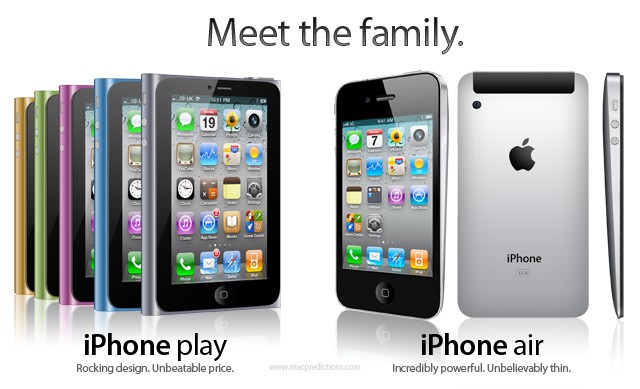
We like the sound of this one: Apple is rumored to be working on a smaller, cheaper iPhone — the iPhone nano. Best of all, the $200 iPhone will be contract free and may be dual-mode.
According to Bloomberg, the new handset will be about one-third smaller and be based on older, cheaper components to keep the price down. Apple already has a prototype (more likely, prototypes) and plans to introduce the new iPhone mid year.
The new iPhone may also be dual-mode. Bloomberg says Apple is also working on a dual-mode GSM and CDMA handset that would work on almost all networks — this may or may not the iPhone 5, and may or may not be in the new, smaller iPhone. Would make sense if it was though.
The cheaper handset is to counter the relentless march of Android phones, which are beating iPhone market share (but not iOS market share).
Bloomberg has great sources and has a good track record with Apple rumors. If true, it’s huge. It would upend carrier subsidies and the whole wireless business, givung control back to consumers and device makers.
As we noted in our prediction piece, Apple is currently competing only at the high-end, and has nothing to counter Android at entry-level prices. We predicted Apple will introduce a cheaper iPhone this year to widen the “price umbrella.” We called the cheaper iPhone, the “iPhone play.”
Of course, the iPhone nano rumors are as old as the hills.
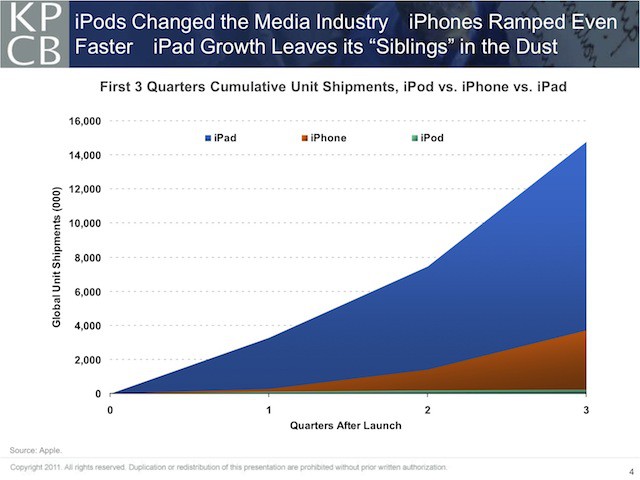
The iPad is taking off faster than anything Apple has shipped before, including the iPod and iPhone, both a pair of monster hits.
Look at this amazing chart from Mary Meeker, a former Wall St. analyst who is now with the VC firm Kleiner Perkins Caufield & Byers. It shows the initial shipments of the iPad compared to the iPhone and iPod.
When the iPod was introduced in 2001, Apple shipped 236,000 units in the first three quarters. In 2007, the iPhone shipped 3.7 million units in its first three quarters. But the iPad blows both away: 14.8 million units shipped.
Steve Jobs has said the iPad was like “catching a tiger by the tail.” No kidding.
And here’s how the iTunes App Store is selling vastly more apps than it sold music or movies:
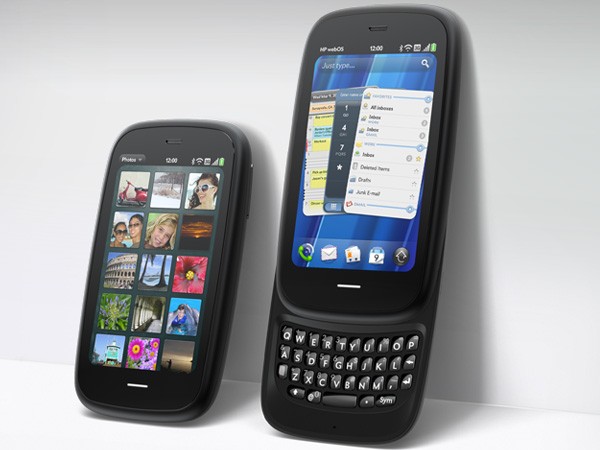
Rounding out a triumvirate of new webOS devices, HP just took the wraps off of the third-generation Pre, or Pre3, their new flagship webOS smartphone. Unfortunately, while the HP Veer was a cute pebble of a phone filling a unique niche, and the HP TouchPad is an able iPad competitor that might even hold its own against the iPad 2, the Pre3 just seems generic.
Yet another Wall Street analyst has weighed in with a prediction on sales of Verizon’s iPhone, which becomes available to everyone Thursday. Apple and Verizon will top the 1 million mark during the first week, RBC Capital Markets’ Mike Abramsky told investors Wednesday.
Despite the iPhone 4 being available for 8 months with AT&T, the Verizon launch could threaten Apple’s estimated 1 million to 1.5 million unit initial inventory, the analyst warned. Between 3 million and 4 million iPhone 4 handsets will be sold by Verizon and its partners during the first quarter after the units become available, Abramsky adds.
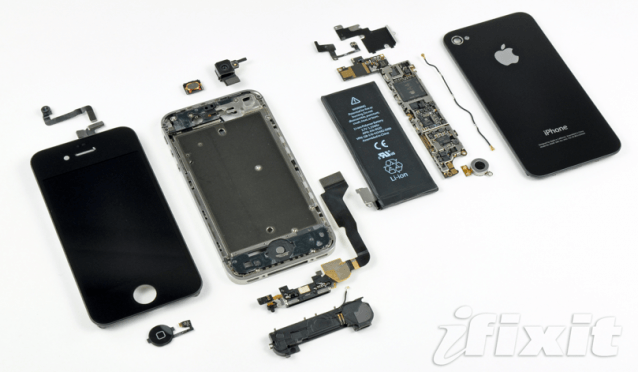
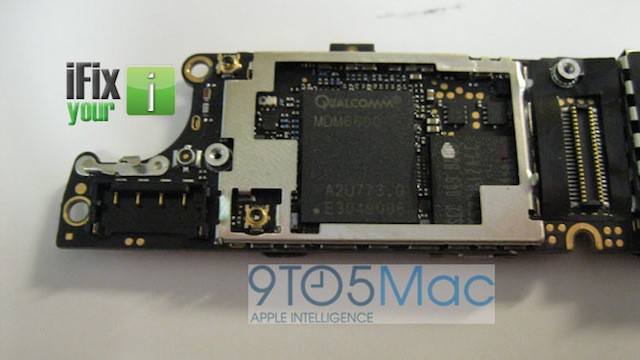
Apple’s latest iPhone 4 launched especially for use on Verizon’s CDMA network has already been given the teardown treatment by our friends over at iFixit, and their findings have revealed that the revised device packs a redesigned vibrator, and changes to the location and design of RF components. However, the most surprising discovery is the Qualcomm MDM6600 chip, which is dual-mode GSM and CDMA compatible.
The use of this particular chip, which also features in the Motorola Droid Pro, signifies that the iPhone 5 will surely be dual-mode, allowing Apple to ship one handset for both Verizon and AT&T, as well as every other carrier in every other country.
The full iFixit teardown of the Verizon iPhone 4 is certainly worth a read, buy you can check out our highlights from the teardown after the break!
Our friends at 9to5Mac have torn down the Verizon iPhone and found a tasty surprise: it’s based on a GSM world phone-compatible chip!
The VZW iPhone is based on the Qualcomm MDM6600 chip, which is dual-mode GSM and CDMA compatible. That means the iPhone 5 will also surely be dual-mode, allowing Apple to ship one handset for both Verizon and AT&T, aw well as every other carrier outside the U.S.