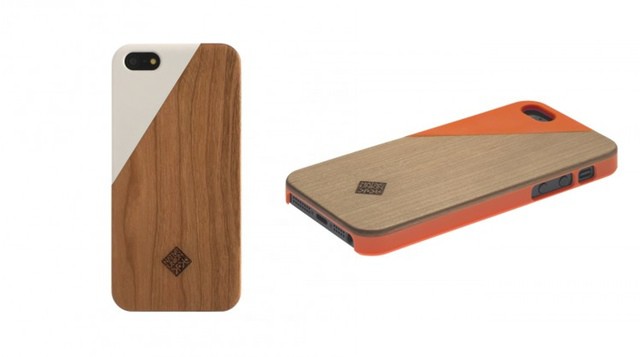
Got wood? Good. Then you won’t be interested in the new Clic Wooden case from Native Union. It’s a rather slick little number featuring a solid cherry wood back panel with a high-gloss plastic insert.
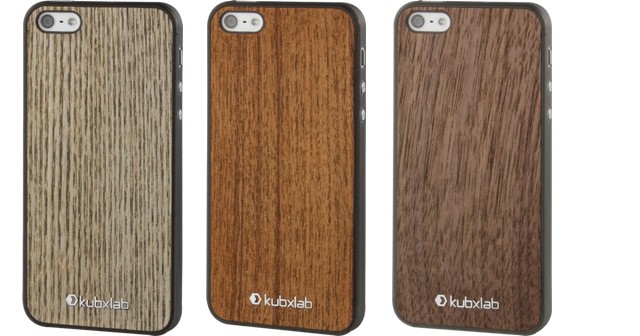
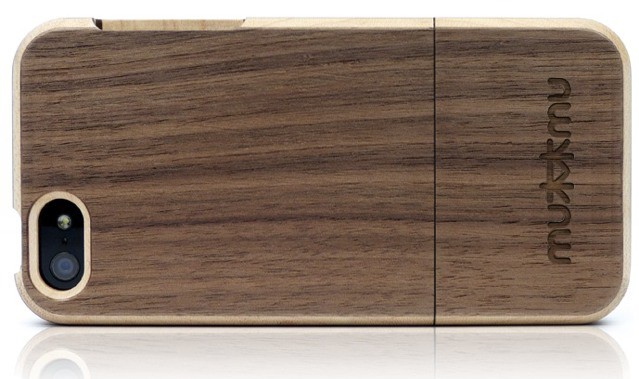
According to the fine folks at Kubxlab, there are three kinds of wood in this world: Light Wood, Dark Wood, and Brown Wood. And – as luck would have it – all three are available as materials for Kubxlab’s Ultra Thin iPhone Case.
It might just be the dozen-odd years I was spent chained to the wall in my grandmother’s basement, a stain on the orange shag carpet my only friend, but I have a natural affinity for slapping wood panneling on any gadget I have. Especially Apple products.
One of the companies that has helped me in this quest of mine is RAW BKNY, a Brooklyn-based woodworking and laser-etching shop which has put out some really bitching wood veneers for the iPhone and Macbook.
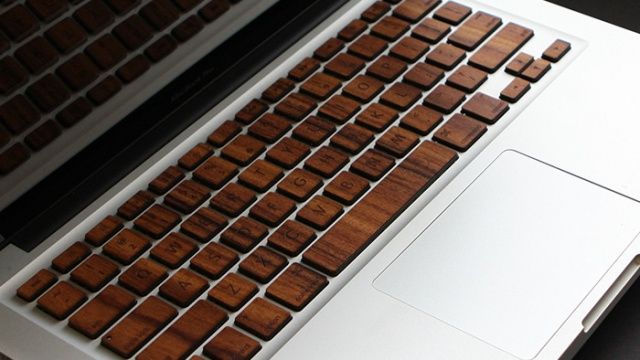
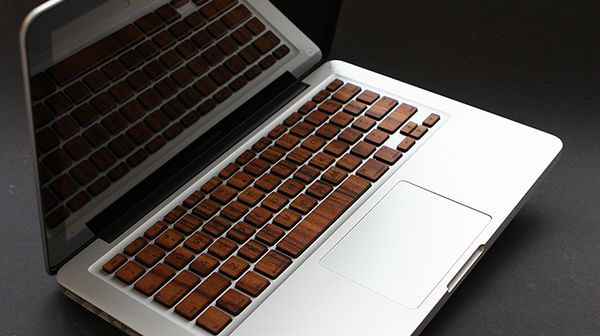
Now they’ve got a new Kickstarter, and I’m super psyched about it: how’d you like wooden keys for your Mac?
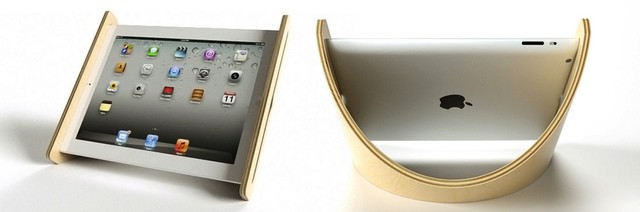
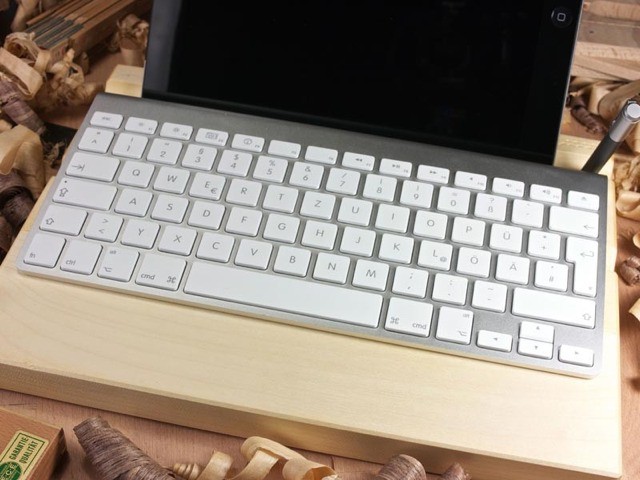
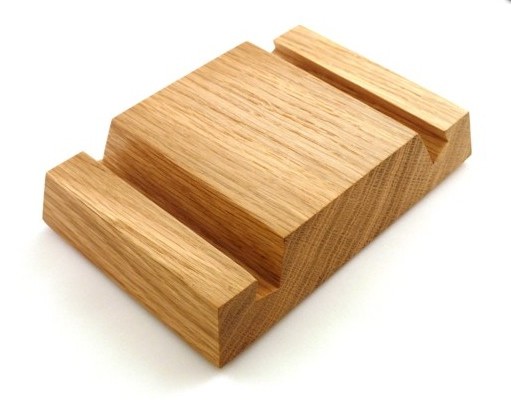
Having just discovered that my beloved PadPivot iPad stand also works great with a closed MacBook Air (the 13-inch), you’d have a hard time convincing me to buy another iPad stand, especially one which only has a single angle of view, and which only holds the iPad in horizontal mode.
However, the Sne Stand, fashioned as it is from beautiful bent Baltic Birch plywood, is certainly tempting. Right up until you get to its $90 price tag.
They look great, and Michael over at RAWBKNY says that while they are only designed for the non-Retina MacBook Pro right now, he’s tweaking it so it should work on the Retina MacBook Pro and MacBook Airs soon.
We’ve got a review unit on the way to see how well these work, but be warned: replacing every key on your MacBook is likely to be a time consuming process. $40 will get you a set.
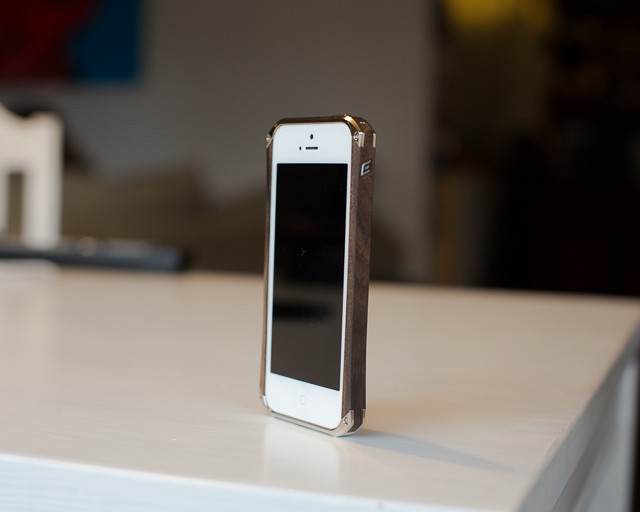
Made from rare woods, leather, and nickel-plated aluminum, Element’s Ronin iPhone 5 case is definitely one of the most beautiful and finely crafted cases I’ve seen. But at $180, its price might be hard from some to swallow.
What could be classier than adding a few extra millimeters to the height of your keycaps whilst simultaneously collaborating in the death of a walnut or cherry tree? Nothing, that’s what. Which is why these Lazerwood keys for Apple keyboards are pretty much the best thing ever.
These gorgeous wooden iPhone 5 cases come from the U.K, and look like they’d cost you an absolute fortune. Amazingly, for something hand-crafted and exquisitely designed, they cost just £35, or $56. Sure, it ain’t cheap, but neither is it crazy.
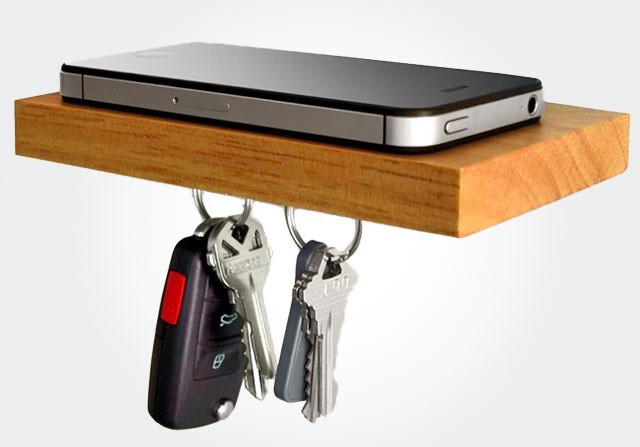
“Plank of wood” might be a lame sounding iPhone accessory, but tell that to a kid whose favorite toy is a “cardboard box” or an iPad owner whose favorite computer is a slab of glass with a metal back.
And the plank in question actually packs some pretty great features, ready to be accessed while it floats up there in front of your wall. That’s right. I said “floats.”
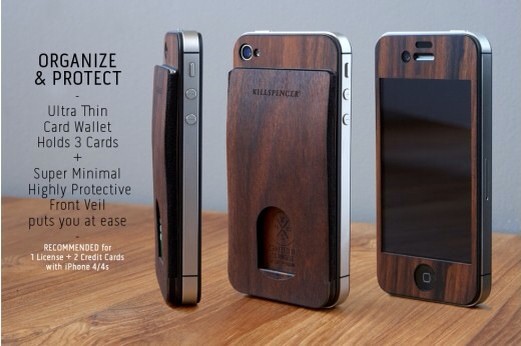
This hot rosewood case might be enough to get me using credit cards.
Killspencer might sound like an order to murder somebody with a fancy name, but it is in fact just an innocent iPhone card-case made from Rosenkrantz*. No. Wait… I mean rosewood.
Wood is the perfect complement to tech. As mere consumers, wood calms us whilst surrounding more complicated hardware. It provides warmth. It is accessible. And it looks brilliant.
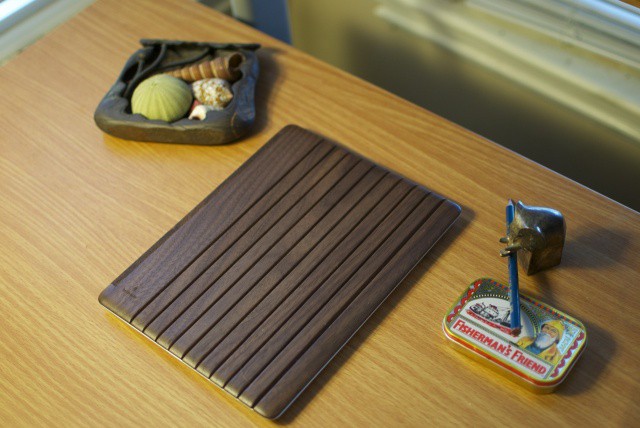
I was an early adopter. The television I grew up with was a wood-blocked behemoth that took both parents to move across our jungle of shag carpet; a task embarked upon only once a year, when we needed to make room for a Christmas tree. Wood has received a wonderful resurgence in the design community of late, with some covet-worthy examples in this desk set and the Monolith iPhone back, lovingly reviewed in April on this very site.
You can imagine my delight, then, when Charlie Sorrel posted about the Miniot Cover Mark Two, or Mk2, this spring. Dissatisfied with most covers I’ve tried for the new iPad, I had to get my hands on the Mk2. And what a dapper little devil it turned out to be.
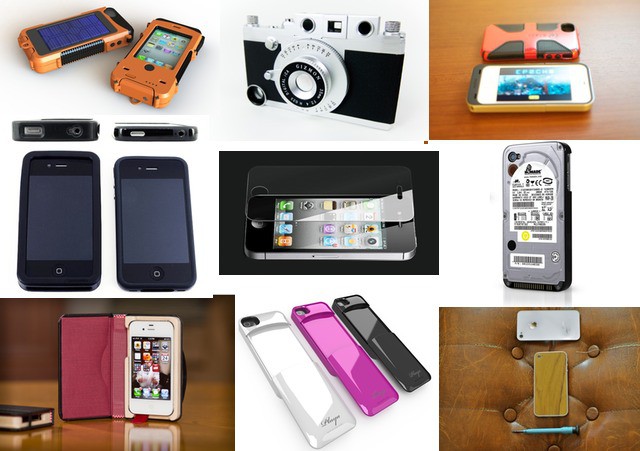
Ideally, we’d all carry our iPhones as God intended — naked. But just as our pink and delicate human bodies need protection from the elements, so does the iPhone. Sometimes all it needs is a skimpy Speedo, other times a full suit of body armor, but you can be sure there’s a case for every occasion. Here’s our roundup of the best iPhone cases out there.
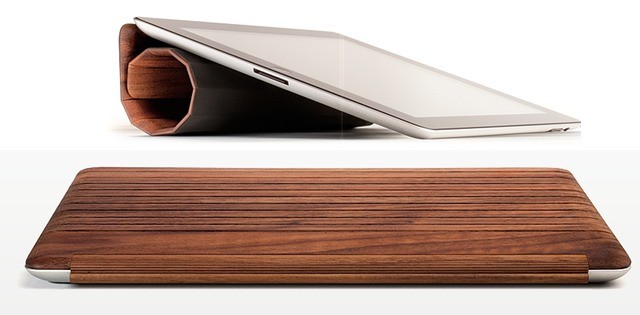
Roll up, roll up! See the magical wooden iPad case in action!
Apple’s Smart Cover is about as minimal as minimal gets, but recently mine has been getting a little slack — literally. Meanwhile, Miniot’s Mk2 wooden iPad cover looks like it may match Apple’s minimalism while actually working a lot better.
The Contega adds some real flexibility to the bookbindery case design. Photo Charlie Sorrel (CC BY-NC-SA 3.0)
In theory, there are two players in the bookbindery iPad case market: Pad&Quill and Dodocase. But that’s a little like saying that there are two players in the tablet market itself: iPad and (snicker) Android. Technically it’s true, but the difference in real life is huge.
Sure, Dodocase makes a nice lightweight case, but it is pretty much the same one it launched a couple years ago. Pad&Quill’s cases, on the other hand, have just gotten better, iteration by iteration. Just like Apple’s products.
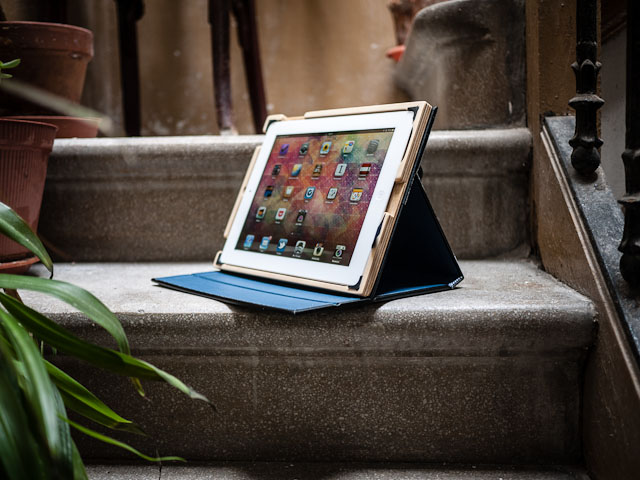
The latest are the Contega and Octavo cases for the iPad 3, and they pack a surprising amount of tech into such a traditional design.
One of the saddest things about tech is that unlike other fashionable things, the aesthetic trend that might dictate what gadgets look like for a few years never gets a chance to come back into style. The most we ever get is the chance to be nostalgic about the look of an old gadget, not to fall in love with the aesthetic behind its design all over again, as if new.
For example, debatably thanks to AMC’s period drama Mad Men, Danish mid-century design has really come back into style. A whole new generation of people have come to discover and love a design trend that a mere two years ago, all but a few people would have, at best, only known by a couple musty old relics collecting dust and mouldering in their grandparents’ garage. Watching Don Draper slip into an Eames lounge chair, or pour himself a drink from a gorgeous teak sideboard, or turn on a tulip lamp designed by Eero Sarinen, though, rejuvenates these items by allowing us to see them as they were meant to be used and experienced. It removes real, living objects from the obscurity of textbooks and turns them into fresh ideas, ready to be used again.
It’s for this reason that I love seeing wood in a gadget. It takes a trend that was ubiquitous in the 70s and 80s, when home electronics were big and bulky enough to be mostly considered a kind of furniture, and presents it as a refreshing anecdote to a modern trend in tech design that puts the emphasis on more impersonal and space-age materials like plastic and metal, silicon and glass.
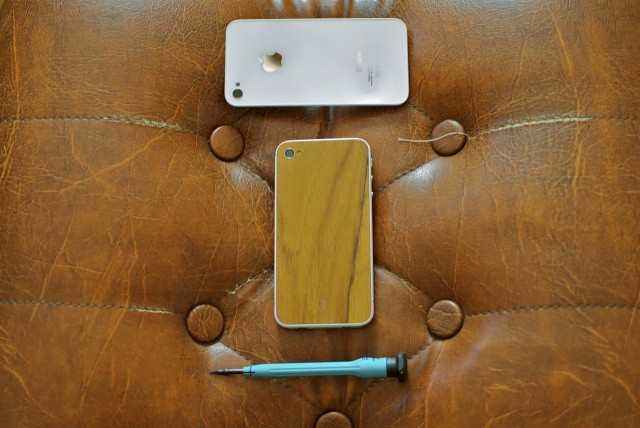
For me, wood can imply an intimacy — a device is yours, it was made for you — that makes it a perfect material for a smartphone: a device that is, by definition, the gadget with which most of us have our most personal relationship. And while Apple understandably doesn’t make iPhones out of wood, I’m delighted that a company like Monolithdoes, by offering a stunning line of natural wood backs for the iPhone 4 and iPhone 4S that are as practical as they are beautiful.
The Woodero is a slightly different take on the wooden iPad case. Instead of a solid sleeve (like several Bamboo cases we have seen) or a Moleskine-like book (like the baltic birch-frame Pad & Quill), it works like a cross between a pencil case and a desk drawer. It also looks rather impractical.
One of the biggest ways Apple has changed the world is by inspiring people across the globe to focus on great design. Take Rainer Spehl for example.
Rainer is a European furniture designer who, after purchasing a 12inch iBook in 2003, was so inspired by Apple’s design ambitions that he set out to create the perfect case for his new machine despite lacking any previous experience in case making. A series of prototypes were created and ideas where tossed around, but it wasn’t until five years later that he settled on a design that he loved. His passion for his craft would be inspiring to anyone and his products speak for themselves. His MacBook Pro cases are gorgeous.
Made from solid oak and lined with genuine cow-leather, the cases are friendly and subtle. Something that reunites nostalgia with the high-tech world of the present in a way that is comfortable and sincere. Rainer Spehl is a true master craftsman striving for perfection. It takes fives hours just to complete one case over the course of three days.
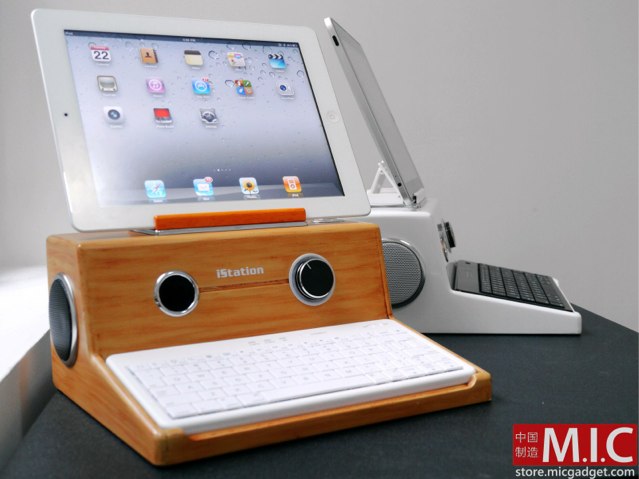
While Apple computers today are famous for their svelte aluminum enclosures, the company’s first machine — born way back in 1976 — was made out of wood. In a bid to bring back that look, the iStation dock attempts turns your iPad 2 into the original Apple Computer.
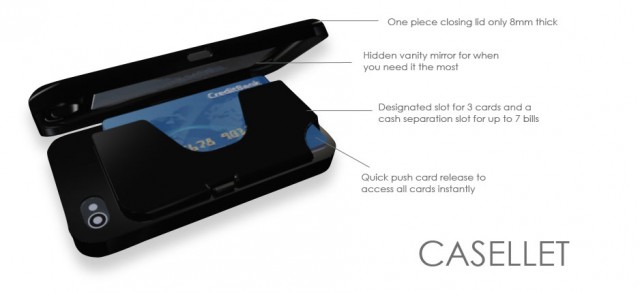
iPhone cases that allow you to leave your wallet at home by making room for your credit cards and cash are becoming increasingly popular. And because they’re popular, there’s a ton of them available. But nearly all of them have one thing in common: they’re made from leather (or a cheap leather lookalike material).
If you’re looking for something a little more robust, check out this Kickstarter project called the CASELLET.
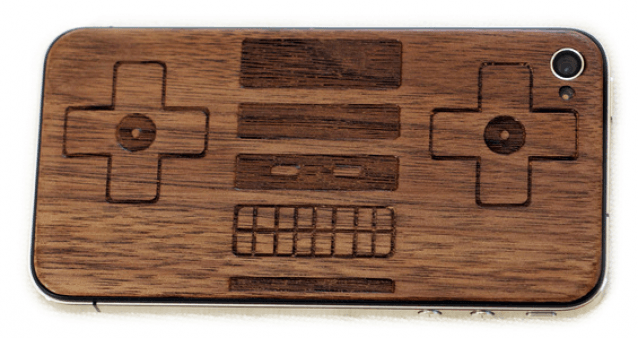
Okay, my iPhone hasn’t really got wood, but it could have, thanks to JackBacks. JackBacks create real wooden backs for your iPhone 4 made from natural bamboo that are completely customizable, allowing you to choose a design that really sets your iPhone 4 apart.