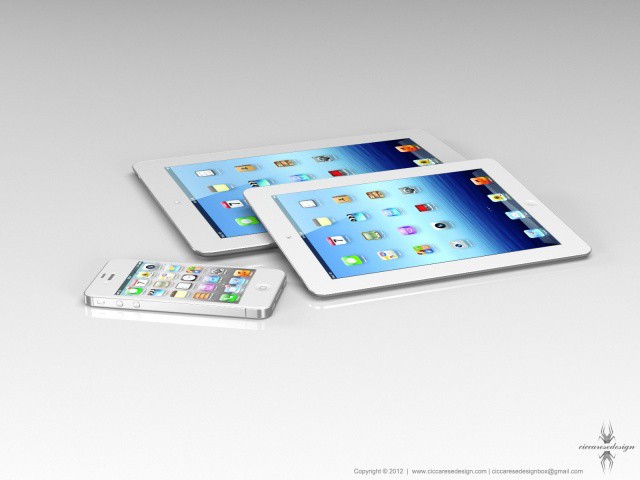
Apple could be making a mistake if it releases a smaller “iPad mini” alongside the new iPhone this fall, because according to a recent survey conducted by a leading coupon code site, nearly 80% of Americans will shun the tiny tablet in favor of the smartphone.
According to a new survey from Appcelerator, a mobile analytics and development company, developers for mobile platforms are moving to the enterprise market. When asked to choose one mobile operating system is best for the enterprise market in this year’s survey, the majority picked iOS (53 percent) over Android (38 percent). This is in marked contrast to last year’s survey, in which the platforms tied at 44 percent.
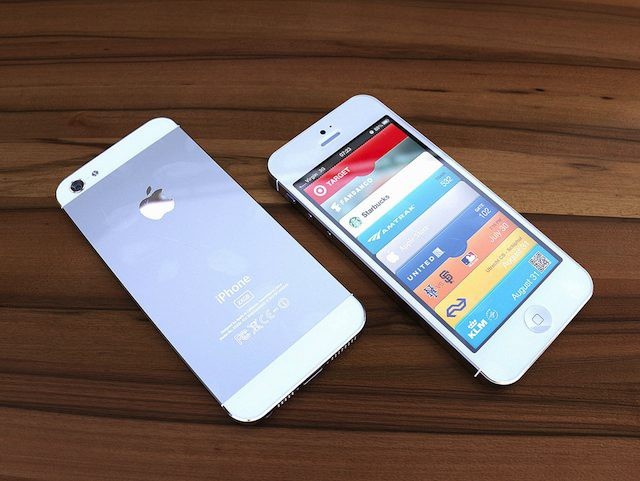
Samsung’s Galaxy S III has gotten off to a great start, and according to one company executive, it has already sold 10 million units. But it’s the upcoming iPhone that the majority of us are waiting for, according to a new survey. Demand for the iPhone 5 is “strikingly higher” that that of any other iPhone, and when smartphone sales hit an all-time high this fall, Apple will be the number one beneficiary.
Titles like Angry Birds, Tiny Wings, and Jetpack Joyride have proven that popular smartphone games are big business for developers. But why are we so addicted to gaming on our mobile devices? Well, according to a new survey from MocoSpace, a third of us do it just to kill time and cure boredom, while 10% of us do it to meet new people.
50% of marketing pros predict iPad continues to dominate business in 2013
The iPad currently dominates the business tablet market so thoroughly that you can pretty much call it the entire market. A big point of debate in many business and IT circles is how long Apple will be able maintain such a position. One research firm reframed that debate by simplifying the question.
Which operating system do you think will become the preferred business tablet option over the next 12 months?
50% of respondents said that they expect the iPad to maintain its lead in business environments.
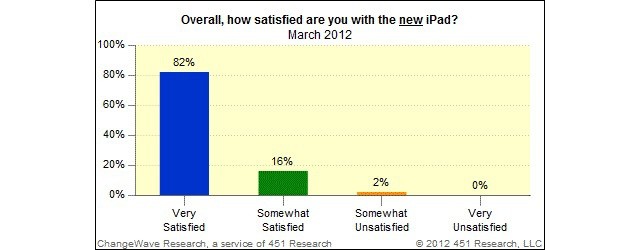
Well, here we go again. Despite the crowing of many “journalists” looking for a click, or so-called consumer agencies which have dumped objective reviews to chase page views, the public loves it some new iPads. According to a survey by ChangeWave, fully 82% of respondents said they were “very satisfied” with the new iPad. And adding in the numbers for “somewhat satisfied,” (16%) we get a 98% satisfaction rating. Not bad, right?
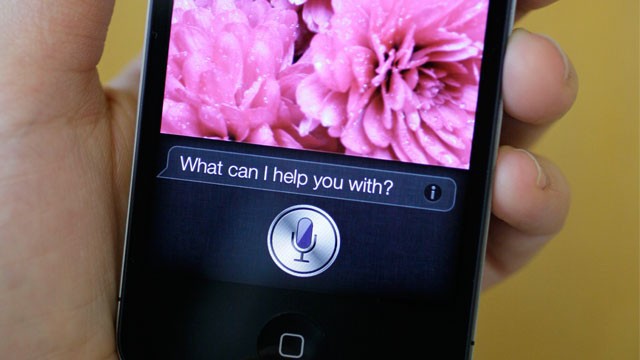
Siri is still popular among many iPhone 4S owners, but not everyone uses it to its full potential.
For some iPhone 4S users, Siri is a novelty that quickly wears off within a week or two of unwrapping the handset. But believe it or not, 87% of iPhone 4S users are still using the intelligent assistant at least once a month, according to a new study. Not many of them are using it to its full potential, however.
Hype for Apple’s third-generation iPad has reached a fever pitch leading up to tomorrow’s announcement. A whole lot of people are eager to see how Apple will leapfrog the rest of the tablet market yet again.
When we asked Cult of Mac readers if they plan to buy the iPad 3, over 50% of you answered with a resounding yes. A new survey indicates that over 40% of online shoppers in the U.S. also plan to spend their hard earned cash on the next iPad, but they want something from Apple in return: cheaper prices.
The mullet – that unfortunate haircut that is business in the front, party in the back – makes kind of an apt analogy with what’s going on with enterprise cell phones.
The iPhone has eroded the number of BlackBerry users, but many of them still use (or are obliged to use) company-mandated RIM devices at work.
This is what a study by Pyxis Mobile, a cross-device cross-device mobile application development platform, found. They polled mobile-toting visitors of Oracle OpenWorld 2011 including people who work in financial services, consumer goods, manufacturing, higher education, government, real estate, technology, and health and life sciences.
According to a study by research group InMobi, 41% of smartphone users in the US, Canada and Mexico are willing to buy a smartphone they have never seen. Yesterday Apple announced its next iPhone event to take place this upcoming Tuesday, and everyone is eagerly awaiting what Apple has up its sleeve.
Apparently, enough people have faith in Apple to place their bets on a phone that hasn’t been announced yet. More than 50% of surveyed consumers in the US said that they plan to buy the iPhone 5 within the next 6 months.
Despite what seems like too much iPhone 5 speculation at times, technical specifications and design details regarding Apple’s fifth-generation device are still very much a mystery to mere mortals like you and I. However, that doesn’t stop 35% of consumers wanting to buy the device before they’ve even seen it.
You know what they say, ignorance is bliss. According to a study by Retrevo, 34% of iPhone users believe that they already have a ‘4G’ device. AT&T and Verizon are starting to aggressively market their 4G networks, and new, 4G-equipped smartphones are hitting the shelves from iPhone competitors, like Android.
The typical consumer can be easily confused by similar numbering and phrasing in marketing, and the iPhone “4” seems to be the reason for all of this 4G confusion.
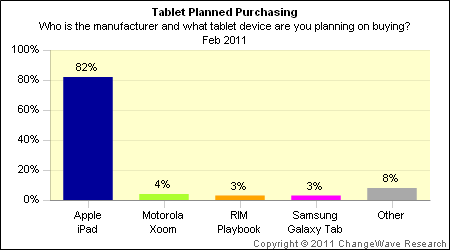
An astonishing 82% of consumers plan to buy an iPad despite the dozens of competing tablets due this year, a ChangeWave survey found.
There’s a caveat: that’s 82% of consumers who plan to buy a tablet in the next 90 days, which is only 5% of the 3,091 consumers surveyed in February – before Apple showed off the iPad 2.
Still, it’s a huge percentage. Only 4% plan to buy the Motorola Xoom; and 3% plan to buy RIM’s BlackBerry PlayBook and Samsung’s Galaxy Tab.
Further out, almost 30% said they will be buying a tablet in the future — also an amazingly high number. Not surprisingly, these tablets will cannibalize sales of netbooks, eReaders and even traditional notebooks.
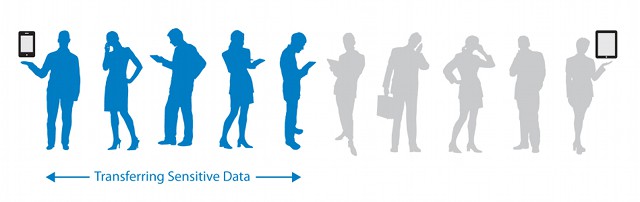
Half of all people using mobile devices for business transfer “sensitive” data over smartphones and tablets, according to a Harris Poll released Thursday. Results of the survey, compiled from the responses of more than 2300 Americans in late January 2011 indicate tablets such as Apple’s iPad may herald a post-PC society, with men and younger audiences more likely to trust the security of their mobile data.
FuzeBox, developers of collaboration solutions for desktop and mobile installations, commissioned the survey, which found that sensitive data transfers appear to be increasing in the mobile universe as professionals begin to adopt tablets in larger numbers, and that tablets, generally, increase the likelihood of transferring sensitive and private information.
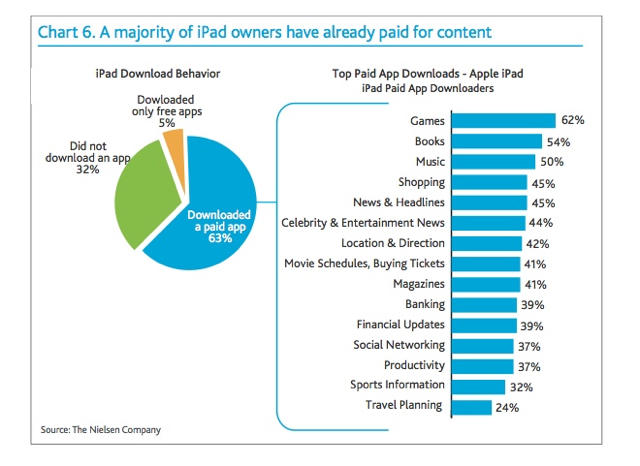
For those of us who practically live in third-party apps, it can be hard to believe that it’s even possible to own an iPad without immediately hitting the App Store… but a new Nielsen survey says that the app-less iPad is a common occurrence.
How common? According to the Nielsen Company, who polled over five thousand owners of “connected devices,” one-third of the iPad owners surveyed have never downloaded an application at all.
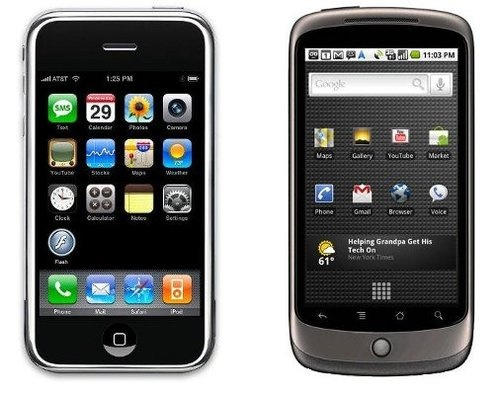
The findings of a recent survey by Coupons.com has all the trappings of some sort of offensive, stereotypical joke… but without the punchline.
Analyzing the findings of how both users on both the Android and iOS operating systems use their website, Coupons.com came to some interesting findings as to what separates the two.
iPhone users? According to Coupons.com, they can best be described as “feminine-smelling, chicken-eating, entertainment-reading fish owners.”
Android users, though, are “manly-scented, pork-eating, news-reading bird lovers.”
These results certainly don’t seem to apply to me. On one hand, I fall into the Android category as far as my pheremonal stink and budgerigar ownership are concerned, but I certainly prefer chicken to pork, and I use iOS exclusively… which according to Coupons’ research, makes me some sort of weird, fish-stroking girl. And what about pork-abstaining Android users, Hassidic and halal alike? There is more research to be done here methinks, Coupons.com.