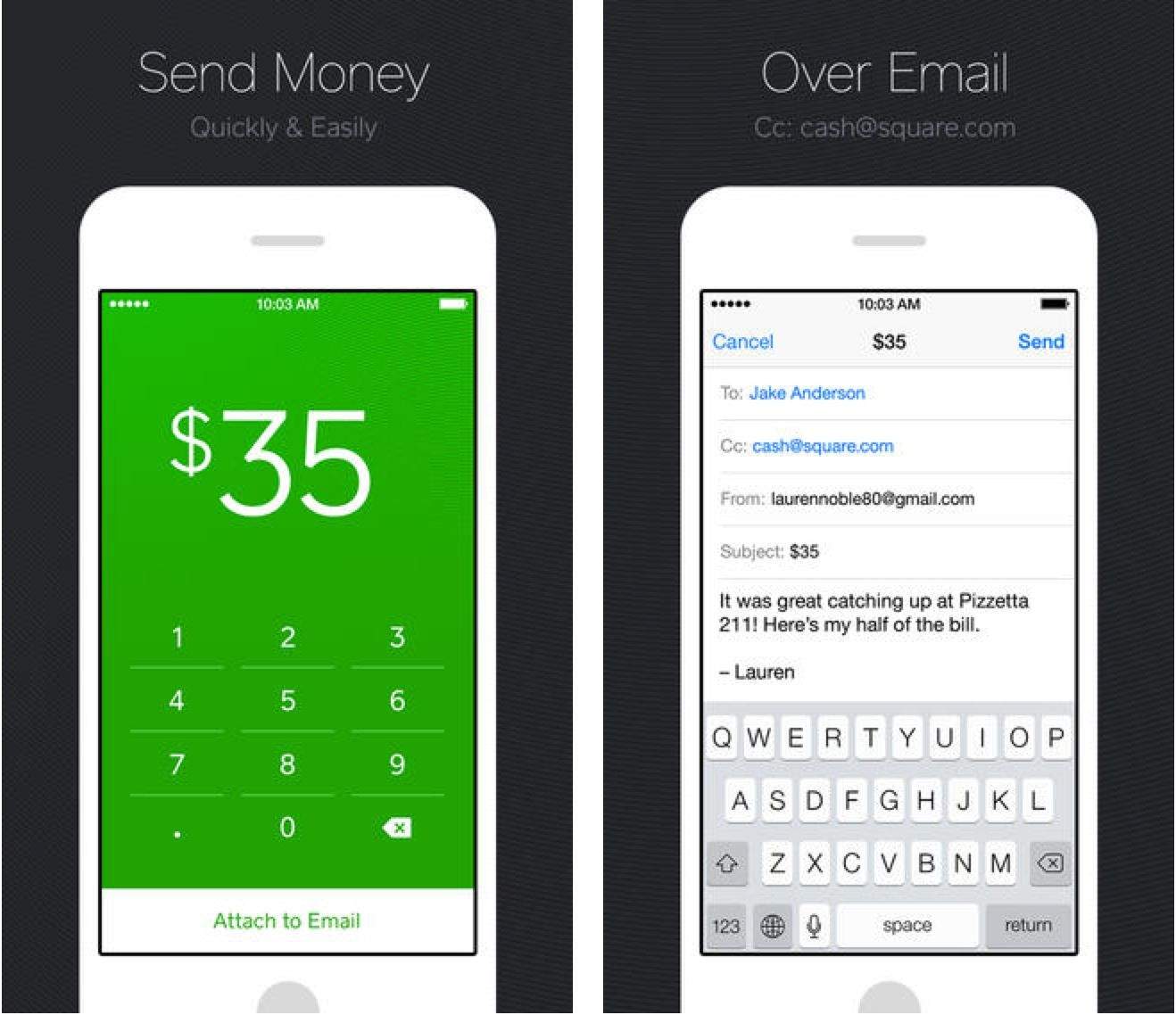
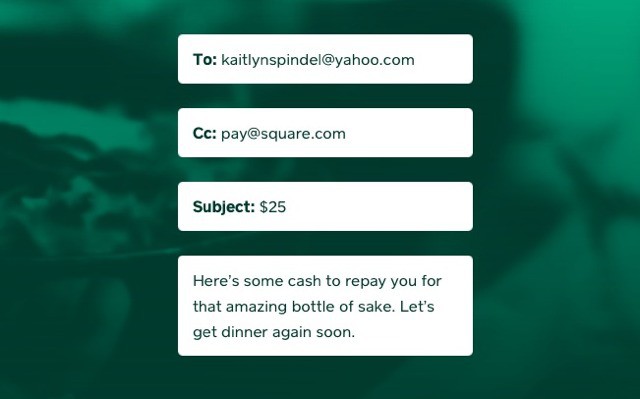
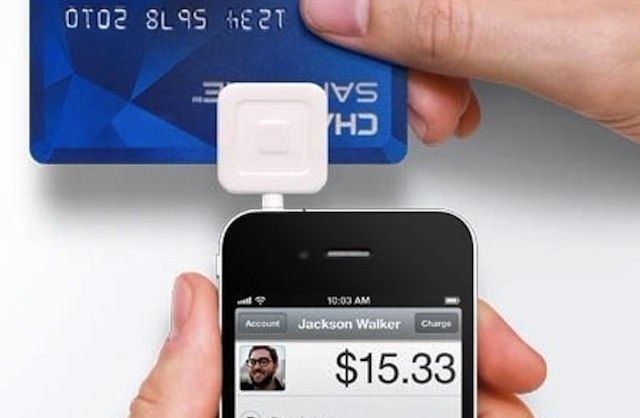
Square has unveiled a new product called Square Cash that lets you send anyone money from your bank account through email. You compose a new email to the person you want to pay, cc [email protected], put the amount in the subject, and send. No hidden fees or strings attached.
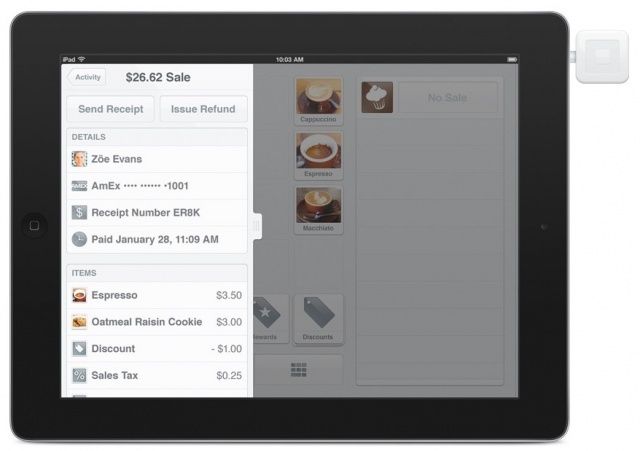
Mobile payment startup Square has updated its Register app with several new features. Both the iPhone and iPad versions of the app can now record and track payments, including checks and gift cards. On the iPad, merchants can reconcile their cash drawers using the app’s clean interface. The portable SM-S220i printer can now be used to wirelessly print receipts from the app via Bluetooth.
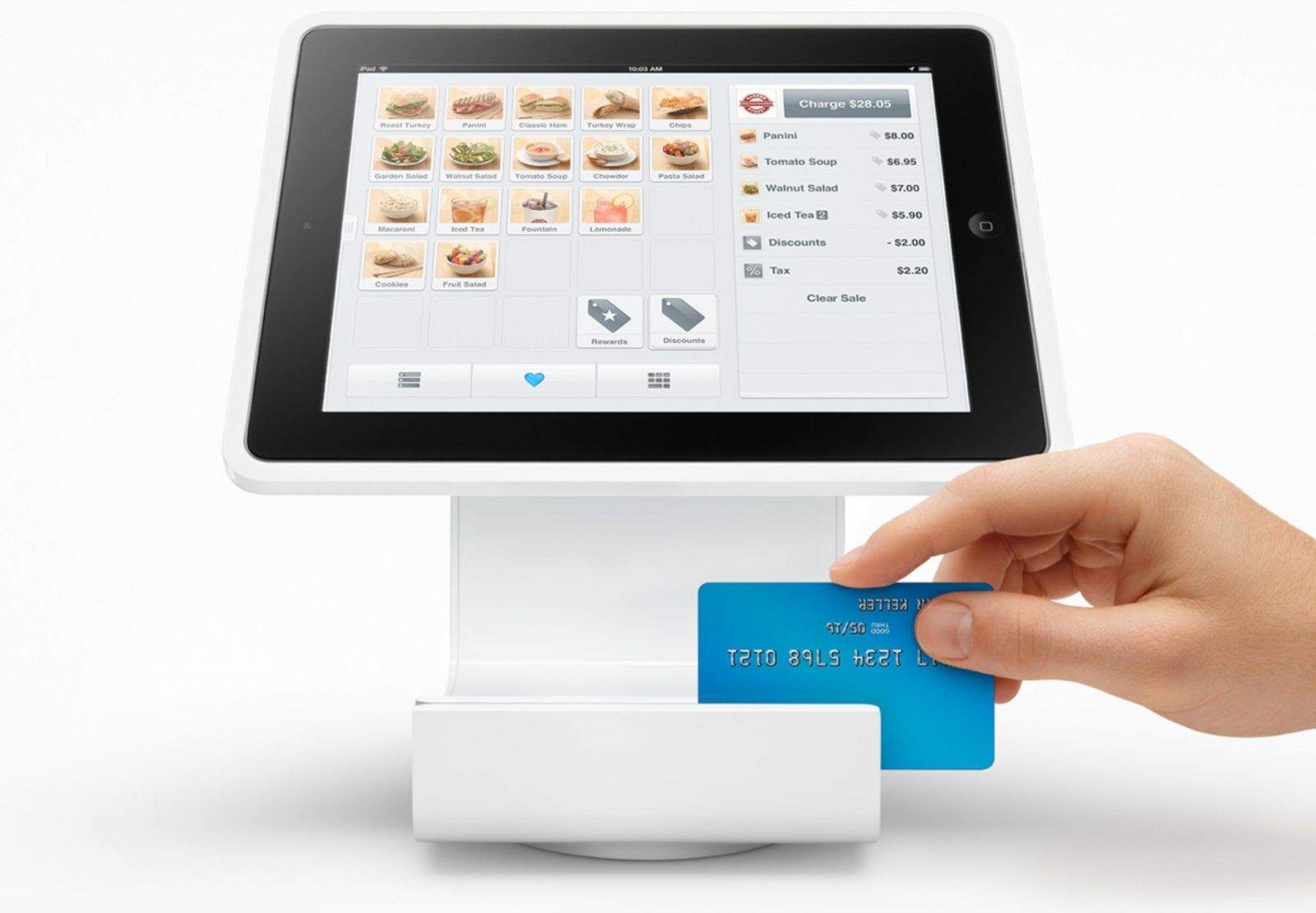
The Apple Store and Best Buy recently started carrying Square’s iPad stand that helps turn the device into a point-of-sale machine.
Square Register is available for free in the App Store.
Despite new technologies for mobile payments, customers trust familiar companies like Apple.
Square has quickly risen to popularity thanks to its clever credit card payment system for iPhone and iPad that has been adopted by small businesses across the country. To compliment its payment system, Square launched the Square Register last month, and today it just introduced its new eCommerce portal called Square Market.
Square Market is an online marketplace for businesses to list and sell their goods across the U.S. (think Etsy or eBay). Anyone can open a store for free with items photos and a profile of your business. You can even post items directly to Twitter to generate interest in your business.
Here’s what Square’s Director of Discovery, Ajit Varma, had to say about the launch:
I’m strictly a cash-only kind of guy. I like my purchases to be anonymous, I like to deprive the credit-card companies their slice of the transaction, and above all I like the feel of the greasy, germ-laden slips of paper in my fingers. 1
However, I recognize that sometimes you just don’t have any cash. Like when you’re supposed to be splitting the dinner bill and your friend ends up paying yet again because you “don’t want to split this fifty.” Well now your sorry payment-dodging days are coming to an end, my friend. Why? Square Cash.
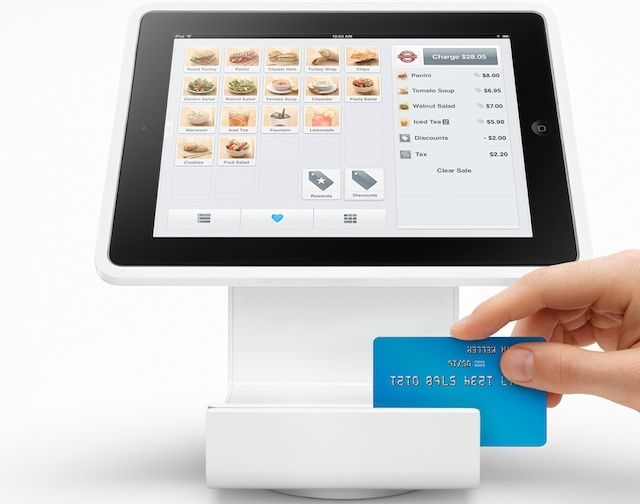
Square is quickly becoming one of the most convenient and coolest ways for small businesses to process transactions. If you’ve ever visited a shop that uses Square you’ve probably seen a number of improvised iPad cash registers, but Square just debuted its own iPad register called Square Stand.
The Square Stand will go on sale starting June 8th for $299, but you can already pre-order it on Square’s website. The new hardware is to be utilized in conjunction with the Square Register app that is already used by thousands of businesses across the country.
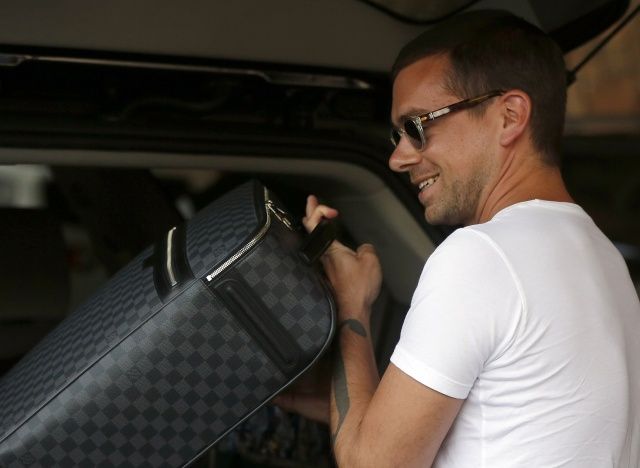
As the CEO of Square, and co-founder of Twitter, Jack Dorsey has quickly become one of Silicon Valley’s most admired CEOs. His Square payment system is quickly changing the way consumers buy things, and it’s making businesses and consumers interact on a more personal level.
Square’s goal is to make payments quicker and easier for both business and consumers, so the company has an intense interest in wearable tech. When asked in a recent interview whether he thinks Google Glass is an interesting product, Dorsey answered that he doesn’t see much value in Google Glass right now, but he’s intrigued by devices that wrap around the wrist – like Apple’s rumored iWatch – because they feel more natural.
When asked whether he’s looked into Google Glass, Dorsey had the following to say:
An iPad, Square, and an internet connection is all you need to run a small business.
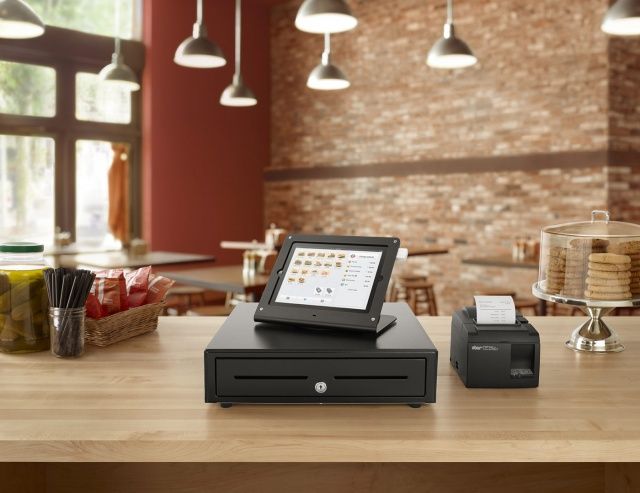
Square, the mobile payment startup that lets you pay for your coffee with an iPhone app, has announced a new product for small business owners. Since Square already specializes in helping merchants use the iPhone and iPad to process payments, the company is launching what it’s calling a “Business in a Box.” The package includes an iPad stand, cash drawer and optional receipt printer. It lets Apple’s tablet totally replace a traditional cash register.
Square, the Apple-like mobile payment service that’s all the rage right now, just integrated with Passbook in iOS 6. Before you get too excited, the integration only allows iPhone users to store and use the new gift cards that can be sent via the Square iOS app. Square lets you pay for your stuff with your bank credentials while Passbook still does not.
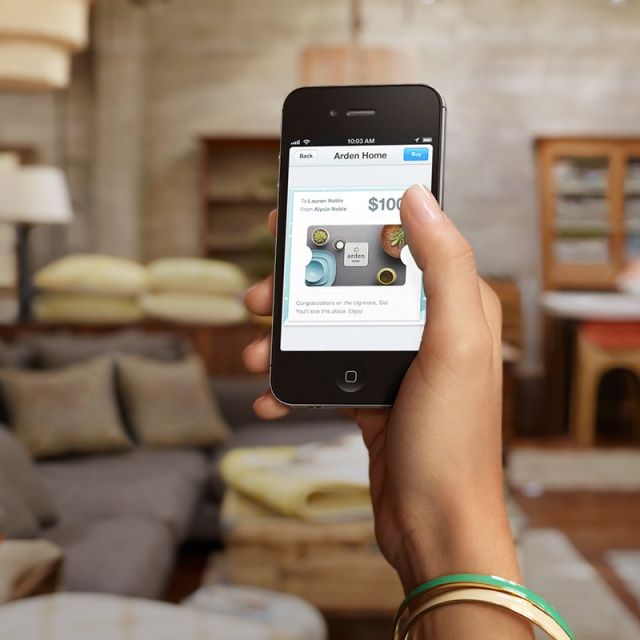
Now you can send a digital gift card from any merchant that partners with Square, and the recipient can choose to open the gift card in Square’s Wallet app, print it off, or use it in Apple’s Passbook.
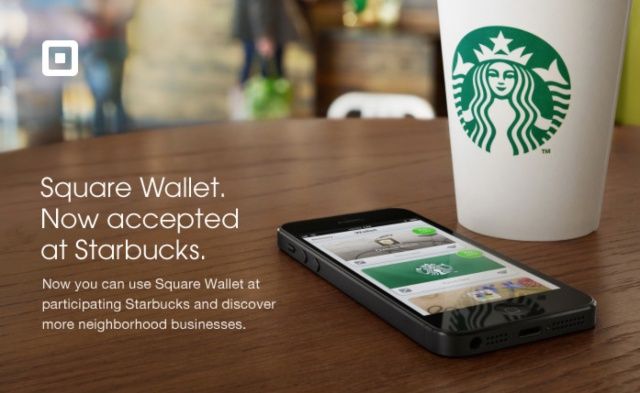
Back in August, Square partnered with Starbucks to bring mobile payments to the coffee giant’s thousands of stores nationwide. Starbucks said that Square would be integrated into 7,000 of its stores across the U.S. by early November, and now the time has come.
Square has the ability to open a virtual tab with a merchant so you don’t have to scan your iPhone at the register, but Starbucks isn’t adopting this functionality. You’ll have to scan your iPhone after you order, like Passbook.
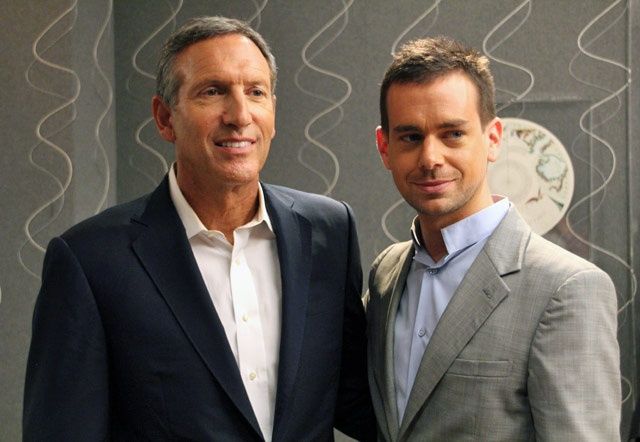
Starbucks CEO Howard Schultz (left) and Square guru Jack Dorsey (right) are helping shape the future of mobile payments.
Back in August, Square announced a huge partnership with Starbucks. The coffee chain giant will be integrating Square’s mobile payment system into many of its U.S. stores this fall, and Starbucks has also invested $25 million in Square.
While we knew that Square was coming to Starbucks sometime later this year, it’s now been revealed that the partnership is launching in early November. Instead of having to use your credit card or cash, you’ll be able to use the free Square app to pay for your skinny vanilla latte.
I want to be able to ditch my wallet so bad, mostly because I have a tendency to lose it or forget it at home. But I never ever leave home without my iPhone, and yeah, Passbook is cool but businesses aren’t really using it yet and I’m impatient. I just want the future to be here right now.
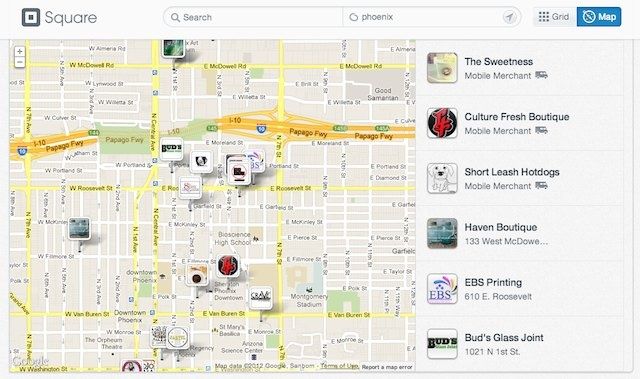
I’ve been really intrigued by Wired’s Christina Bonnington as she’s trying to live a walletless life, and it seems like one of the biggest hurdle right now is knowing where you can ditch your wallet and pay for goods with a service like Square, and where you can’t. Right now it seems like Square is trying harder than anyone to help you ditch your wallet, and they just made things a little easier by creating Square Directory so you can see all the places you can pay for goods with Square Wallet.
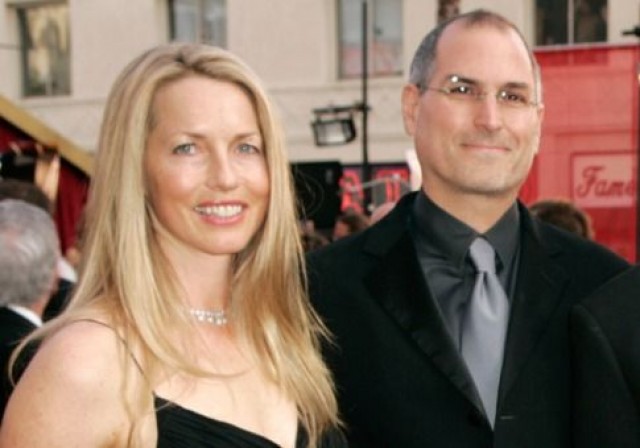
Forbes released their list of the richest people in the world today, and among the newcomers making the list is Laurene Powell Jobs, widow of Apple cofounder Steve Jobs.
Powell inherited Steve Jobs’ massive fortune, which Forbes estimates to be $11 billion, making her the wealthiest woman in Silicon Valley, and 28th richest person in the world.
Making more money than with just your credit card transaction fees.
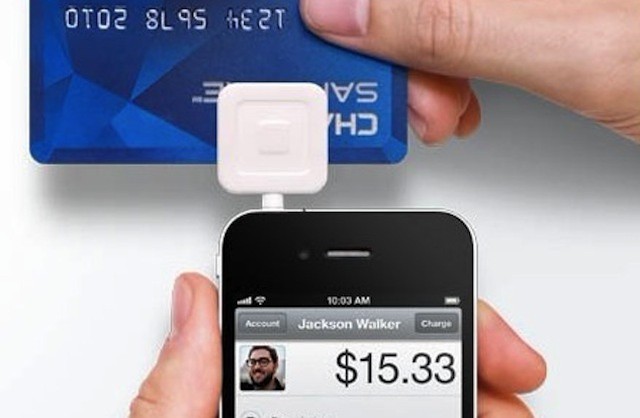
Closing its fourth round of funding, the mobile credit card processing company just raised $200 million, making it worth a staggeringly large $3.25 billion. The company, built by Jack Dorsey of Twitter fame, allows anyone with an iPhone, iPad, or other compatible mobile device, to accept credit cards. Square is widely seen as the industry leader in the mobile payment-with-a-dongle space (I just made that term up), as evidenced by other dongles released shortly thereafter by the likes of PayPal and Intuit, among others.
In what may come as no surprise, the COO of Square, Keith Rabois, is on record at All Things D, saying that the transition from current registers and point of sale devices (like ATM card-swiping devices) to iPads or other tablets will happen within the next year and a half. Square’s partnership with Starbucks is only the first of the steps being taken actively by Square to make this a self-fulfilling prophecy.
PayPal announced the biggest partnership yet in the U.S. mobile payments market today – a deal with Discover that will bring PayPal in-store payment to seven million locations next spring.
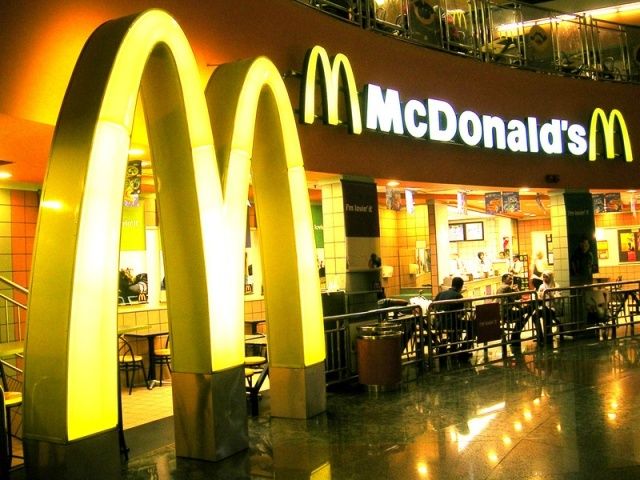
PayPal looks to expand its mobile payment market share and features with an app-based payment trial at McDonald's locations in France.
Square’s announcement of its partnership with Starbucks and the launch of new mobile payment company by several key retail and service chains were signs that the mobile payment industry and digital wallet concept is big business. Late last week, however, there was more news on the mobile payments front that proves that the race is far from over – one could even say that it’s barely started.
In a move that could make Square’s deal with Starbucks seem small and limited, Reuters reports that PayPal may soon be expanding its brand of mobile payments to include on the biggest fast food chains on the planet – McDonald’s. PayPal is currently testing a payment system in 30 McDonald’s locations in France. The company demoed the technology earlier this year.
Square is courting small business with new rules and lower transaction fees.
Last week, Square announced a partnership with Starbucks to provide back-end payment processing and CRM for the coffee mega-company. Today, Square brings news of the other end of the business spectrum. Small businesses who make less than $250,000 per year will no longer have to pay the standard 2.75 percent per swipe processing fee (though they can still opt for this) if they pay one flat rate, currently set at $275 monthly.
If a small businesses chooses the flat rate option, they’ll essentially end up paying 1.3 percent per swipe – a significant savings if they meet the criteria. IF the business goes over the line, they’ll be charged the standard per-swipe rate.
This is Square making sure that it can have as many users as possible, from super corporate giants to small mom and pop shops with a bit of tech savvy.
Major retails join forces on mobile payments system to fend of Google, PayPal, Isis, and other potential digital wallet competitors like Apple.
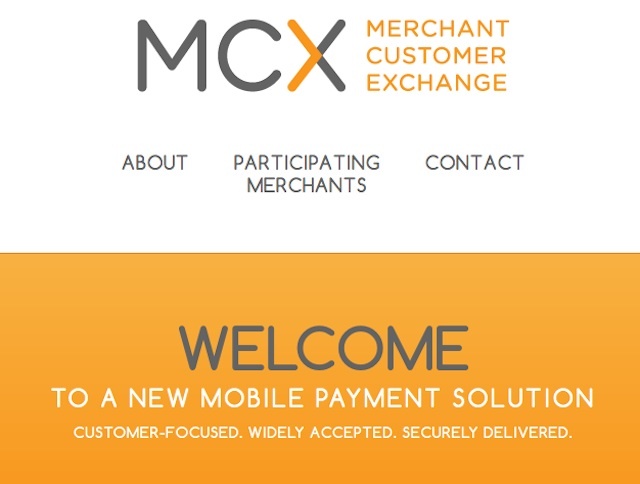
In a move that makes the Square/Starbucks partnership announced last week look like small potatoes, a group of national and international retailers announced plans to develop their own mobile payment network complete with mobile apps and digital wallet functionality. The move seems almost certain to shake up the nascent mobile payments market where a wide range of companies and organizations have been trying to figure out the secret sauce that will turn mobile payments into a mainstream retail system for the past couple of years.
The Merchant Customer Exchange or MCX, as the new company is known, plans to deliver a solution that offers convenience in both making purchases and in receiving customizable offers from retailers. Development of a mobile app and payment network are underway, but MCX has yet to announce any details about either the app or its network.
Square scored its big partnership with Starbucks by realizing mobile payments aren't really about mobile payments.
Last week’s announcement that Starbucks is partnering with Square for mobile payments and credit card processing is big news for the nascent U.S. mobile payments market. It was also a warning shot fired by the startup across the bow of traditional payment processing companies, many of which have struggled to bring together an effective and successful digital wallet (or iWallet) solution. The move could also complicate any plans that Apple has to move into that market following the release of iOS 6 and its Passbook feature.
Square just announced a huge partnership with Starbucks that will put the hot mobile payment startup in 7,000 Starbucks nationwide this fall. The news means that Square users will be able to use the app to pay at select Starbucks locations and find nearby stores in the Square Directory.
As part of the partnership, Starbucks is investing a cool $25 million in Square and the CEO of Starbucks will be joining Square’s Board of Directors. This is definitely a win-win for Square, Starbucks, and the mobile payment industry as a whole.
With PayPal's acquisition of card.io mobile credit/debit payments could become as easy as snapping a photo.
While Apple’s taking a wait and see approach to the nascent mobile payments and digital wallet industries, PayPal seems ready to launch an all-out offensive. In addition to its existing assortment of mobile, local, and online payment systems, PayPal announced this week that it is acquiring startup card.io.
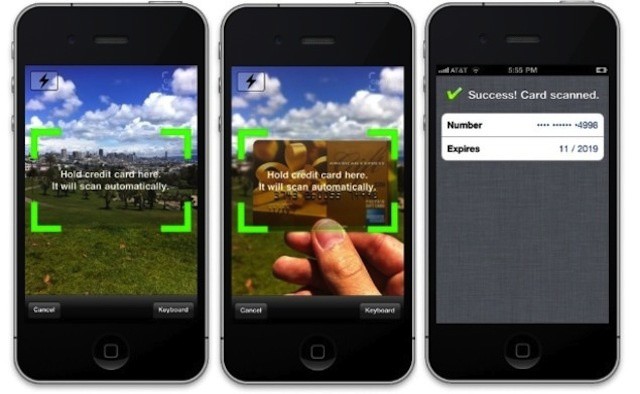
card.io currently works with a range of iOS and Android developers to help them integrate mobile credit/debit card payment capabilities into their apps without the need of additional hardware like Square’s card reader or PayPal’s Here card reader. Instead, card.io’s partners use the built-in camera of an iPhone (or other iOS or Android device) to snap a photo of a credit card. The card number and related information is extracted and passed to a payment processor to complete the transaction (manual keying in a card number is also supported as a backup).
Passbook could be a brilliant way for Apple to trump any other mobile payment option.
Mobile payment technologies have an interesting and complicated relationship with local businesses. On the one hand, local mom-and-pop restaurants, shops, and services are probably the companies that you’d expect to adopt new payment technologies the slowest – particularly if those technologies require new point of sale hardware like an NFC reader. On the other hand, mobile payment systems could be poised to deliver a new wave of business to such local companies.
Making the situation more complicated is the fact that any mobile payment system (Google Wallet, PayPal in-store purchasing, or any system that Apple may be slowly developing) can’t be considered a solid winner or option unless that system strikes it big with local businesses. A system that only applies to large chains, like the in-store purchasing the PayPal rolled out to Home Depot and other retailers, can’t be considered mainstream unless it’s adopted very widely and by a significant percentage of small businesses.
Further complicating the relationship is the fact that many players in the race to create a true digital wallet are on focusing widely varying options for small and local businesses. That means that no one company is leading and no company really seems to have a consistent strategy for tapping this immense and important market.
Despite new technologies for mobile payments, customers trust familiar companies like Apple.
PayPal, Amazon, and Apple are leading the mobile payment market according to IDC. The research company released the results of a business strategy study that focused on new and emerging payment technologies. The 2012 study is eighth year that IDC has conducted the survey, but it is the first year where mobile payments were a major focus.
While many efforts are underway to develop new payment technologies, many of them based around NFC, most new technologies have yet to catch on with consumers.
Overall mobile payments, however, are catching on with consumers. IDC reports that the number of individuals making mobile payments has doubled since last year’s report and that one-third (33%) of consumers have made some form of mobile payment. The data also shows that the mobile payments market is being led established players and existing technologies.
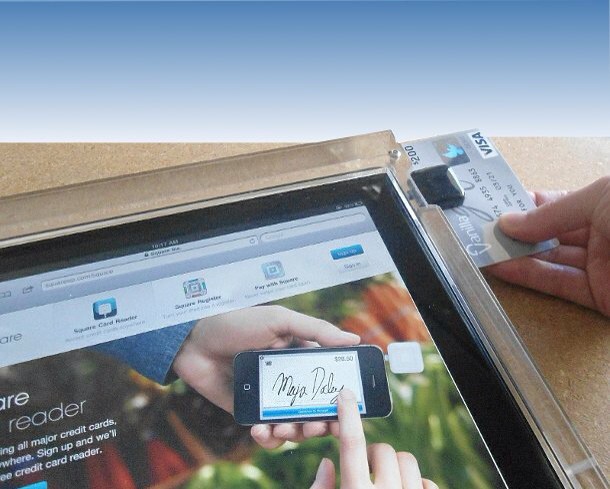
You know your product is successful when somebody starts selling accessories for it. But what about when people start selling accessories for accessories, which work together with the original product? This happens: the New iPad Credit Card Dock, a perspex frame which holds both and iPad and a Square credit card reader.
This cash register could be used in the House of Bamboo
I used to work as a the sole waiter in a restaurant where the cash register consisted of a wooden cigar box and a solar-powered Casio calculator. I’m an honest chap, and the chef was also the owner, so it worked just fine. But times have changed, and now there exists a modern alternative to our old cedar box. It’s called the Cashbox and it is fashioned from beautiful bamboo varnished to look like a hideous high-school craft project.
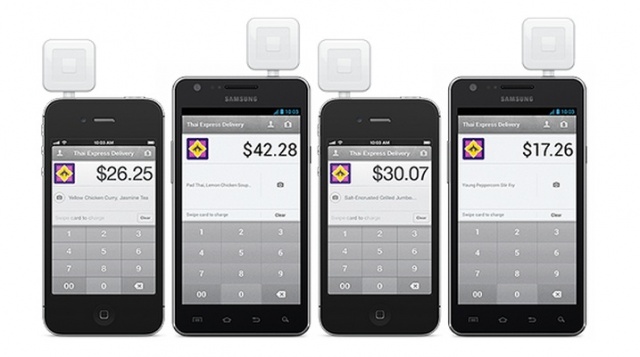
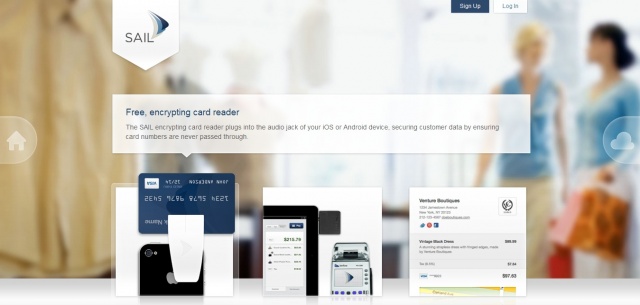
It looks like Square has yet another competitor in the mobile payments arena. Global payment leader VeriFone has announced SAIL, a credit card reader much like Square’s, that will attach to a number of mobile devices. While VeriFone may have a little catching up to do, they have the advantage of an extensive network with a commanding percentage of retail transactions passing through their service.