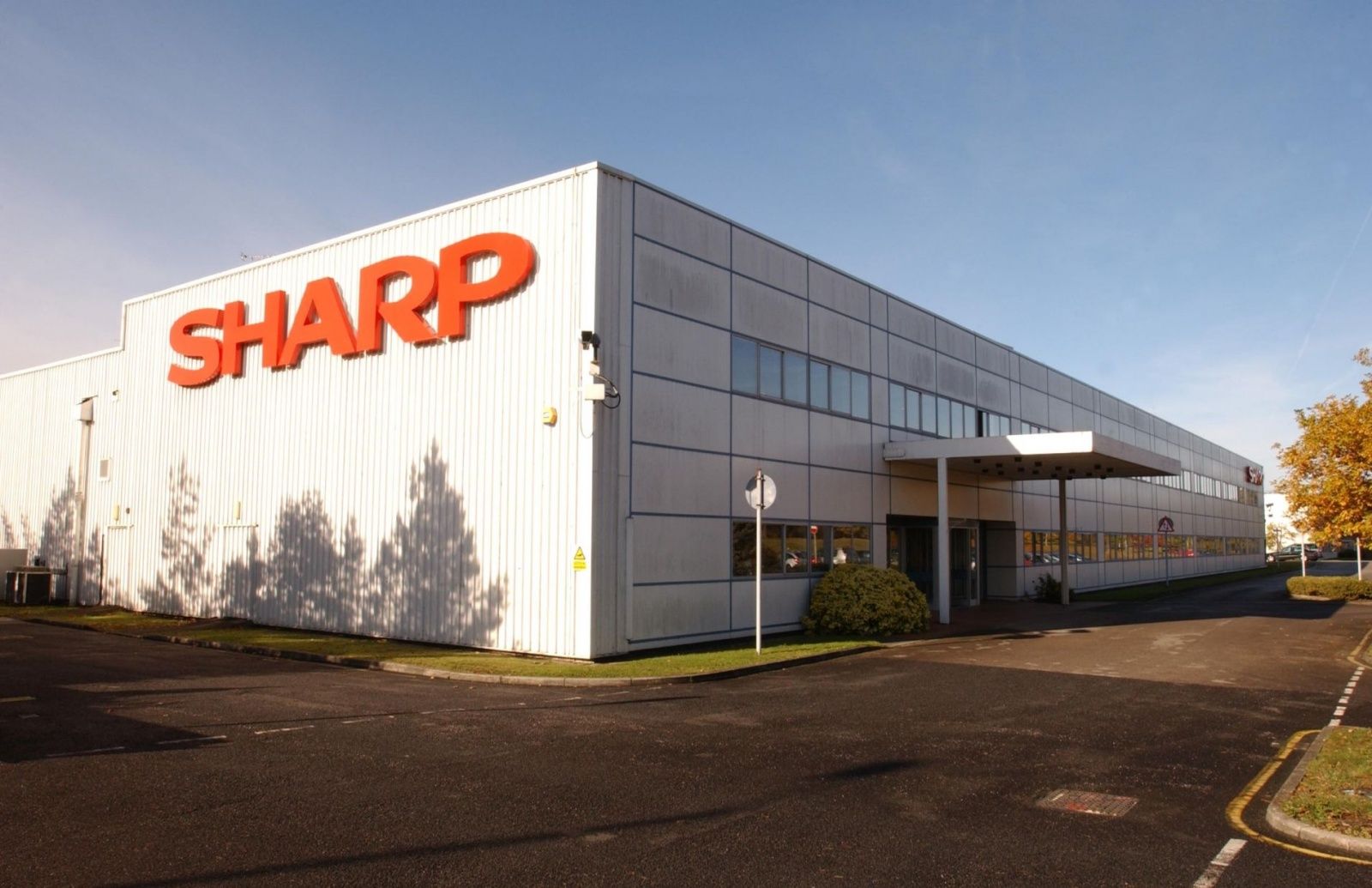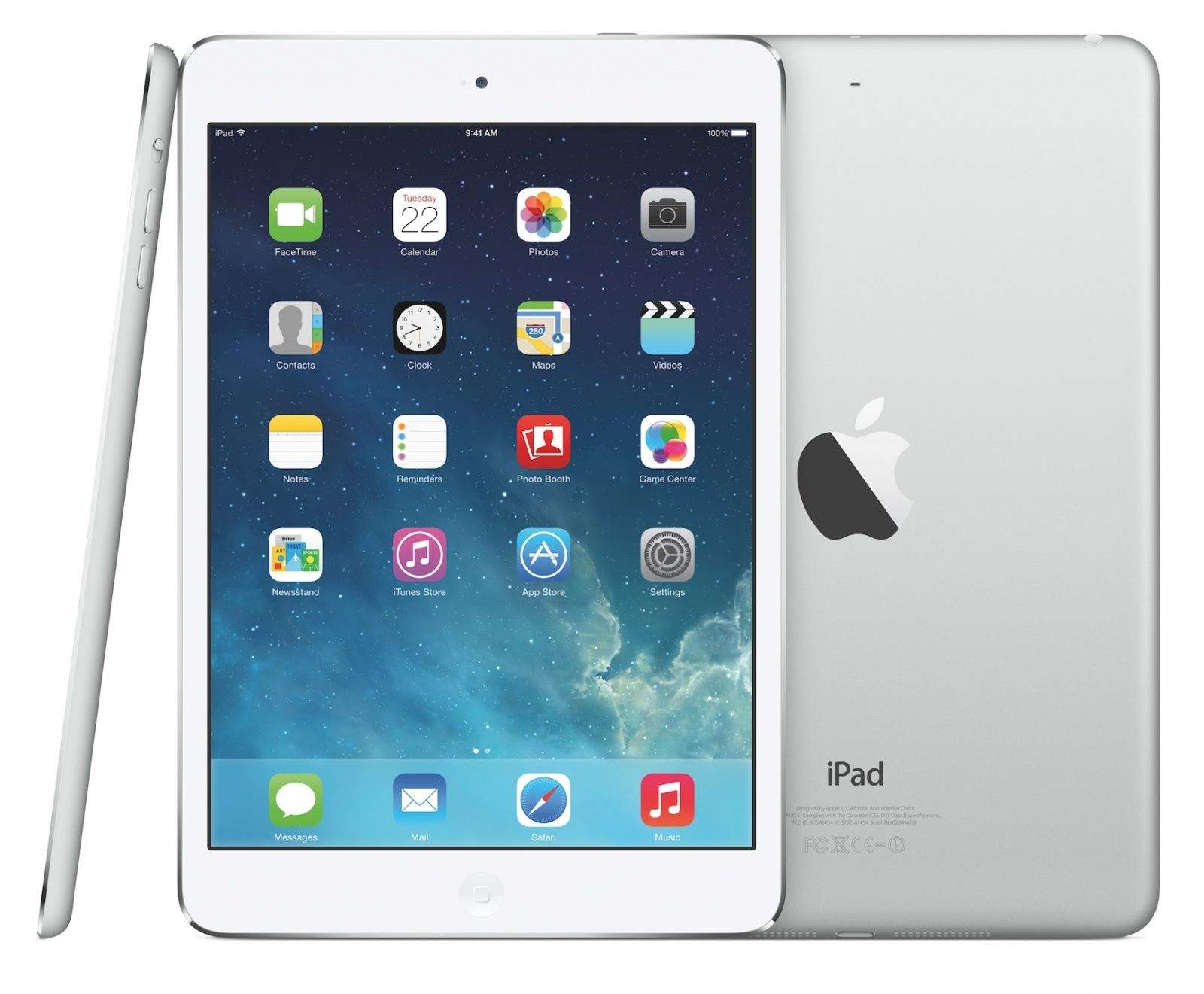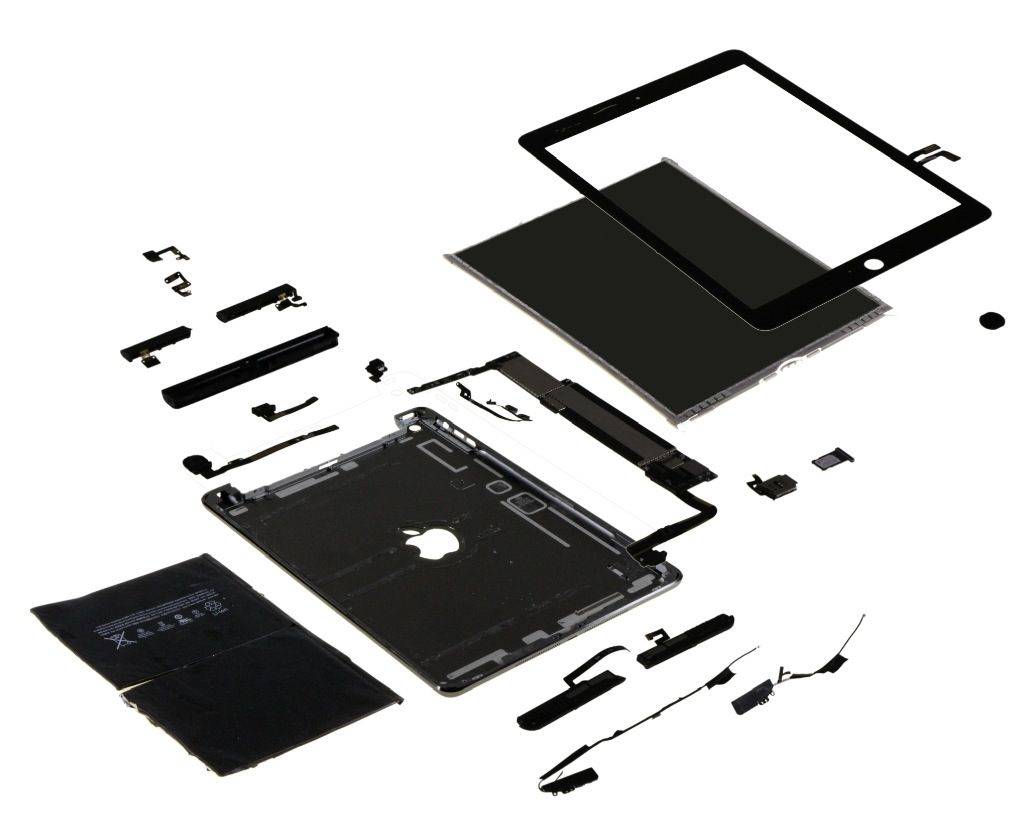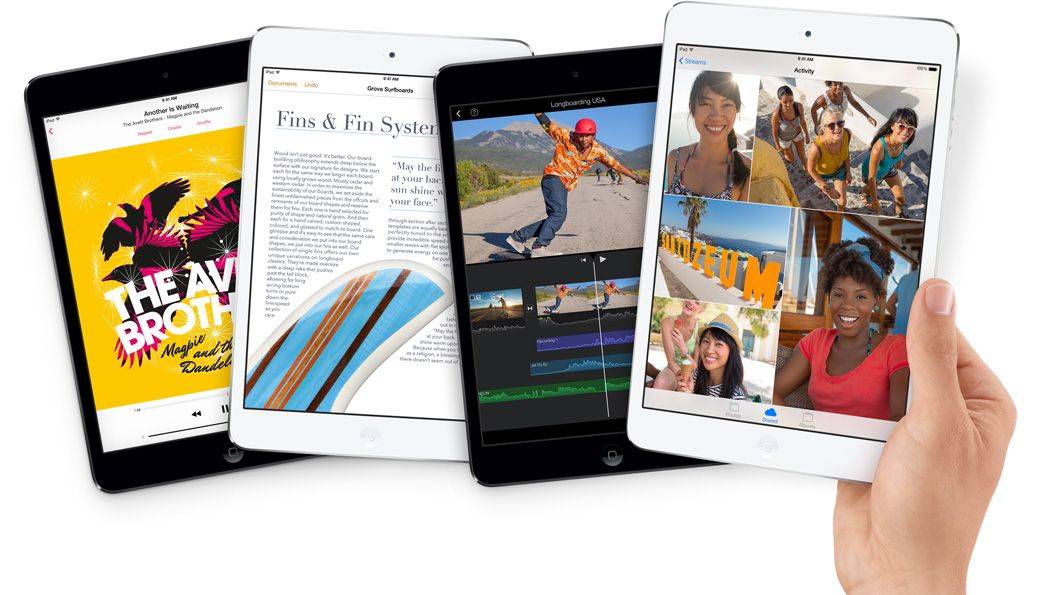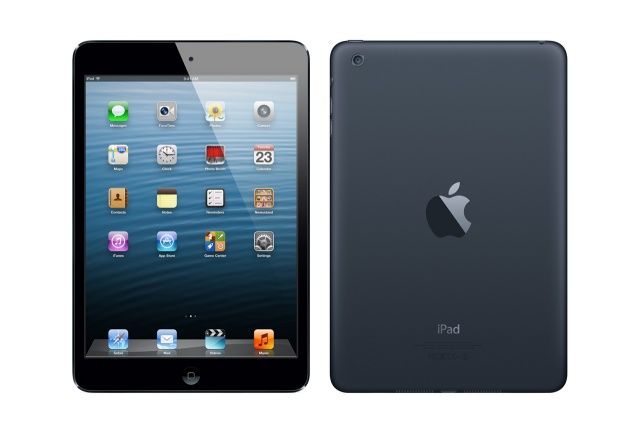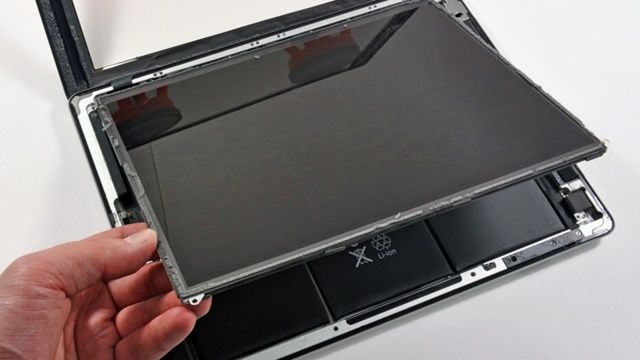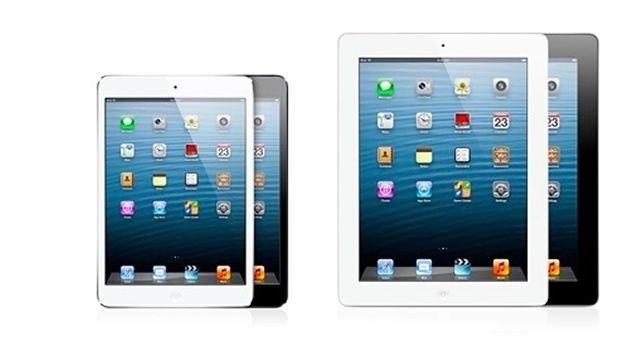
Sharp has “nearly halted” its production of 9.7-inch iPad displays as consumers shift their demand towards the smaller iPad mini, Reuters reports. Sources familiar with Sharp’s plans have claimed that production of the larger panels at Sharp’s Kameyama plant in central Japan has fallen to the “minimal level” this month following a gradual slowdown that began at the end of 2012.
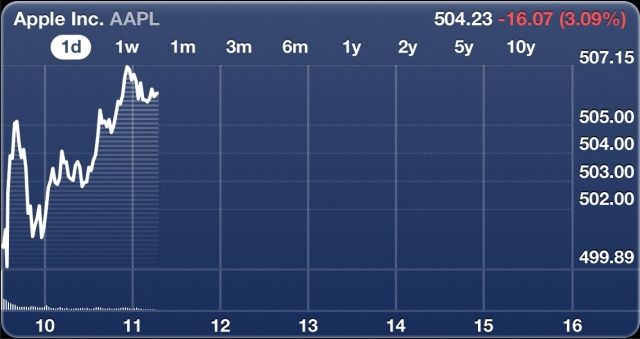
Apple’s share price has plummeted this morning, following an earlier report that said the Cupertino company had cut iPhone 5 component orders due to weaker-than-expected demand. When the market opening on Monday morning, Apple stock dropped to $16.23, or 3.1%, to $504.07.
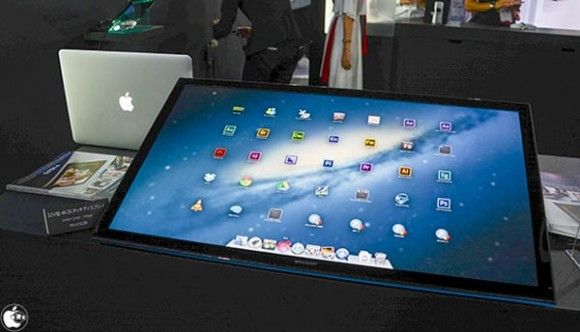
Apple’s much-anticipated television set has entered its initial testing phase at Hon Hai Precision Industry, a company source has revealed. It’s expected to feature a display between 46 inches and 55 inches in size, and shipments are likely to be “huge.” Don’t expect to have one in your living room anytime soon, however; it doesn’t look like it’s going to get its grand unveiling during 2013.
You new iPad mini’s display could look ancient in 12 months.
Yeah, this is one of the least surprising rumors you’ll hear all day. But it’s sure to delight those who are holding out for an iPad mini with a Retina display. According to industry sources in Taiwan, Apple will indeed be “enhancing” the display resolution of its second-generation iPad mini, introducing a 2058×1536 panel with 326 pixels-per-inch.
Apple has begun testing high-resolution television set designs with manufacturing partners in Asia, according to a new report from The Wall Street Journal that cites unnamed sources within Foxconn. Both Foxconn and display manufacturer Sharp are said to be involved in the process, which is still in its early stages.
It seems like we’ve been waiting for Sharp IGZO technology to solve all of our battery life problems forever now. Unfortunately, Sharp hasn’t just been slow to get the exciting display tech out on the market… they’ve also struggled with financial issues relating to their core business that have threatened to put the Japanese company under.
Luckily, it looks like Sharp might be saved, with Qualcomm now apparently investing up to $120 million in Sharp, specifically to get IGZO displays out there to the masses.
When Apple’s annual capital expediters report for fiscal 2012 was released, it was discovered that Apple spent $10.3 billion when they had only planned to spend about $8 billion. The discrepancy in the huge change from Apple’s original forecast left some wondering what that $2.3 billion went to.
If one analyst is correct, that $2 billion may have gone to Sharp to help bail them out of their financial problems, and keep display supplies flowing for Apple’s products.
Apple won’t make us wait too long for a Retina iPad mini 2.
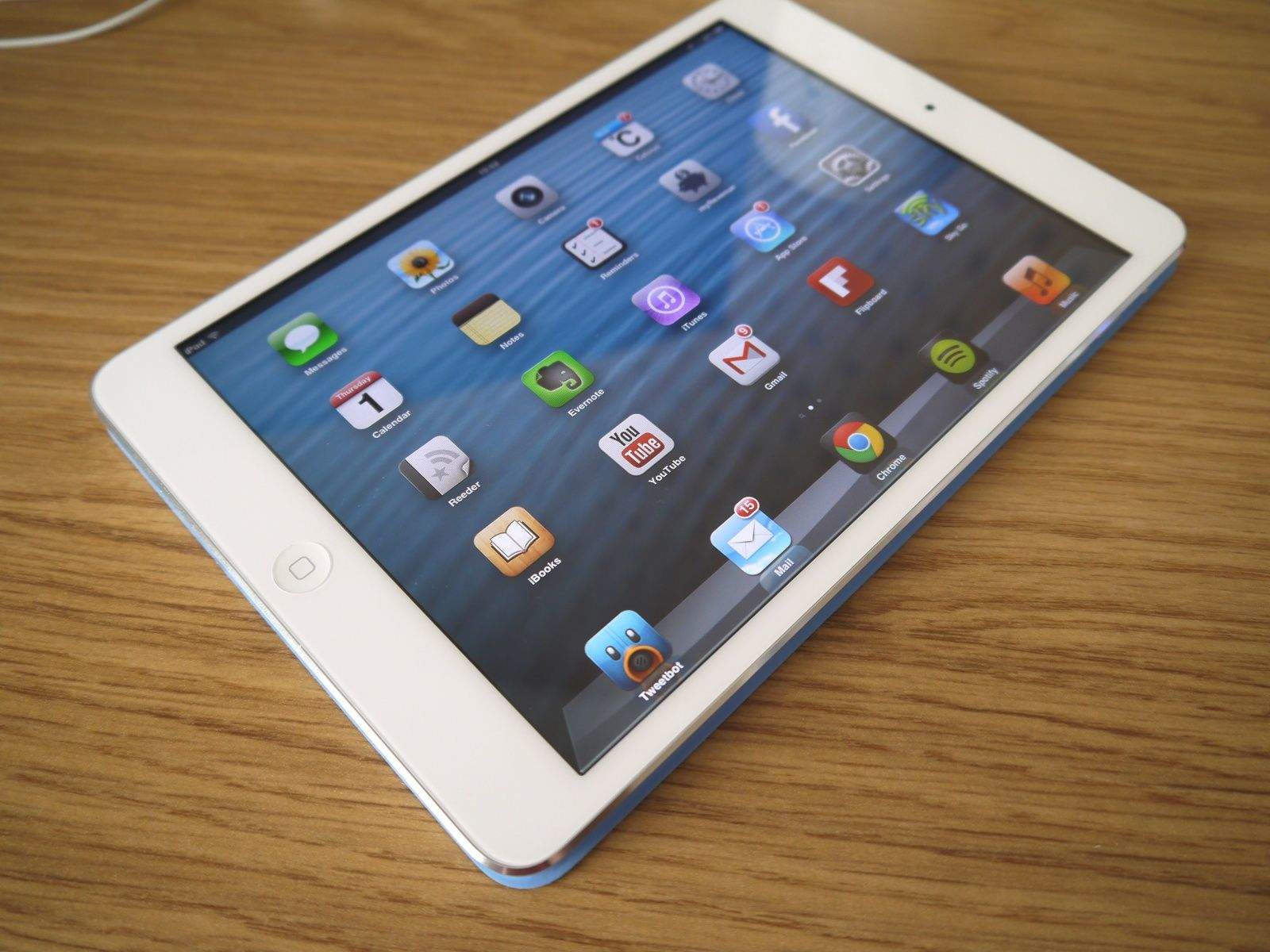
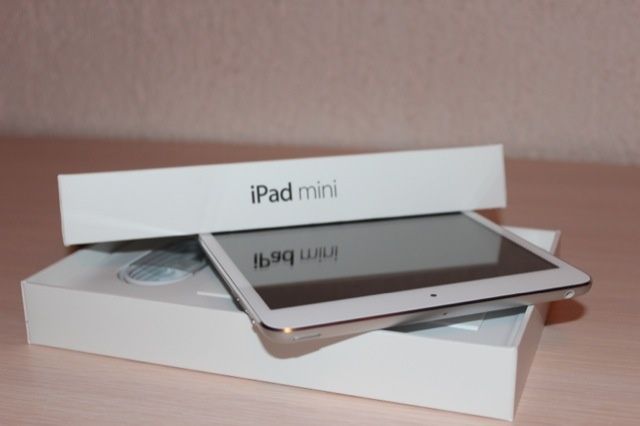
The iPad mini is an incredible tablet, and I haven’t been able to put mine down since it was delivered last Friday. I love how thin and light it is, and that it will run all of my existing iPad apps right out of the box. There’s no ignoring the fact that it doesn’t have a Retina display, however.
The iPad mini’s low-resolution display sticks out like a sore thumb the second it lights up. It’s not awful — it’s still better than the iPad 2’s display, and after a few days you stop worrying about it. But it’s noticeably worse than the Retina iPad’s display.
If this has been stopping you from picking up the iPad mini, then you might want to hold onto your cash until its successor arrives next year. According to sources in Apple’s supply chain, the Cupertino company is already working on its 2048 x 1536 Retina display.
Will the iPad mini become the first iOS device with an IGZO display?
Sharp has been hard at work on a new display technology known as IGZO which looks set to be a perfect solution for mobile devices. Not only does it offer higher touch sensitivity, but it’s so energy efficient it can triple the battery life of devices. We’ve been expecting Apple to use IGZO displays for some time, but reports have suggested that Sharp simply cannot make them quick enough to meet the demand of Apple’s consumers. However, it seems that’s all changed.
Just hours ahead of Apple’s iPad mini event in San Jose, Sharp has announced that it soon expects sales of its IGZO displays to surge.
To vastly simplify matters, every LCD screen is made up of a bunch of pixels connected to each other with a mesh of tiny little wires. These pixels don’t actually emit light themselves, but simply regulate the color of the light being displayed in that pixel. Behind this mesh is a lamp, and before a pixel can light up on your screen, the light from this lamp needs to shine through this mesh of wires. Because this mesh is so densely packed, though, the lamp needs to shine very, very brightly to get through… and the brighter an LED light shines, the more power it soaks up.
This is why the new iPad needs such a massive battery. The Retina display has over 3 million pixels in in a tiny area, which means the mesh behind the display is even thicker and more densely packed. To compensate, Apple needs to use a very bright light to shine through this extremely dense mesh, which results in worse battery performance over all.
What if there was a way to make the mesh of wires behind every pixel a lot less dense? That’s the idea behind Sharp’s IGZO technology, and the reason why we’ve been excited about it finally coming to Apple products since at least the beginning of the year. Now it looks possible that, with the iPad mini, we could finally get our wish, as Sharp is now announcing that their IGZO tech comes in 7-inch varieties… and they are releasing a tablet to prove it.