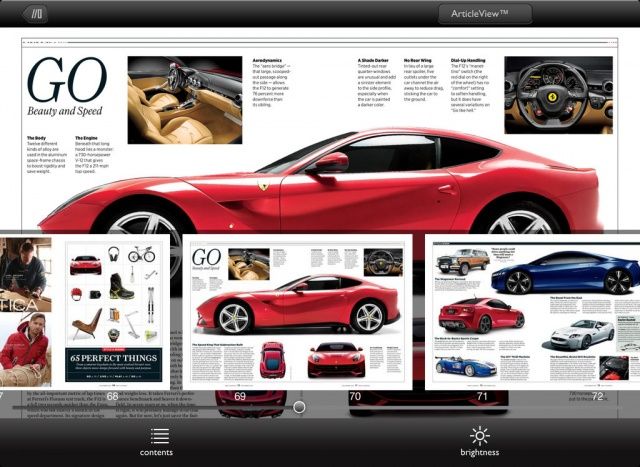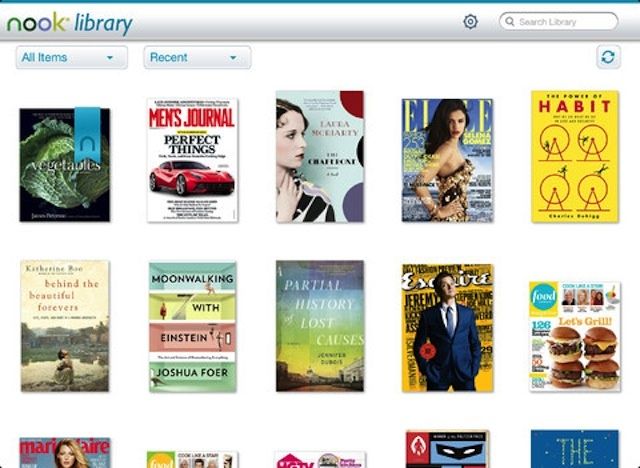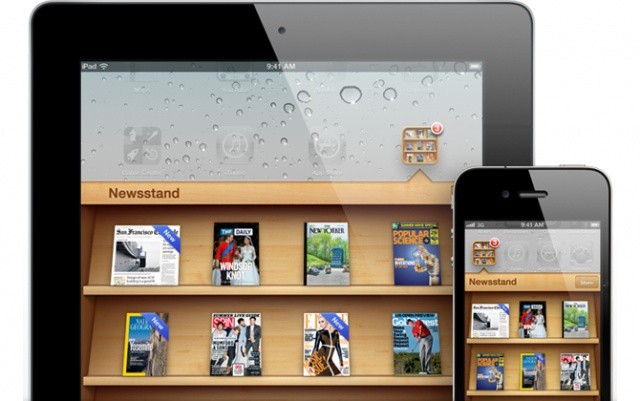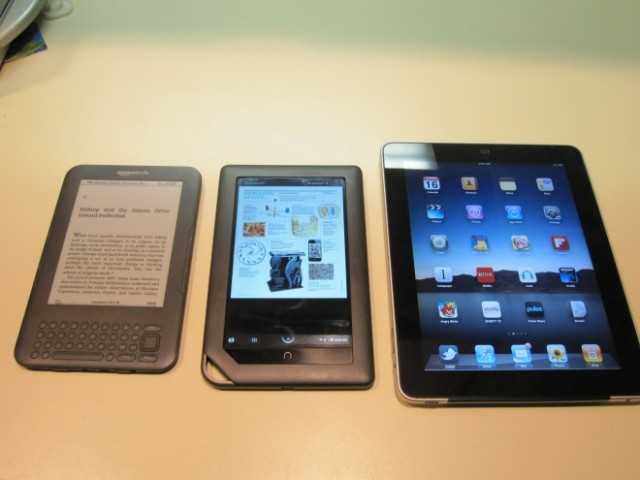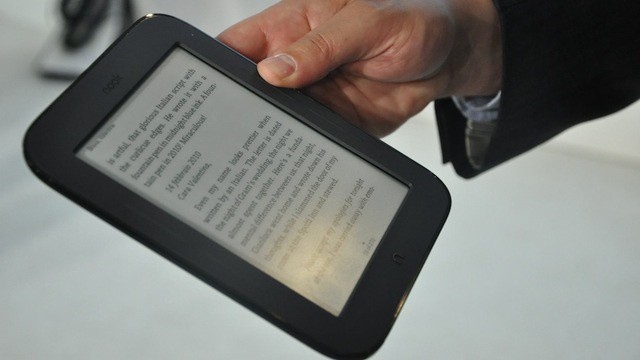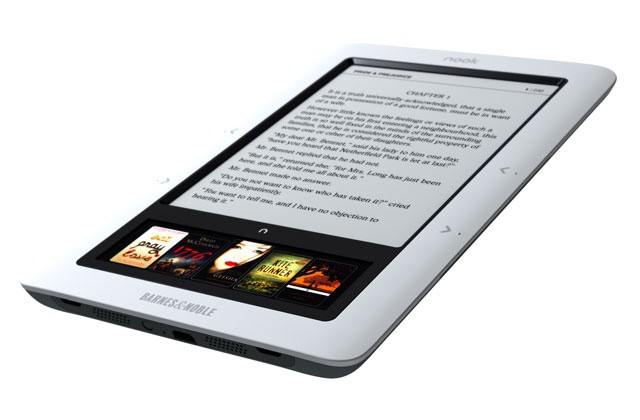
If you’re a frequent user of the official Nook app for iOS, then you’re going to love its latest update. In addition to support for high resolution magazines on the iPad, version 3.4.0 introduces support for Nook Comics, more detailed imagery, better organization options, and lots more.
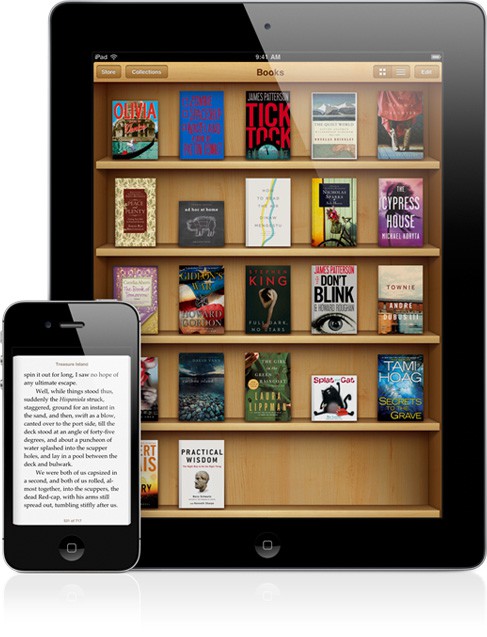
Good news, everyone! Barnes & Noble’s Nook app for iOS has just been updated with support for Apple’s fantastic VoiceOVer accessibility feature, as well as the zoom functionality. This brings the Nook iOS app up to parity with iBooks, the only other iOS e-reader app that can be used by folks with a visual impairment or learning disability to have books read out loud.
Zoom lets those with low vision see the screen at much higher magnification than just increasing the font size, allowing them to use the buttons, icons, and other visual interface systems that they can’t see at the standard size on the iPad or iPhone screen.
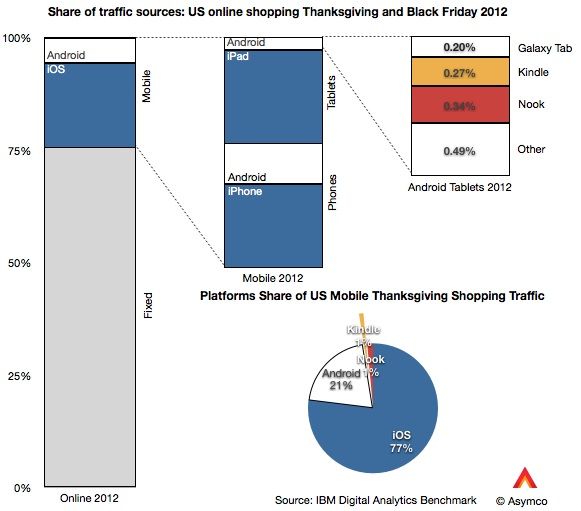
Even though Android leads in terms of marketshare, iPhone and iPad owners use more data than Android users. It also appears that iOS users are also more comfortable with shopping online via their mobile device than Android users.
IBM released their Holiday Benchmark Report and found that among U.S. consumers shopping for Thanksgiving and Black Friday deals from their mobile device, a strong majority were using iPhones or iPads and about 77% of all mobile purchases originated from an iOS device.
You need to read more. It’s just a fact. Everyone could stand to read a few more books a year and watch a few less GIFs on the internet. Isn’t that why you bought your iPad? Because you said you’d read more if you had an “eReader”? No? Well you should anyway.
To inject your life with more literature you’ll need to buy a lot of books. They’re not cheap, and they kind of suck to buy because, depending on which digital store you buy them from, they’re laden with DRM. Don’t let that get you down though because there’s some really great news today on the eBook front. Storybundle.com just launched their cool new website, and it’s pretty much the neatest thing to happen to eBooks this year.
TED’s new ebook series and ebook app highlights the concern that ebook purchases lock readers into specific platforms.
The TED organization, which sponsors a range of conferences and talks on cutting edge topics recently launched an ebook series known as TED Books. Like the non-profit’s other initiatives, TED Books are “designed to spread great ideas.” Sticking to that ideal, the organization is making the ebooks, which will be released every two weeks, available across a range of ebook platforms including the new TED Books app for iOS devices.
The move highlights one of the challenges about ebooks – the choice of merchant and platform. That’s a particular concern when it comes to Apple’s iBookstore because purchases can only be read on an iOS device.
The Wall Street Journal today has a report on how the e-book industry is paying close attention not only to what books people read, but how they are reading them. Do readers skim the intro, skip around in the chapters? Do they read straight through? What are readers’ favorite passage to highlight and share? This kind of data mining is happening now, even on your iPad.
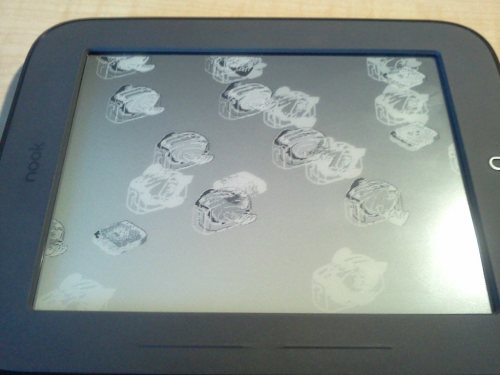
Some people dream of flying sheep, but blogger Mike Cane thinks different, dreaming of flying toasters. His dream – in November 2011 – was to see the classic Macintosh OS running on a nook Simple Touch, the eInk reader from Barnes and Noble. His dream seemed far-fetched, perhaps, even to him, but consider the following specs:
Original Macintosh: 68000 Motorola CPU at a blistering 8MHz(!), 128K(!) of RAM, and 512×342 screen Nook Touch: TI OMAP3621 (ARM Cortex-A8 core, 800MHz), 256MB RAM, and 600×800 screen.
The Nook Simple Touch outperforms the original Mac by quite a bit. All he needed was someone to bring his dream to life.
Hearst see digital publications as the future but without interactive features
Hearst, the publishing conglomerate that includes several of the world’s largest magazine brands, sees a bright future of iPad and tablet editions. Duncan Edwards, CEO of Hearst Magazines International, delivered some surprising statements as to what that future will look like at this week’s World e-Reading Congress in London.
The most surprising statement was that Hearst doesn’t plan to include interactive content in its digital publications despite work done in the company’s little known App Lab and the belief that users will pay more for a digital edition. Edwards also described mix of devices used by Hearst digital subscribers. That mix is headed up by the iPad but with Barnes & Noble’s Nook platform right behind it.
Battle for e-textbooks heats up with new Nook company
Barnes & Noble’s announcement that it was spinning off its Nook business and that Microsoft would be a significant stakeholder in the new company raised a lot of eyebrows. The partnership seemed unnecessary in order to meet the goals of settling a patent dispute and ensuring a Nook app for Windows 8 tablets.
It turns out that Barnes & Nobel will be shifting its textbook business to the new company along with the Nook and that Microsoft’s $300 million investment will likely be centered around creating an e-textbook initiative that will likely compete head-on with Apple’s fledging iPad-based e-textbook business.
Despite holiday gains, Apple retakes tablet market share from Amazon and Android.
While Apple saw strong sales for all its iOS devices during its post-holiday quarter, Android tablet sales slumped, giving up any gains that Android had seen as a tablet platform during the holiday shopping season.
According to IDC, overall tablet shipments were down more than the analyst firm had expected. The decline to 17.4 million units represented a 38.4% drop off from the holiday quarter shipments of 28.2 million units – a notably steeper decline than IDC’s predicted 34% decline.
While overall tablet shipments were down, Android tablets slumped significantly more than Apple’s iPad, which gained an additional 13.3% of the tablet market.