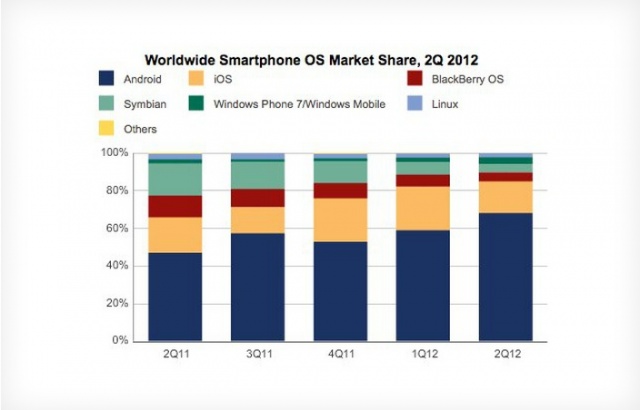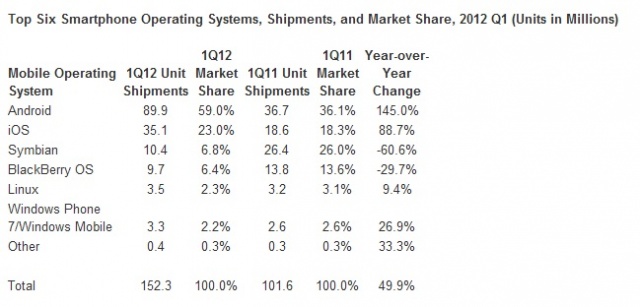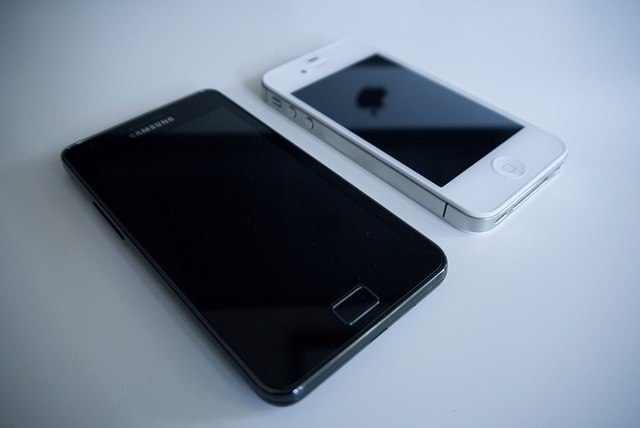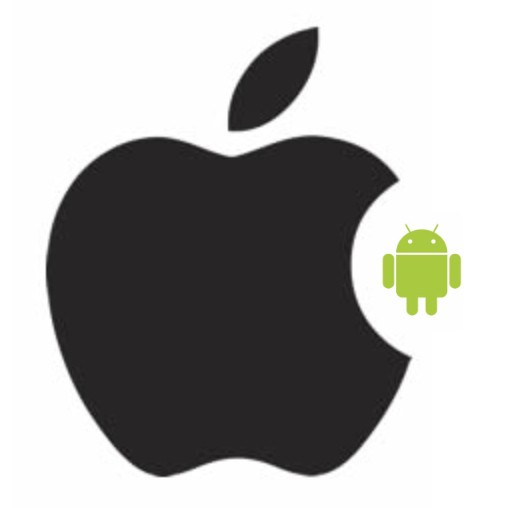
Here we go again, more numbers, more Android and iOS domination. According to IDC, 8 out of 10 smartphones shipped in the first quarter of 2012 included either iOS or Android. Android continues to lead the pack with a total of 59% of the 152.3 million smartphones shipped, while iOS accounted for 23% respectively. Combined they populate 82% of the smartphone market, up 27.6% since Q1 2011. These numbers are an amazing testament to Android’s growth as well as iOS’s stability (which is amazing considering they only have a few devices).
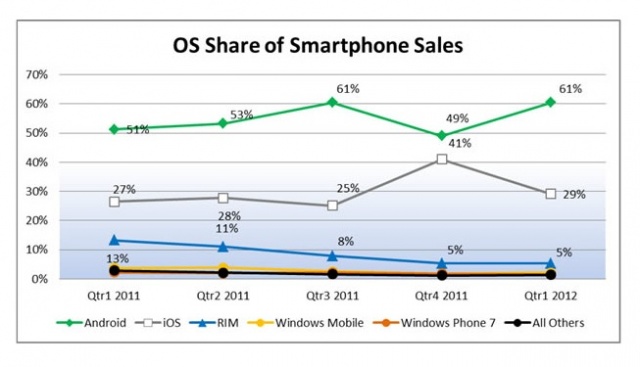
Not many surprises here. According to the latest research from the NPD Group, Android and iOS continue to dominate the OS arms race. Combined, these two powerhouse operating systems account for 90% of smartphone sales. Report after report, we continue to see the same thing: Android an iOS on top.
According to the latest report from the International Data Corporation, Samsung has ousted both Apple and Nokia to aquire the top spot in both smartphone and total mobile phone shipments for the first quarter of 2012. This marks the first time since the inception of IDC’s Mobile Phone Tracker that Nokia did not lead the global market in total mobile phone shipments. That’s quite a testament to Samsung’s tremendous growth over the past year, which according to the IDC, was nearly triple in the smartphone category.
Android maintains its overall lead in the U.S. market while the iPhone gains ground
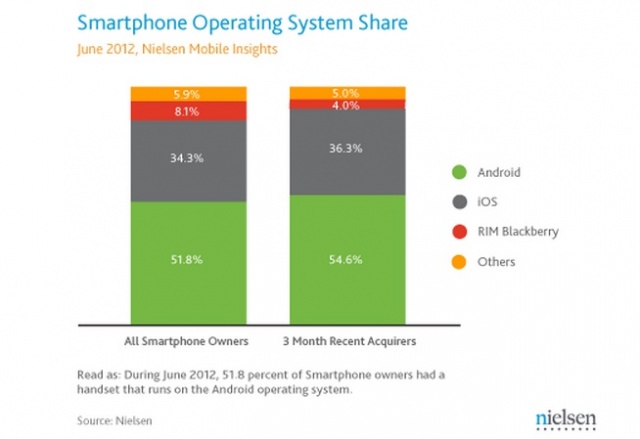
Smartphones are close to becoming the primary type of mobile phones sold in the U.S. for the first time. Market research giant Neilsen’s latest analysis of the mobile industry shows that about half of all mobile phone owners in the country now own a smartphone – up significantly from this time last year.
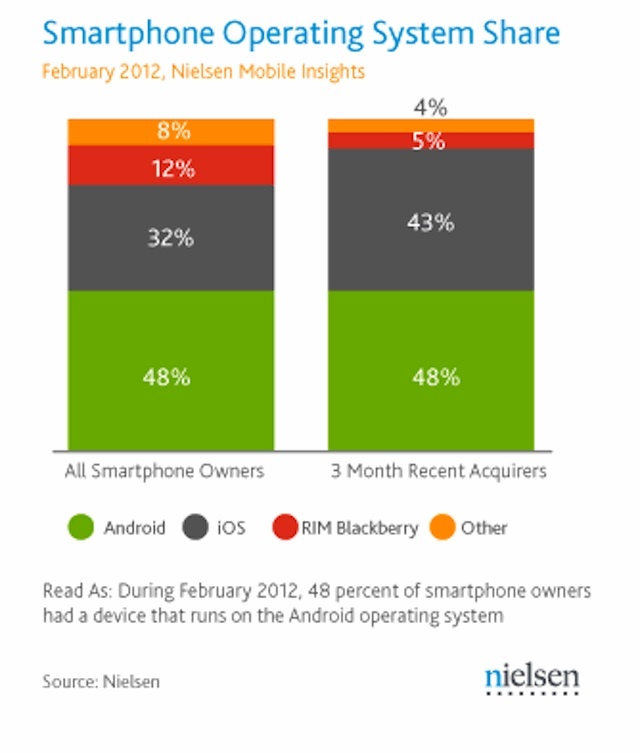
In addition to smartphones gaining major traction, the company also released its data on the makeup of the U.S. smartphone market that shows gains by Apple’s iPhone and significant losses for RIM’s BlackBerry. Android, however, still manages to hold the biggest share of the market overall.
Customers line up for the new iPad outside of Apple's Fifth Avenue store.
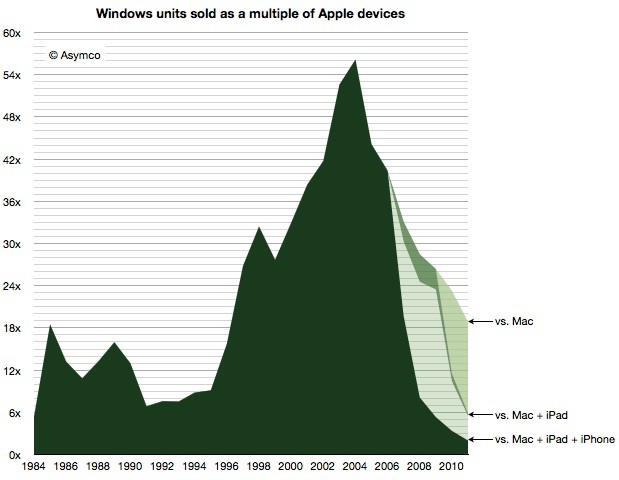
Analysts predict that Apple’s new iPad, which has already sold over 3 million units, is shaping up to boost sales of the device by a whopping 156% year-over-year. The tablet is expected to become “measurably larger” that the entire PC market.
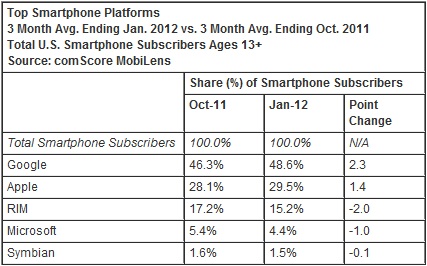
Report after report, same old, same old: Android and iOS continue to kick everyone’s arse in the mobile market. The latest comScore report is out, and once again, these two remain the only ones gaining any market share. Android continues to lead the pack with 48.6% (up 2.3 percentage points) while iOS remains in second with 29.5% (up 1.4 percentage points). Everyone else continues to lose market share with RIM holding the third position at 15.2% (down 2 percentage points. After that it’s Microsoft with 4.4% (down 1 percentage point) followed by Symbian with 1.5% (down .1 percentage point). Overall Android and iOS occupy 78.1% of the market with no signs of slowing down.
The iPhone is ranked as the top smartphone in the United States, and with sales on the upward trend worldwide, one would think that there’s no stopping Apple’s magical handset. As it turns out, the iPhone has a “crutch” that’s key to its success: carrier subsidies.
It’s common practice for U.S. carriers to subsidize a phone to make it more affordable for the average consumer. The trick is that customers get locked into a two-year contract. While Apple profits and carriers take an initial hit off the subsidized model in countries like the U.S. and U.K., less expensive Android devices are dominating markets where consumers pay full price for their new phones.
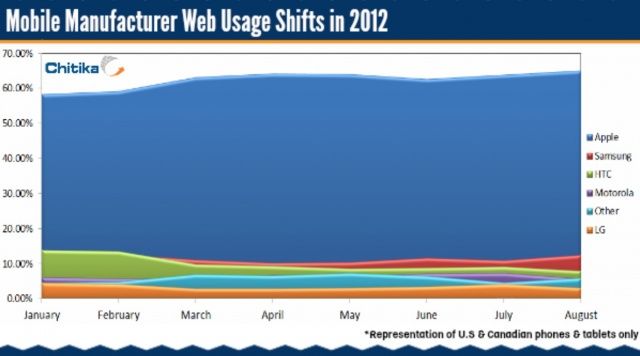
According to a new report, iOS web traffic has surpassed Mac OS X for the first time in history. iOS market share has grown nearly 50% over the last 6 months, and Apple’s mobile products are now driving more web traffic while the Mac’s traffic share has declined.
Based on the last 12 weeks of sales in 9 countries (including the U.S., U.K., and Australia), the iPhone is growing faster than Android. The tides are turning.
It seems it’s all RIM can do these days just to hang on to the, well, rim. A new report by Business Insider reveals the same predictable result in last quarter’s round of the Smartphone Wars: Apple’s subscriber base is growing, with Android also growing, but at twice the speed — and mostly at the expense of Blackberry-maker Research In Motion.