After an anti-trust lawsuit was launched by the European Union earlier this year to check whether or not Apple’s e-book pricing is anti-competitive, Apple and four publishers are ready to accept an offer from the EU to end the probe.
The acceptance of the offer hands Amazon a big victory in the battle for e-book pricing in Europe as it opens the door for Amazon to continue to sell online books cheaper than its rivals.
It’s no secret that Apple often takes a puritanical view of art featuring human anatomy — the flapping genitalia, dewy folds and turgid protuberances that some of us find so arousing and others find a moral failing — at least when it comes to being submitted to the App Store or iBookstore.
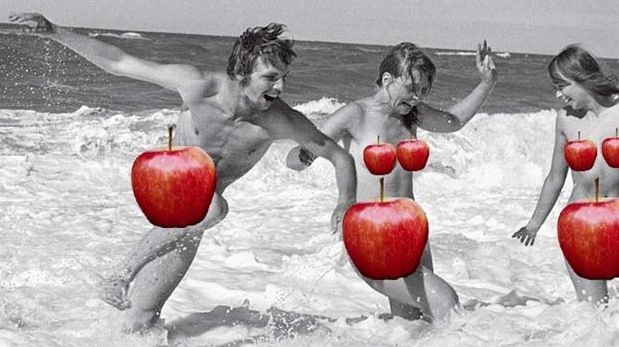
So it’s no surprise that when Danish author Peter Øvig Knudsen submitted his latest work of non-fiction, Hippie 2, to the iBookstore, the e-book was rejected based upon the fact that it contained forty-seven photographs of hairy frolicking hippies with exposed breasts, buttocks and genitals.
What is more surprising is that they also rejected Knudsen’s resubmitted version of the text, which featured all of the photos censored with giant red apples.
With every major release of iOS and a new iPhone, Apple typically offers its official user guide online for free. What’s odd is that Apple doesn’t promote this resource at all, yet it’s still available. Each iOS device purchase comes with a little booklet to help familiarize a new customer with the basics of the device and iOS itself, but the full user guide is much more thorough and extensive.
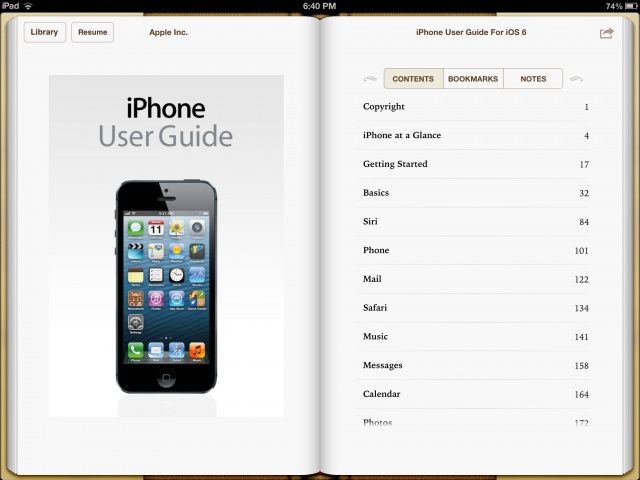
Apple has an official user guide out for the iPhone 5 and iOS 6. The 365 page guide is available for anyone to view on the web, and Apple has also made it available for free in the iBookstore.
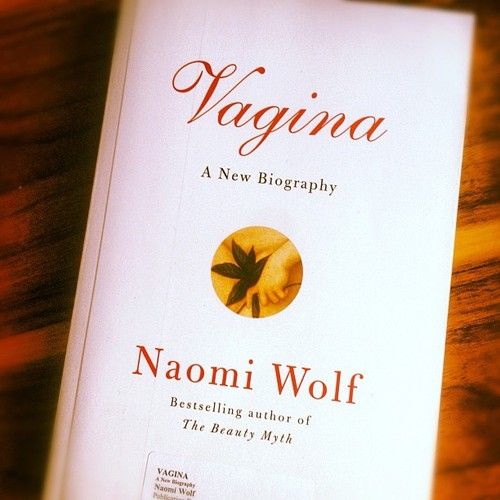
In what was undoubtedly an ironic coincidence involving Apple’s automated profanity filters, the title of Naomi Wolf’s new book Vagina — which is about how society chauvinistically stigmatizes the female sexual origin into something so profane it can not be talked about — was briefly censored in the iTunes Store.
The U.S. Government Printing Office now offers reports, documents, and ebooks via Apple's iBookstore.
In a somewhat ironic move, the U.S. government has entered into an ebook deal with Apple that will see a range of government reports, documents, and ebooks published in Apple’s iBookstore. The partnership, which was announced earlier this week, coincides with the Department of Justice’s latest legal filings in its anti-trust suit against Apple.
The deal with the Government Printing Office (GPO) will make a wide swath of documents and ebooks available through the iBookstore. While some government documents are available for free, a number of documents and full-length ebooks are not.
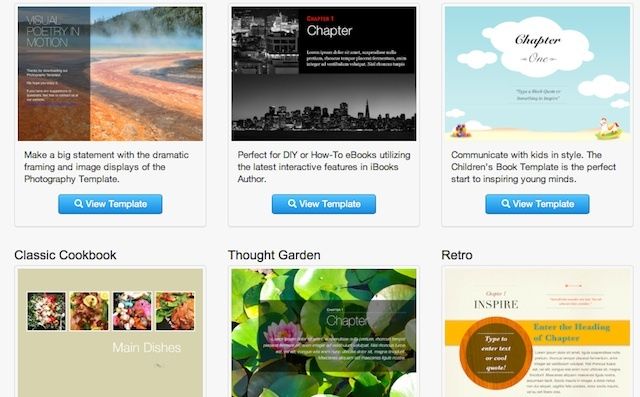
Template packs for iBooks Author, help make your ebooks look unique and professionally designed.
Although Apple pitched iBooks Author as a tool for educators, the company fully supports anyone who want to create an ebook using iBooks Author to do so. Apple also lets anyone that creates an ebook with iBooks Author to distribute it through the iBookstore – the catch being that the iBooks Author edition of an ebook can’t be published using another company’s store (though the text of the title can be repackaged using other apps and sold elsewhere). As usual, Apple will take a 30% cut of any sales.
There are, of course, plenty of non-education uses for iBooks Author.
The iPad is engaging students and transforming the K-12 education experience.
During its education event in January, Apple unveiled its plans to revolutionize the K-12 classroom with the iPad, electronic textbooks, a revamped version of iTunes U that supports content for K-12 schools as well as higher education, and tools for educators to create their own digital content using iBooks Author and iTunes U.
In the intervening months, schools and districts around the country have made significant investments in iPads, including the San Diego Unified School District, which invested $15 million in 26,000 iPads for its students. Those sales created a record quarter for Apple in the K-12 education market.
With the back to school season upon us, it’s clear that the massive iPad deployments will give Apple the opportunity to disrupt the classroom in the ways it has whole industries and, in many ways, that’s a good thing.
Schools are adding Apple technology, but many don't integrate it well into the classroom.
Apple kicked off 2012 with its education event in New York. At that event, the company announced its electronic textbooks for iPad initiative, iBooks Author, and the revamped iTunes U. According the Apples latest financial data, the education initiative has paid off with both iPads and Macs being purchased by schools in record numbers.
A 21st century vision of education , however, is about more than getting the iPads and MacBooks into the classroom. It also requires technology goals, professional development for teachers, high-speed access to up-to-date content, education-centric portals for students and teachers, back-end systems, and education apps or software.
TED's new ebook series and ebook app highlights the concern that ebook purchases lock readers into specific platforms.
The TED organization, which sponsors a range of conferences and talks on cutting edge topics recently launched an ebook series known as TED Books. Like the non-profit’s other initiatives, TED Books are “designed to spread great ideas.” Sticking to that ideal, the organization is making the ebooks, which will be released every two weeks, available across a range of ebook platforms including the new TED Books app for iOS devices.
The move highlights one of the challenges about ebooks – the choice of merchant and platform. That’s a particular concern when it comes to Apple’s iBookstore because purchases can only be read on an iOS device.
French publishing and price-fixing laws might have been the model for Apple's iBookstore price-fixing
One of the ironic twists about the anti-trust lawsuits against Apple and the major publishing companies is that Apple’s entrance into the ebook market actually broke Amazon’s virtual monopoly on the ebook business. In the process, publishers gained the ability to control ebook pricing, which can be seen as actually encouraging competition in the industry.
While the U.S. Department of Justice and attorneys general from many states are pursuing lawsuits around the matter, not every country would see the situation in the same terms as the U.S. government. In France, for example, publishers can legally control pricing and are protected from booksellers undercutting their business as Amazon had been doing with its power over the ebook market. It’s even possible that France’s laws protecting publishers may have served as inspiration for the agency model that Apple used in building the iBookstore.
New information made public in anti-trust suit against Apple and publishers
The Justice Department’s anti-trust suit and the accompanying class action suit brought by various states (totaling 31 plus the District of Columbia) on behalf of consumers against Apple and the major publishing houses has always been tinged with more than a little irony. After all, the alleged price fixing and collusion actually broke Amazon’s monopoly-like hold on the ebook market. In doing so, it opened the door for products and platforms to compete with Amazon’s Kindle.
The idea of Apple as a sort of digital age Robin Hood is a powerful one in the narrative and one that could give Apple a viable case in the anti-trust suit if the actually goes to trial. Unfortunately, new evidence in the class action suit throws a bit ice water on Apple’s attempt to cast itself as the good guy (or at least as the better guy than Amazon).
JAMF's Casper Suite provides integrated Mac and iOS management
May is Mobile Management Month at Cult of Mac, where we will be profiling a different mobile management company every weekday. You can find all previous entries here and read our Mobile Management manifesto here.
JAMF specializes in Apple management technologies. The company Casper Suite is a full featured Mac client management solution as well as an iOS device management product. Being devoted specifically to Apple technologies, JAMF is able to include features not found in other products at this time including the ability to integrate with Apple’s enterprise sales and warranty system known as GSX, the ability to distribute ebooks to iOS devices, and deployment workflows that integrate with Apple Configurator.
While Casper Suite is an excellent option for organizations that are predominantly or completely Apple-based, organizations with a mix of desktop and mobile platforms may find the product somewhat limiting. In addition to Casper Suite for Mac and iOS management, JAMF also offers Mac enterprise deployment and asset management tools. Finally, it’s worth noting that JAMF offers significant licensing discounts for education institutions implementing Casper Suite.
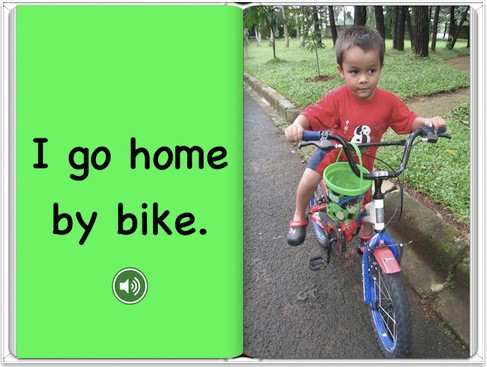
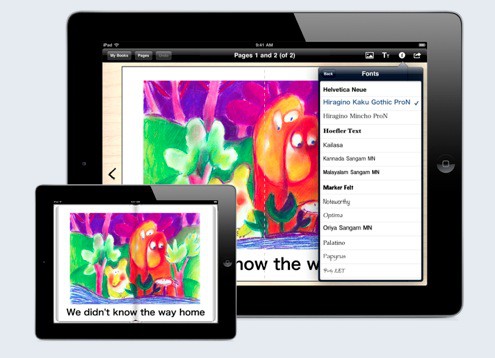
Say hello to John Tambunan. This five-year-old resident of Indonesia published his first book on the iBookstore a few days ago – a cute tale about catching fish.
Apple feels that it has a case against the DoJ regarding e-Book pricing in the iBookstore.
The U.S. Department of Justice recently accused Apple and 5 large book publishers of conspiring to raise e-Book prices in the iBookstore. Experts said that it would be unlikely for Apple to be found as guilty of collusion, and now the Cupertino company is wanting a trial to defend itself against the DoJ’s accusations.
The U.S. Department of Justice recently accused Apple of conspiring with book publishers to thwart Amazon’s power over eBook pricing. Today Apple has responded saying that “the DOJ’s accusation of collusion against Apple is simply not true.”
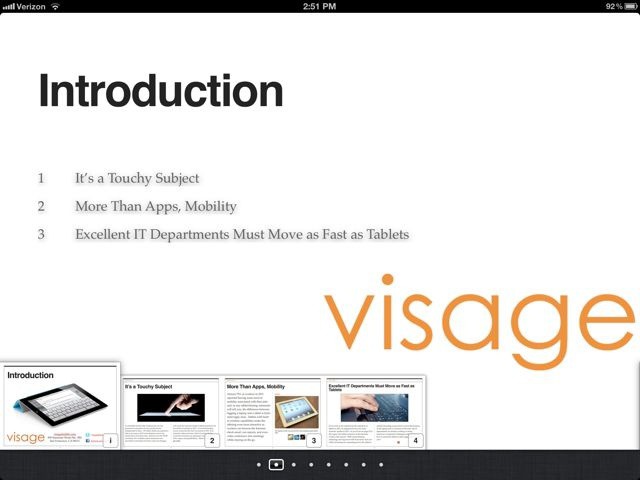
Visage MobilityCentral transforms the white paper for Apple's iBookstore
When Apple announced iBooks Author in January, the company positioned the free ebook publishing tool as a way for faculty members of schools and colleges to create their own customized and interactive textbooks. However, since Apple allows the software to be used by anyone, it has become a tool for authors or organizations that want to self-publish either for personal distribution or for sale/download in the iBookstore.
While easy self-publishing tools may bring to mind the image of someone writing their first novel or a memoir, there are any number of ways to use both the publishing features of iBooks Author and the distribution channel of the iBookstore. One of which is as a marketing and informational tool – an approach that takes the concept of a white paper to a new and powerful interactive level.
Register a domain name that attempts to pass for Apple or its products and you'll probably end up losing it.
Ever since the first iPod, Apple has had problems with squatters sitting on top of Apple-related domains, trying to scam people. Here’s another one. It is now seeking to take ownership of the Applecom.com and ApplePrinters.com domains and protect its trademark after filing a complaint with the World Intellectual Property Organization (WIPO) on March 29.
Don't expect Harry Potter or Near-Dead Dumbledore to appear on the iBookstore.
J.K. Rowling’s enormously successful Harry Potter series is about an incompetent orphan who lucks his way through a series of magical adventures despite being essentially inept. Tens of millions of people — myself included! — have enjoyed them over the course of the last decade, but only in dead tree form. Bizarrely, Harry Potter has never officially come to e-books up until now.
Of course, no longer. As one last magical trick, Harry Potter has made the jump to a number of e-book stores, including Amazon, Barnes & Noble, Google and Sony. The only company left out? Apple’s iBookstore.
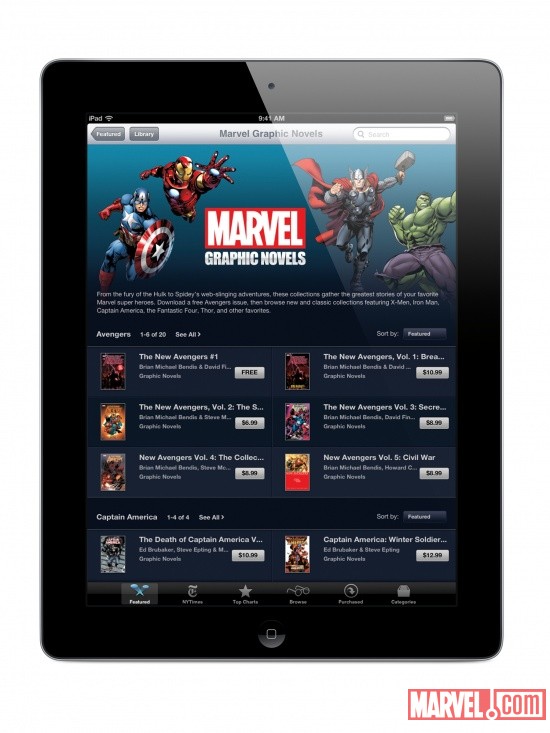
Comic book junkies rejoice: Marvel has brought 80 graphic novels to Apple’s iBookstore. Titles like Civil War, Avengers, Dark Tower, Spider-Man, X-Men, and more are now available in the iBookstore for the iPad, iPhone, and iPod touch.
More titles will be added to the iBookstore every week, and Marvel is offering a full issue of New Avengers for free to wet your appetite.
The DRM restriction that prevents Apple’s iBooks from being opened on other devices can now be removed by the latest version of a free DRM removal tool. Requiem 3.3, a piece of software that is incredibly popular for removing the DRM from music and videos purchased from the iTunes Store, has been updated to crack e-books purchased from the iBookstore.
Apple has announced some changes to the iBookstore today in an iTunes Connect letter to content publishers. Like the App Store, promo codes for iBooks can now be offered to iTunes users. Screenshots can also now be submitted for iBooks titles. This change follows the release of iBooks Author and Apple’s entrance into the digital textbook industry.
Apple’s new iBooks Author application for Mac is an impressive piece of work, even more so when you consider that it costs nothing. Although easy to use compared to many other page layout apps, it’s still quite a lengthy and complicated process to produce a book with it. It’s also squarely aimed at the education market. It was designed for the creation of textbooks.
So what if you want to make a shorter, simpler ebook? What if your kids want to make one? iBooks Author, for all its benefits, would probably be overkill. Enter, stage right, Book Creator for iOS. This five-dollar app lets you create simple ebooks on your iPad with very little fuss.
If you thought there would be little interest in an Apple event that didn’t include new hardware, think again. Following the unveiling of iBooks 2 with support for textbooks last week, Apple saw an incredible 350,000 textbook downloads in just three days of availability.
There’s been a lot of fuss overnight about what exactly Apple is claiming ownership of in the Terms and Conditions associated with its new iBooks Author application for Mac. The fuss is understandable, because the wording of the license agreement gets a little bit muddy.