Apple takes privacy pretty darn seriously. Photo: Ste Smith/Cult of Mac
Are you a third-party dev, advertiser, or Apple employee hoping to use targeted ads or personalized recommenders based on Apple customer data? There’s an app for that. Good luck with that!
That’s according to a new report, which states that Apple has an internal committee consisting of three expert “privacy czars,” who have have to sign off on any and all collection of Apple user data.
And if you thought the App Store review process could drag on, you’ve got another thing coming: debates over individual uses of data at Apple can, in some cases, continue for upwards of one year.
Apple just isn't cut out for the business. Photo: Apple
Apple’s six-year dabble into the world of advertising has come to an end. The company is reportedly surrendering its iAd program over entirely to publishers. That means publishers will get full control over the creation of ads, ad management and selling them. Apple apparently just doesn’t want anything to do with the ad business anymore.
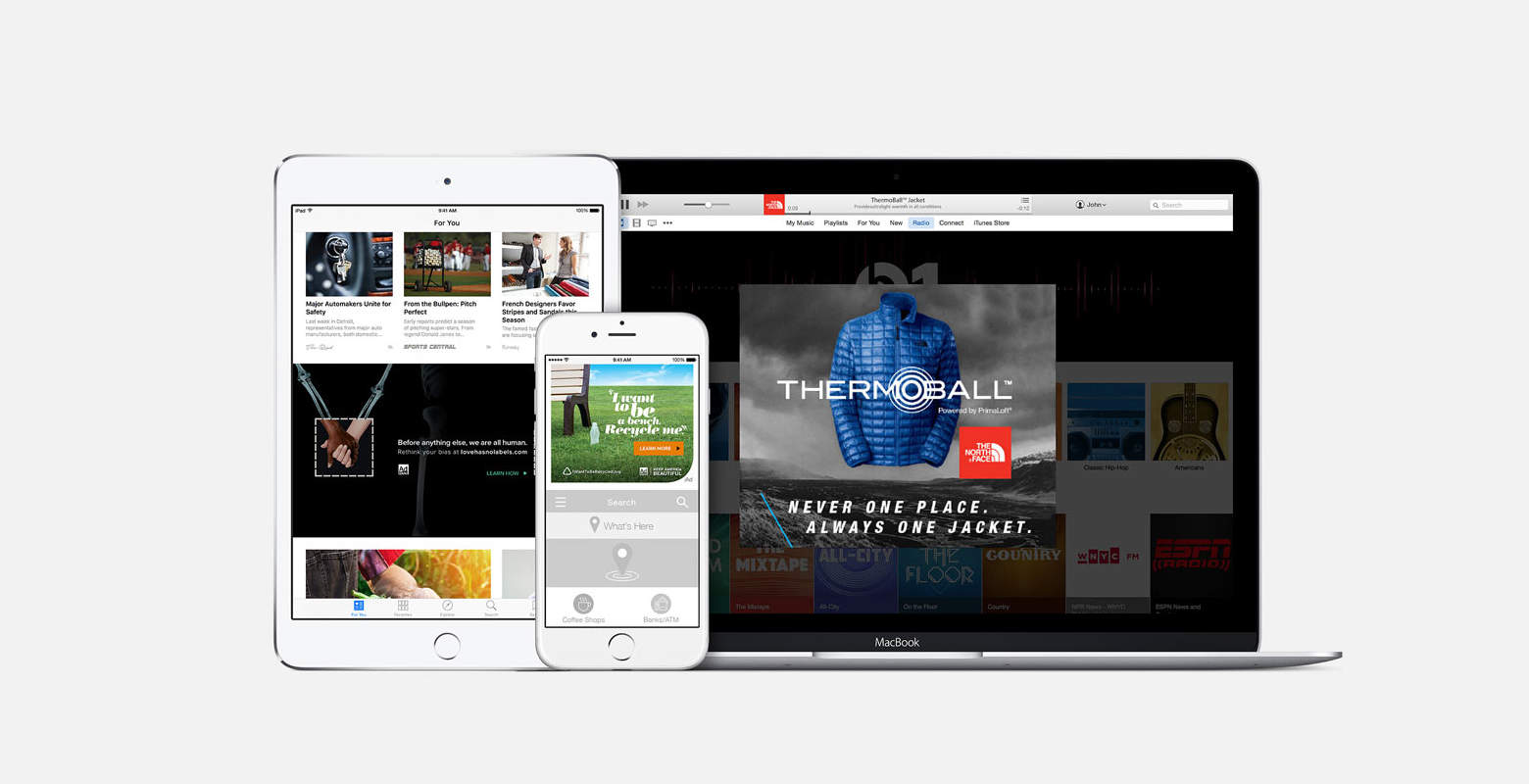
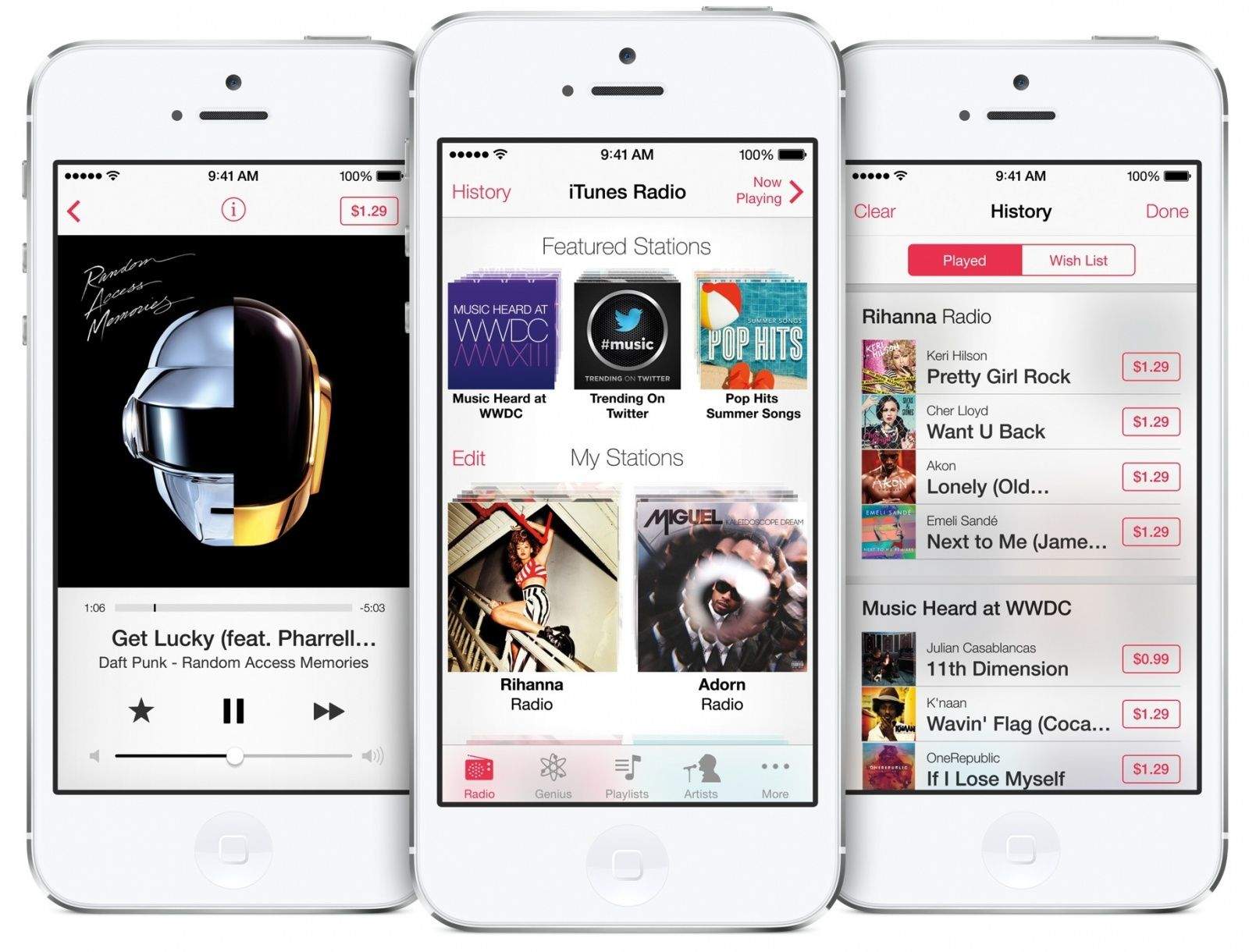
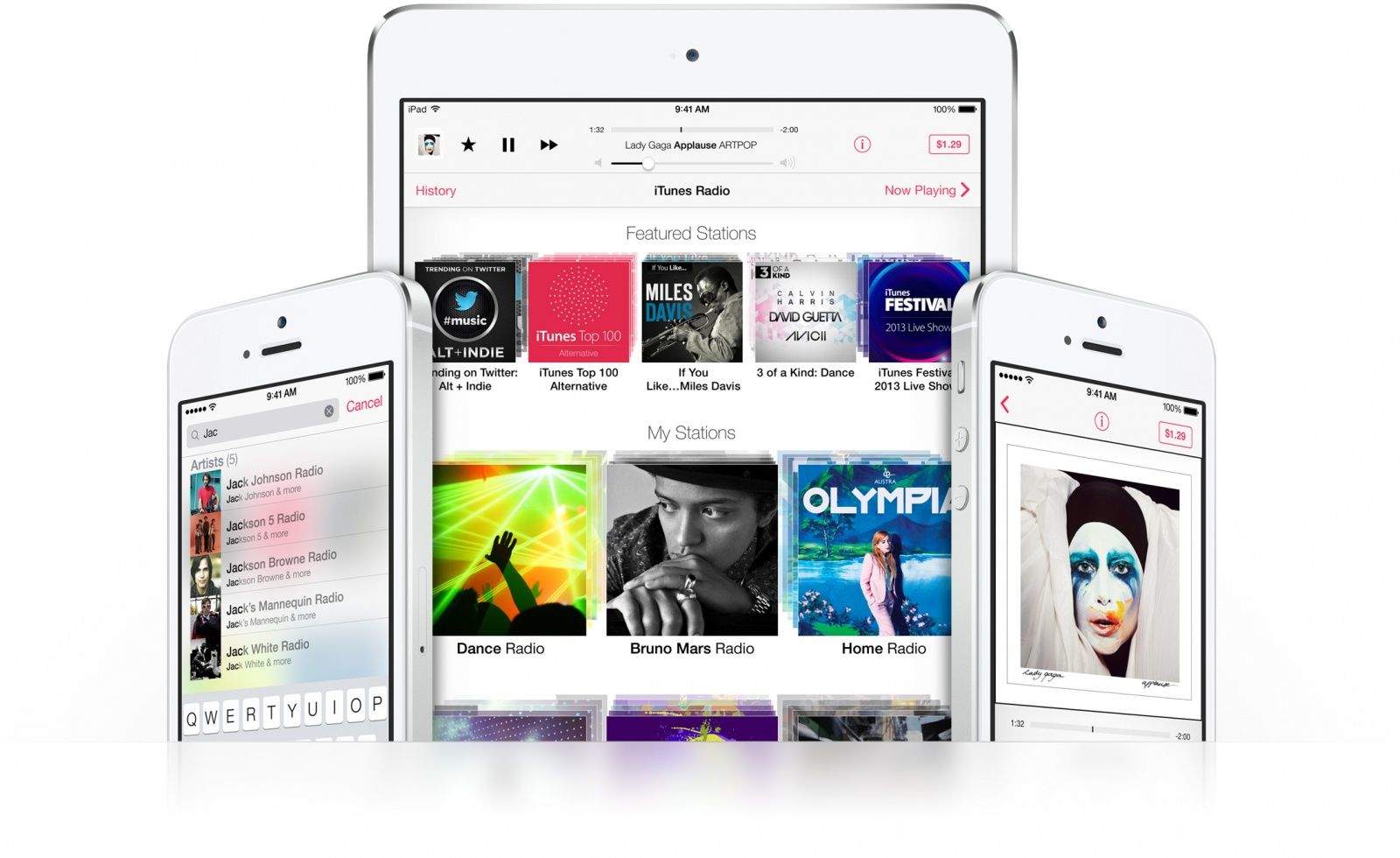
Apple is beefing up its iAd network for iTunes Radio by making it easy for advertisers to target certain customers. Like iAds for apps, advertisers can also buy their own audio ads without having to go through Apple’s sales team.
The change seems geared towards making advertising on iTunes Radio a more attractive opportunity, especially now that brands can use Customer Match, Apple’s ad-targeting system.
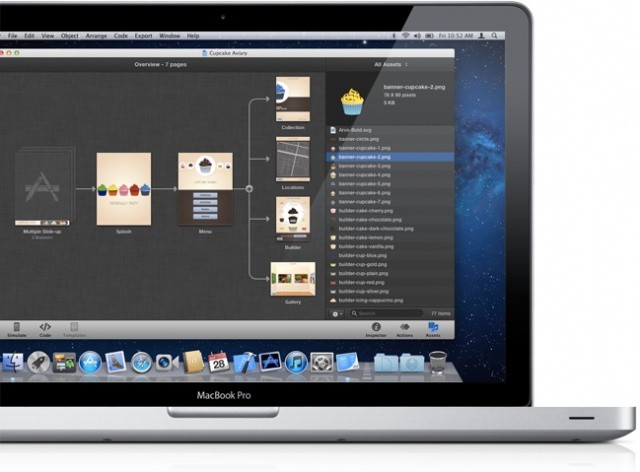
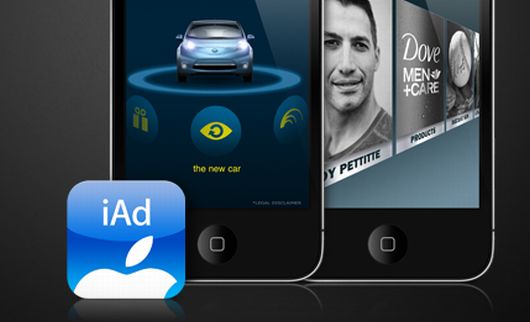
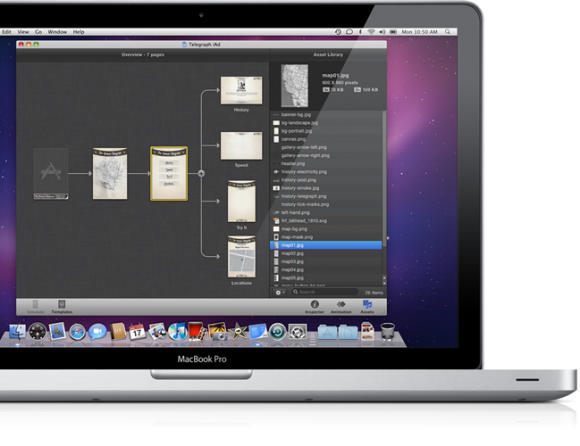
Apple has issued an update to its iAd producer tool — adding support for creating full-screen banner ads for iPhone, along with the ability to upload Producer project to iAd workbench.
iAD Producer version 4.2 additionally includes folder reorganisation in the tool’s Assets sidebar, alongside the expected unspecified bug fixes and performance tweaks.
Apple is starting to crack down on apps that request a user’s unique advertising identifier, but not actually show any ads within the app… and Apple may be doing it to put its own iAd network on better competitive footing.
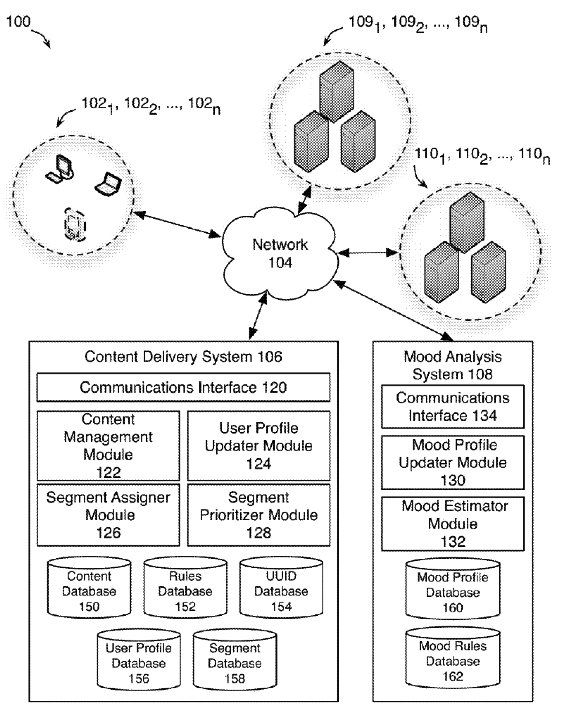
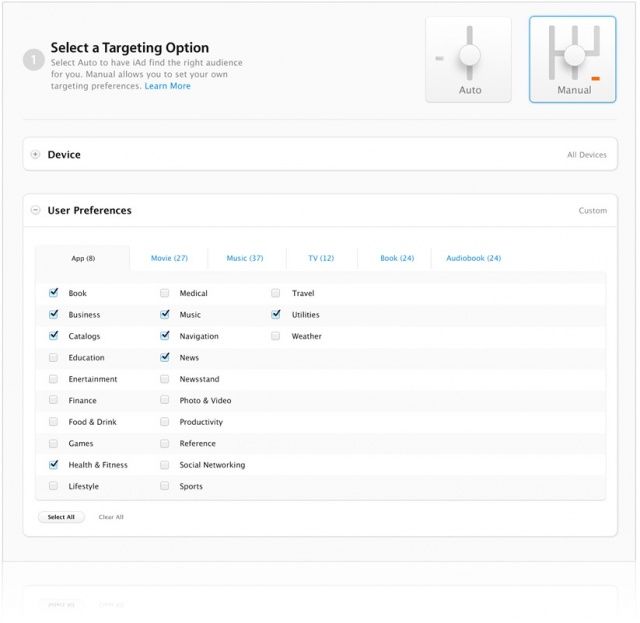
A new Apple patent application published today relates to iAd technology that will allow Apple to target users with specific content based on a person’s predicted mood, their likely interest level, other content they are currently interacting with, their current geographic location, and the time of day.
In some applications, mood would be gauged using a camera which, equipped with facial recognition algorithms, would be able to measure specific expressions.
Apple has restructured its growing iAd division to focus heavily on selling spots for iTunes Radio, according to a report from AdAge. To help sell individual ads to more potential buyers, the company is also reportedly building a real-time bidding exchange for in-app iAds.
At a recent staff meeting, Apple’s Eddy Cue reportedly communicated that iTunes Radio was the “top priority” for selling iAds. “The message that came across was basically if you’re not working on iTunes Radio, you’re irrelevant,” according to an AdAge source. Apple makes 90% of the revenue off its audio ads and only has to give 10% to advertisers. The company recently hired a top-level radio exec from Cumulus Media to help negotiate big deals.
Before iTunes Radio, iAds were only designed for developers to put in iOS apps, but they never really took off. Apple charged a steep premium and was highly selective in selecting ad partners initially, but this recent report suggests that the focus is being shifted to cheaper ads that can be bought individually. The real-time bidding system would work similarly to the stock exchange. In-app iAds could not only become more affordable, but more specifically targeted at users.
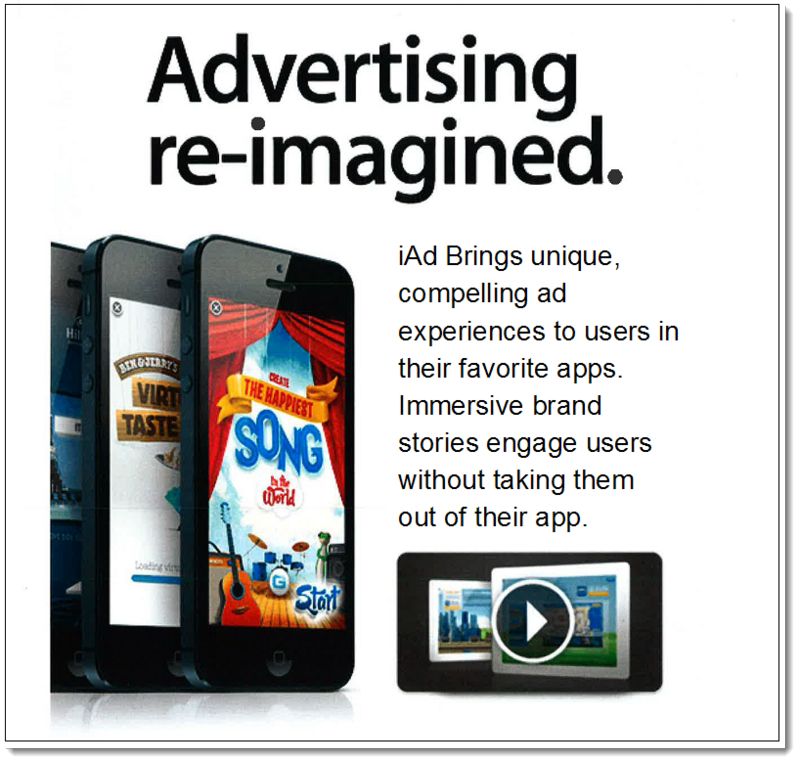
Apple has moved to trademark the “Advertising Re-Imagined” slogan used to promote its iAd mobile advertising platform. The Cupertino company filed for the trademark on Wednesday, September 25, more than three years after it launched the iAd business.
Apple has been on a hiring binge of ad executives lately as its ad-supported iTunes Radio product nears launch. During the month of August alone, Apple has posted over 40 job listings for iAd related positions on its own job board and LinkedIn. The positions range from account coordinators, ad design managers, and engineers, all of which will be used to create new media ads for iAds.
iAd has not been a big hit for Apple. Although the service was launched with a lot of fanfare about ads that you truly want to play around with and unheard-of levels of engagement, iAds hasn’t really taken off.
Part of the issue was Apple’s strategy: they focused on targeting large companies and demanded they make huge minimum buys-in. There was no dipping a toe in iAd: you either didn’t use it at all, or plunged right into your neck for hundreds of thousands of dollars.
Apple’s waffled on that before, allowing ad developers to start hocking their own apps on the iAd network starting in 2010. Today, however, Apple has added an iAd Workbench, making it even easier (and way, way cheaper) for developers to advertise with the network.
Following word that Apple’s iAd team is being restructured to allow for tighter integration with iOS 7’s new streaming music feature, iRadio, a new report talks just about how the ads on iRadio are going to work, how Apple’s going to make money on iRadio, and how much Apple’s paying the labels to make it happen.
Despite launching iAd in 2010, Apple’s foothold in the mobile advertising business hasn’t really taken off yet. Tim Cook even addressed Apple’s advertising strategies during his interview at the All Things D tech conference this week, and stated advertising isn’t core to Apple’s business.
Apple’s enthusiasm for mobile advertising might start picking up soon though if today’s latest rumor turns out to be true. According to Business Insider, Apple is planning to launch an ad exchange, similar to way Facebook and Twitter have recently done.
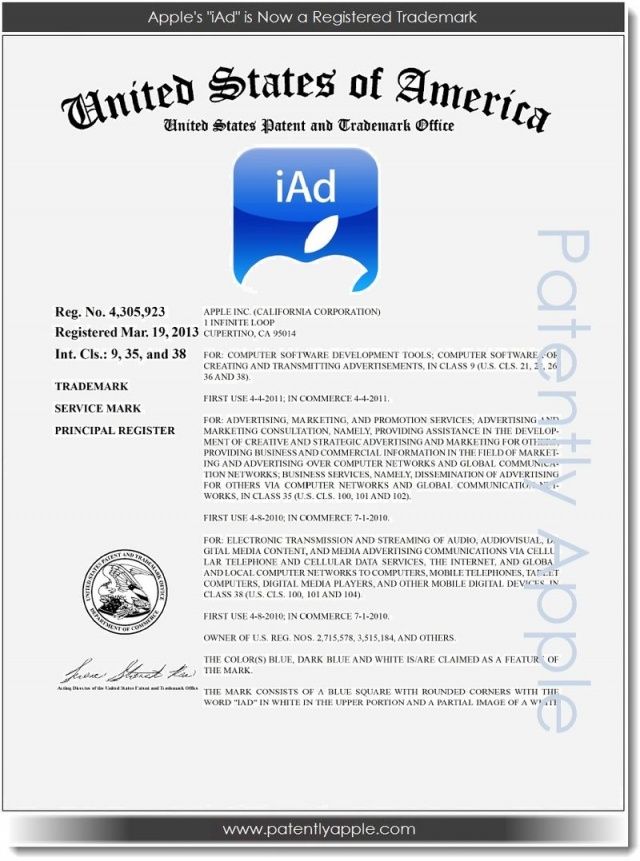
The U.S. Patent & Trademark Office has today approved Apple’s application for a registered trademark for “iAd,” 21 months after the Cupertino company first applied for it.
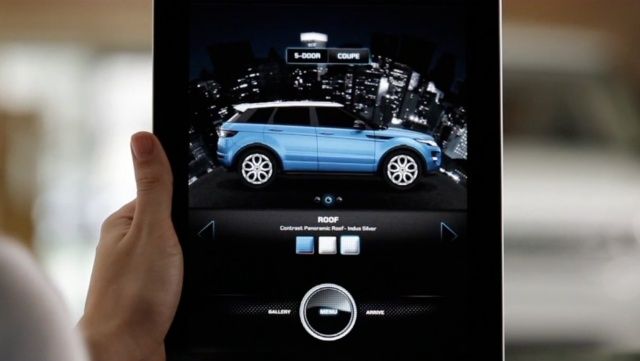
Apple’s iAd network hasn’t really caught on as fast as the Cupertino-based company would have liked, but that doesn’t mean iAds aren’t creating great results for the companies who have hopped on board. In a new video profile on its iAd Network portal, Apple shows how iAd has helped Land Rover raise awareness for its Range Rover Evoque automobile.
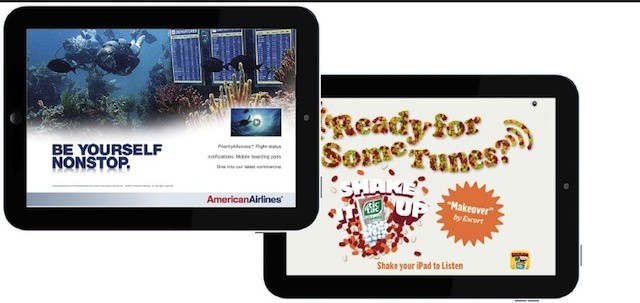
Few iPad publications include interactive or immersive ads (source: Kantar Media)
It’s pretty clear that digital distribution is going to play a large role in the future of magazines and newspapers. That doesn’t mean, however, that print editions are going away any time soon. For the foreseeable future, we’re likely to see print/digital hybrids while consumers and publishers test the waters of both digital products and distribution channels.
The road to digital hasn’t been a smooth ride for many publications. Part of the reason is the lack of resources being devoted to creating engaging and immersive digital content that doesn’t feel as if you’re simply reading a PDF of the print edition.
One big area where publisher are still failing is advertising – despite excellent interactive ad systems like Apple iAd, publishers are still stuck in a print mentality when it comes to ads. In fact, according to a new study, publications often simply toss the exact same print-formatted ads into digital editions that run in their print counterparts.
Apple has released a new version of its iAd Producer application with multiple additions and fixes. Overall speed and stability for version 2.1 has improved, and features like Twitter integration, support for the third-gen iPad, improved ad testing, and more have been added.
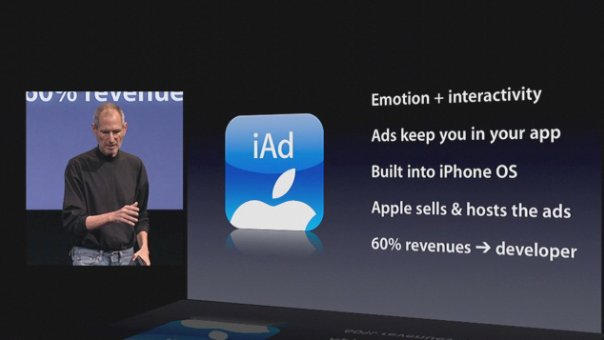
Historically, developers have earned 70% of the revenue from application downloads from the App Store and 60% from iAd revenue, but today comes good news for those of you who use the iAd platform in your apps. Apple has revealed on its Developer Center that developers will now be earning an extra 10% from iAd revenue, boosting it to 70% in total. Is this Apple’s push to get the advertising service into more apps?
Apple’s iAd hasn’t received much in the way of attention since it’s announcement as part of iOS 4 almost two years ago. The platform was designed as a way for advertisers to create powerful interactive mobile ads and to make it easy for app developers to integrate those ads into their products. Of course, it was also intended to help Apple take a big slice of mobile ad spending.
Despite a big introduction in 2010, iAd quickly fell off almost everyone’s radar. Apple initially set a high barrier of entry by requiring iAd campaigns to commit $1 million. The company later cut that in half and this week lowered the required initial investment to $100,000 – one tenth of its original requirement – something that speaks volumes about the company’s mojo when it comes to selling ads.
It could be several years before India gets its first Apple store.
Apple is planning a media event in New York this month, according to AllThingsD. While we shouldn’t expect to see the iPad 3 or a new Apple TV, AllThingsD’s usually-reliable sources have indicated the event will be “important,” but not “large-scale.”
Apple’s iCloud exec, Eddy Cue, is expected to show at the event in late Janurary. The last time Cue took the stage in New York was to help launch the iPad-only magazine by News Corp called The Daily.
Just under 18 months after its launch, Apple is set to make more changes to its iAd mobile advertising service in a bid to attract more customers. The Cupertino company is hoping to claw back some of the ground it’s quickly losing to Google’s AdMob service by reducing the initial buy-in to iAd, and changing the way in which advertisers pay.
After repeatedly being bashed by Apple, here some good news for RIM: mobile advertisers aren’t abandoning the platform, but actually taking a second look with dumb phone advertising rising, says one advertising network Wednesday.
Despite Google’s position as one of the biggest advertising companies on earth, if you’re a company looking to promote your product, buying ads for an Android device is a pretty dicy proposition when you could buy them on an iOS device instead.
When Apple first launched iAds back in April 2010, it was widely criticized by developers and advertisers due to Apple’s strict design requirements and a huge $1 million buy-in rate. iAds has finally gained momentum, though, and Apple just announced its 100th iAd campaign. How’d Apple turn things around?
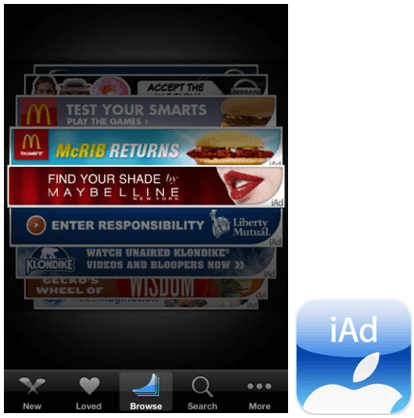
If you’re the kind of person who loves to watch commercials – you’ll love Apple’s new iAd Gallery application that just hit the App Store. Apple describes the application as a “celebration of advertising,” allowing you to view every iAd currently on the network.
Featuring adverts from some of the world’s biggest brands, a spinning wheel view lets you scroll through the collection of iAds and view the ones that take your fancy. If you really enjoy a particular add, you can ‘love’ it and make it one of your favorites. You can also search the collection by advertiser, category, or feature.
It’s not just ads, however – you can also learn more about the products advertised and the advertising agencies behind them.
Despite all of its features, I’m still not sure I get the point of the iAd Gallery application. I spend a lot of time trying to avoid adverts, especially within iOS applications, so the idea of an app – with no other content but iAds – is my idea of a virtual nightmare.
Having said that, it’s certainly worth checking out – if only for a few minutes. In true Apple style it’s well made, easy to use, and contains a catalogue of iAds that aren’t quite as boring as other adverts.
Only Apple could get away with making an application full of its adverts and still be respected.
Although Adobe itself is hardly on the ropes, having just scored their first billion dollar year in revenue, Apple continues to pummel Flash into the ground, like a berserker rabbit punching the occipital lobe of a downed enemy.
The latest blow? Apple has just launched iAd Producer, a new tool for online advertisers that allows them to create interactive iAd content in an easy, streamlined manner that would have previously required Adobe’s Flash developer tools.