Today Facebook CEO Mark Zuckerberg unveiled “Home,” his company’s new experience on Android devices. Rumors leading up to today’s event said that Facebook has been working on its own Android device in conjunction with HTC, and that has turned out to be true.
Zuckerberg started by explaining how modern smartphones are built around different apps that communicate with people, and that Facebook wants to switch that paradigm and focus on people first. Home allows you to quickly interact with your Facebook account anywhere from your device, including the lockscreen.
In two days, Facebook will gather a bunch of people into a room and Mark Zuckerburg will tell them all about Facebook’s new smartphone. It’s made by HTC. It’s got a custom build of Android, and tons of Facebook integration. And it looks pretty boring.
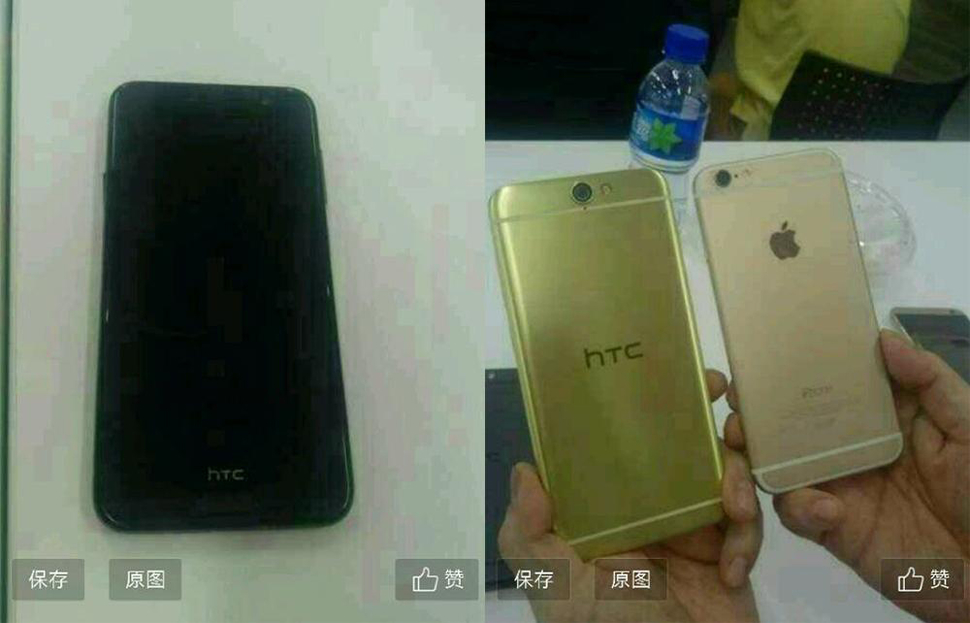
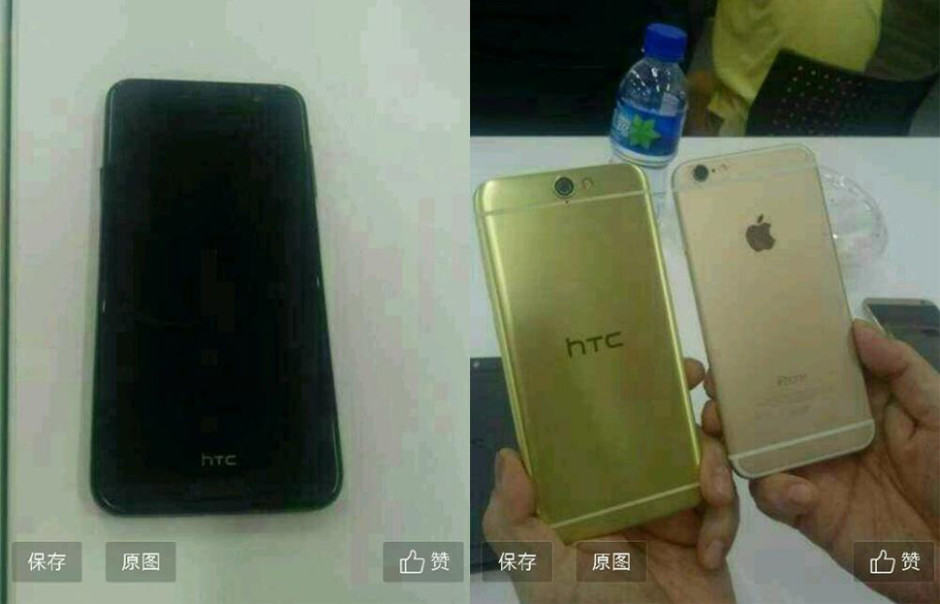
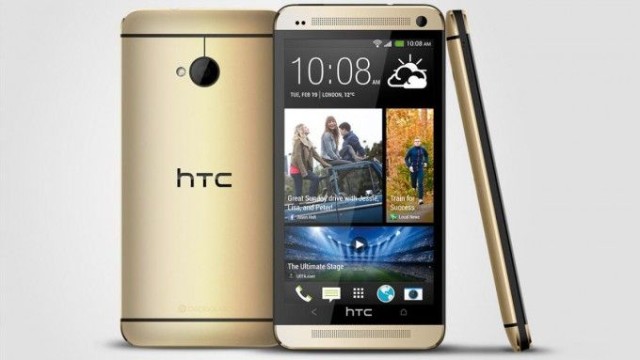
Evleaks just posted a picture of what is probably Facebook’s smartphone. It’s called the HTC First, and it looks like millions of other Android handsets on the market. No details on the specs, but I’m sure Mark will give us an ear full on Thursday.
The latest Facebook SDK makes the Facebook on iOS experience even greater.
There have been rumors for over a year that Facebook is trying to make its own smartphone to compete with the iPhone and Samsung Galaxy S3, but we haven’t had much reason to believe in them until now.
Facebook sent out invitations last night to an event on April 4th at its headquarters, where the company will allegedly unveil its own smartphone that was built in partnership with HTC.
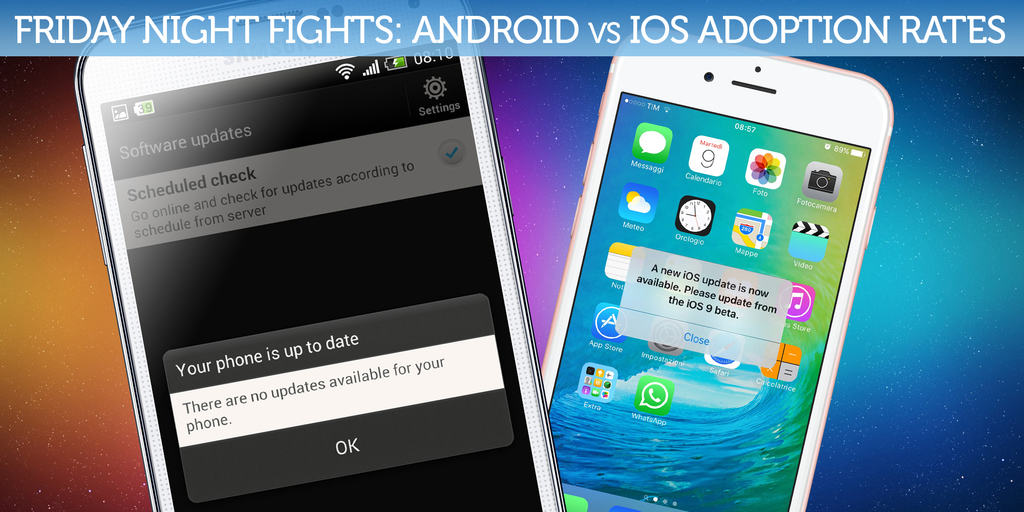
One of the biggest complaints about Android, is that Google will announce a new version of Android, but then it takes over six months for that software to actually get on your phone. What gives?
The guys over at Gizmodo decided to talk to both manufacturers and wireless carriers to find out what’s the hold up. It seems like a software update would be a pretty straightforward process, but what they found was a myriad of problems that can take months to answer before your Android phone gets an update.
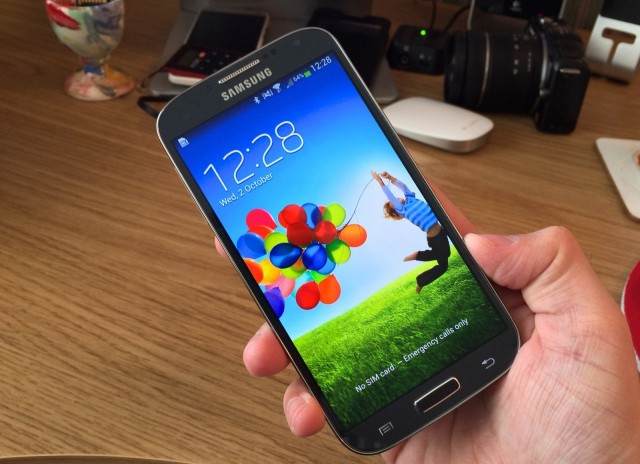
Samsung has already explained its love for plastic, and why it chose to stick with it for the flagship Galaxy S4. But after receiving a lot of criticism for that decision, the company’s head of design, Dennis Miloseski, was forced to defend the Galaxy S4’s plastic build once again at Engadget’s Expand conference in San Francisco this weekend.
In response to Samsung’s Galaxy S4 announcement last Thursday, Apple has updated the iPhone 5 pages of its website to remind visitors why people love the iPhone. “Loving it is easy. That’s why so many people do,” the landing page reads, before going on to list all the reasons why the Cupertino company’s smartphone is so popular.
If you didn’t hear the news already, Samsung announced their new flagship phone last night, the Galaxy S 4. It looks a lot like the Galaxy S 3. It’s made of plastic. Has a huge screen. And it comes with some weird software features you might use, but probably won’t.
We were on hand last night to test out the Galaxy S 4, and while it’s an impressive phone, it leaves the door open for companies like HTC and LG to capture the Android crown.
Here’s a video comparison of the Samasung Galaxy S 4 next to the iPhone 5:
Apple and Samsung are both looking to bring wireless charging to their smartphones this year, following in the footsteps of rivals like Nokia, LG, and HTC. The feature will come to flagship devices, such as the upcoming Galaxy S IV, according to industry sources who have been speaking to DigiTimes.
In the competition between iOS and Android, Google’s Android operating system has been growing in the U.S. much faster than iOS until now. For the first time, Android actually lost some of its U.S. marketshare in 2013 while iOS gained a few points.
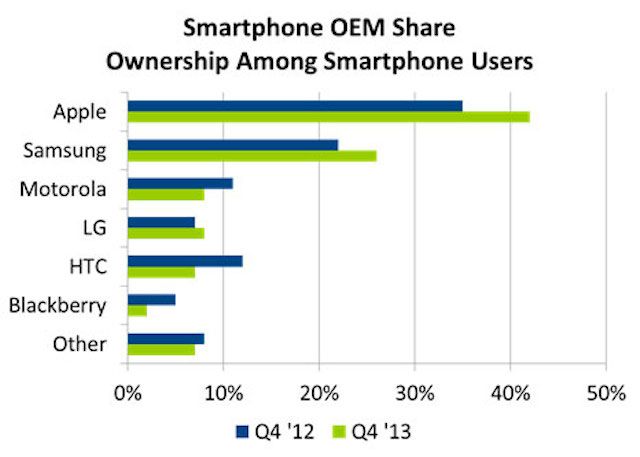
comScore just released its report on the U.S. smartphone market and had some very encouraging news for Apple. While most other manufacturers are slumping, Apple is increasing its lead on Samsung, HTC, Motorola and LG in the U.S.
BARCELONA, MOBILE WORLD CONGRESS — As I was walking around the show floor at MWC today, I noticed a number of smartphones that looked very familiar — yet they were being paraded by Chinese companies I’d never heard of. I saw what looked like a large iPhone 5, an entire range of Samsung Galaxy devices, and a number of high-end HTC handsets.
Except they weren’t really Apple, Samsung, or HTC devices at all; they were actually cheap clones that were trying their best to look like the real thing. They even had fake accessories that were identical to the originals.