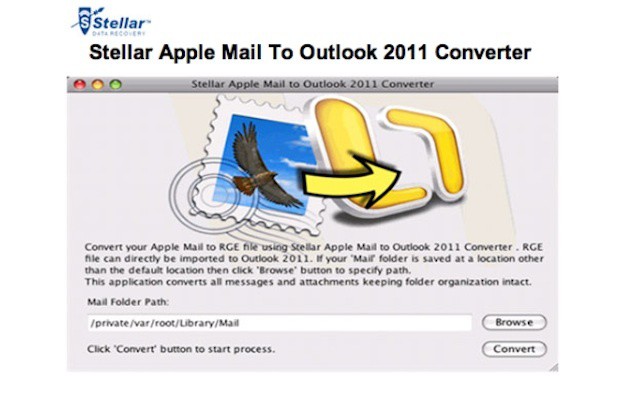
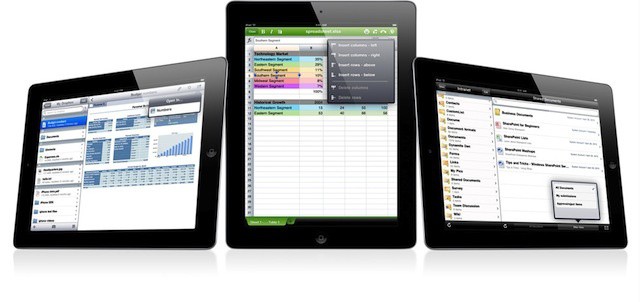
Stellar's new utility promises a quick and easy transition from Apple's Mail to Outlook for Mac.
Stellar, which produces a number of Mac and Windows utilities has launched a new tool designed to offer a quick and painless transition from OS X’s built-in Mail application to Outlook 2011 for Mac. The new Stellar Apple Mail to Outlook 2011 Converter joins Stellar’s collection of prosumer and business email management, transfer, and recovery tools.
BYOD programs are here to stay, but many companies still don't secure employee devices.
The number of personally-owned iPads, iPhones, and other mobile devices that professionals bring into office is expected to more than double between now and 2014. That means the businesses that have so far been lax about considering or planning an official bring your own device (BYOD) program and/or establishing security policies around BYOD are going to need to play catch up – and they’ll need to get started as soon as possible.
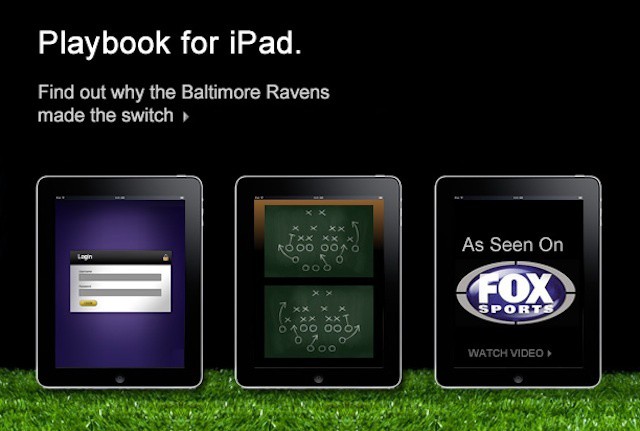
College football teams follow NFL teams in replacing playbooks with iPads.
Football season is just around the corner and the iPad is set to become a fixture for both college and pro teams. As we noted earlier in the year, a handful of NFL teams made the switch to iPad-based playbooks at the start of last season and more are making the switch this year. In addition to NFL teams, several colleges have announced that they are transitioning to the iPad playbook model as well.
iPads at Duke cancer clinics lead to more accurate medical histories and symptom tracking.
The iPad has become a fixture in health care that simplifies the lives of doctors and nurses. It turns out that the iPad can improve the quality of care patients receive if it is used as a mechanism to record a patient’s medical history and/or as a way of monitoring that patient’s progress on follow-up visits.
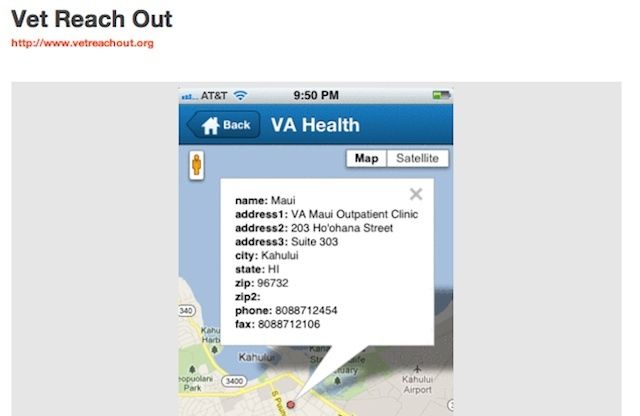
Vet Reach Out is one of the finalists in the Project REACH app contest sponsored by the VA and JBJ Soul Foundation.
Department of Veterans Affairs is no stranger iOS devices or to developing custom apps to help deliver key services to veterans and their families. In fact, the VA’s CIO last year said that the agency needed to become “iPad friendly” in order to effectively support the agency’s physicians, nurse, and other medical staff and an iOS pilot program was launched earlier this year.
More recently, the VA has been looking for ways that mobile technology can help homeless veterans find food, shelter, and other critical resources. To achieve that goal and raise awareness of veteran homelessness across the country (one out of six homeless adults in America is a veteran), the VA has teamed up with JBJ Soul Foundation, the non-profit charity created by music legend Jon Bon Jovi to launch an iOS/Android app contest called Project REACH.
The new iPad's LTE success seen igniting a serious new revenue stream for carriers.
The LTE version of the new iPad may cost $130 more than the Wi-Fi version, but the throughput that LTE delivers makes the iPad into a phenomenal mobile solution. The performance easily tops a large segment of home broadband services, which delivers tremendous value. Add the free personal hotspot feature available to Verizon customers and a MacBook Air (or other notebook) and you get a powerful business solution for professionals on the road.
Right now only 13% of iPad/tablet users worldwide have an active mobile broadband subscription, but that will change significantly over the next five years according a new report by research firm Strategy Analytics. The potential that the new iPad with LTE offers both mobile professionals and consumers will be one the key factors contributing to that change.
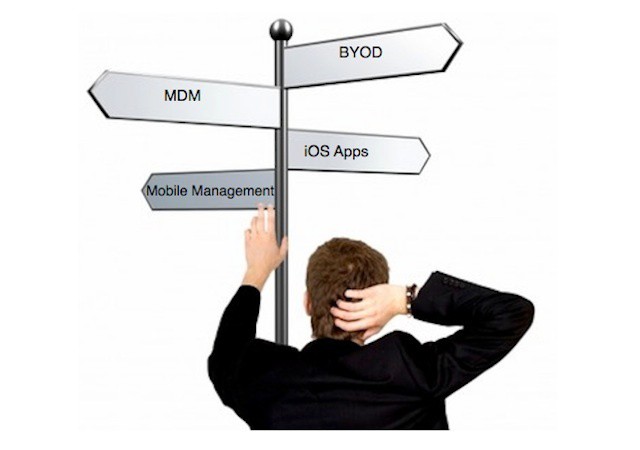
Mobile management means securing apps and content as well as locking down devices.
There are plenty of stories out there about the explosive growth of mobile technology in the workplace. The trend towards bring your on device (BYOD) models in which employees are allowed or encouraged to bring their own iPhones, iPads, and other devices into the office is driving a massive expansion of the number of mobile devices used for work tasks. At the same time, the annual (or even more frequent) device an OS release cycles that have become common are driving up diversity of devices and resetting the mobile technology playing field every few months.
That constant change is forcing the IT professionals to adapt to new devices, apps, use cases, network models, and security threats faster than anything the IT industry has ever seen.
This is particularly visible in the mobile management space. A year ago, the primary method for handling mobile device and data security was to manage and lock down the device itself using one of dozens of mobile device management (MDM) suites on the market. Over the past six to nine months, however, MDM has been replaced by mobile app management (MAM) as the best way to secure business data. That’s a warp-speed transition in the mindset and goals of IT professionals.
Registration is available for this fall's MacTech Conference 2012.
Registration is now open for MacTech Conference 2012. The annual conference, which is a great learning and networking experience for IT professionals and developers, will be held October 17 – 19 in Los Angeles. A pre-registration discount is available for anyone who registers by the end of August.
The conference is sponsored by MacTech magazine and was launched in 2010, the year that Apple chose to focus its annual Worldwide Developers Conference solely on iOS. Since then, the conference has grown into a major event for IT professionals that need to support Macs and/or iOS devices in business, enterprise, and education environments. The conference has also become a serious event for Mac and iOS developers.
IT Pros like the idea of Bonjour, AirPlay, and AirPrint, but feel they don't fit will on college campuses.
An online petition has been created to try to convince Apple to make changes to its Bonjour network discovery service and related technologies including AirPlay and AirPrint. The petition is asking Apple to redesign Bonjour and other services to deliver a better fit with education and enterprise networks. It was started by Lee Badman, wireless network architect for Syracuse University, on behalf of the Higher Ed Wireless Networking Admin Group at Educause, a non-profit resource organization for IT staff working in higher education.
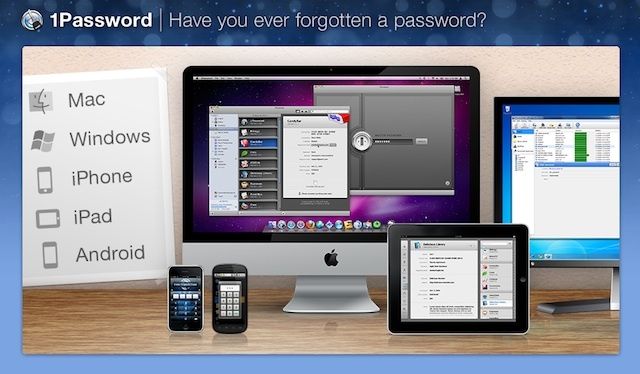
1Password goes head-to-head with a password cracker and shows why complex passwords are important.
1Password by AgileBits is a an incredible tool for keeping your data safe. More than just a password manager, 1Password allows you to encrypt and organize a wide range of data (website passwords, non-web digital accounts, credit/debit card numbers and financial account details, software licenses, and files containing confidential information.
Those features are all well and good, but the biggest feature is 1Password’s ability to keep all that data secure in the face of brute force attacks – the kind of attacks where a piece of software simply tries combination after combination of possible passwords. Password cracking software that rely on such attacks can easily try thousands of potential passwords each second.
To find out whether or not 1Password can withstand such attacks, AgileBits tested one 1Password against John the Ripper, one of the most well-known password cracking tools.
Responding to a security breach, Dropbox plans new security tools, but they might be too burdensome for iPhone and iPad users.
In the aftermath of a data breach that it announced this week, Dropbox says that it will begin implementing new security measures. Those measures include new automated techniques for spotting suspicious behavior, a page where you can examine all active logins to your account, password update requirements, and two-factor authentication.
All of those are reasonable steps to take. That Dropbox hasn’t implemented most of those items before is a bit surprising. Only one of those items – two factor authentication – really puts a burden onto Dropbox users, but it could put a very big burden on iOS users and app developers.
Following the launch of Mountain Lion, Apple has started rolling out Mountain Lion IT certifications.
Apple has launched its first Mountain Lion training guide and certification for IT professionals. The certification is the Mountain Lion edition of the Apple Certified Associate – Mac Integration certification, which can be viewed as the introductory Mac IT certification.
Apple began offering the certification following last year’s launch of Lion. Unlike Apple’s other certification options, Apple provides a free guide to the material on the Mac Integration Basics Exam on its training site. You can also register and take the exam online for $65. Should you fail the exam, Apple will let you retake the exam at no additional charge.
A growing number of companies embracing BYOD are ignoring mobile security issues.
The number of companies investing in mobile management and security solutions related to bring your own device (BYOD) programs is growing, but not nearly as fast as the number of companies that are actually offering BYOD to their employees. The result is that many companies are putting themselves and their data at risk by jumping onto the BYOD bandwagon too quickly and without properly securing employee iPhones, iPads, and other devices or the business data that is stored on them.
Schools are adding Apple technology, but many don't integrate it well into the classroom.
Apple kicked off 2012 with its education event in New York. At that event, the company announced its electronic textbooks for iPad initiative, iBooks Author, and the revamped iTunes U. According the Apples latest financial data, the education initiative has paid off with both iPads and Macs being purchased by schools in record numbers.
A 21st century vision of education , however, is about more than getting the iPads and MacBooks into the classroom. It also requires technology goals, professional development for teachers, high-speed access to up-to-date content, education-centric portals for students and teachers, back-end systems, and education apps or software.
iPads help USDA service survey farmers and collect agriculture data across the country.
The USDA is working its way through an ambitious iPad deployment that may come to serve as a model for a range of government agencies within the U.S. and around the world. The challenge was to develop a simple, intuitive, and effective field survey and data collection system.
The National Agricultural Statistics Service (NASS) is a division of the USDA that is charged with surveying and reporting agricultural data across the country. NASS operates in all 50 states plus Puerto Rico. With a staff of around 3,000 enumerators NASS conducts thousands of survey each year about agriculture across the country. The service has been operating since the mid-1800s and, until the iPad, it conducted surveys and collected data in pretty much the same way that it had back in the 19th century – with paper forms filled out by hand and mailed to various field offices. Although various technology initiatives have been tried by NASS since the 1980s, none was a successful fit before the iPad.
The enterprise integration vendors of the Enterprise Device Alliance have announced universal support for Mountain Lion.
The member companies that make up the Enterprise Device Alliance announced earlier this week that all of their products have either been updated already with support for Mountain Lion or will be within a few weeks.
The Enterprise Device alliance is a consortium of companies focused on integration Apple technologies in the business and enterprise environments. The solutions offered by those member companies include Active Directory integration, Mac and iOS device management, advanced file and print integration options, mobile backup, Windows virtualization, and help desk operations.
O2 executive James Le Brocq points out what an iWallet needs in order to be a success.
Apple may be the only major company operating the mobile space that hasn’t announced a partnership or trial related to delivering mobile payments and creating an iWallet. While it seems a forgone conclusion that Apple will eventually enter the mobile payment market, a recent statement by James Le Brocq, managing director at O2 Money (a division of the U.K. mobile carrier O2) illustrates why Apple hasn’t yet entered the that market and why that’s a good move for Apple: consumers aren’t that interested in mobile payments.
Carrier partnerships can offer one-stop shopping for mass iPhone deployments.
During our Mobile Management Month series, we noted that a number mobile management vendors have established strategic partnerships with consulting firms, telecom agents, and mobile carriers. According to a study, these kinds or partnerships are paying off for everyone involved – carriers, vendors, and business customers.
With new iOS and Android apps, ownCloud becomes a serious business cloud option.
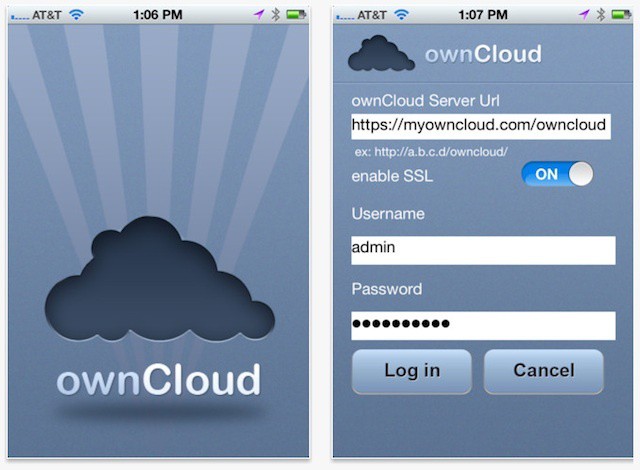
We’ve taken a couple of looks at ownCloud over the past few months. The company launched its signature cloud server software in April and issued a major update about a month ago. Today, ownCloud announced its iOS and Android apps, making the product a serious option for many businesses that need to develop a secure internal cloud strategy.
Microsoft will need to spend some serious cash if it wants to make Windows 8 and RT true iPad competitors.
Apple continues to top PC sales thanks to the iPad. Meanwhile, according to research firm Canalys, Microsoft will likely need to heavily subsidize the price of touch-first PCs and tablets if it wants Windows 8 to be anything like a success.
Echoing Tim Cook’s about Microsoft’s Windows 8 strategy being like converging a toaster and a refrigerator, the research firm notes that Microsoft’s approach could jeopardize the Windows 8 launch. Canalys notes that the big issue is that most Windows 8 features are designed for touchscreen use. That means that existing PC owners won’t get the full value or experience that Windows 8 offers unless they upgrade their hardware to a tablet, touchscreen notebook, or a hybrid device that functions as both.
Traveling for business? Don't forget to pack an expense tracker app.
Traveling for business is a lot different from taking a vacation. While you may get to experience far off cities, meet new people, and have some genuine fun on a business trip, you’ll also need to work, worry about delays that could make you miss critical meetings, ensure you leave your hotel room looking your most presentable, and keep track of every expense related to the trip.
Of those stress factors, tracking expenses so that you can submit them for reimbursement or explain charges you make to a company credit card may not seem the most stressful. The majority of the time it isn’t (unless you lose some big-ticket receipts or have unusual charges to justify). It is, however, often tedious drudgery that is prone to human error and mistakes.
There are many iOS expense tracking apps out there and there are some very good reasons to invest in one of them.
Seven simple rules about push notifications help craft killer iPhone/iPad marketing campaigns.
Over the past few months, a number of different studies have shown the iPad (and to a lesser extent the iPhone) is a near-perfect advertising vehicle that enourages ad click-throughs, user engagement, and purchase decisions in ways that generally aren’t seen with other technologies.
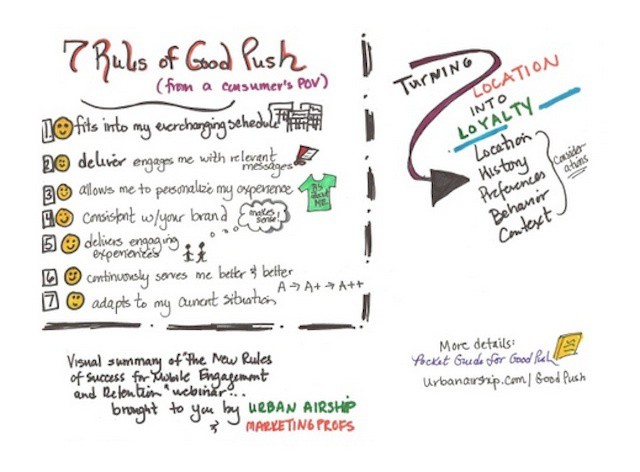
A truly well-crafted marketing campaign aimed at iPad and iPhone users in, however, is more than just a series of ads. Instead it’s a series of interactions that build a relation with mobile customers. According to the marketing gurus at MarketingProfs, one key to building those relationships is using push notifications – and using them in the right ways.
IT embraces the iPad and other tablets, but not as PC or smartphone replacements.
One common assumption about iPads in business is that employees and executives are insisting on using their personal iPads at work or are demanding that the company provide them while CIOs and IT departments are fighting tooth and nail against the iPad. While that assumption certainly makes for good headlines and soundbites, it isn’t actually true – at least according to a new report from cloud and content management firm Alfresco.
In fact, Alfresco’s new report indicates that IT staffers are heavily involved in tablet adoption and may even be the driving force behind it. The report also provided a range of insights as to how iPads and other tablets are being used in the workplace and notes that tablets are offering new opportunities more than they are replacing either smartphones or PCs.
Although an iPhone and iPad can help you work on vacation, here are ten good reasons that you shouldn't.
Over the past few weeks, I’ve taken a look at a couple of studies that show how the iPhone, iPad, and other consumer technologies that are being embraced at the office are shifting the work/life balance for most professionals. The always connected and available capabilities that our mobile technologies engender are pushing us towards more work and less life.
The first study showed that professionals using an iPhone, iPad, or other mobile devices on the job and at home often put in enough extra time during “off hours” to equal an extra day’s worth of work each week. The second study showed that many of us tend to bring work with us on vacation in the form of an iPhone or iPad (both of which are great for travel), a laptop, or even just cloud-based access to work resources.
New trends show health-related apps are changing how patients experience healthcare.
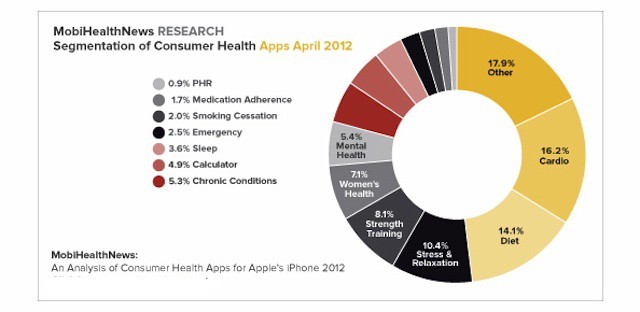
Health related iOS apps are proliferating quickly in the App Store. While the most popular health related apps tend to be focused on diet, exercise, and stress relief, there are some other fast growing trends that show how the iPhone and iPad transforming the healthcare experience for consumers.
According to MobiHealthNews, which provides an annual assessment of the market for mobile apps related to medicine, health, and fitness, three new trends are emerging that could significantly reshape our experience of healthcare.