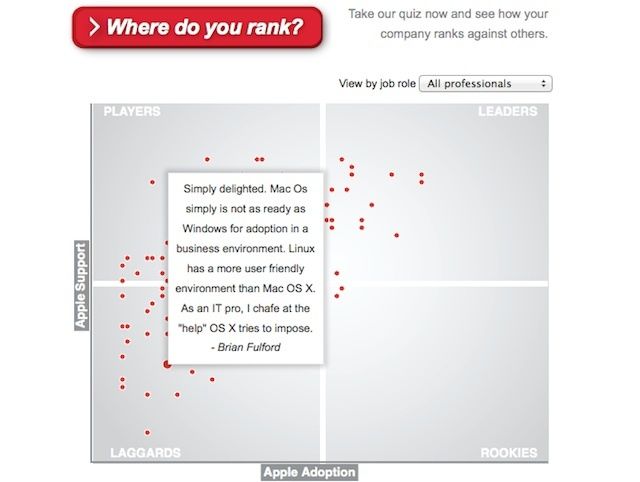
Parallels uses crowdsourcing to compare the Apple/BYOD friendliness of companies.
Ahead of the launch of Parallels Desktop 8, Parallels has launched a crowdsourced “Apple In The Workplace Barometer” that allows businesses or individual employees to see how their workplace ranks in terms of BYOD readiness for Macs, iOS devices, and other technologies. The site offers a quick and simple questionnaire that asks workers (or managers) about their work computing tasks, resources, and company-provided options. At the end of the survey, their company is plotted on a grid that measures active adoption of Apple technologies and active IT support for Macs, iPhones, and iPads.
After delays, Isis will launch its NFC-based digital wallet in just two U.S cities.
After months of delays, Isis has announced the debut of its mobile payment system. A joint venture by AT&T, T-Mobile, and Verizon, Isis made news earlier this year at the Mobile World Congress in March, but has been pretty quiet since then. During that quiet period a number of other players in the mobile payment market have stolen the spotlight and announced major deals.
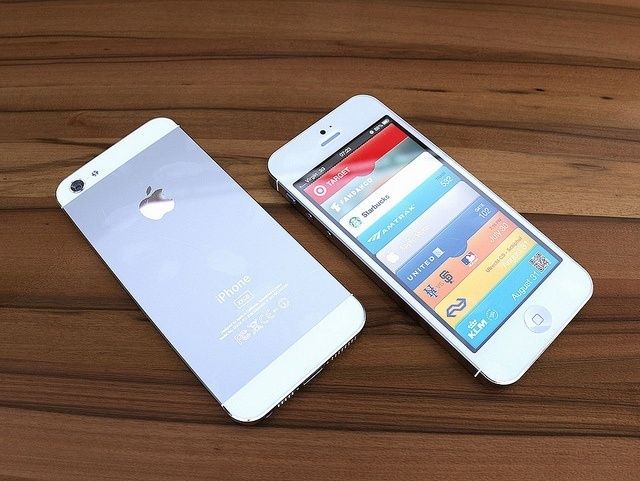
Apple is expected to eventually unveil its own mobile payment system, one that will most likely be based around the iTunes Store payment system, but hasn’t made announcements beyond iOS 6’s Passbook feature. Apple has also kept quiet about whether it will include NFC chips used in some mobile payment systems in the upcoming iPhone 5, which some analysts and pundits consider a barrier to entry into the mobile payment market.
New research suggest that iPad/tablet use before bed can cause sleep disorders and may raise your risk of other health problems.
It’s no real secret that bring your own device (BYOD) programs and the explosion of iPhones, iPads, and other mobile devices in the workplace have begun changing how we work, how we view work as a part of lives, and how much we work out of the office. A study earlier this year concluded that the average American worker using mobile technologies works seven hours outside of the office (essentially one business day) every week. A more recent study indicated some mobile professionals work even more – up to 20 hours each – during off hours thanks to BYOD programs.
One of the impacts this has one iPhone and iPad-toting professionals is a disruption from the traditional work/life balance that can make hard to fully “switch off” at the end of the day. Now there’s evidence that such a disruption can have a physical as well as a psychological impact on the human body.
iOS 6 will deliver a lot of business features, but what about enterprise/IT integration?
It’s been over two years since Apple unveiled iOS 4 with mobile management features designed to make the iPhone and iPad a significantly better corporate citizen. During those years, the landscape of business and enterprise mobility has changed dramatically. RIM has collapsed and will never truly recover, Microsoft has doubled down on the interface it launched late in 2010 with no guarantee of success, and Android has become much more enterprise friendly. Perhaps more important is the fact that idea of mobile management and security has shifted from a focus on devices to a focus on securing data and managing mobile apps.
As all this has happened, Apple’s mobile management framework, which is the system that all mobile management vendors plug into in order to secure and manage iOS devices, has essentially stagnated. With iOS 6 on the horizon, lets look at the areas that Apple needs to address if it wants iOS to remain one of the preferred mobile platforms for business.
The VA’s mobile security chief offers IT leaders five excellent tips for securing mobile devices.
Like many federal agencies, the Department of Veterans Affairs has embarked on the journey of integrating iPhones and iPads as mobile solutions. The agency currently has 20,000 mobile devices that includes iPhones and iPads along with some BlackBerries and a small number of Android devices. Despite the range of devices, the VA has been very active in trying to eliminate mobile data breaches and, according to the VA’s director of Mobile and Security Assurance Donald Kachman, the agency’s campaign has been extremely successful.
Kachman credits encryption technologies with as a major factor in that success – 99% of all VA data is now secured around the clock on mobile devices and desktop PCs. The security approach is one that can be a model for any organization.
Secure enterprise file sharing and sync service kitedrive comes to the Mac.
Secure enterprise file sharing and file management vendor Accellion has added Mac support to its file sync system for mobile workers known as kitedrive. As we noted earlier this year in covering the launch of kitedrive for iOS, Accellion describes kitedrive as “Dropbox for the enterprise.” That’s a pretty good description. kitedrive syncs content for offline access to business documents, which are securely encrypted during transmission and while stored on the a mobile device, PC, or Mac.
Using an iPhone or iPad for work can result in some truly nasty bills.
While bring your own device (BYOD) programs that encourage employees to use their personal iPhones, iPads, and other devices in the office increases productivity and employee satisfaction, the trend is also turning those employees into workaholics. That’s not entirely a new realization – we’ve covered the potential impact of the BYOD trend on the work/life balance before (including a recent study that showed that BYOD programs actually improve that balance for IT professionals).
The latest research on BYOD’s impact on workers shows two additional insights – a significant number of employees are footing the bill (sometimes a very big bill) for mobile data service while on the road for work.
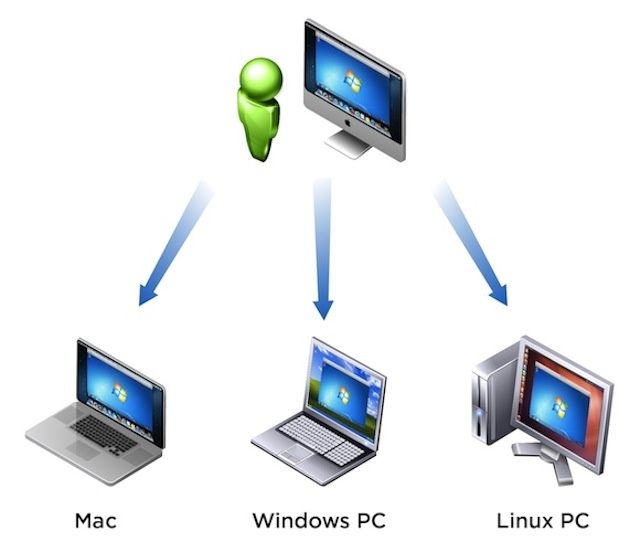
VMWare finally integrates Fusion with other VMWare enterprise products and functionality.
VMWare announced the newest version of VMWare Fusion, its Mac virtualization product, this week. In doing so it also launched its first business or enterprise version of the popular tool for running Windows and other operating systems on Mac workstations. Dubbed Fusion Professional, the new solution has a range of features that are likely to appeal to IT professionals in both business and education.
Ordering and paying for food using a mobile app or website has hit the mainstream.
Many fast food and restaurant chains now offer iPhone apps that facilitate ordering for delivery or pick up. A number of services, like Splick-it and Grubhub, also help facilitate such orders through an iOS app, offering independent restaurants to compete with the chains. Beyond apps, there are web-based services like Mealeo that offer the same functionality. Despite being a relatively new phenomenon, online and mobile ordering has become a serious business – over two-thirds of Americans use such services on a regular basis.
In fact, of those two-thirds of Americans, most say they tend to order more from a mobile or web service than they would over the phone or in person.
Microsoft may try to challenge the iPad’s place in the classroom, but time isn’t on its side
The iPad became a big hit in the K-12 education market over the past year. Pioneering schools that brought Apple’s tablet into the classroom last school year proved that the iPad can be a excellent learning tool – one that has immense power to transform education.
As the new school year begins, and hundreds of thousands of students across the U.S. become iPad users thanks to one-to-one iPad deployments, there’s already talk that the iPad’s success in schools will be short-lived. The belief is that iPads will quickly be replaced by tablets running Microsoft’s Windows RT or Windows 8.