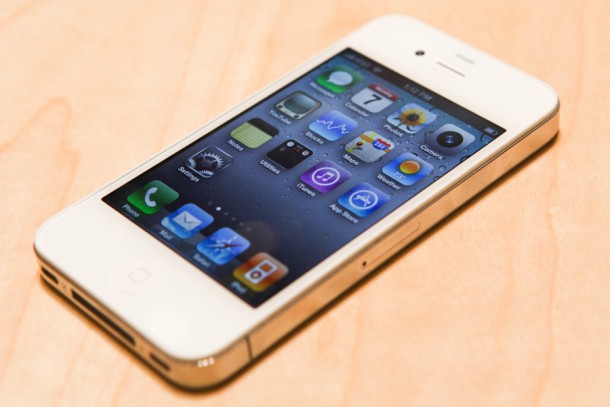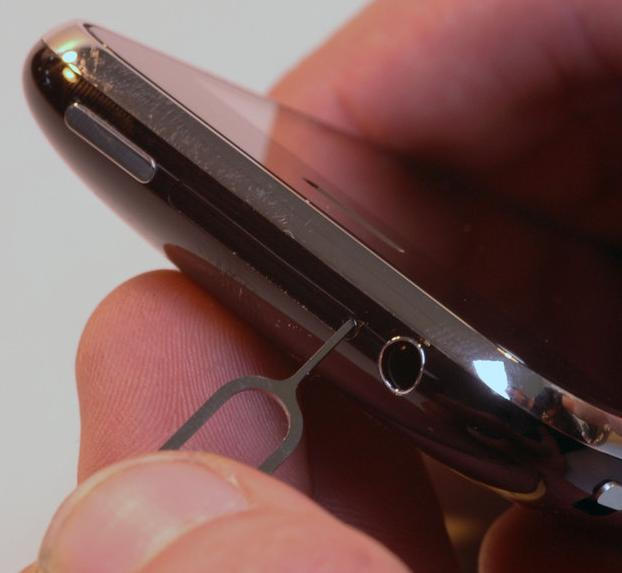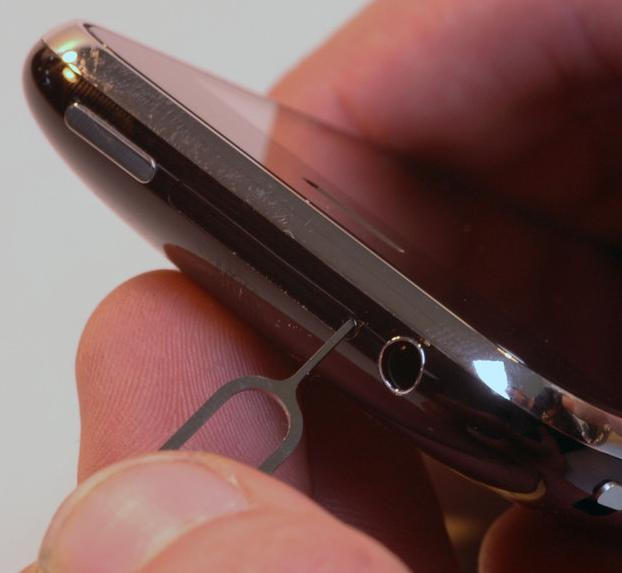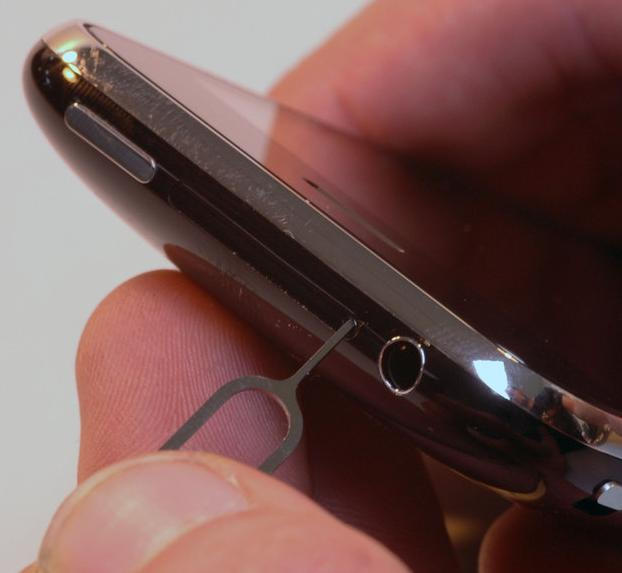
RIM thinks Apple employees are pretending to be from other companies to rig votes for the nano-SIM.
Research in Motion may be watching its mobile business crumble away at its feet, but that’s not the Canadian company’s only concern. It has sided with Nokia and spoken out against Apple’s nano-SIM proposal, accusing its employees of vote rigging by registering themselves under a different affiliation.
Despite the performance of LTE, Apple still makes FaceTime Wi-Fi-only
When Apple introduced FaceTime on the iPhone 4 nearly two years ago, many users were disappointed to find out that they could only place video calls while connected to Wi-Fi. That was a disappointing fact, but not entirely surprising given the bandwidth that it takes to pull off a high quality video call and Apple’s penchant for making the user experience perfect at all costs.
Guaranteeing a solid experience might have made a good deal of sense when it comes to the iPhone 4, iPad 2, and iPhone 4S – all of them are 3G devices and 3G data performance often falls short of terrestrial broadband and Wi-Fi. But the Wi-Fi only restriction remains in place on the new iPad models with LTE even though LTE performance can approach that of many home broadband options – begging the question: Why is Apple limiting FaceTime on its new LTE devices?
Apple has continually talked about the number of companies that have been testing or deploying iPads to its workers - and if you look around many workplaces today, you’re likely to see at least one or two iPads.
If you’re craving more than anecdotal evidence that the iPad is a serious business tool, however, a new ChangeWave study offers plenty of solid proof. The study shows that 84% of businesses looking to deploy tablets are planning to buy iPads within the next three months. That follows an earlier study that showed the iPad commands 96% of the business tablet market.
T-Mobile has announced its earnings for the 2011 holiday quarter, and the GSM carrier lost over 800,000 subscribers. Being the only major U.S. carrier left not carrying the iPhone, T-Mobile saw a 3.3% decrease in revenue to $20.6 billion.
Although the network’s growth has been on the decline for awhile, the fourth quarter of 2011 resulted in an exponentially greater loss following the launch of the iPhone 4S.
GEVEY has announced the Ultra S unlock for the GSM iPhone 4S. Unlike an unlocked iPhone you have to buy at full price from your carrier, GEVEY’s $55 solution turns your iPhone 4S into a plug-and-play device for any GSM network around the world.
Jailbreakers have been able to unlock their iPhones with a software tool called UltraSn0w, but an unlock for the iPhone 4S has yet to be provided until now. The GEVEY Ultra S does not require a jailbreak, and it’s definitely the easiest way to get your iPhone unlocked for cheap.
A really nifty jailbreak widget for iOS 5’s Notification Center is now available in Cydia. WeeTrackData lets you quickly check your iPhone’s data usage from Notification Center, and you can set a monthly limit to make sure you don’t exceed your allowance.
While most Notification Center widgets seem to be rather trivial functionality-wise, WeeTrackData is one of the first jailbreak widgets with some real practicality.
We’ve all been wondering when Apple will release the next update for iOS 5, with many speculating we won’t see 5.1 until the next-generation iPad is unveiled. According to a new discovery in the iPhone’s carrier operator profiles, Apple could be set to drop iOS 5.1 on Friday, March 9th.
This fall, Sprint became the third U.S. carrier to offer the smartphone. Sprint is the third large largest carrier in the country and the only one to coninute to offer unlimited data plans to new customers – a point that Sprint makes in most of its advertising.
Sprint talked about the iPhone’s impact as part of its quarterly earnings Tuesday. Although Sprint reported large overall net loss of income, the company maintains that the launch of the iPhone was a success. It’s important to note that the iPhone, while helping Sprting add customers, was a factor than the larger than typical net loss, whichthe company expects to recoup in future quarters.
A big challenge for businesses and organizations is cost management, particularly in the current economic climate. Many companies are trying to maximise their budgets – one of the big factors pushing the BYOD trend. Where BYOD isn’t feasible, however, businesses may still have the need to support mobile professionals – and need to do so as cost effectively as possible.
Despite the common presumption that Apple solutions are more expensive, the iPhone offers companies unique advantages when it comes to keeping costs down – and those advantages aren’t likely to be found in Android devices.
A recent survey of mobile carrier execs by Deloitte highlights some of the major concerns over the next few years. Chief among them is losing control of the mobile industry and market space to platform developers – namely Apple and Google. As Galen Grumen points out for Infoworld, this scenario actually gives Apple more power than Google because Apple controls the entire iOS ecosystem, from operating system to hardware to app and media sales.
This situation has mobile carriers worried. Carriers in Europe have actually gone so far as to consider developing their own smartphone platform to compete with iOS and Android in the hopes of enough success to maintain bargaining power against the demands of Apple or Android manufacturers. But the big question is whether or not this is good for consumers and business customers.