Browsers on iOS run with a major disadvantage to Mobile Safari. Not only are they obliged to use Apple’s built-in WebKit rendering engine, but they have to use a slower version of Apple’s speedy Nitro JavaScript engine. The result? If you use any third-party browser on your iPhone or iPad, it will run slower than Safari… at least without a jailbreak.
It’s unfair, but various companies have still made excellent browsers for iOS, including Google Chrome and Opera. Mozilla, though, will not follow these company’s lead, having said at this weekend’s SXSW conference in Austin that Firefox won’t be coming to iOS any time soon.
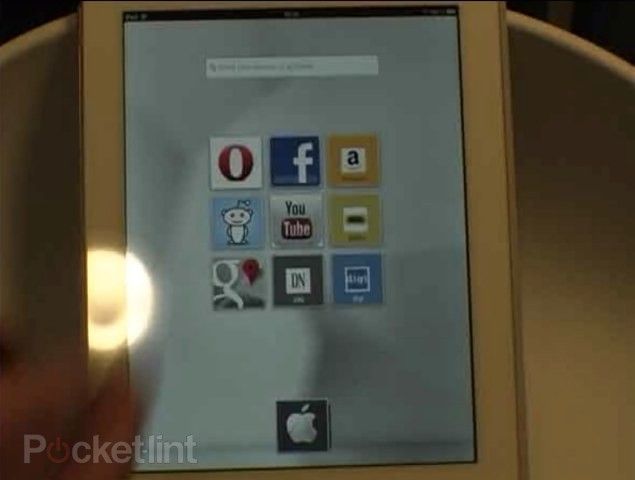
In an internal video released today by web browser company, Opera, the initial programmer of the new concept showed off a beta of the new Opera browser scheduled to go live for iOS and Android in February of this year.
The video, posted on Pocket Lint, shows a browser that looks to redefine the typical mobile browsing experience, with icons instead of tabs and gestures instead of buttons. The focus is on the user and using rich web applications, like Google Maps.
It’s taken about 6 months, but Mozilla has managed to officially Retina-ize its Firefox browser on the Mac. A beta release of Firefox brought Retina support back in November 2012, but today’s public release of version 18 brings it to the masses.
Apple has said that its working on a tool to end the notorious Flashback botnet once and for all, but there’s still the remotest chance you could get infected. Keep in mind that only around 600,000 Macs have fallen prey to Flashback, and that number is a tiny fraction of the millions of Mac users around the world. Most of the machines that have been infected already are centralized in North America.
Your Mac is completely up to date and you’ve already checked to see if you’re infected by the Flashback trojan. If everything is squared away and you’re not infected already, here’s how to ensure there is zero chance you’ll get infected while you wait for Apple to save the day.
Given the numbers, LG might be better sticking to physical displays of 3-D like this one at the Mobile World Congress last week. Photos Charlie Sorrel (CC BY-NC-SA 3.0)
IOS runs HTML5 games a crazy three times faster than Android, according to a study by Spaceport.io. The tests were run on various hardware and software combinations, both for Android and iOS, and the results are pretty startling. And there’s an even more amusing data point: The Blackberry Playbook beat every Android device.
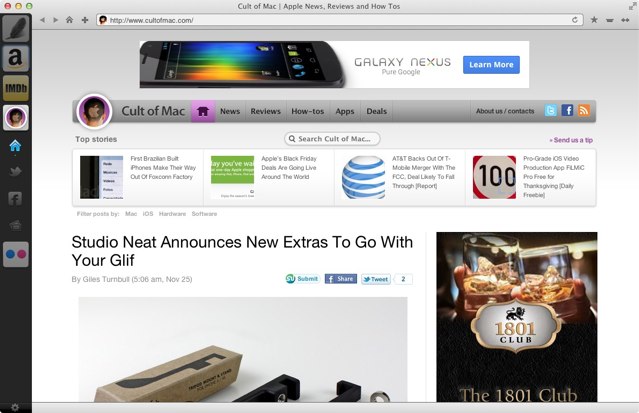
Raven is a new browser for OS X (Snow Leopard and Lion), currently in beta. What sets it apart from the rest is a sleeker appearance, and a Twitter-esque side panel called the Smart Bar.
Evernote has announced “Clearly,” a new browser extension that mimics other enhanced reading services, like Instapaper and Readability. Clearly is available for Google Chrome now, with support coming for other browser in the near future.
While Evernote already lets you save webpages, take notes, archive memories and more, Clearly has one simple, clear (pardon the pun) focus: distraction-free reading.
If you’re still rocking the red panda as your default browser, great news. Following the new rapid release cycle that saw Firefox leap from version 4 to version 7 in just six months, Firefox has made another evolutionary leap today with the official release of Firefox 8.
Late last night, Apple seeded a new build of Safari to developers, 5.1.2 beta, which brings a fix to the embedded PDF viewing and printing issues that were present in previous versions of the browser. It also introduces a “known bug” that causes extensions to crash. As the ancient Romans used to say, caveat developor.