SAN FRANCISCO, CA Collin Donnell wants app developers to learn from his mistakes.
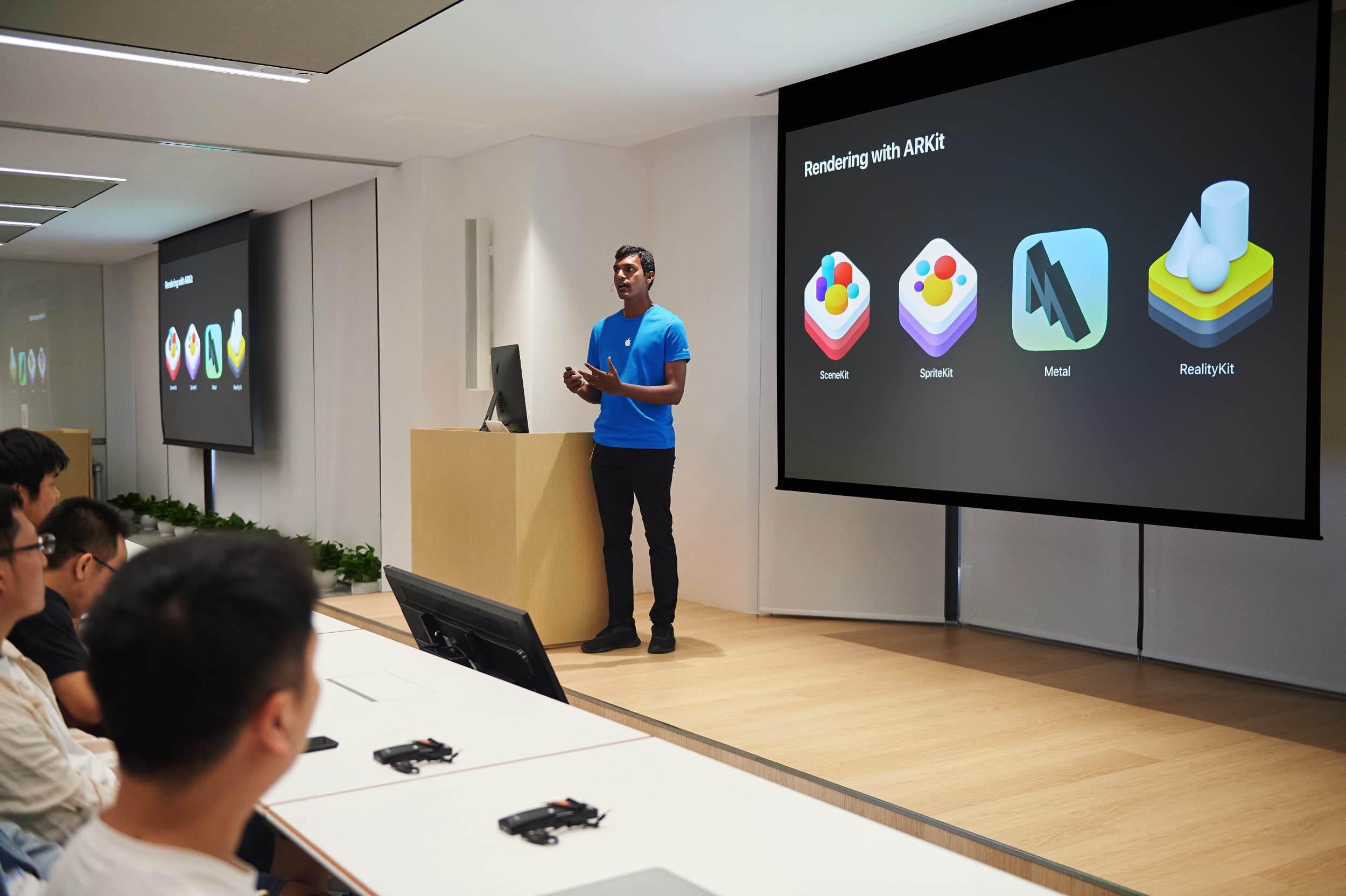
Donnell, a full-time iOS developer since 2008 whose app credits include Pinbook for Pinboard, shared some tips to a packed room at AltWWDC, which we have beenallover like an snuggle iPad case. He divided them into practical and philosophical, but they sort of blend together.
What do you get when you combine a highly anticipated iPhone app with a fascinating link to a senior executive at the most valuable company on earth? You get Mailbox and Adam Cue, a software engineer working on the hyped email app that’s going public soon. Cue works at Orchestra, the app development company behind Mailbox. You may recognize Adam’s last name because it also happens to be the last name of Eddy Cue, a longtime Apple senior executive who now oversees all of the company’s internet services, including email.
While this doesn’t mean that Apple will acquire Orchestra’s Mailbox app, it’s interesting to note the connection between the two companies.
FileMaker pitches its product line as an alternative to native iOS app development.
Last week FileMaker launched a new campaign to encourage businesses to adopt the company’s flagship database product line as an app development platform for the iPhone and iPad. The move is unique and the idea of FileMaker as an enterprise development solution does have its appeal – creating FileMaker apps requires no software development knowledge or experience and it can deliver native performance and functionality that HTML 5 web apps can’t.
What lessons can businesses and app developers learn from the federal government?
The U.S. federal government may not be where you’d expect to see mobile innovation or find good app development suggestions. While there’s still a public sector bureaucracy in government, a number of government agencies are beginning to develop new ways to connect with citizens and invest in mobile technologies for internal use.
Granted, most agencies are doing so because of requirements under the Obama administration’s 21st Century Digital Government Strategy. One of which is that every federal agency must make two high-value, customer-facing services available via mobile devices over the next year. Still, the innovation is happening and the agencies that have already taken up the challenge are good models for agencies that have yet to do so.
They’re also good sources of advice for any organization that is beginning to develop an iOS or mobile app strategy.
Business to business app development is likely to be a growing enterprise trend. Apple has a solution, even if it isn’t yet a perfect one.
According a study released earlier this month, Apple’s iOS is becoming the most popular platform for enterprise app development – with 53.2% of developers picking iOS for corporate app development compared to 37.4% of developers standing behind Android. RIM’s BlackBerry, the old guard of enterprise mobility, came in a distant fourth behind Windows Phone with only 2% of developers supporting it.
That’s great news for Apple and the iPhone and iPad in business and enterprise environments. Apple even makes enterprise distribution possible outside of the App Store. Mobile App Management (MAM) and enterprise app store solutions provide efficient and effective distribution and update methods for enterprise apps.
Business to business (B2B) apps and solutions, however, present a different kind of challenge – one for which Apple has a solution, even if it isn’t a perfect solution.
Until now, it’s been relatively difficult to make an app for iOS without a considerable amount work learning how to write code. Mysterious Trousers, the developers of apps such as Calvetica Calendar and Dialvetica Contacts want to change all of that with a new tool they call TinkerLearn. In a nutshell, TinkerLearn helps you learn code with real example apps.
CompTIA finally gets into the mobile management game at its upcoming conference.
IT industry group CompTIA has announced the agenda for its upcoming Breakaway Conference that runs from July 30 though August 2 in Las Vegas. CompTIA will be offering a two-day/three-session training on mobile devices in the business and enterprise environments during the event.
The training, which CompTIA refers to as CompTIA Executive Certificate in Mobility (Foundations) Course 1, 2, and 3, will focus on three distinct areas – a session on the shift to a mobile workforce and the challenges that this poses for businesses, a session on locking down mobile devices using mobile management solutions, and a session on mobile app development.
Even if an app is for inside your business, it needs to deliver an insanely great user experience.
Almost every major company has plans to develop a range of iOS apps (if they haven’t created some already). In fact, one of the reasons that enterprise app stores are becoming as popular as they are in business is that they fulfill two critical needs. One of those is to easily distribute internal apps to staff members. (The other is to point users to suggested or required apps from Apple’s App Store.)
One thing that every company developing an internal app needs to keep in mind is that users are becoming more tech savvy and comfortable selecting and using iOS apps. That can be a good thing for the whole enterprise app store concept. It let’s users choose and manage their selection of apps on their own without help from IT.
It also means that most iOS users are sophisticated enough to know when an app is poorly designed. That places an extra burden on anyone developing iOS apps, particularly if there are equivalent public apps that users can install as partial or complete replacements for a poorly built internal app.
Zipcar customer interactions now come from the company's app more than its site
Zipcar was one of the first companies to showcase the potential of iOS apps using location services. The company’s demo during Apple’s 2009 WWDC keynote was one of early harbingers of the ways that mobile devices and data have become integrated with our daily lives. Zipcar continues to have its finger on the pulse of what’s possible when local services are transformed by iOS and other mobile platforms.
Speaking today at the MIT Sloan CIO Symposium, Zipcar CEO Scott Griffith spoke about how quickly smartphone apps revolutionized Zipcar and the ways it interacts with its customers and offered insights into the company’s success.
Bypassing IT for app development could be a slippery slope
One of the surprising, and some might say disturbing, realities of today’s consumerized IT departments is that IT staff are being left out of the loop on technology projects. Nowhere is that more evident than when it comes to developing mobile app strategies, particularly customer-facing app strategies.
Instead many business and marketing managers are recruiting or contracting app developers directly, often bypassing CIOs and IT managers in the process. While this new trend is primarily focused on app development, it could easily be the start of a slippery slope that leads to more and more outsourcing of technology projects and management.