Sick, enraged or just plain glum about the fact that your new iPhone 5 won’t work with your multiple and expensive speaker docks? Then you should probably lose that sense of entitlement.
Or you could move to Brazil (where an iPhone costs the same as a small private plane, more or less) and start buying paper magazines. Because a recent Coca Cola ad turns a copy of Capricho magazine into a passive cylindrical speaker dock.
Some Mac users felt Apple’s ‘Genius’ ads made them look stupid.
Scott Trattner, the executive creative director behind the “Genius” advertising campaign — which was quickly killed by Apple shortly after its debut — has left his role at TBWA/Media Arts Lab in favor of a new role with advertising agency 72andSunny.
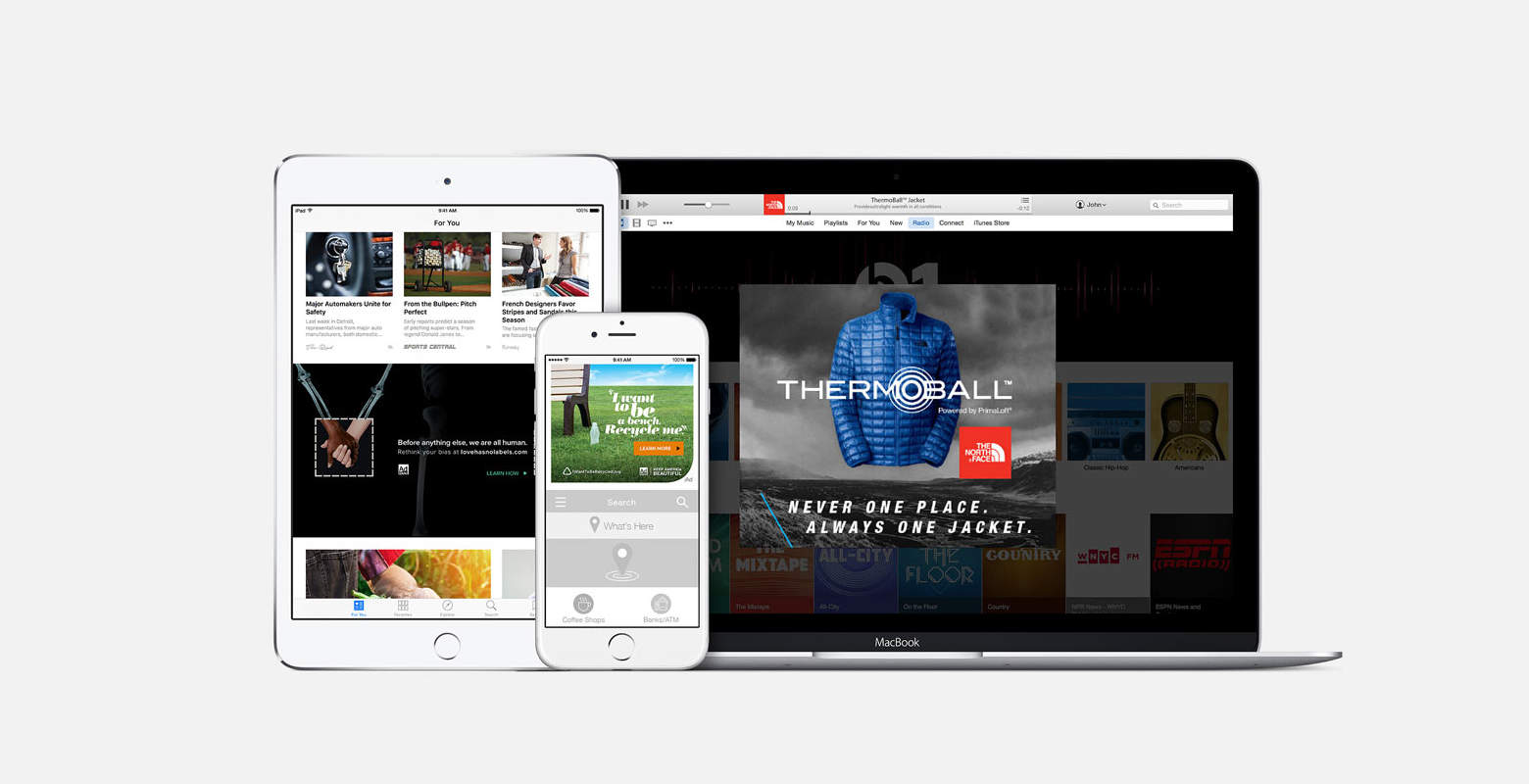
The iPhone and iPad present unique marketing opportunities and challenges.
Over the past several months, we’ve seen studies on the reactions that iPad and iPhone users have to mobile marketing initiatives. Often these studies suggest that the iPad is a golden opportunity for marketing professionals. We’ve also seen the ways that companies are shooting themselves in the foot by not taking advantage of the unique capabilities of mobile devices, particularly when it comes to the iPad and other tablets.
So what does it take to develop a successful mobile marketing campaign? It takes a real understanding of the advantages and disadvantages that mobile devices offer, understanding their place in a consumer’s daily life, and recognition that mobile marketing needs to treated as part of a brand strategy.
What would an “Applefied” Coca-Cola ad look like? Or Levi’s, and Starbucks? Art director Bryan Evans has been wondering that himself and has created a series of ads for popular products that mimic Apple’s style. Take a look at what the world would be like if every ad looked like an Apple ad.
iPad user responses to search ads is changing how companies spend ad dollars.
Studies released earlier this year strongly indicated that the iPad is one of the most effective online advertising vehicles out there. iPad users are more likely to respond to ads than users of most other devices and more likely to purchase or research a product after seeing an ad on their device.
A new study confirms this trend and raises the possibility that the iPad may be subtly reshaping the online advertising industry.
Samba offers free 3G mobile broadband to U.K. iPad owners willing to watch commercials.
Earlier this year, we reported on the plans by NetZero and FreedomPop to offer free 4G mobile broadband in the U.S. over ClearWire’s WiMax network. Both companies planned to operate on a freemium basis where users get a limited amount of data each month and can buy more if they choose.
This week, a company in the U.K. called Samba joined the free broadband bandwagon with a model that’s ad-based and freemium in nature, making it somewhat similar to NetZero’s original business model from the good old days of dial-up service.
Universal shows how to do a mobile ad campaign the right way.
Over the past few months we’ve learned a lot about the mobile ad market from a variety of studies. We know that iOS users are more likely to respond to ads than Android users, and that there’s often a big return on ads designed specifically for the iPad and other tablets. We’ve also learned that many ad agencies haven’t yet realized the value in either of those data points.
One company that sees the value of mobile ads is Universal Pictures. Universal has created an interactive mobile campaign for its upcoming “Savages” – an Oliver Stone thriller that opens a week from Friday (July 6) – that ticks all the right boxes for mobile ad success.
iPad-optimized ads deliver great results if companies make the effort to build them
Mobile advertising as an industry has been slow to evolve since the introduction of the iPad. A study that we reported earlier this year found that many advertising companies fail to take advantage of the mobile ad capabilities offered the iPad even though iPad users are significantly more likely to interact with ad content.
A more recent study shows that companies hesitant to develop iPad and tablet-optimized ad content are passing up major opportunities to engage customers. It turns out that, in addition to being more likely to interact withs ads, iPad users are more likely to make purchasing decisions based on iPad or tablet-optimized ads.
Malkovich has Siri telling jokes, but Apple's fans are far from amused.
Apple has produced some of the most memorable adverts in history. Its “1984’ commercial for the original Macintosh is still talked about today, and we can all remember the “Mac vs. PC” commercials, and the dancing silhouettes that were used to promote the iPod. However, it hasn’t quite been the same story in recent years.
Despite promoting incredibly popular products like the iPhone and the iPad, Apple’s most recent commercials have been far from unforgettable. In fact, the CEO of one ad-tracking firm has revealed that Apple is being mocked for its latest Siri commercials, which employ celebrities to sell a feature that rarely works in real life.
iPad and iPhone users are more likely to respond to ads than most Android users
If you’re considering developing an ad-support mobile app or if you’re an advertiser looking to get the most bang from your mobile advertising buck, you’re likely to find that iOS devices deliver a significantly bigger ad return than most Android phones or tablets regardless of the screen size of the device(s) in question.
That news comes Jumptap, a company that specializes in targeted mobile advertising which uncovered some interesting and information for mobile app developers and companies looking to develop a mobile ad campaign.