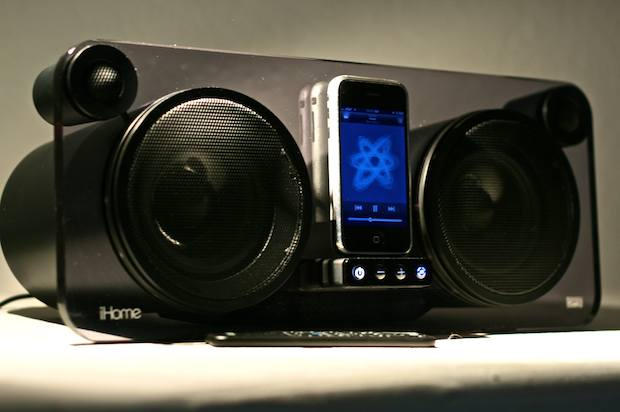
We’ve seen this before: A company that’s built a reputation offering stuff to the budget-minded shopper suddenly does an about face and starts wooing the uptown crowd. Sometimes it works brilliantly; often it’s a misfire.
Earlier this year, it was iHome’s turn at bat. The company, well-known for their cleanly simple, inexpensive line of iPod/iPhone accessories, stepped in a bold new direction with the release of their flagship iP1 iPod dock, a product that costs double their previously most-expensive item.
Hit the jump to find out if iHome struck out or hit a home run with the iP1.
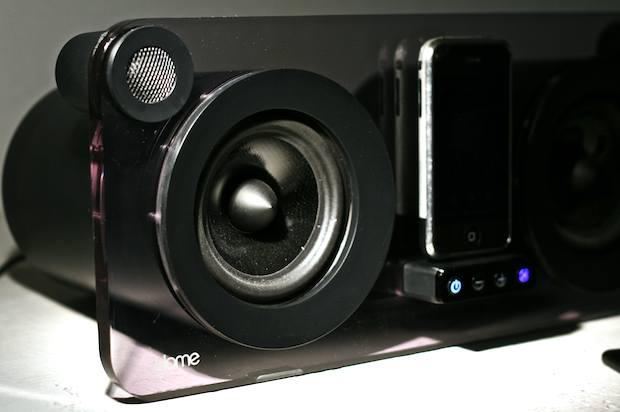
First, this is arguably one of the sexiest inanimate objects I’ve ever come across. My first thought was that an Italian design firm had a hand in the iP1’s form. Its elegantly minimalist visual elements bring to mind an Italian sports car: sensual and sleek and down to business, with no use for petty trifles like a clock, radio, or some kind of handle to be moved around with — none of which the iP1 has. This is a display piece as much as it is a useful gadget. Even the smoky acrylic pane, iHome says, is painstakingly cut, milled and polished. By contrast, the remote is a dinky, blister-buttoned stick with buttons that are impossible to distinguish by touch in the dark. The remote receiver also seems to have a very narrow field of view.
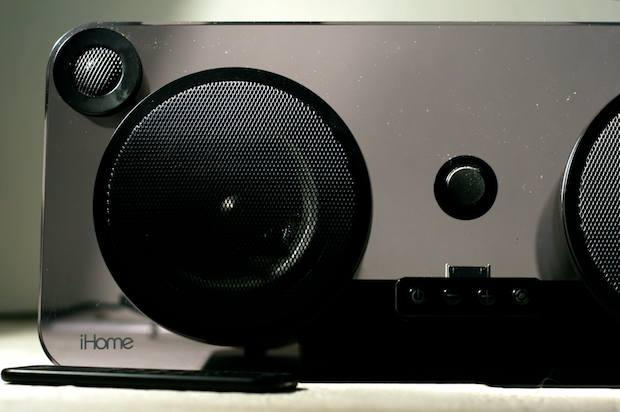
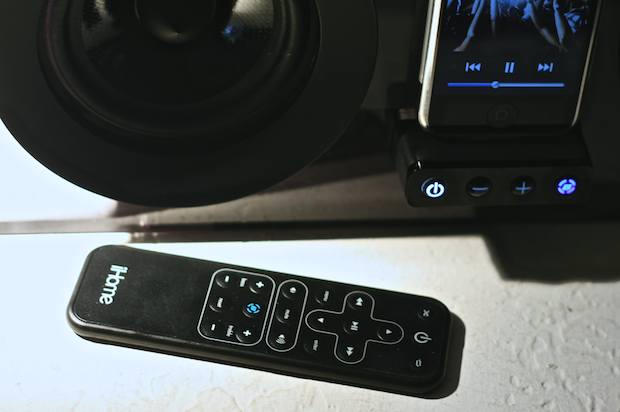
But docks at this stratum are really all about sound. in this case it’s even more true, since the iP1 is basically just two pairs of speakers and the actual dock, held together by a slab of smoky plastic. The most important question then, is: how will it make your music sound?
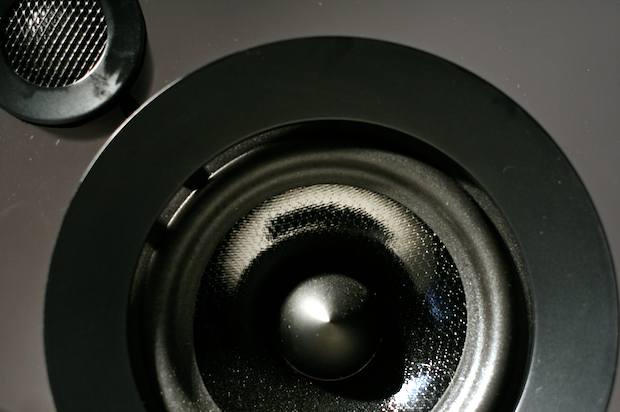
The answer: very good; just not quite mind-blowingly so. The iP1’s 100 watts and silk-dome tweeters are boosted by Bongiovi Acoustics‘ DPS system, which tailors the signal specifically for the speakers the DPS system is incorporated into. And it seems to work miraculously. Hit the blue “B” button and the system sounds as if you’d just removed a pillow from muffling its speakers: suddenly, songs jump to life with wider dimension and clarity. In fact, I can’t think of an instance where I’d want to turn the DPS off.
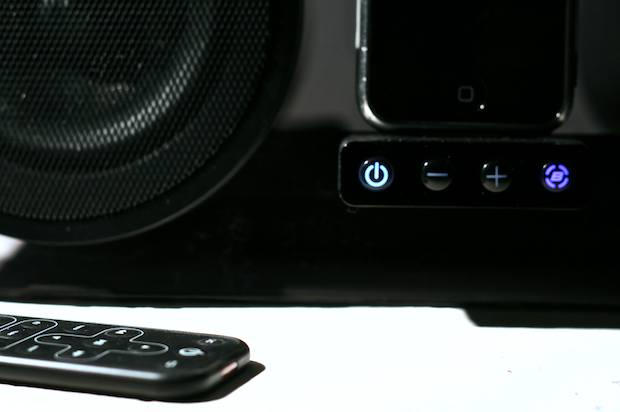
The iP1 sounds better than many other docks in its price range, and seems to excel at allowing quieter, more subtle fare to sparkle, like say Bebel Gilberto or Boards of Canada. It isn’t, however, capable of anything like the meaty base of Altec Lansing’s Mix Boombox — so if you’re buying something to wake the neighbors, look elsewhere.
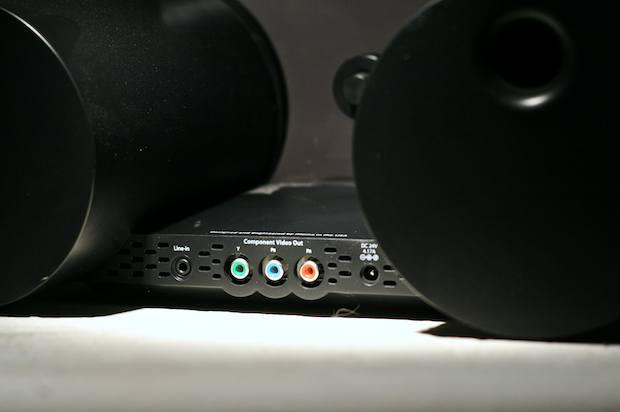
As a bonus, iHome equipped the iP1 with composite video outputs that let you watch videos from your iPhone on your giant flatscreen — and control playback through the remote — which is fantastic when friends come over with movie-stuffed iPods. The only other dock I’ve seen that has this capability is the B&W Zeppelin, which costs double the iP1.
iHome also lets you play around with the look of the iP1 by swapping out the original grilled speaker covers with a pair of rings — although, I’m not sure this is a great idea. The manual specifically states “avoid touching these speakers.” And the iP1 is going to get touched. Touched, fondled, rubbed up against…I can see why iHome cleverly included a cleaning cloth in the box — you’ll need it.

When he was eight, Eli Milchman came home from frolicking in the Veld one day and was given an Atari 400. Since then, his fascination with technology has made him an intrepid early adopter of whatever charming new contraption crosses his path. He calls San Francisco home, where he works as a journalist and photographer. Eli has contributed to the pages of Wired.com and BIKE Magazine, among others. Hang with him on Twitter.