Are you tired of walking, running or otherwise moving to eek a bit of electricity from the numerous gadgets converting kinetic energy into power for your iPhone?
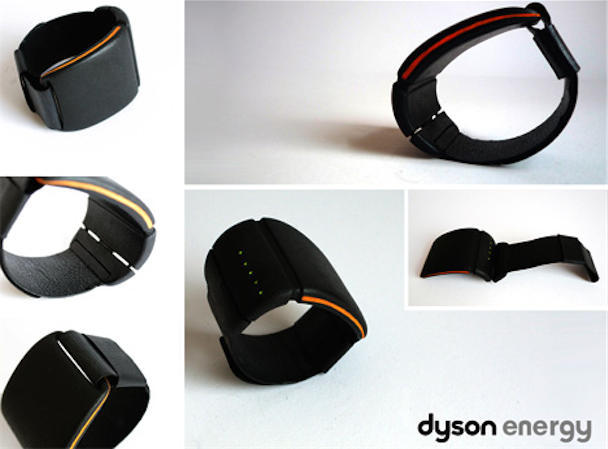
Get ready for extra talk time for just being alive. The Dyson Energy Bracelet converts the temperature difference between your body and the surrounding environment into enough electricity to talk a few more minutes on your favorite Apple communications device.
The bracelet includes a mini USB connection which Apple and other cell phone makers earlier this week approved as a universal standard (at least in Europe) for recharging mobile phones, starting in 2010. A price and distribution date have yet to be announced. More information is available at Yanko Design.
Unlike the Viber Burst kinetic device we talked about recently, the Dyson bracelet employs the thermoelectric effect to convert body temperature into electricity. Although the thermoelectric effect is commonly used in temperature sensors, it can also be used to generate power. (Here’s a fuller explanation of the science behind the gadget.)
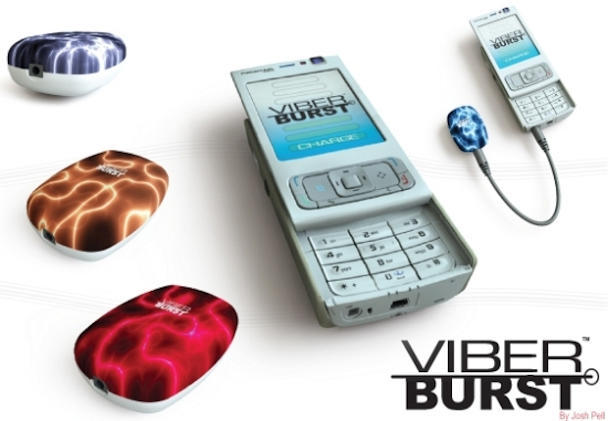
Until now, most human-produced cell phone chargers have used kinetic energy. Australian design student Josh Pell created the Viber Burst, a cell phone charger created with flexible components that can be tied to your shoe, thrown in your bag or held in your hand during a walk or run.
Earlier this month, Tremont Electric unveiled its nPower PEG (Personal Energy Generator, which can recharge a cell phone with just an hour of activity. The inventor, Aaron LeMieux, came upon the idea after walking the 1,500-mile Appalachian Trail.
Nokia earlier this year also introduced a way to harvest energy that usually goes to waste. Nokia’s UK researchers developed a way for its phones to collect 50 milliwatts of ambient energy produced by radio waves from TV towers, Wi-Fi transmissions and elsewhere. Phones using the technology will appear in the next three to five years, according to Britain’s The Guardian.
(Via EnviroGadget)

Ed Sutherland is a veteran technology journalist who first heard of Apple when they grew on trees, Yahoo was run out of a Stanford dorm and Google was an unknown upstart. Since then, Sutherland has covered the whole technology landscape, concentrating on tracking the trends and figuring out the finances of large (and small) technology companies.