Top stories

Commuter Delays? iPhone Tube Refund App Pays for Itself

Londoners stuck in the tube now have a handy iPhone app to request ticket refunds.
Tube Refund, which costs $0.99, zaps off the request for riders whose journey is delayed over 15 minutes.
Depending on where you go and what time of day, a one-way tube ticket can cost from £1.80 to £4.00 ($2.75 – $6 circa) [...]

What’s Next For the iPad? A Tabletop iPad, According to Xerox PARC Circa 1991

Way back in 1991, just as Apple was transitioning from 68k to PowerPC chips, the braniacs at Xerox PARC were predicting it’s entire iPod, iPhone and iPad strategy. And next up for the iPad is a blackboard-sized device.
Nearly 20 years ago, just as personal desktop computers were taking off, researchers at Xerox started thinking about [...]

iPhone App Arms Users With Silent Panic Button

A new app called Silent Bodyguard features a panic button that sends an SOS distress signal with GPS coordinates to potential rescuers without alerting onlookers.
While the $3.99 app, available on iTunes, isn’t the first ICE (in case of emergency) app, this one is backed by Dr. Clint Van Zandt, former FBI chief hostage negotiator and criminal [...]

Early Apple Employees Auction Killer Collectibles

If there’s a good thing about the recession, it seems to be bringing some fine Apple memorabilia out of storerooms and closets.
Cliff and Dick Huston — ex-Apple engineers, for the record employees 27 and 25 — have decided to part with a treasure trove of Cupertino collectibles by auctioning them on eBay.

What’s on the block:

Apple [...]

Companies Charge Apple Manipulates Flash Memory Prices

(Photo: Brandon Shigeta/Flickr)

(Photo: Brandon Shigeta/Flickr)

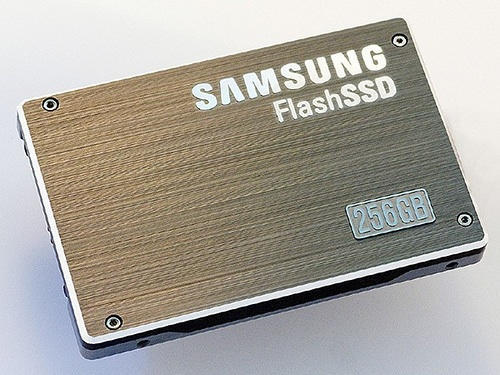
Has Apple manipulated flash memory supply and demand, causing prices to fluctuate? An unnamed memory industry official tells a South Korean newspaper the Cupertino, Calif. company “should certainly be blamed for deteriorating the supply and demand cycle in the global NAND flash market.”

The comments are just the latest pointing a finger at Apple for changes in how much NAND, or flash memory, is purchased by the company and the effect on Korea’s memory makers, such as Samsung and Hynix. Anonymous sources told The Korea Times Apple will often order, then buy less than expected, creating an excess inventory and lower flash memory prices. The supposed tactic is being attacked, given Apple’s record profits amidst lean times for chipmakers.

This isn’t the first time Apple has been implicated in the economic health of chipmakers. An October report said flash memory supplies, already 1.3 percent below demand, are expected to reach 3.3 percent under demand for the all-important holiday period. The reason: chipmakers are favoring Apple and its plethora of flash-driven devices, including the iPod and iPhone.

In September, Apple was blamed for a “serious shortage” of flash memory ahead of unveiling a new line of flash-based iPods, including the 64GB iPod touch and an updated iPod nano. Earlier in the year, another flash scare was blamed on an expected iPhone update.

[Via 9to5Mac and Korea Times]

If you enjoyed this article:
Subscribe via RSS or email, or follow us on Facebook and Twitter

About the author

Ed Sutherland

Ed Sutherland is a veteran technology journalist who first heard of Apple when they grew on trees, Yahoo was run out of a Stanford dorm and Google was an unknown upstart. Since then, Sutherland has covered the whole technology landscape, concentrating on tracking the trends and figuring out the finances of large (and small) technology companies.


Email the author | Read more posts by Ed Sutherland.

8 comments

    Don’t they believe in CONTRACTS? You think Apple will just call them up and make an order without any paperwork from either party? What a load of bull.

    If Apple is breaking contractual agreements, then there is a legal case against them. Otherwise…. why the hell would they not purchase when the timing is right? Apple is a for-profit company, and they have an obligation to reduce costs as much as possible, otherwise they will be criticized by their shareholders.

    As far as placing orders in so-called bad fatih: The suppliers do not need to follow Apple’s “orders placed” …. UNLESS THERE IS A PURCHASE CONTRACT IN PLACE!!! Useless whiney morons.

    Apple’s not just causing gluts, they’re causing a shortage at the same time?? Guys, if you can’t control your business, get a new business.

    You don’t like the way Apple does business? Don’t do business with Apple.

    This keeps bouncing around in my head. I used to work for a company that made an advanced version of a commodity part. We had the same types of problems with some of our customers. They were used to buying thousands of parts for pennies, and it cost less to stockpile inventory than control it.

    Well, our stuff cost 50 times more, and they suddenly were tying up a lot of money in inventory, and wanted us to buy it back, and then would come back a couple months later with their hair on fire because they were out of parts. We tried making them happy, but soon realized that we couldn’t afford to manage their inventory and ours at the same time. We put together a matrix of our customers, figuring out how much it cost us to service them, who had the ability to actually manage themselves, who was willing work with us to improve their inventory management (we even created tools for them to use), and who wasn’t going to change their model.

    Then we did something every successful company does to that last category: we fired ‘em. Yup, we got rid of them. If they weren’t willing to do business in a way that would work for both of us, we weren’t interested. We’d still sell them parts on an available basis, but most of our production was reserved for dependable “client list,” and they weren’t on it. We could now control our production better, improve our delivery time and customer service. Everybody – at least everybody who was willing to adapt, was happier and made more money.

    If Apple is disrupting your business, fire them.

    imajoebob: You are so right. My former company would price a production job, which allowed for a couple of change orders and a client viewing before signoff before I’d master it for replication. One customer would constantly abuse this, “needing” multiple change orders that eroded the buffer for deadlines and force me to put the team on overtime. The division manager couldn’t stand up to them as our company didn’t diversify the client base and fire this customer. We spent more time fixing this client than we would have servicing a half dozen normally-functioning accounts. The team was so exhausted and furious it was almost a relief when our company went out of business. What a waste.

    Business schools all study Apple’s highly efficient supply chain / inventory management.

    So even if this dubious person is speaking the truth, would it be Apple or the supplier’s fault at poor inventory control or judging market demand?

    With Apple iPhone having a highly successful release in Korea, it’s probably a competitor of Apple spreading FUD.

    Wall-mart buys a lot of stuff also. Companies buy what – where and when they need. Big deal it is called Capitalism. You don’t have to do business with them if they perplex your morals.

    I expect the official remains unnamed as he prefers not to come out in public as a moron.

Add your comment

Name(Required)

Mail (required, but not published)

Website

Comment

Buy Inside Steve's Brain Buy from Amazon.com Buy from Barnes & Noble