The T-Mobile G1 has only been out for a couple of days, but new problems with the first generation of Google’s entry into the phone business continue to materialize just about every hour on the hour. Still the most shocking is the lack of corporate e-mail and calendaring support, with Google assuming that a third-party developer will just magically figure out how to do Exchange ActiveSync and Lotus integration.
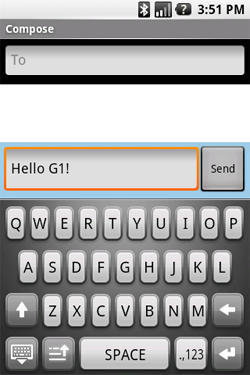
Today, the big news is that Google plans to send out a software update at some point with a touchscreen keyboard so that it becomes possible to enter text while using the phone in vertical portrait orientation. Yes, in case you missed it earlier, it’s impossible to even type in a URL while browsing the web in the preferred one-handed iPhone style orientation. Granted, the G1 has a physical QWERTY and a pretty decent one at that, but it’s incredible that any company could ship a phone this intricate without realizing this could be a deal-breaker in actual human use. It’s like they didn’t even test their ideas out before sending them to final production.
I bring all of this up, because it’s another piece of evidence that even though an open-source model works incredibly well when working on technical feasibility and optimization, it’s pretty poor at making a consumer-facing complex system work well together. It’s the same reason that Linux has incredibly low-level networking and multithreading code, and it’s still impossible to expect a decent graphical user interface.
Apple’s focus on freakishly detailed design and engineering can have its own failings, of course (most specifically in leaving out any features that Steve Jobs can’t understand the value of), but it also tends to lead to solutions that were considered as full experiences instead of a collection of features. It all works together well, instead of working well in spite of contradictory features. The holistic approach Apple takes to product design is the reason we love it. Android’s haphazard approach of fixing things as they become crises. Google will mostly catch up eventually, but I have to pity T-Mobile for being forced to fight back with such an unfinished product. The G1 is so far behind that it’s hard to imagine anyone who isn’t a hobbyist being pleased with the first kludgy Android phone.
Android Roadmap via HTC Source via Gizmodo

Pete Mortensen is a design strategist for consulting firm Jump Associates and the co-author of Wired to Care: How Companies Prosper When They Create Widespread Empathy, a book and blog that are significantly more interesting than you might initially think. Pete’s particular Apple avocations are both around design–interface and industrial. Follow him on Twitter!