Publishers Defend Higher Ebook Pricing Against Consumers ‘Unrealistic Expectations’

Publishers Defend Higher Ebook Pricing Against Consumers ‘Unrealistic Expectations’

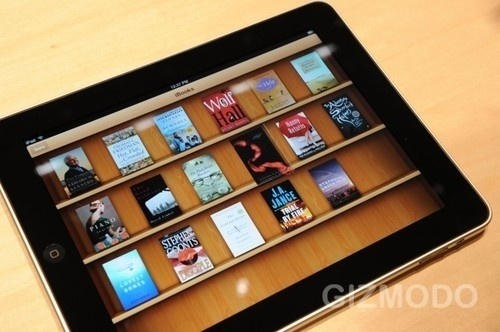
Publishers, after winning a struggle to raise ebook prices to $13-$15 in preparation for Apple’s iPad, are now defending the move, blaming consumers for ‘unrealistic expectations.’ In a report, publishers say they will still pay fixed costs along with fighting for a piece of a smaller pie.

A number of publishers have sided with Apple’s “agency pricing” model that could increase the retail price for ebooks from $9.99 which Amazon once required to between $13-$15. However, publishers will get just $9.09 of that after Apple takes its 30 percent cut. Then author royalties will cost $2.27 to $3.25, marketing cost about $0.78 and preparing the manuscript another $0.50, according to The New York Times.

Couple that with the e-book market being only 3 to 5 percent of sales of printed books and you have publishers concerned with playing the ‘how low can you go’ retail game, the report says.

Another factor limiting how cheaply ebooks can sell is worry if electronic versions of printed titles fall too low, the arteries of the publishing industry – giant booksellers, such as Barnes & Noble – could die due to shrinking profit.

Although a number of book publishers quickly sided with Apple’s iPad, the story is not as clear for magazine and newspaper publishers. Some are considering a strategy that would involve both Amazon and Apple. Publishers would renew their Amazon contracts, thus retaining Kindle subscribers, while also offering a free, more-limited version for the iPad, according to a recent New York Times report.

DON'T MISS
Report: Amazon Insisting Publishers Sign 3-Year Kindle Deals

[via AppleInsider and The New York Times]

About the author

Ed Sutherland

Ed Sutherland is a veteran technology journalist who first heard of Apple when they grew on trees, Yahoo was run out of a Stanford dorm and Google was an unknown upstart. Since then, Sutherland has covered the whole technology landscape, concentrating on tracking the trends and figuring out the finances of large (and small) technology companies.

(sorry, you need Javascript to see this e-mail address)| Read more posts by .

Posted in News |

  • Tom

    Maybe it’s consumers realising that their overheads are dramatically cut doing ebooks. Returns? Delivery? Piracy?
    Not like they’re giving a much bigger cut to the author. I’d imagine with some likelihood they’re increasing their percentage take, and also their total take per book.

    And customers can sense that. See hardback costs – used to really screw the customer. Pennies to do, but they add pounds/ $$ to the price (doing hardback first to get the early buyers to pay up more).

  • Sam

    The problem is that consumers have the seemingly magic power to help make expectations real by … wait for it … expecting them.

    It’s annoying to see the publishers move backwards on this, but it’ll work out when people don’t buy the stuff and then one of the publishers finally decides to grab for volume instead of price-premium.

    Or we’ll get a temporary weird market distortion like what happens with Kindle books (and to a degree, MP3 sales) where people buy digital stuff when it’s on a promotional sale or just plain free and all of its gets dumped together in one “downloaded” number that we’re supposed to think represents sales.

    It’s not just that digital distribution drives the publisher’s overhead to zero — it drives my overhead for owning the “thing” I’m buying to zero also. I don’t have a “thing” in my hands after I buy it, and I don’t have to give it space on my shelf, and I don’t even have to think about it unless and until I want to read it. And that means I’m not going to invest as much in it, especially when I can find other content that conforms better to my expectations. Hence, my “unreasonable expectation.” And it may well be unreasonable. But if it is, then that means that the expectation of the publishers that there current business model can continue is also unreasonable. Good luck with that.

    We may have to find some other way to connect economic reward to the production of content than sale of copies of the content; heck, much of the history of human achievement in art functioned without sale-of-copies as the economic driver for artistic production. We need artists, and we’ll find a way to keep them. But publishers in their current incarnation may well be optional and maybe even vestigial.

  • CaryMG

    For the most part, people are stupid.

    Did they really expect bestsellers to stay at $10 forever ?!?

    That was just to get used to the idea of routinely buying books digitally.
    Then once everythng’s logistically settled in, the price goes to what’d be normal for eBooks.

    Dopes ….

  • http://www.chrispian.com chrispian

    I’m not falling for the book industry BS. There is no way they aren’t saving money on digital. No housing, no shipping, no printing. They’ll continue to screw us and authors. I’m not saying every book has to be $9.99. But what’s the point of buying a $13 book digitally when I can get it for near that printed? I know most of the cost (allegedly, according to the publishers themselves) is printing, storing and moving paper. I guess now that they have an alternative that “story” is changing.

  • http://thesoapvox.com Vox

    Ok, now I have to wonder…how the hell is Baen Books (http://baen.com) doing it so they can sell ebooks for 5 bucks? And they do it without DRM and then include CDs in their hardcover books with a license that says “share share share!”…and still manage to stay afloat and have some of the best SF/F authors there is today.

    Must be wizards, uh?

  • Mikey

    I can wait for reality to set in for the publishers. Once sales drop off and they are losing money at the higher price, we will see and adjustment. It is just a simple law of economics – supply and demand.

  • DM

    Mikey, you are exactly correct. Publishers may think that consumers have unrealistic expectations, but those consumers have what the publishers want–money.

    I’ve always said that nothing is overpriced or underpriced when it is sold. It sells for exactly what each party feels is proper at the moment of sale. If consumers think that $15 for an ebook is too much, then they won’t buy it for $15. If publishers feel that $10 is too low for a ebook, then they won’t sell it for $10.

    It’s a very simple concept that is lost on many who claim that some product is overpriced, even as they are handing over their credit card or cash to purchase the same product. If you really felt it was overpriced you wouldn’t be buying it.

    I suppose there is an argument somewhere for overpriced staple items (food or fuel for heat, for example) in times of crisis and profiteering, but I’m going into that right now. My argument is limited to luxury items purchased with disposable income.

  • Rick

    I do alot of work with publishers (I am a technology consultant) and specifically around financial systems.

    I assure you, the margins on traditional “hard” books (a) do not usually pay 20-35% in royalties, and (b) the gross margin on traditional books is no where near 65% of revenue.

    In other words, the publishers are being shortsighted as usual, slow to adopt a new sales model. Publishing is incredibly slow to change direction. They seem to be missing the fact that their margins would increase markedly, and instead are looking at the revenue volume rather than the margin. The amount of overhead that is reduced by switching to eBooks is immense.

  • porkchop1234

    The music industry learned the hard way and the movie industry is currently learning the hard way. Looks like its time for the publishers to stand up to the plate and get their asses handed to them. ANYONE who buys a ebook at nearly the same price as a off the shelf paperback is just being stupid. I give the publishers 10 years tops before the major players fall flat on their faces and a huge restructuring/powershift happens in the industry.

    The year is 2010 we’re entering a new technological era and the general public is far more media savy then they were 20 years ago. The music industry found out the hard way that the general public WON’T be held hostage to antiquated business practices. The major players wan’t to try and bilk the consumer for more money I say go ahead and try. The average consumer with half a brain in his head will just get their books from other sources and leave the major players penniless.

  • http://www.antellus.com Theresa M. Moore

    As a self-published author and part time economist I long ago recognized the fact that the traditional publishers don’t understand how the law of supply and demand works. That is why there are so many remainders warehouses. The cost to carry the books alone would break the bank for me. That is why I price my ebooks around the $4 to $9 range, and my books below list price. I still make a decent profit just by creating value for my customers, instead of flooding every bookstore on the planet with books and hoping that one of them takes off as a blockbuster. On the economic level, that means for every bestseller sold the cost must be absorbed for the ones that just sit there unsold. Since I use POD I don’t have to take that overhead into consideration, which is why I can afford to price my books lower. Geez, it does not take a rocket scientist to figure this out.