Apple Juice Logo to Sour with Apple Computers?

Picture 7

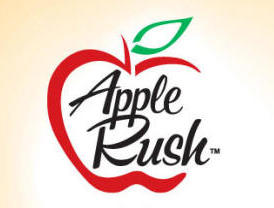
Just came across Apple Rush, an organic apple juice and beverage company that turned up in an RSS feed for news on Apple Computers.

This one looks a lot more like the Apple logo than some of the logos with apples that have been taken to court by Apple over trademark issues.

Apple Rush, based in Dolton Illinois, sells apple juice and sparkling beverages in bottles and cans through a network of 40 distributors in the U.S. and abroad.

Granted, since confusion is one of the cornerstones of trademark infringement, unless consumers are likely to mistake a sparkling beverage with an iPod — though an Apple energy drink, to make your computing breezier would be pretty nifty — this one may end up in the copycat hall of shame instead of the courts.

DON'T MISS
The iPhonc Is Clever About Its Infringement

Thoughts?

About the author

nicole_martinelli

Nicole Martinelli is a San Francisco native who has lived in Milan and Florence, Italy. She's written for Wired.com, The New York Times and Newsweek. You can find her on Twitter , Facebook and Google+.

If you're doing something new/cool that's Apple related, email her about it.

(sorry, you need Javascript to see this e-mail address)| Read more posts by .

Posted in News | Tagged: , |

  • gecko

    Unless it looks near-identical to Apple’s logos…. Apple needs to drop these petty fruit logo battles. They will lose at least half of these fights in courts, and these are costly battles for Apple in the long run. Fact is, the apple fruit is soooo uniquitous that bazillion-trillion companies in the world have some kind of interest in the apple fruit, and so it is natural that they would attempt to have some kind of apple-fruity logo. Does Apple (the Mac company) think they will be able to take on every one of these battle??? Costly. Time-consuming. It’s not worth the effort.

  • Gene

    Sorry, Gecko – but it *is* worth the effort.
    If Apple doesn’t vigorously defend the trademark in every instance of a small transgression, the courts will throw out the big cases.
    And they don’t lose “at least half” of these cases as far as I can tell.
    That said, Apple likely doesn’t own a trademark on juice and foodstuffs; unless this company starts building techno gadgets, Apple probably doesn’t have a claim.
    Which brings up another point: is this yet another Cult of Mac article for the sake of an article? What is this entry here for? Nicole saw a logo of an apple and that was enough to warrant a post?
    Hmm. CoM has definitely lost its information value of late.

  • Sean Peters

    Yeah, this is nuts. Dude, the company makes… wait for it… Apple juice. What the hell are they supposed to use for a logo? Steve’s company makes computers, not fruit products – there’s not even a hint of a trademark case here.

  • Nathan

    If it didn’t have the “Apple Rush” name on it, it may look similar but as it’s pictured above, it doesn’t look like the Apple logo at all.

  • Kensei

    The original owner of the Apple logo the Beatles shouldn’t have settled and disallowed Apple computers from using the symbol in the first place and we wouldn’t have all these law suits. Sue first, ask questions later seems to be what Apple is all about.

  • Poppa

    I did not know the the brand Apple Rush till now, good advertising ploy.
    Apple is still the forbidden fruit according to god ,sorry I mean Steve Jobs…

  • imajoebob

    The problem is not the name, it’s the art. It’s just too similar. If the Apple were closed, it would probably be safe. But the missing “bite” is too derivative. And the bite is a key feature of the Apple, Inc. logo. Using a similar name for non-related products is accepted practice. And using the name “Apple” in an apple-based product is iron-clad.

    As for Apple Records, they didn’t spend a lot of time disputing the (completely different) logo, but the name. They realized they couldn’t win on the brand, so they settled with a preemptive agreement to keep Apple out of the music business. They thought about challenging iTunes, but gave it up when Apple successfully positioned iTunes as a software delivery system, not a music publisher or company. Do you really wonder why there’s no Beatles on iTunes? I wouldn’t be shocked to see things that way are until after Paul and Ringo’s stake is owned by their estates.

    No one will confuse the name or the product, but the logo has curious similarities, and an appearance of trying to trade on the Apple logo, if only by your initial, visceral impression.