The Economist Names 2000s the iPod, iPhone Decade (Maybe That’s A Bad Thing)

ipod_iphone

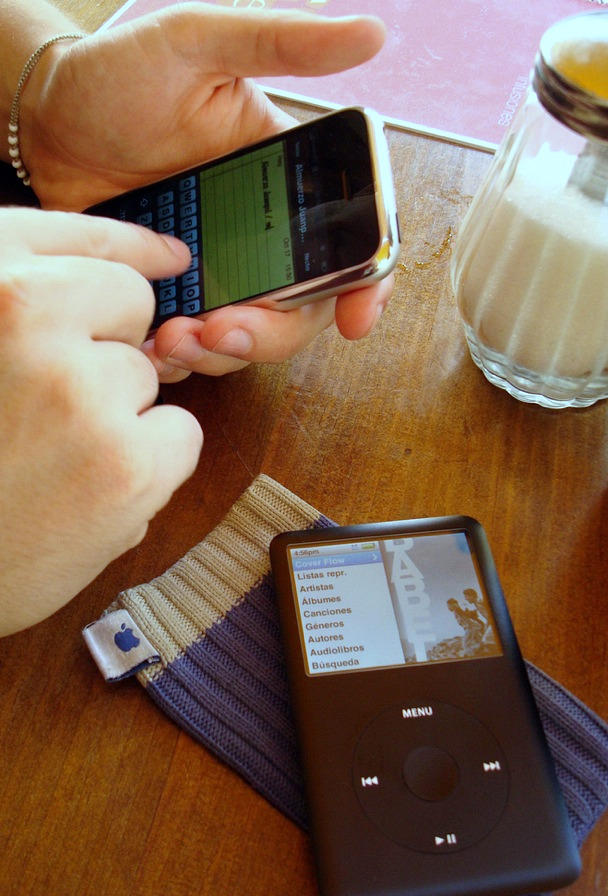
Used with a cc-license, thanks to juanpol on flickr.

The Economist’s quarterly mag Intelligent Life did round robin interviews with a number of design luminaries, literati and museum curators about what objects define life in the aughts.

The iPod and iPhone came up most frequently, leading the editors to name this the iDecade.

That doesn’t mean they have anything nice to say about them, however.

Most of the comments veer towards the “these devices cut us off from humanity” type.  Young’uns in other times were more social and less social media, apparently, we were all the better for it.

A few choice excerpts:

STEPHEN JONES, Milliner
iPhone. Txt spk
What is the Mini of today? Probably the iPhone. I wish I could say floor-length dresses or big green hats, but I can’t. Communication is the issue now, not freedom and mobility: iPhone, MySpace, Facebook, Twitter. This is a big sea-change: it is more about communication through the word and less about the image…

DOMINIC SANDBROOK, Author of “White Heat: A History of Britain in the Swinging Sixties
iPods. Extreme materialism. Politicians cycling.
People listening to iPods on their way to work—and not merely as a symbol of technology, but as a representation of a sort of introversion, a retreat within our own bubble…

DON'T MISS
Opinion: iPhone 4 Death Grip Is Non-Issue, But Apple Still In PR Trouble

EKOW ESHUN, Artistic director, Institute of Contemporary Arts, London
The Prius. iPods. Style jams
The Prius is the car of the decade. It’s unlovely in lots of ways, but it has become an icon of aspiration. And then the iPod and social networking. Something that spools from these is that we don’t really have style subcultures anymore. Instead we have a playlist culture, where you’re allowed to mash up everything around you in a sort of pick’n’mix…

Via More Intelligent Life

About the author

nicole_martinelli

Nicole Martinelli is a San Francisco native who has lived in Milan and Florence, Italy. She's written for Wired.com, The New York Times and Newsweek. You can find her on Twitter , Facebook and Google+.

If you're doing something new/cool that's Apple related, email her about it.

(sorry, you need Javascript to see this e-mail address)| Read more posts by .

Posted in Cult of Mac, News |

  • Quill

    The iPod is about letting people define there own playlist and lifestyle, which of course is a huge threat to people like those quoted, who are in the business of defining lifestyle and culture.

  • Monster Magnet

    I am one of the few on the planet who hates the iPod, sorry, but I just don’t like them!

    While I own 2 Macs and my missus owns 2 Macs, three ipods and an iPhone, so you know I’m not ragging on Apple products, I utterly despise the iPod! The sound quality of Apple’s player is absolutely dire to my ears. I listen to a lot of death and thrash metal and the iPod simply makes everything sound like it’s being played through a tin can! That coming from someone who listens to music, that at the best of times, sounds like a pack of dogs loose in a guitar shop!!!

    I’ve tried out my Missus’ players, I really have tried to like them, believe me, but I still prefer the audio coming from my naff little £40 Phillips 4GB MP3 player, midrange removal and plenty of bottom end.

  • imajoebob

    The iPod didn’t cause people to withdraw, it allowed them. For urbanites, with the cacophony of distractions, and being assaulted with messages everywhere, simply walking around has become an uncomfortable experience. Add to this a growing demand that we do more things individually. So the iPod protects us from being overwhelmed by the demands of urban society.

    Also neglected is the almost single-handed rescue of music, and maybe literature. Instead of assisting the growth of music piracy, it can be argued that Apple converted a big chunk into legitimate sales. It also broke the stranglehold by a few goliath corporations on production and distribution. Nowadays pretty much anybody can and does record and distribute their own music.

    Podcasts have “democratized” what was the exclusive bailiwick of commercial radio – with ownership even more concentrated than the music publishers. The stations used to control what we heard by charging “co-promotion” fees (aka payola) to play your music. But with podcasts as diverse as Celtic, Afro Caribbean, and maybe even left-handed Basso Profundo aria, it’s hard NOT finding new music.

    It can be argued that iPods have boosted book sales. iPods changed the clunky Books-on-Tape model into the simple and convenient Audible category. They exposed us to personal entertainment devices, spawning the Kindle, et al. FInally, in an oblique way, they increased demand for actual books. Before the iPod, reading was difficult, but made commuting less painful. The iPod enables us to read in relative peace. There were times I was ripping through more than a book a week when I commuted 30 minutes each way.

    Sure, the iPod closes us off from some of the world, but it expands it in other directions.

  • http://www.zoomata.com Nicole Martinelli

    imajoebob — spot on analysis as usual.
    When you think about the kind of information you can get as a podcast (university lectures, recipes, language lessons) the argument that we’re all just hyper-coccooning doesn’t hold up. (Didn’t we do that with the Walkman, anyway?)

    As an expat, it’s now hard to even imagine when one was limited to listening to only Italian radio/tv and dubbed US movies not to mention the 3 overpriced English paperbacks available in bookstores…